A few minutes into our test run aboard Vessev’s sleek, hydrofoiling electric vessel, something unusual happened: absolutely nothing.
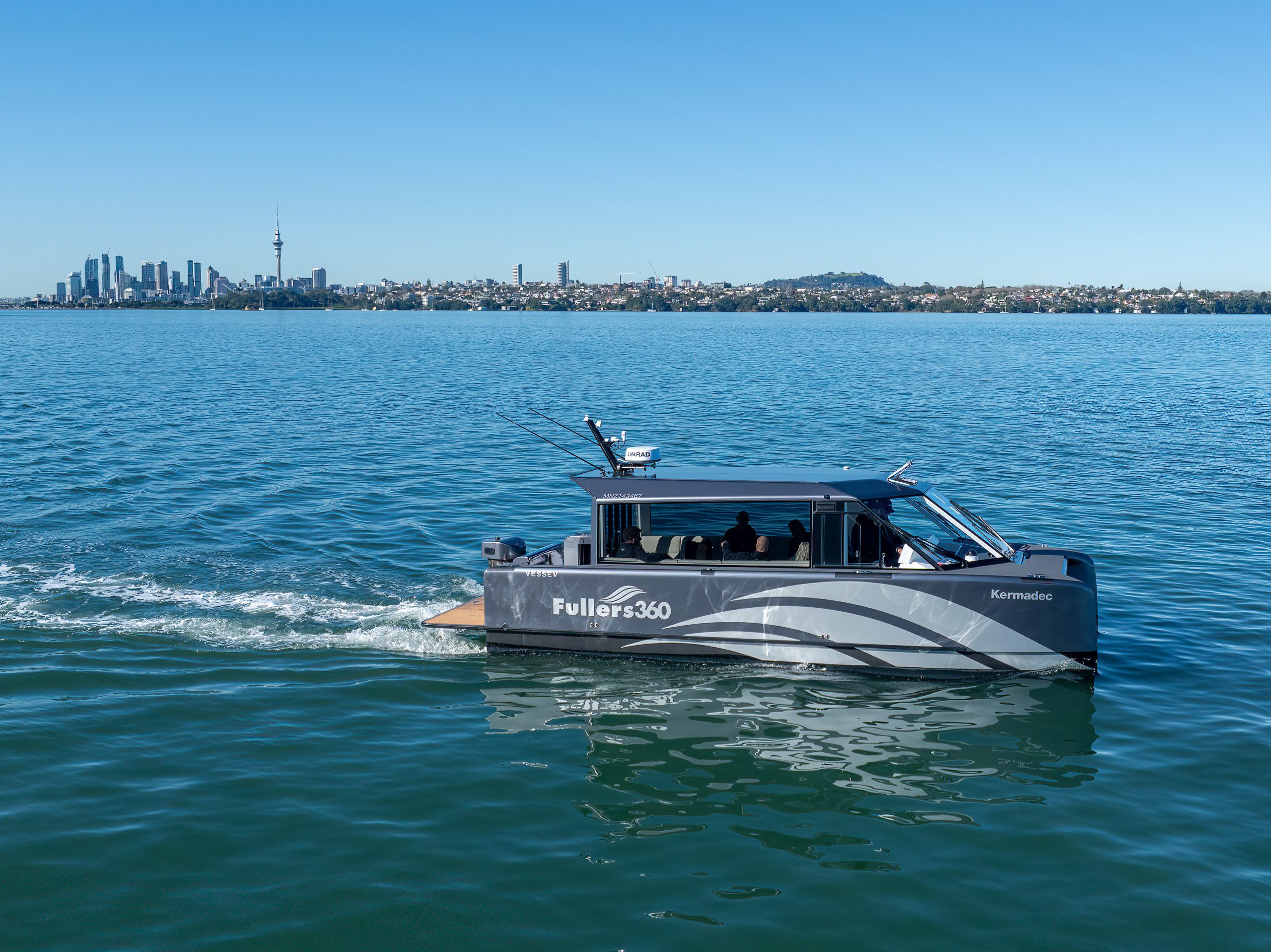
No lurch, no slam, no roaring burst. Just a subtle hush as the hull lifted free of the water and we began to fly. The only giveaway? The wake behind us suddenly disappeared, replaced by the quiet whisper of twin carbon foils slicing beneath the surface.
This was our first ride on board the Vessev S–9, a New Zealand-designed and built platform aiming to redefine marine transport. While our factory tour had given us plenty to talk about (see our behind-the-scenes feature in this issue), experiencing the craft under way was something else entirely.
Hands-off hydrofoiling
Unlike some hydrofoil systems that require constant trimming, toggling or supervision, Vessev’s foils do the thinking. The onboard computer, housed deep in the vessel’s modular ECU architecture, calculates foil pitch and lift in real time. For the person at the helm, the workload couldn’t be simpler.
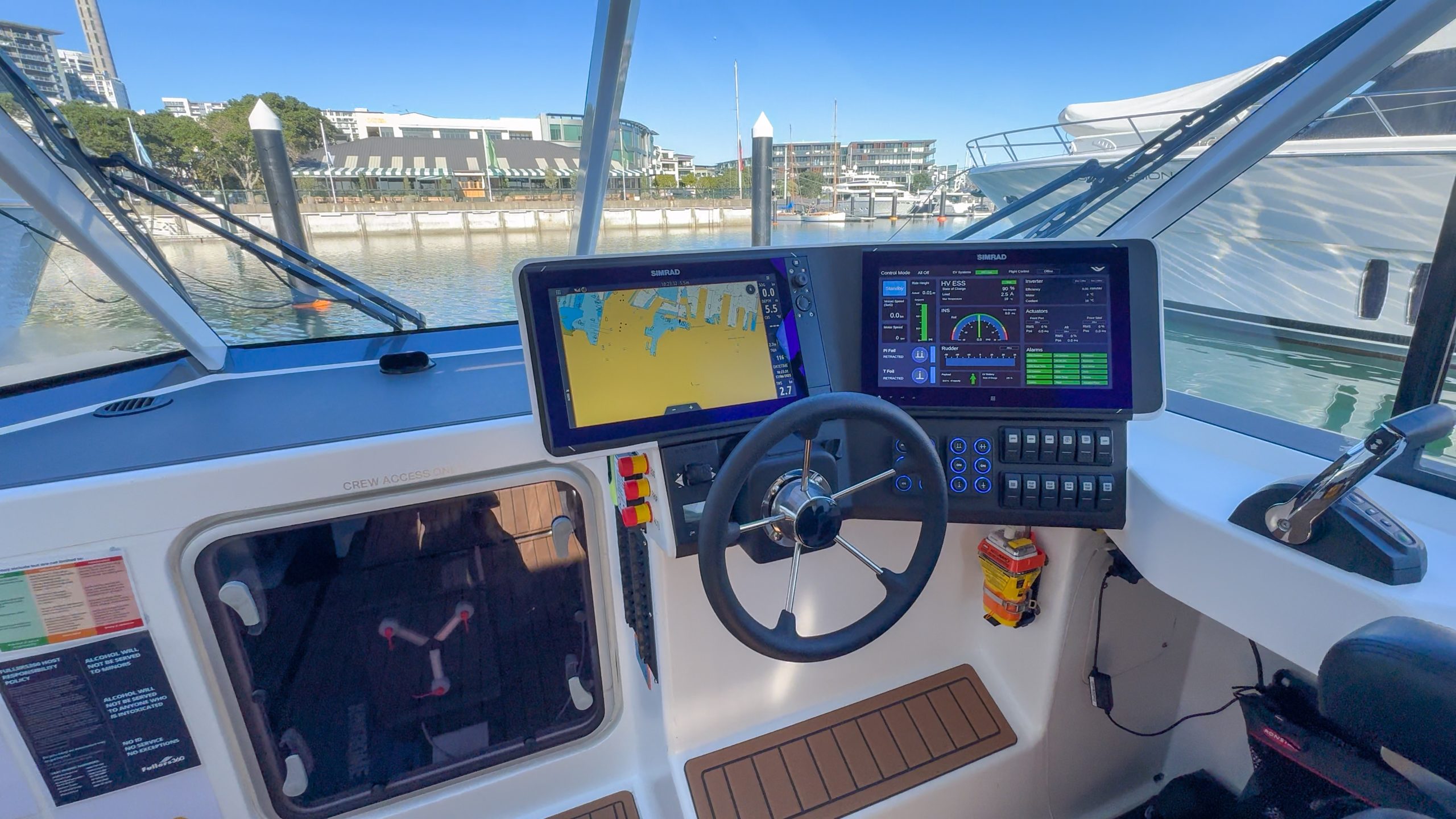
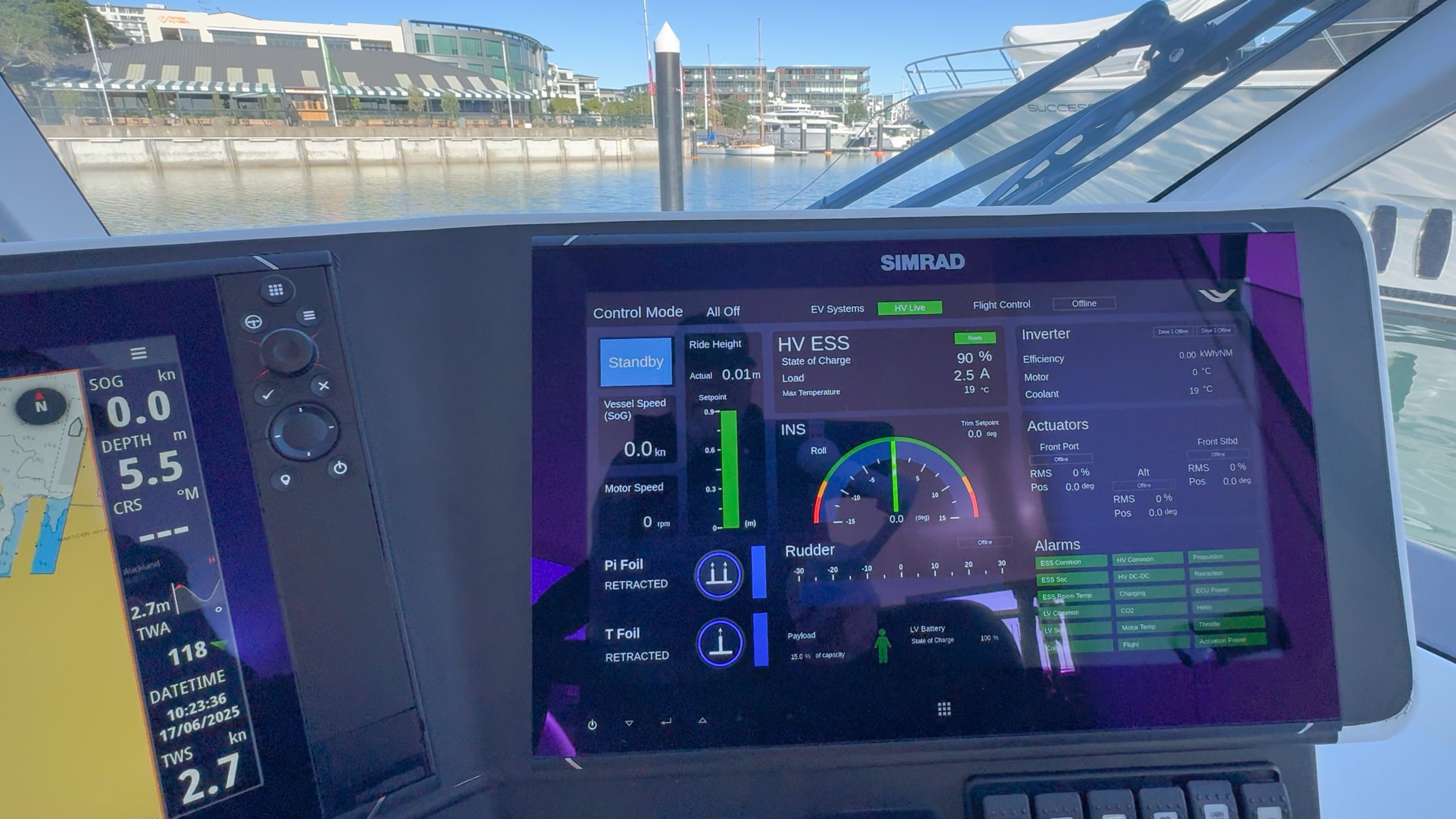
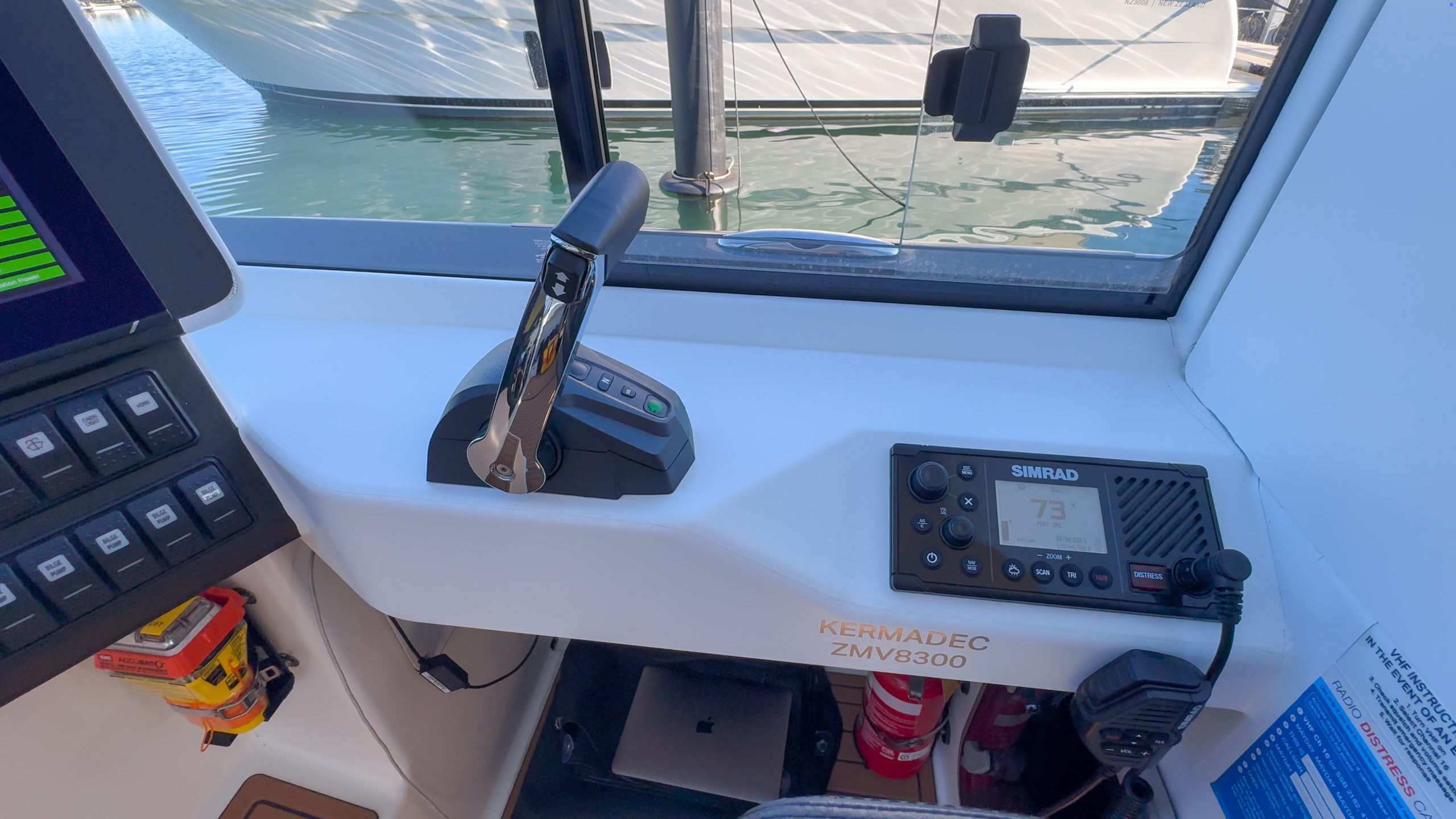
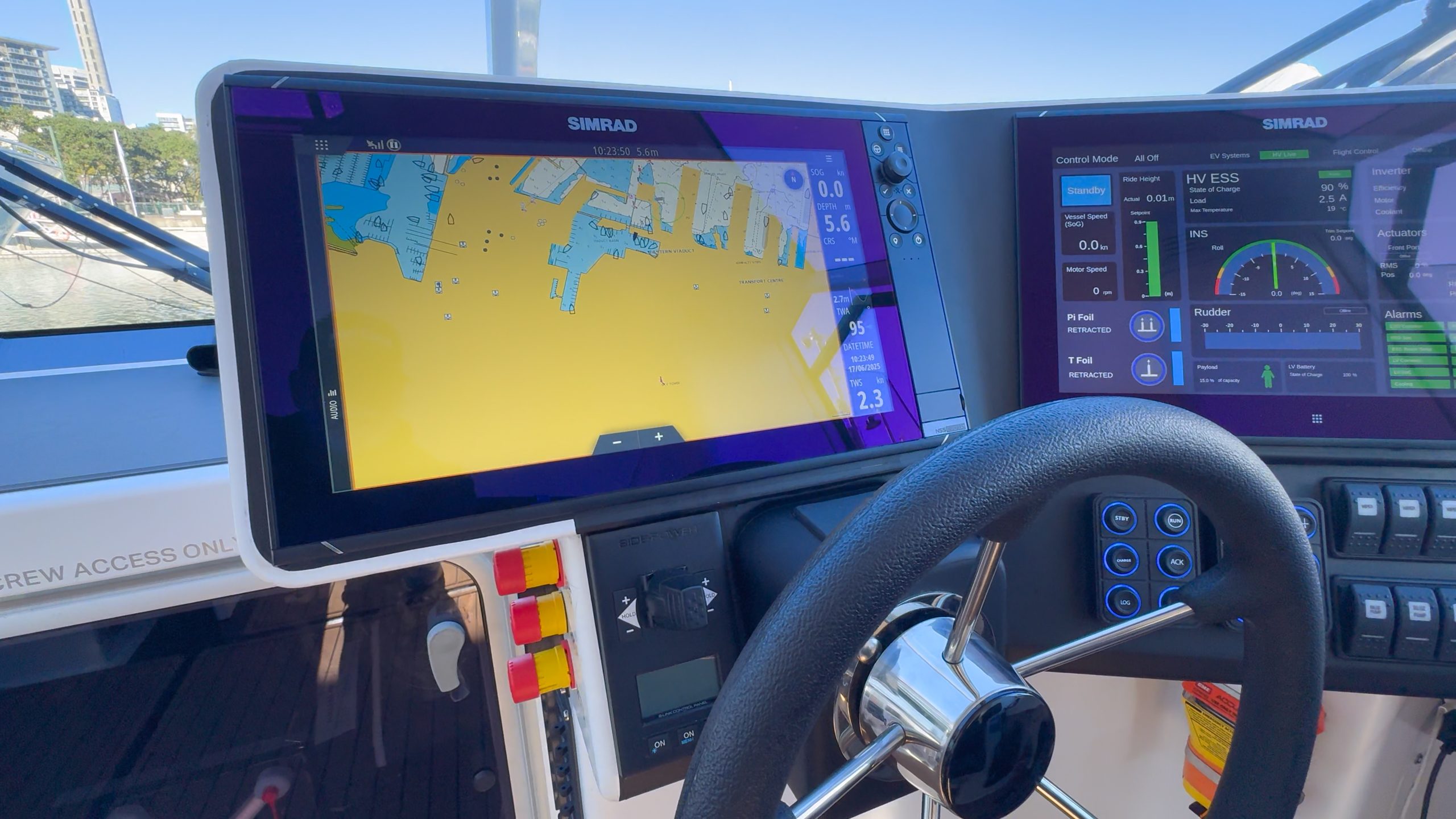
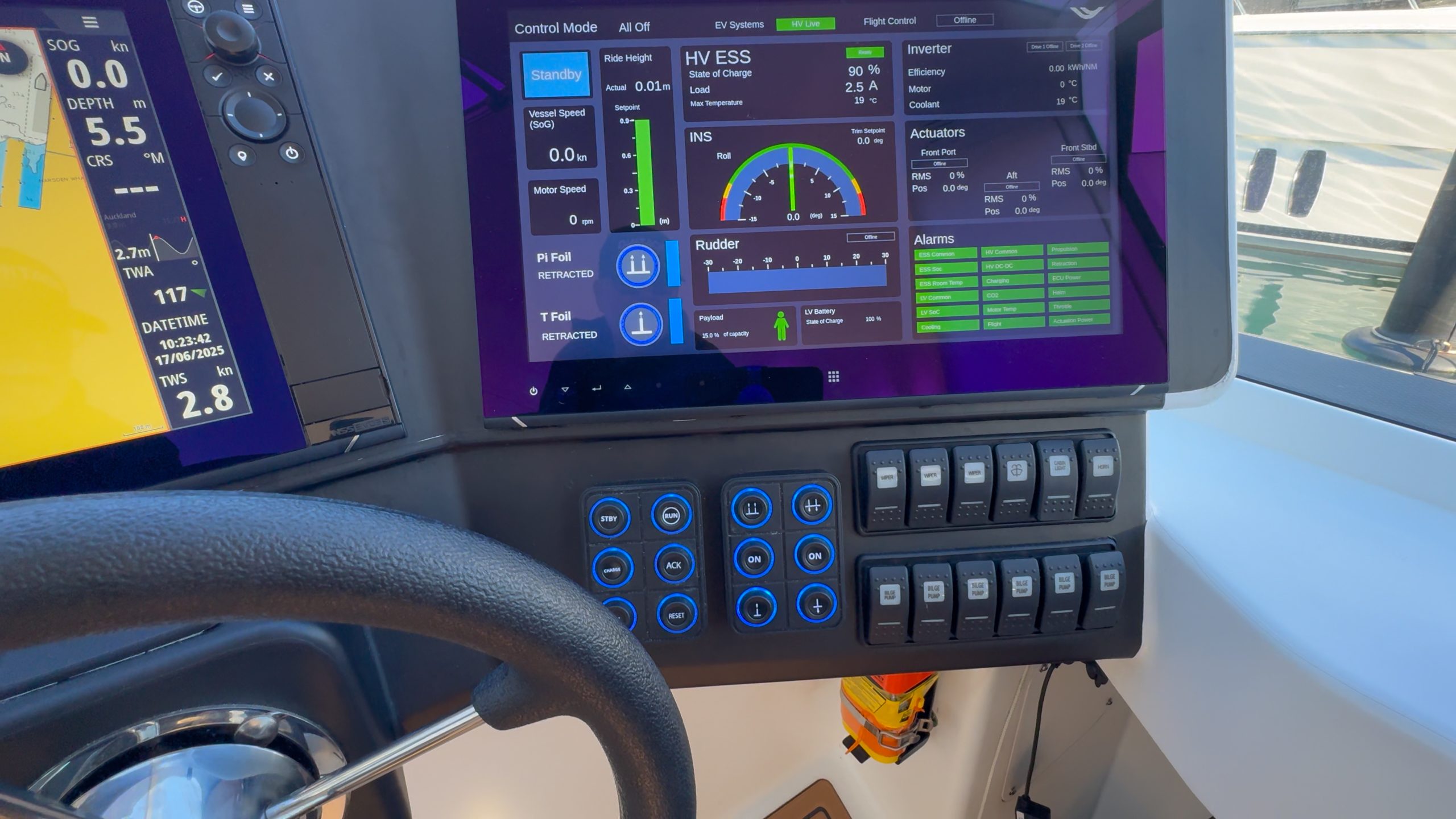
“You just steer and control speed,” CEO Eric Laakmann told us. “The boat figures out when to fly and when to come back down. That’s it.”
It’s an elegant bit of marine automation. Acceleration is smooth and surprisingly quick, and at a pre-determined speed, the foils engage. As the vessel lifts free of the water, the transition is almost imperceptible. The only clear difference is in ride quality—gone is the noise and chop of displacement hulls, replaced by a near-silent glide.
Remarkably smooth ride
Waitematā Harbour isn’t always forgiving. From ferry wakes to tidal slop, there’s usually something to remind you you’re at sea. Not today.
The boat’s foils managed every bit of the harbour’s movement with effortless poise. Even as we crossed behind a large commuter ferry, the ride remained dry and level. We expected the occasional thump or spray—there was none.
One guest, a lifelong boatie, remarked that it felt like “a cross between a launch and a magic carpet.” It’s a lighthearted comparison, but not far from the truth. The craft delivers the presence and stability of a displacement hull, combined with the silent glide of flight.
And the best part? You don’t need to know a thing about foils to enjoy it.
The foils do the work
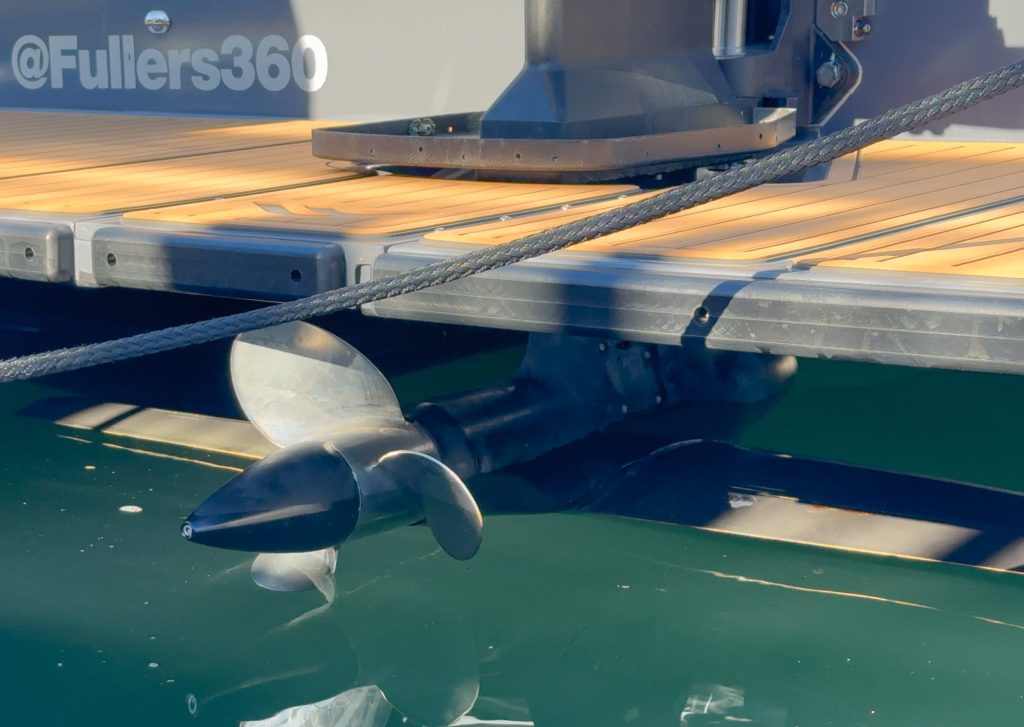
Below the waterline, things are more complex—but equally refined. Vessev S–9’s foil system features a distinctive ‘Pi Foil’ design, with broad central lifting surfaces and tapered tips for reduced drag. Each foil has its own actuator and onboard logic, controlling flap deflection and pitch without needing manual input.
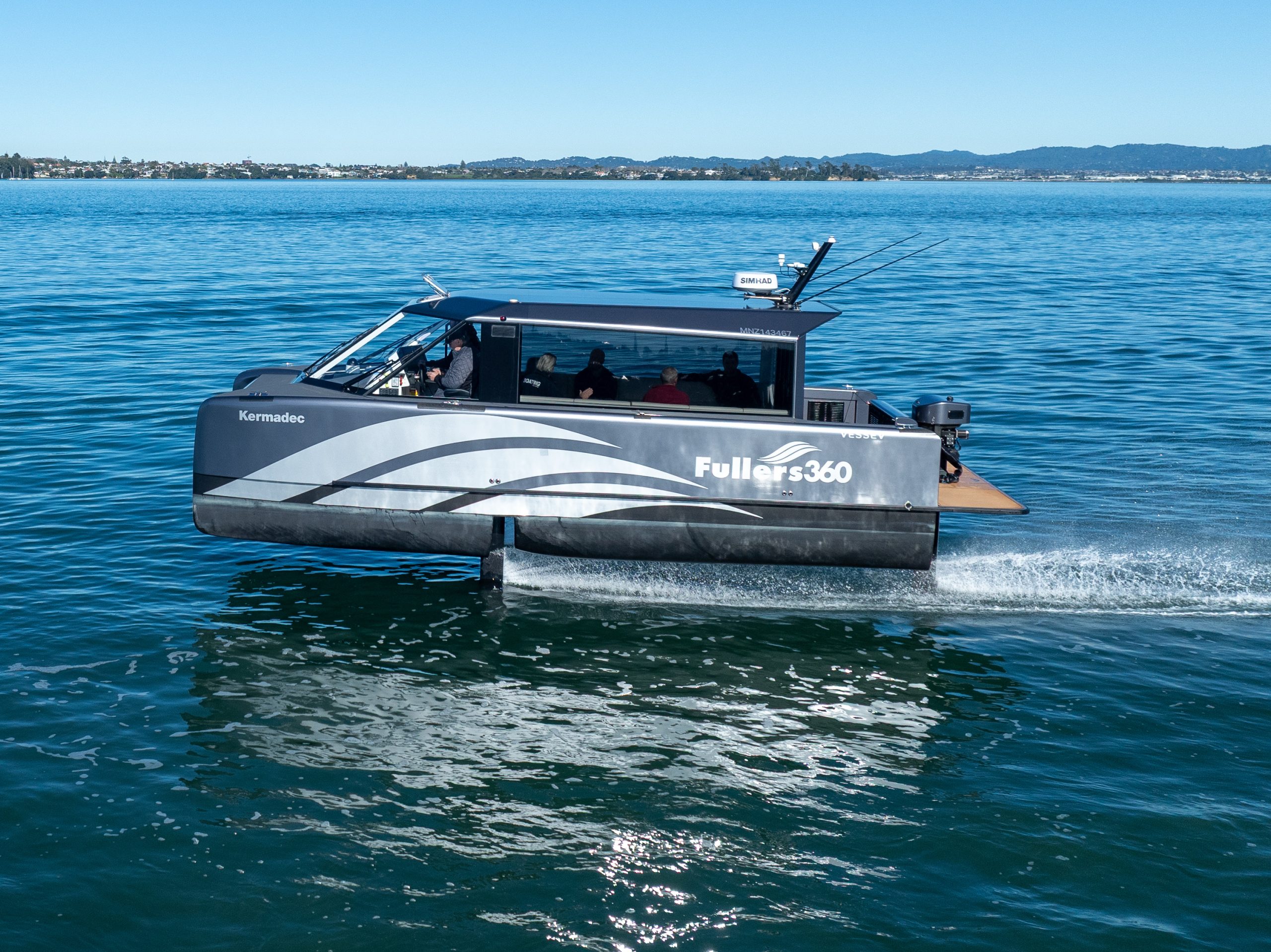
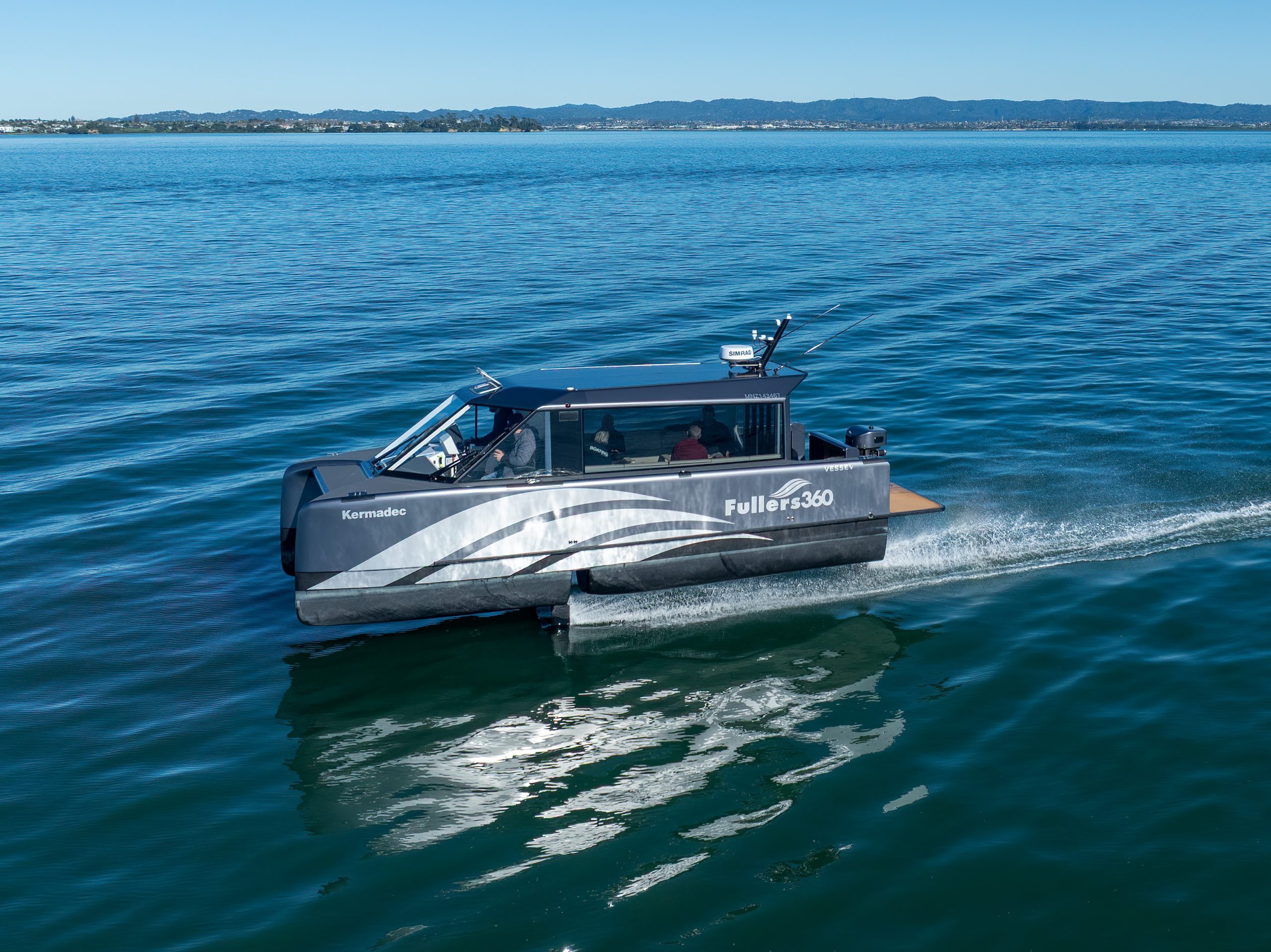
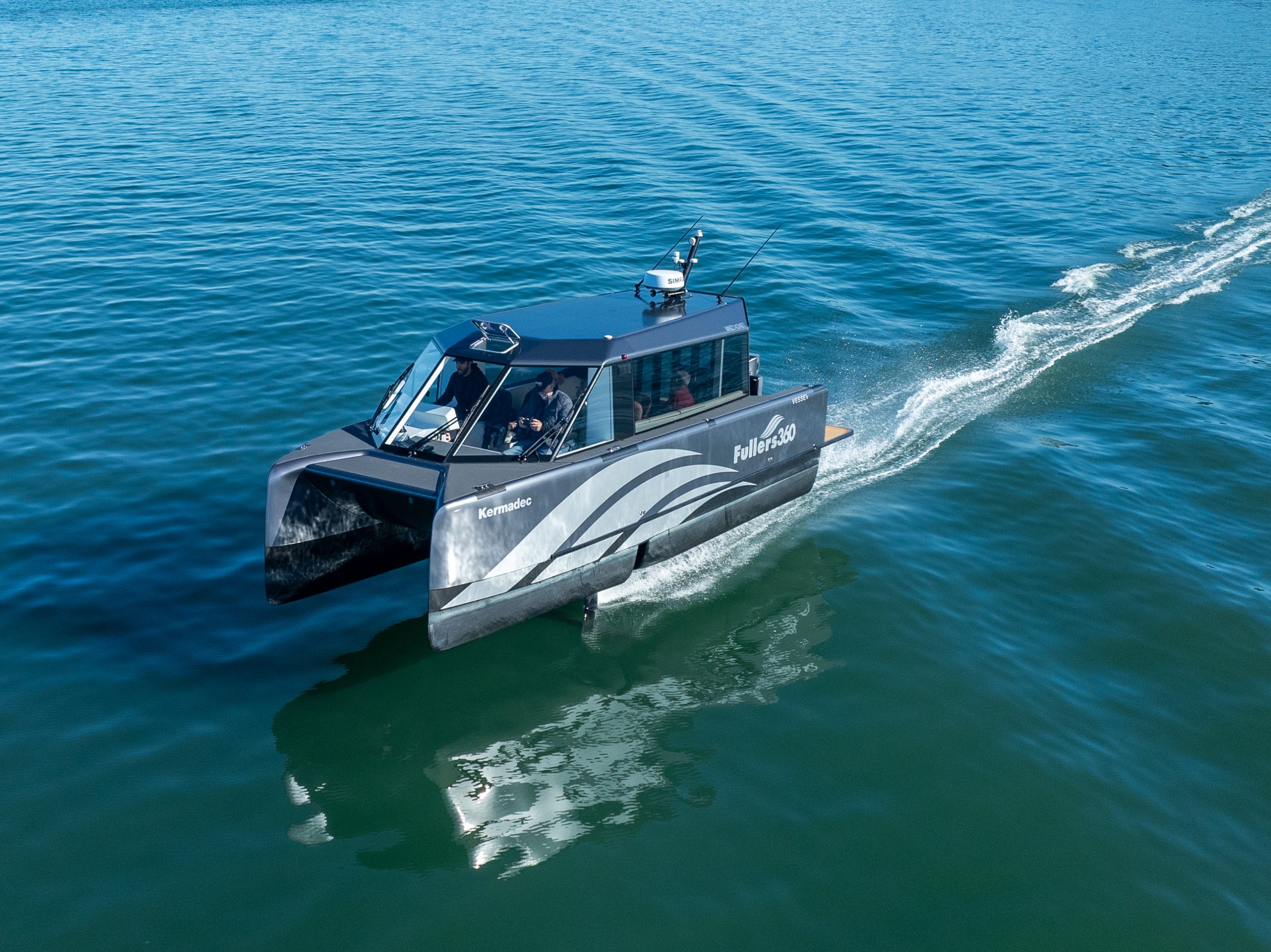
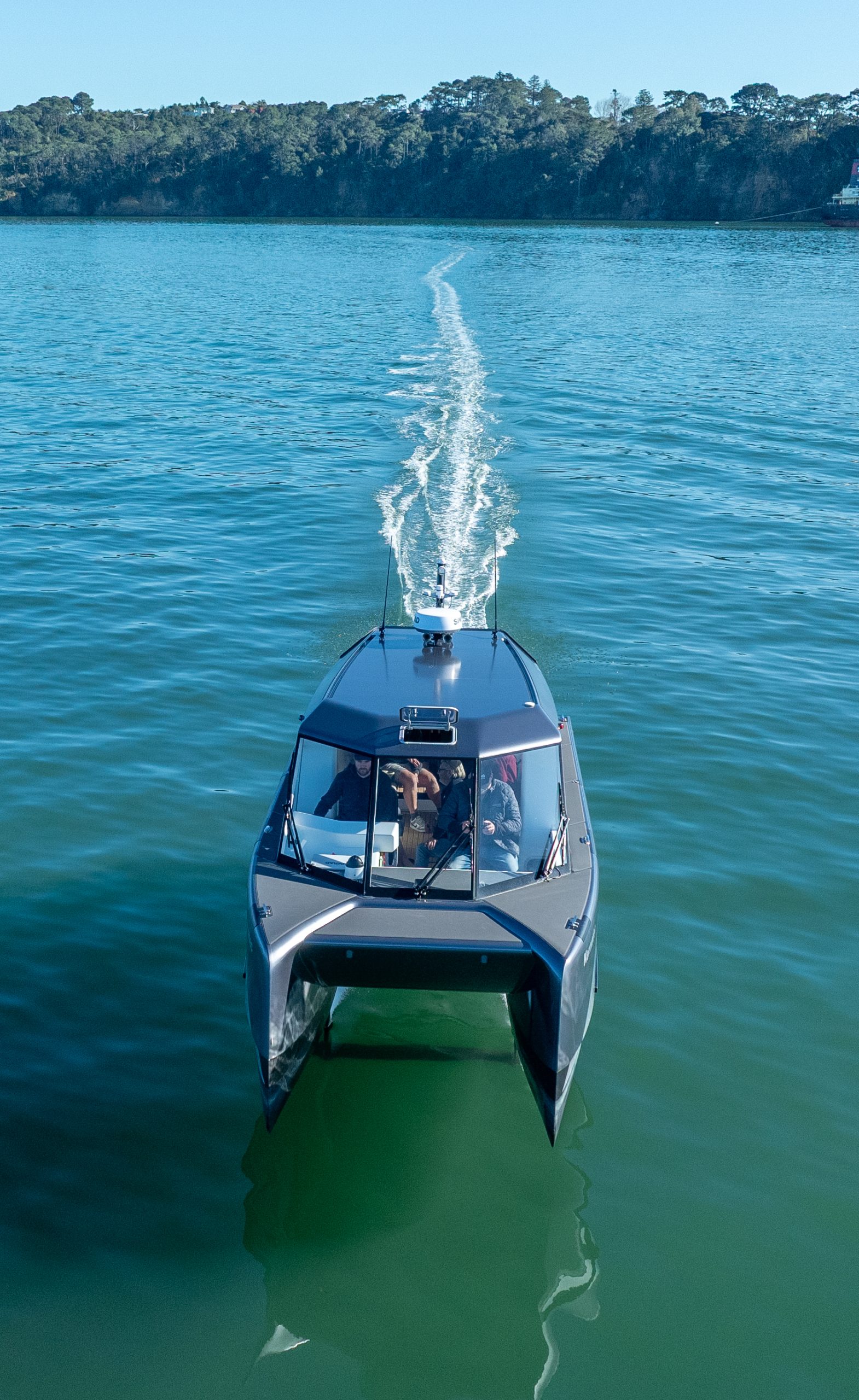
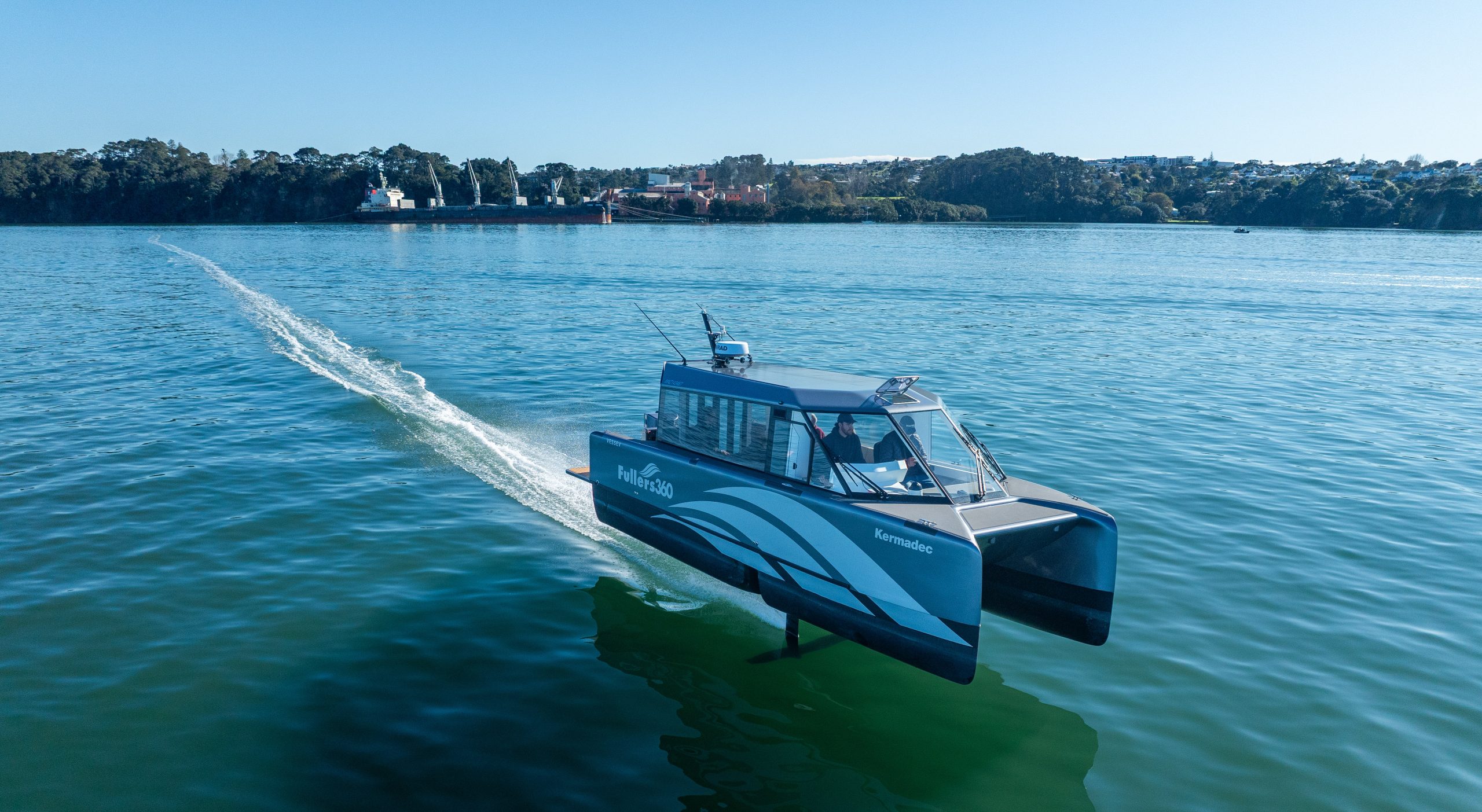
We had three Vessev team members aboard, each quick to share insights into the system’s workings. Eric Laakman, the company’s CEO, explained how the central portion of the foil does the heavy lifting—literally—while the outer sections are optimised to minimise vortex loss and turbulence.
They also pointed out how the actuators are designed for long-term maintenance. “These are the same across every moving part on the boat,” Eric said, pointing to the compact aluminium housing bolted beneath the deck. “Seven actuators, one design. Keeps spares and service simple.”
Better still, the entire foil system is retractable. At low speed or at the dock, the foils lift clear of the water to reduce fouling. For commercial operators, it’s a practical feature that saves time and avoids the need for constant underwater cleaning.

Future-ready performance
While the Vessev S–9 is a 9-metre model, the same principles will carry through to Vessev’s planned 12- and 18-metre platforms. According to the team, these larger vessels will retain the same user-friendly control systems and modular architecture, allowing ferry operators or patrol agencies to focus on their mission, not the machinery.
Our journey lasted well over an hour, long enough to appreciate the consistency of the ride. It’s one thing to skim smoothly over glassy water for a few minutes. It’s quite another to remain effortlessly stable as the wind builds, traffic moves around you, and conditions change.
This consistency—combined with quiet operation and low energy use—is what positions Vessev’s craft so well for regular duty. From harbour patrols to coastal ferries, the use cases are growing by the month.
Confidence at the helm
Most surprising to us was just how unintimidating the experience was. For all its tech, the vessel doesn’t feel like a spaceship. There’s no digital overload, no endless checklist of foil configurations. You drive it like any other vessel, and it quietly takes care of the rest.
In a world where marine electrification can sometimes feel like a tech arms race, Vessev’s approach is refreshingly practical. It’s not about showing off bells and whistles. It’s about removing barriers to entry, and making advanced performance accessible to everyday operators.
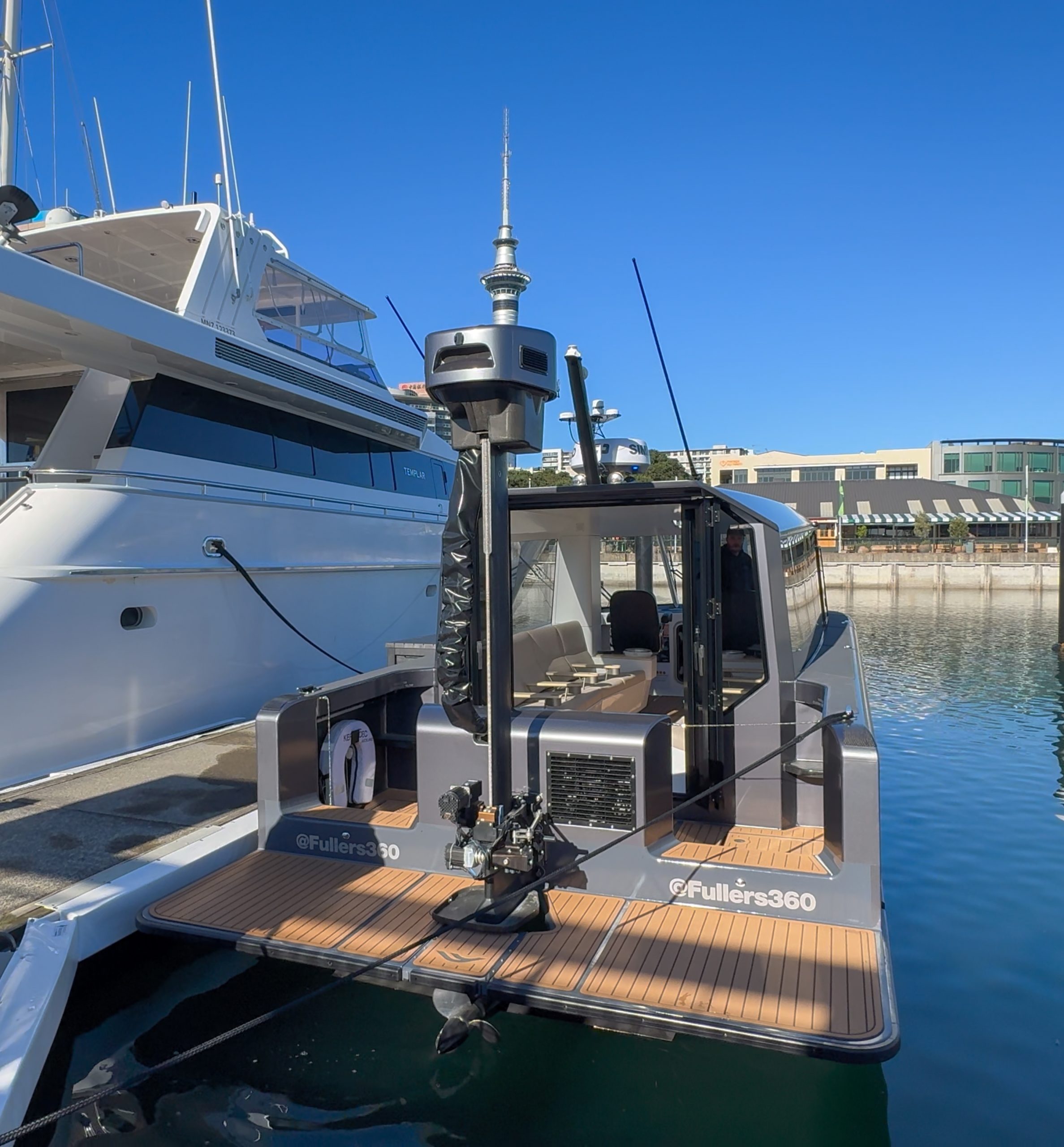
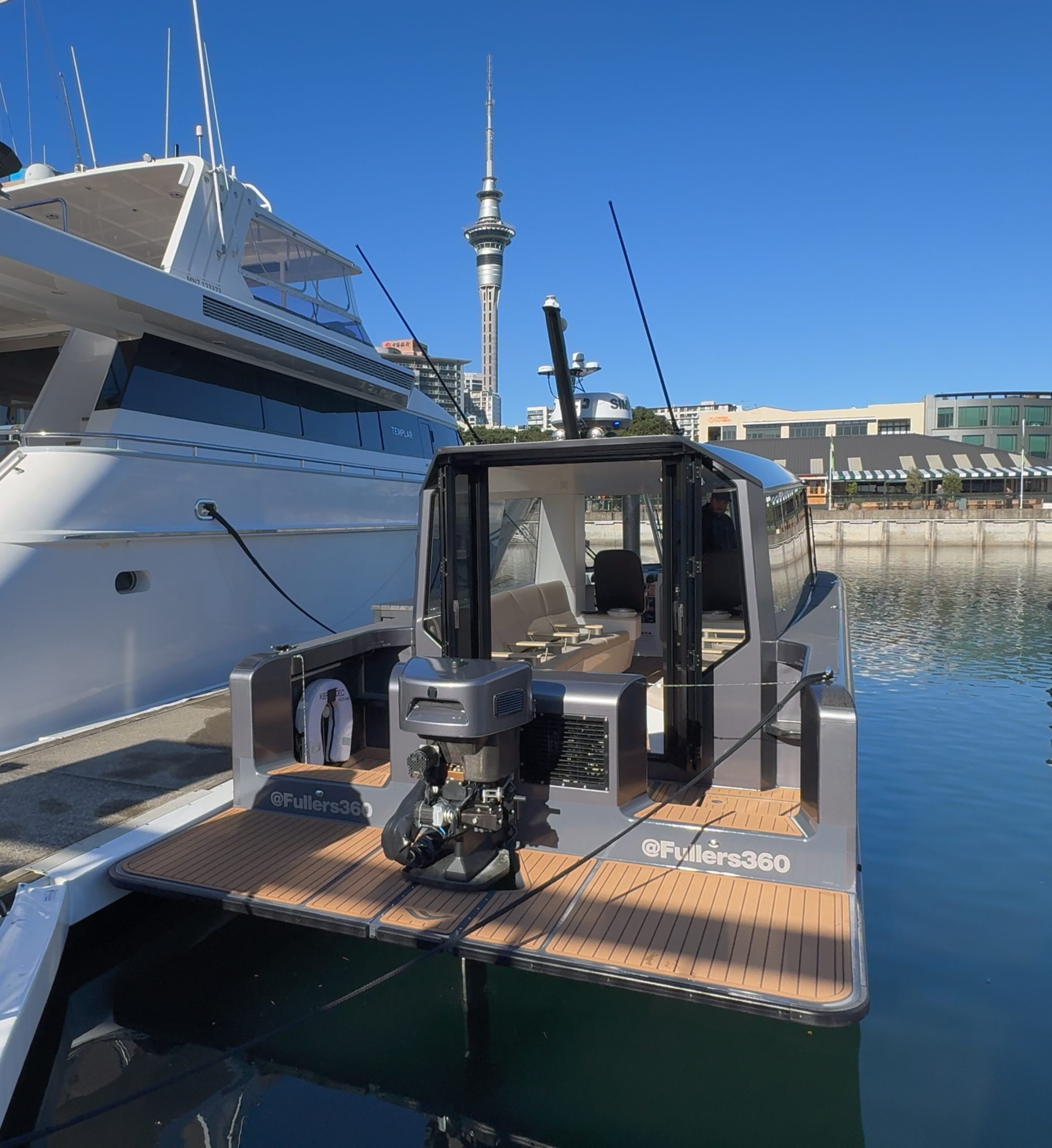
Vessev S–9: built well for the future
The real genius of Vessev’s design isn’t just in the foils, or the speed, or the silence. It’s in how little the skipper has to think about them.
You steer. You throttle. And suddenly, you’re flying.
As the boating world adapts to new energy demands and commercial expectations, this kind of effortless efficiency could become the new normal. And based on what we’ve just experienced, it can’t come soon enough.