Spiny dogfish review underway
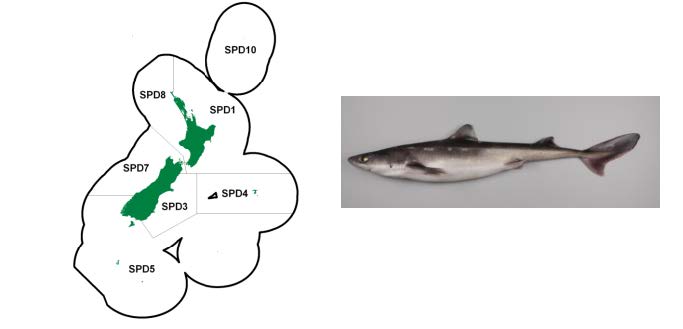
Fisheries New Zealand (FNZ) has launched a review into whether commercial fishers should continue to return spiny dogfish — also known as pioke, makohuarau or kāraerae — to the sea after capture. The small shark, which averages just over a metre in length, is a common bycatch species across the country’s inshore and mid-depth fisheries.
The consultation, which closes on 18 December 2025, is part of a nationwide review of landing and discard rules following changes made by the Fisheries Amendment Act 2022.
Currently, commercial fishers are allowed to return spiny dogfish to the sea, alive or dead, and the catch still counts against their Annual Catch Entitlement (ACE). FNZ is proposing that this exemption should remain, saying it meets the new legal criteria for species that could damage other catch if retained onboard.

Why retention is a problem
Spiny dogfish are notorious for creating headaches at sea. Their sharp dorsal spines can puncture other fish in the hold — or even injure crew — while their flesh rapidly “ammoniates” after death. This occurs when the high urea levels in their bodies break down, releasing ammonia and contaminating other fish stored alongside them.
FNZ notes that handling and processing dogfish requires immediate gutting, bleeding, and chilling — often impossible when large schools are caught in a single haul. Many smaller vessels also lack the space or equipment to store them safely.
“Given the large quantities that can be bycaught and the species’ physical characteristics, it’s impractical for fishers to separate and manage catches before they ammoniate,” FNZ concludes in the discussion paper.
Maintaining sustainability
Under the proposal, the exemption would stay in place for all fishing methods, provided fishers take practical steps not to harm or kill any dogfish that are retrieved alive. All returns must still be recorded and balanced with ACE, ensuring that fishing mortality is accounted for within existing catch limits.
FNZ says the move won’t affect overall sustainability. Dogfish are rarely targeted, and current catches average 5,486 tonnes per year, less than half of the total allowable commercial catch across all quota management areas.

Cultural and recreational considerations
Spiny dogfish have little recreational value — most anglers view them as a nuisance — but they hold some customary importance. Historically, Māori fishers took “dogfish” species including rig, school shark, and spiny dogfish, though modern customary take appears low.
FNZ notes that previous iwi feedback on landing and discard rules emphasised avoiding waste (kaua e moumou) and returning fish close to where they were caught, aligning with the practice of releasing unwanted catch at sea.
Consultation open
Public submissions are now open through the FNZ consultation page until 5 pm on 18 December 2025. Stakeholders are invited to comment on whether returning spiny dogfish should continue, how ammoniation affects other catch, and what best practices might minimise harm when releasing live fish.


![Microplastic beads seen in the central tube of a copepod [their intestinal tract], as evidenced here, fluorescently labelled beads help with visualisation and identification. Credit: Plymouth Marine Laboratory](https://images.boatingnz.online/wp-content/uploads/2026/02/01190204/biological-pumps-how-z-696x461.jpg "Microplastic beads seen in the central tube of a copepod [their intestinal tract], as evidenced here, fluorescently labelled beads help with visualisation and identification. Credit: Plymouth Marine Laboratory")