“Beacon Hill. Beacon Hill. Come in. Mayday.”
It’s after 10pm on a Monday, late August, when the distress call crackles over the Wellington harbour radio.
The transcript was released to RNZ by the Harbourmaster’s office.


“We’re f****** getting swamped out here. We’ve lost fuel tanks please advise.”
Mayday calls are rare, rarer still to be heard over the harbour’s working channel. But the operator doesn’t hesitate, swinging into action.
“Mayday. Wellington Harbour Radio. Who is calling? Who is calling? Please identify yourself and your position. Over.”
A long 12 seconds of silence follows.
The operator tries again.
“…Mayday, channel one-four. What is your position? What is the name of your vessel? Over.”
The response is distorted by static, but there’s a location: Three nautical miles from Karori Rock.

The small boat is in the notoriously dicey Cook Strait off Wellington’s south coast.
“We’re being swamped … I’ve lost the bungs to the back of our boat. We’re swamped.”
Three more times the operator asks for the vessel’s name, the responses are inaudible, punctuated by long pauses.

In total, they’ll ask for the boat’s identity eight times – but they never get it.
“… we’re taking on water, we’re swamped …”
How many people on board? How many people?
Two.
Silence.
Those on the sinking boat are told to tune into channel 16 – the distress frequency – they’re informed that Maritime radio is their point of contact now, and police have been advised.
Behind the scenes an urgent search and rescue operation is launched.
But the flailing boat isn’t heard from again. More than three months on the question remains – did it even exist?
Mayday response ‘exceedingly good’
The mayday on 25 August sparked a desperate search.
Police, Coastguard, and the airport’s fire service flooded the stretch of water near Karori Rock – an offshore lighthouse on the remote southwest coast of Wellington.
Commercial boats – including an Interislander ferry – joined the effort, combing the Cook Strait for several hours.
But no debris – water containers, or chilly-bins – was found bobbing on the surface.
No one was reported missing and shoreline searches for empty trailers at boating ramps yielded nothing.
The next afternoon, the search was suspended.
Police – who led the response – declined an interview, but confirmed an investigation into the mayday has since ended.
The call is often characterised by two words, ‘odd’ and ‘unusual’.
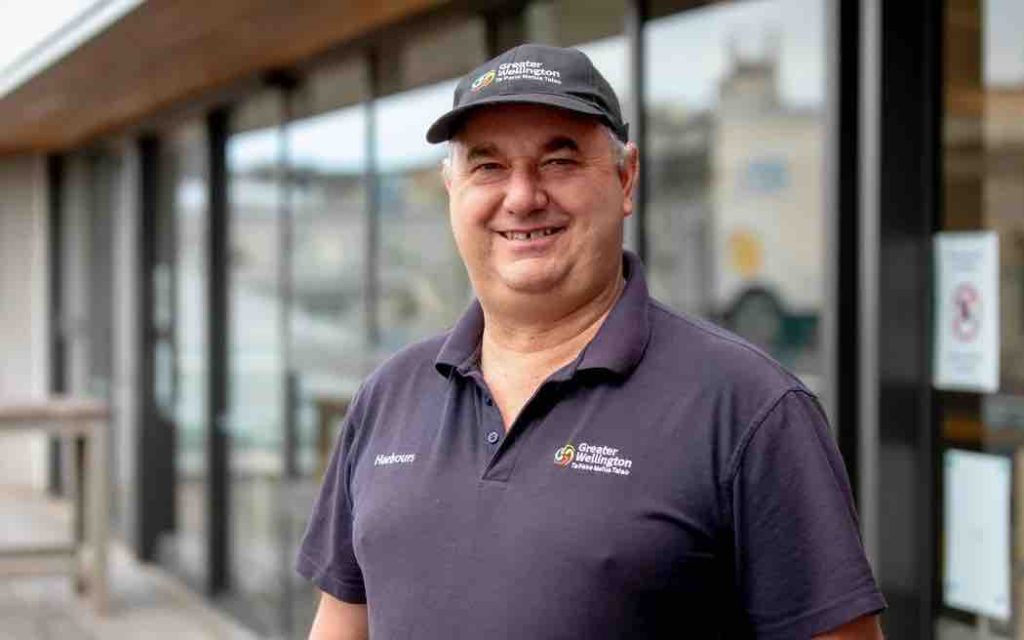
Wellington harbourmaster Grant Nalder says it had “all the elements” of a boat in distress, but it was strange – coming directly to the harbour’s signal station on channel 14.
“The usual for a mayday is [that] you don’t call anyone specific, it’s just ‘mayday’ – that’s the trigger word on channel 16.”
It’s the internationally recognised channel for distress and communication, he says, and a mayday on that frequency immediately gets picked up by the national Maritime radio.
Months later, listening back to a recording of the call, he thinks he can hear two different voices on the end of the line.
He says based on their report, ‘mayday’ was entirely appropriate.
“That’s the one that’s used if there’s imminent danger to life. Three miles southwest of Karori Rock’s known for its tide and rough waters.
“If a boat had been … anchored in Oriental Bay and taking on water, it’s not good but it’s probably a swim ashore. Cook Strait, that’s very different.”
Fortunately, maydays aren’t common and Nalder says the response to this one was “exceedingly good”.
“Our operator kept asking them questions, they confirmed the location … which is really important. You can’t do a search if you don’t know where you’re going.”
He says those details quickly made their way to police and the national search and rescue headquarters – from there, things ramped up.
Calling all ships
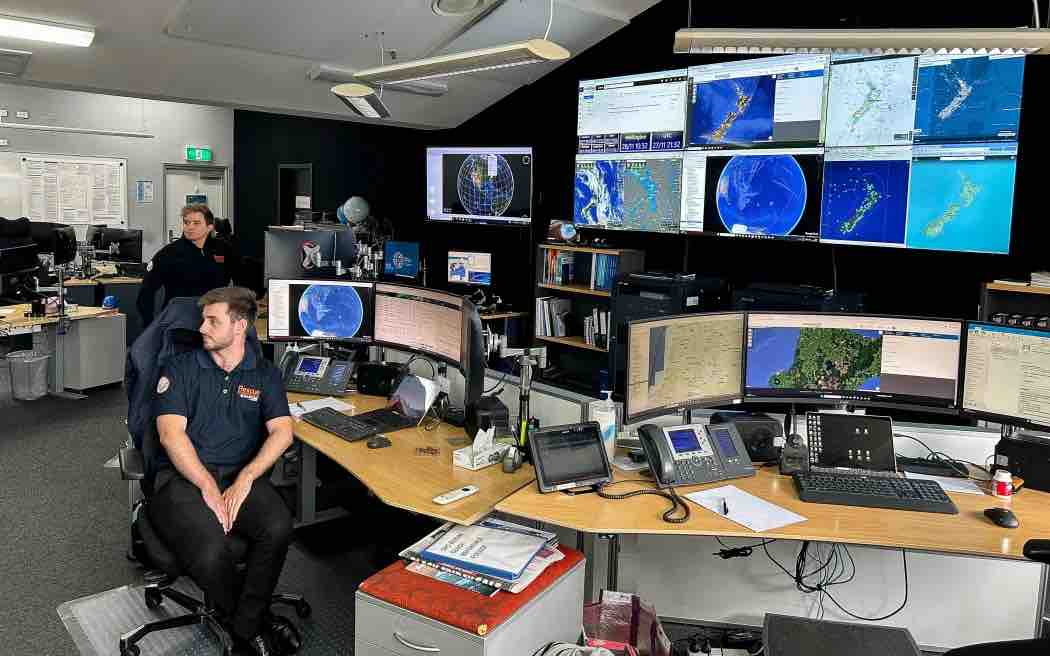
Maritime NZ Rescue Coordination Centre (RCCNZ) is housed in Avalon Studios – an incongruous, 10-storey, tower block in Lower Hutt.
It’s a round-the-clock operation on RCCNZ’s floor, with Maritime radio operators working to a backdrop of random static bursts and broadcasts – dials tuned to channel 16.
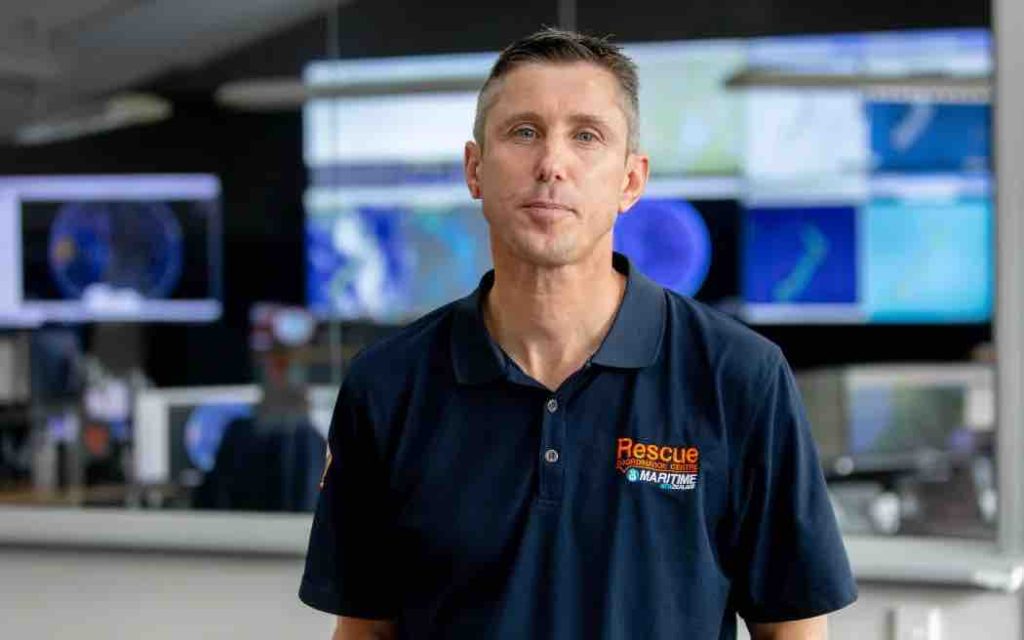
Down the hall, search and rescue officers rotate in 12-hour shifts in front of screens that blink and flash with real-time information on the weather and locations of boats and planes.
According to RCCNZ’s operations manager, Michael Clulow, the team covers one of the largest areas in the world (top five or six for size), stretching from the South Pole to Tokelau, near the equator
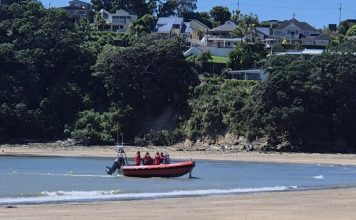
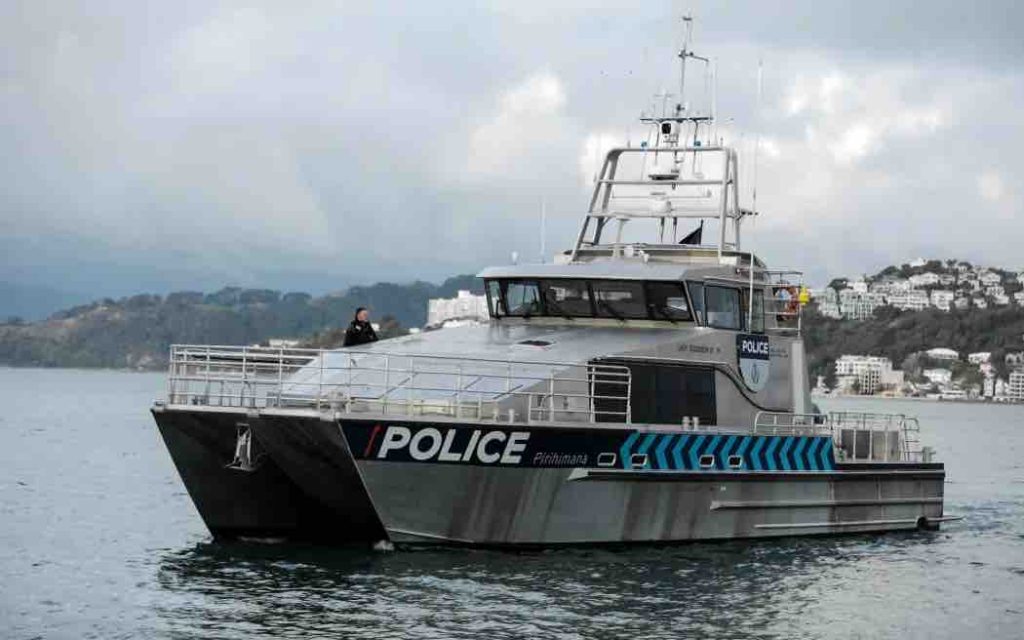
The Wellington police boat returns to harbour on 24 May 2024 after spending the day looking for a man who went missing after falling from the East By West ferry.
Within the roughly 30 million square kilometres, RCCNZ has the power to pull in whatever resources it deems appropriate to save someone’s life – from the local surf lifesaving club, to the defence force.
Last year, the team responded to about 1500 distress calls. But each year about 50 to 100 are maydays, Clulow says.
Such a distress call can trigger an all-ships broadcast, which demands anyone in the area to stop what they’re doing and help.
Following the mayday on 25 August in Wellington, police asked Maritime radio to do exactly that.
Search yields nothing
Around the same time, Police’s Lady Elizabeth IV and the airport fire service hit the water, as do two boat-loads of Coastguard volunteers who make their way to the choppy waters within the Karori rip.
Maritime’s broadcast has captured both recreational and commercial boats in the area, who are referred to police for instructions.
The Interislander ferry, Kaiārahi, arrives first on the scene.
At the time, ferry passenger Tupoki Wairau-Hunter told RNZ the ship slowed as they approached Wellington and those on board were encouraged to help search under a large spotlight sweeping the water.
The search lasted until the early hours of Tuesday morning.
In a statement a few hours later, police confirmed no debris had been found and nothing had turned up in a check of the shoreline and boat ramps.
They “urgently wanted to hear from anyone with information directly related” to the distress call.
Throughout, Maritime’s radio operators were listening on channel 16, but Clulow says they heard nothing further from the swamped boat.
On Tuesday afternoon, police reiterated their plea for information and suspended the search.
Origins of call remain a mystery
So was it a prank call? When put to them directly, both Nalder and Clulow hedge.
“We don’t actually know what the case was with this,” Nalder says, but then cites the lack of evidence pointing to a boat lost at sea.
He says there’s a possibility there was a problem that got resolved, but admits it’s unlikely.
“There’s a lot of people that put up a lot of time for this – it’s not something to be done lightly. But by the same token, we don’t want people to be afraid to call for help if they need to.”
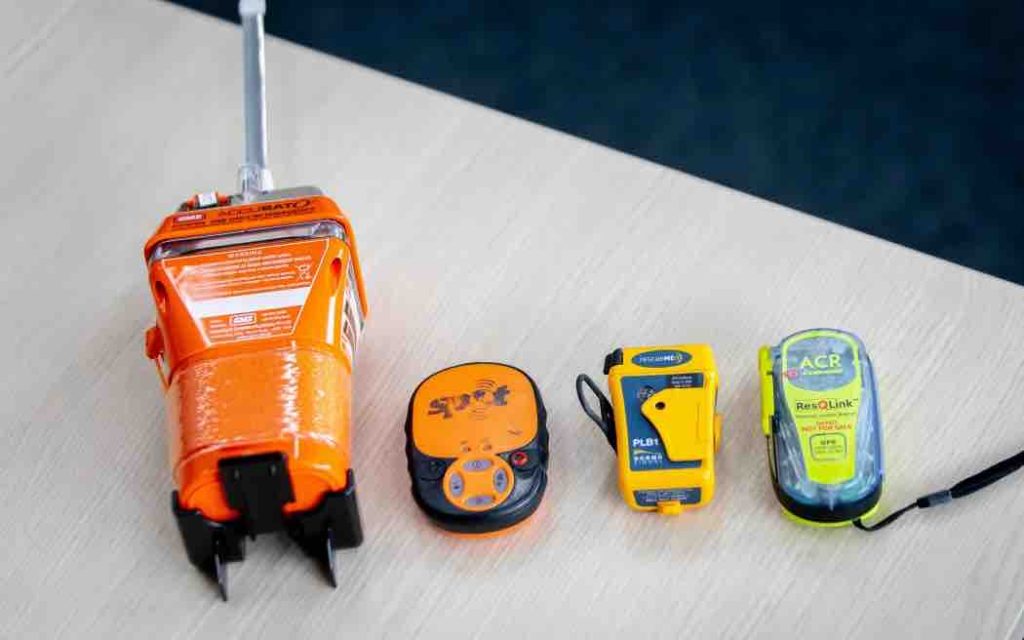
Clulow accepts a hoax is possible, but stresses that such calls are incredibly rare and typically don’t cost a lot (more troublesome, are unregistered personal locator beacons accidentally going off).
In his more than three years at RCCNZ, he’s only come across two fake calls.
“In that same time, we’ve done 4500 search and rescue incidents. Going and responding to something that isn’t an emergency is a bit of a waste of resource,” he says, and “it’s obviously frustrating”.
“But it happens really infrequently.”
When it comes to cost, the boats wear it – it’s the framework that keeps mariners safe, he says.
A KiwiRail spokesperson says the distress call delayed Kaiārahi’s next sailing by about 90 minutes, and any extra cost is absorbed as part of its “commitment to maritime safety”.
“Under international maritime law, seafarers have a duty to render assistance to those in distress at sea. We take that responsibility seriously and our crews are trained to assist in emergencies.”
A police spokesperson told RNZ the investigation into the mayday call has ended.
“With no persons reported missing or coming forward, we are unable to clarify the origins of the radio message.”
If the call was a fake, and those behind it identified, any charges would need to meet the Solicitor-General’s guidelines for prosecution, they said.
So, is Clulow comfortable that no one’s been left at sea?
“I certainly hope not. We’d move heaven and earth to help those in distress and we throw a lot of resource at it because obviously, it’s the safety of our friends and whānau.
“We’ll always respond to people in need.”
How to stay safe on the water
Clulow says two forms of reliable communication is a must, and recommends a beacon such as an EPIRB (Emergency Position Indicating Radio Beacon).
If a phone is an option, Nalders says go directly to 111, “don’t call your mate, don’t try and find the Coastguard number”.
He’s says ‘mayday’ on channel 16 is an obvious, and the channel can also be used let Maritime radio know about less urgent matters, for example a flat battery or loss of fuel necessitating a tow.
Finally, check the weather, plan the journey, and don’t wait to ask for help.
Nalder says a small issue can escalate from a pick-up and tow to a full-on search and rescue, especially in the dark.
“So, if you’re having difficulties, tell someone.”