The man behind Mariner and Maritimo turns his attention to Caribbean — and refuses to slow down.
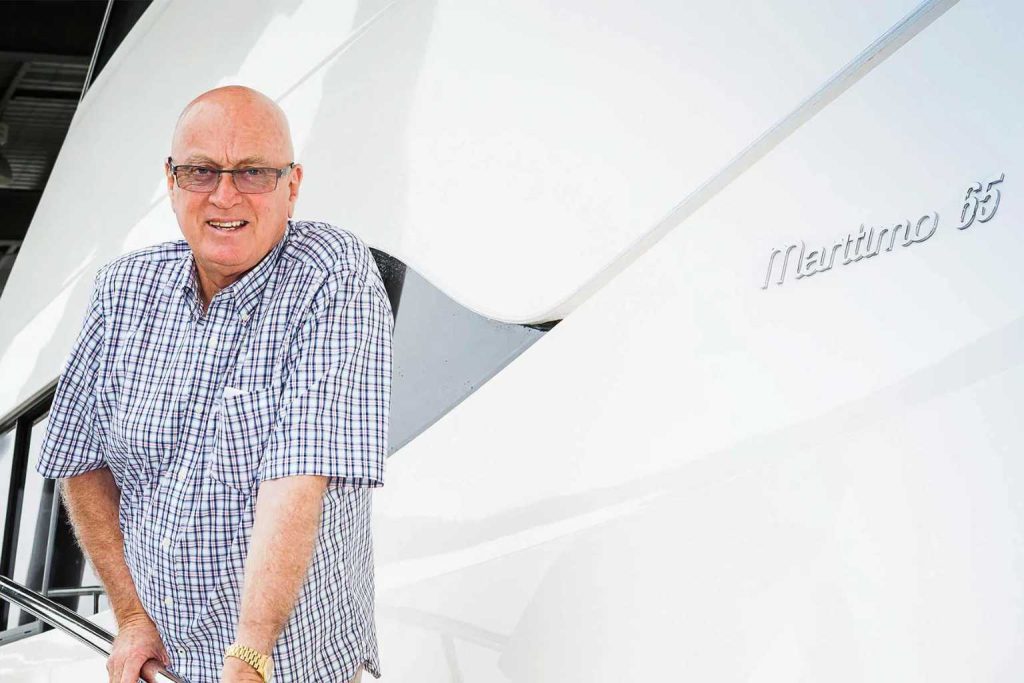
“It’s been an interesting journey.” Bill Barry-Cotter says it with a small smile, the kind that carries half a century of stories. He stands beside one of his latest creations, the M50, sunlight catching the sweep of its coachroof. At an age when most people have stepped back from the workplace, Barry-Cotter remains where he has always been — close to the tools, close to the water, and surrounded by boats in various states of becoming.
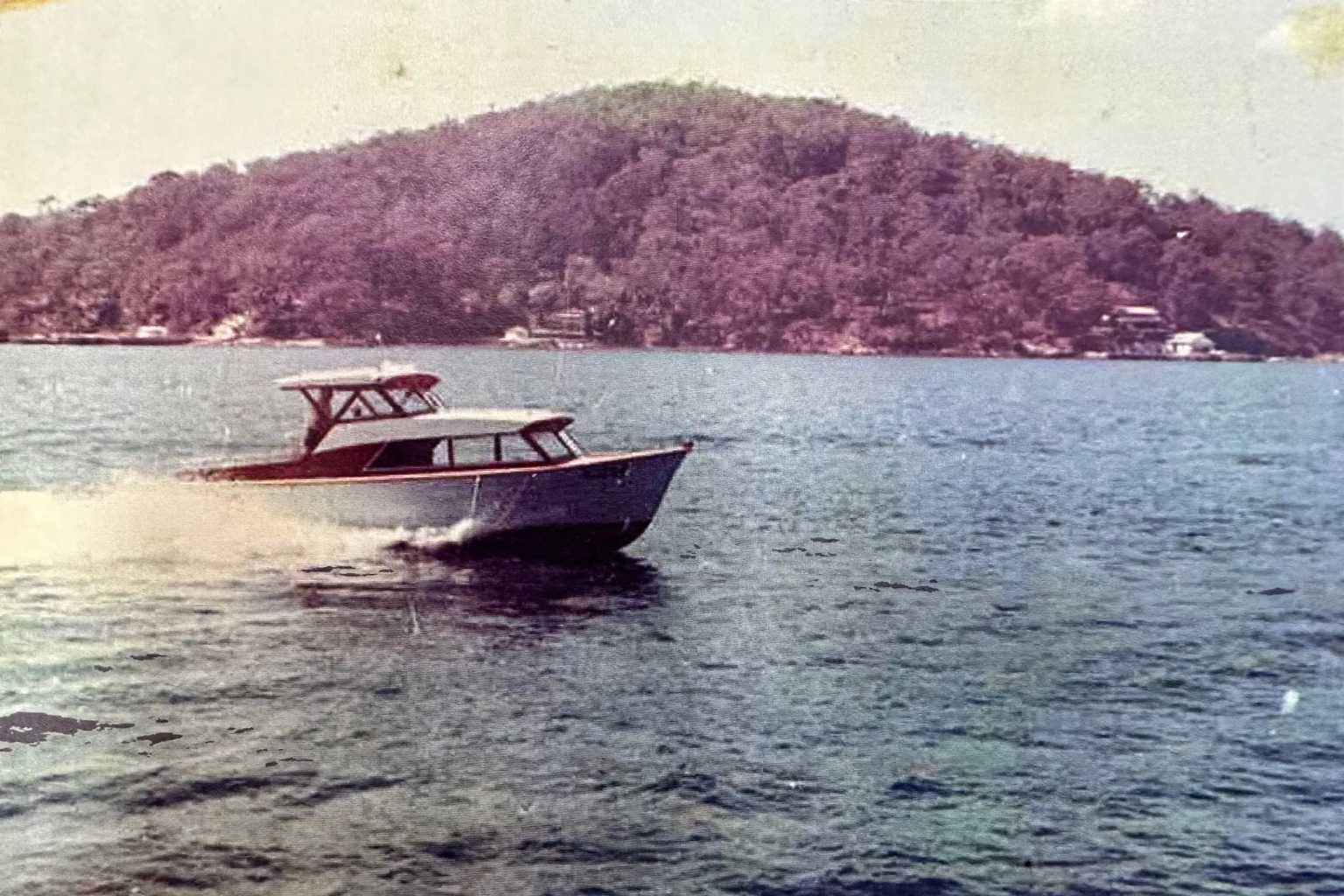
His journey started in the 1960s as a young apprentice shaping timber hulls by hand. In the 1970s he embraced fibreglass long before the Australian industry trusted it, then turned that bold shift into Mariner, a company that would become the country’s largest boatbuilder. Twenty-two years ago he launched Maritimo on the Gold Coast, a brand built on the simple idea that long-range luxury should be driven by engineering, not embellishment.


Yet for all the achievements behind him, it is clear he is not looking backwards. If anything, he has shifted up a gear.
Caribbean reborn
The clearest sign of that momentum arrived with the surprise announcement that Maritimo had acquired Caribbean, one of Australia’s most beloved boat brands. For many Australians the name Caribbean isn’t just a boat; it is childhood memories — fishing trips, coastal hops, sunburnt weekends and family cabins that smelt faintly of salt and sunscreen.
That heritage is exactly why the rebirth matters.
“They were strong, reliable, simple, and built to last,” says long-time Maritimo director of distribution Sean Savage. “But they needed a birthday. And that’s exactly what we’re giving them.”
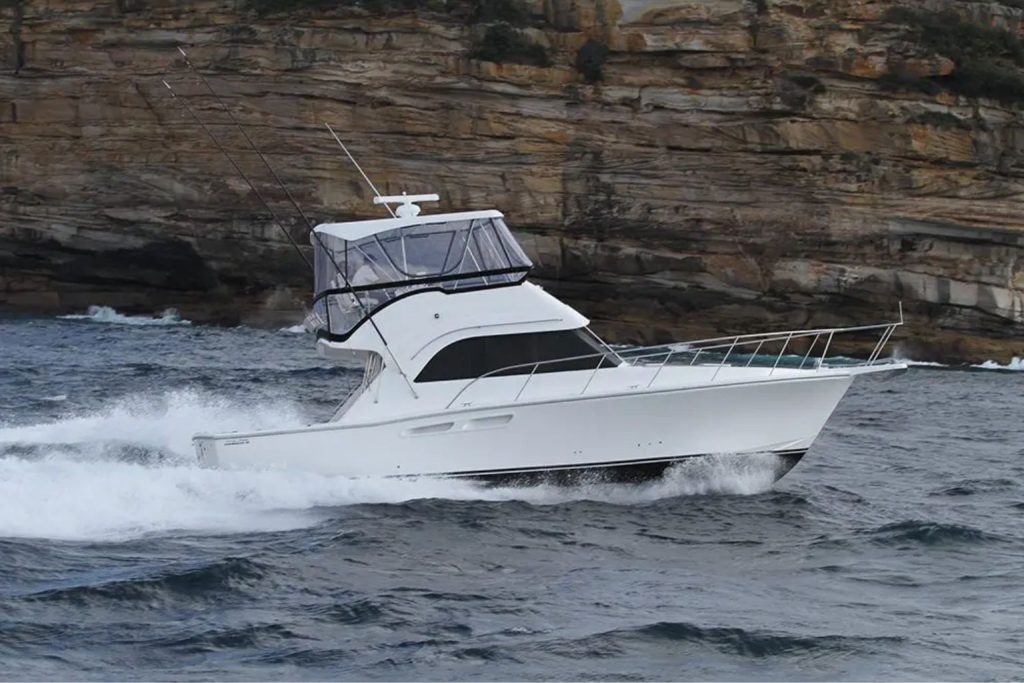
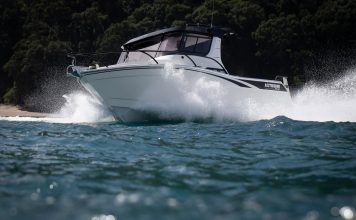
Under Maritimo’s stewardship, Caribbean is keeping the hulls that made the marque famous but reimagining almost everything above the gunwale. New decks, superstructure, accommodation and systems bring the boats firmly into the modern era, while game-fishing and family cruising versions offer fresh flexibility.

The demand arrived almost instantly. Before any real marketing began, buyers placed deposits. Loyalty, it turns out, remains a powerful force when a brand is rebuilt with respect.
Barry-Cotter sees Caribbean as a natural extension of his own journey. Reinvention is not new to him; it is the thread that connects every decade of his career.
Always building the next chapter
The Caribbean revival sits comfortably alongside the measured evolution of Maritimo itself. Barry-Cotter’s habit of treating constraints as creative fodder is perhaps best seen in the development of the M50.
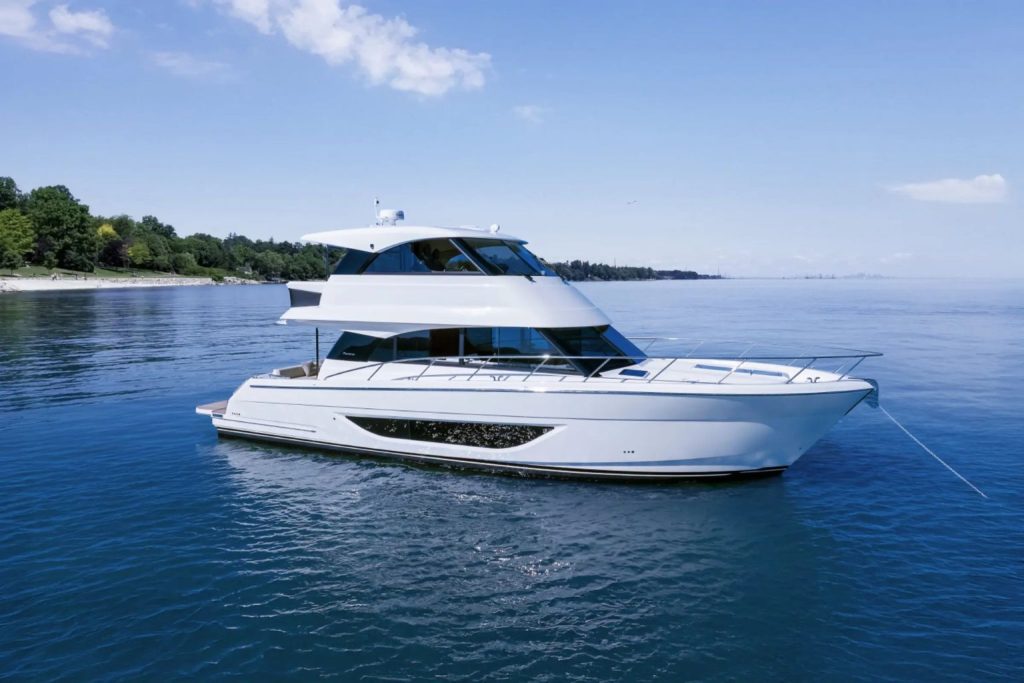
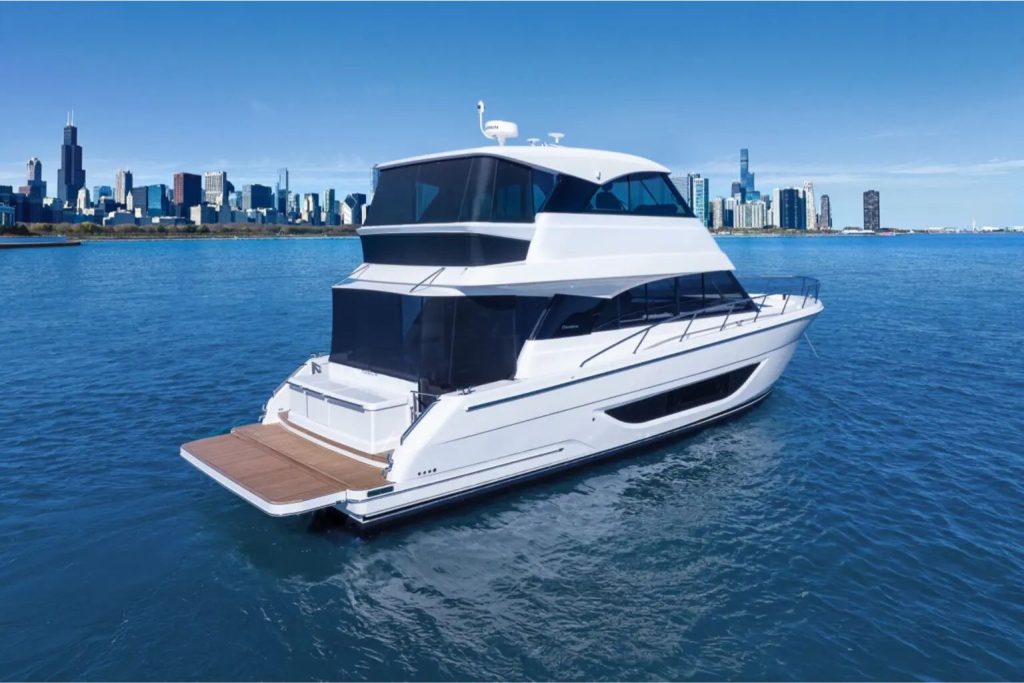
A US dealer pointed out that berthing fees jump when a vessel exceeds 55 feet. The solution? Build a boat that carries the presence and comfort of a larger yacht yet officially measures under that line. The result is the M50: a generous stateroom, expansive VIP cabin, and a saloon configured to offer extra sleeping when required. Everywhere you look, the design finds space where none seemed available.
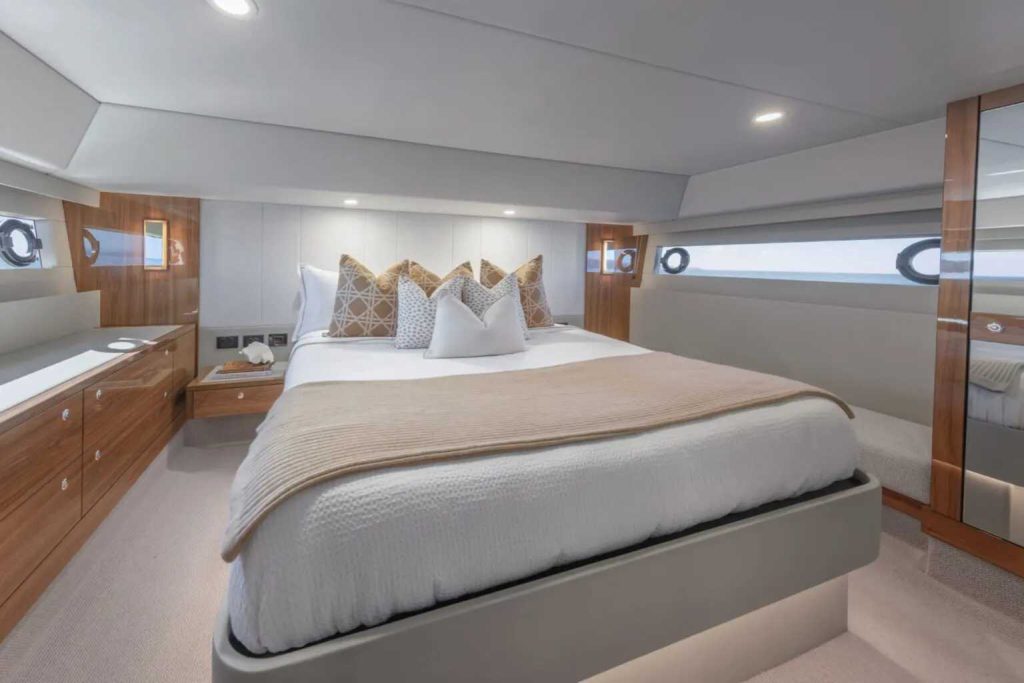
“We engineered the anchor through the deck where normally you’d find a bowsprit,” Barry-Cotter explains. “And we hinged the swim platform so that it can rise vertically, then come back a full metre for use. It’s about giving owners more without making the boat bigger.”
The platform story says a lot about him. Early in development he said they might land on fifty or sixty prototypes. Others suggested they’d need two or three. As of now they are nudging twenty.
“Despite all the CAD drawings, you’ve just got to keep doing it,” he says. “It gives you a buzz when you’re winning, but when you do it three in a row and it fails every time, you think, what am I doing this for?”
He knows exactly what he’s doing, of course. That persistence is one of Maritimo’s greatest strengths.
A factory built on people, not just process
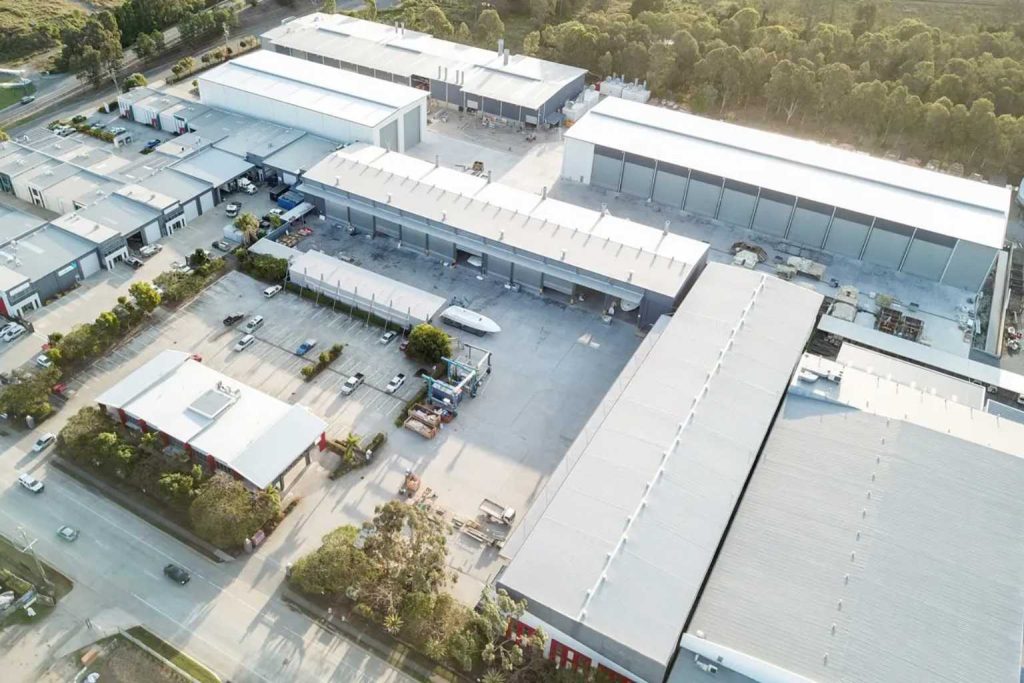
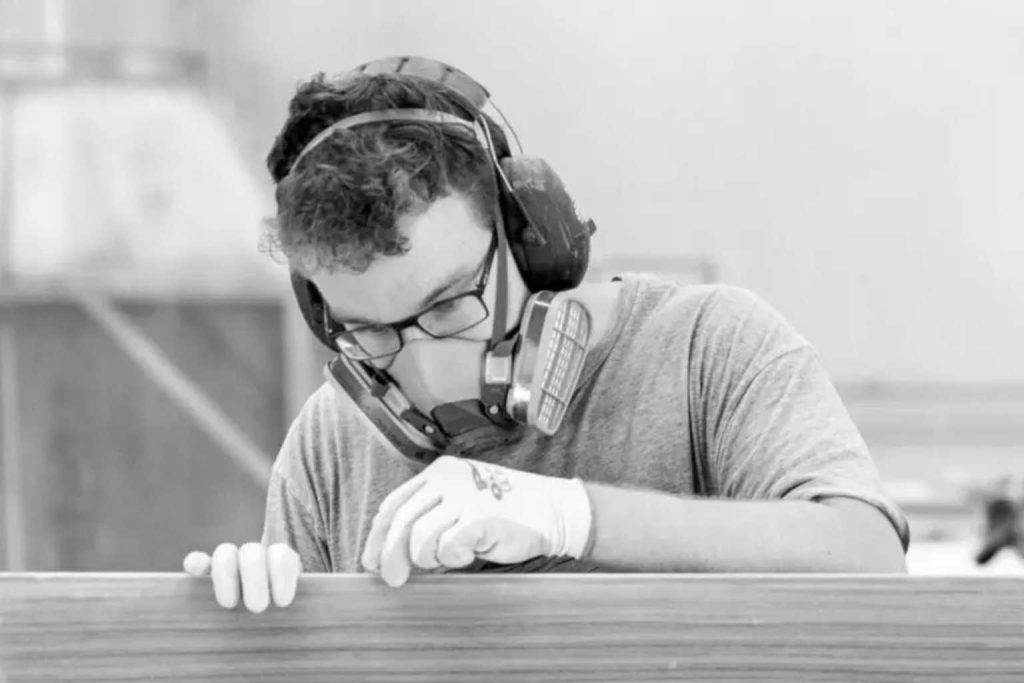
Step into Maritimo’s Coomera facility in the early morning and you get a sense of the culture. There are apprentices polishing brightwork, designers sketching in pencil before opening laptops, and veterans of the trade sharing quiet advice over a mould. There is pace but no rush. Precision without stiffness.
“I’m proud that our people love coming to work,” Barry-Cotter says. “That’s what gives you productivity. It takes away the negative side of going to work.”
In a world increasingly driven by automation and outsourcing, this grounded, craft-first culture is rare. It also happens to be the reason Caribbean has a real chance of a second life.
Maritimo already has the trades, the systems and the space to build 40-footers economically — something that would sink many smaller builders before the first plug even left the mould. Caribbean therefore gains access to scale without losing soul.
“When you see a Maritimo 50 or 75 you know it’s a Maritimo,” Savage says. “The Caribbeans will have their own identity with a similar stance and profile. What matters is that it’s still going to be a Caribbean.”
The wider tides: industry, politics and determination
Barry-Cotter is frank about the headwinds facing Australian manufacturing. He recalls the days when a call from Queensland Premier Joh Bjelke-Petersen could resolve a shipping impasse within minutes. Today, he says, government help is largely absent.
Free-trade settings have made exporting Australian boats difficult. Tariffs dropped to zero for imported utes while duties on Australian exports barely shifted. “Totally prohibitive,” he says. It is one reason why production across many sectors has drifted offshore.
His solution: look locally, invest locally, build locally.
The Caribbean project symbolises that belief. It is a commitment not just to a brand but to an industry — a statement that Australian boatbuilding can continue to stand on its own merits with the right mix of heritage and innovation.
Innovation between the lines
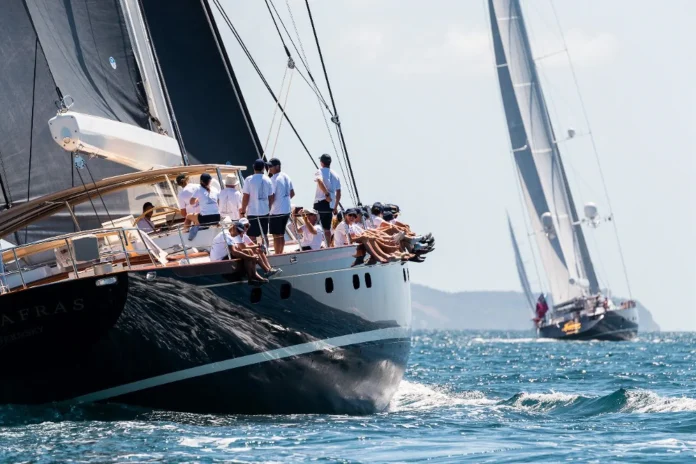
Barry-Cotter’s appetite for experimentation extends beyond production lines. His 100-foot sailing yacht, a familiar sight in the Sydney Hobart fleet, now doubles as a rolling research project. He recently repowered her with a Scania engine and cut fuel burn from nearly six litres per nautical mile to two.
“That’s a 30 to 40 per cent saving,” he says. “A big environmental gain, and a better solution than dragging batteries around with you.”
It is a typically pragmatic view of sustainability — engineering-led rather than ideological — and entirely in keeping with his approach to progress.
A legacy still being written
The next few years will be busy ones. Caribbean models will follow in a steady line, stretching from 21 feet to the mid-50s. Maritimo aims to unveil the new C2700 and C40 at the 2026 Sanctuary Cove Boat Show. The R&D department is humming. Staff are working late. The sheds glow long after dark.
And at the centre of it all is Barry-Cotter, still sketching, still problem-solving, still looking for the next improvement.
The line he began with — “It’s been an interesting journey” — lands differently by the time he repeats it. It isn’t a conclusion. It’s an opening. A hint that the next chapter of Australian boatbuilding is already taking shape in the Coomera sheds, mould by mould, prototype by prototype, under the eye of a man who has never learned how to slow down.