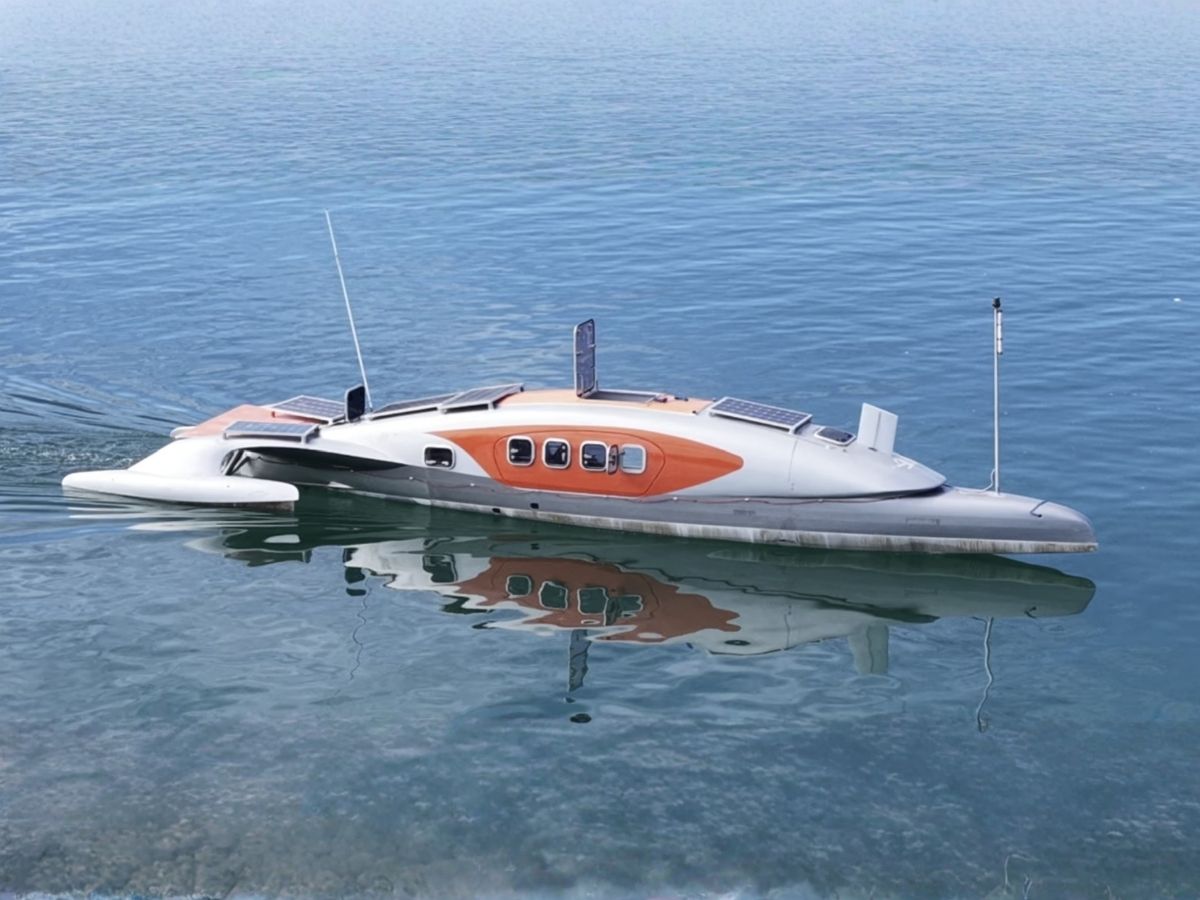
A carbon fibre pedal powered trimaran developed in New Zealand replaces ocean flights with continuous human propulsion, offering a technical rethink of how human powered circumnavigation should work.
For world record seeking endurance cyclist Paul Spencer, the issue was not distance or endurance, but definition. Existing human powered circumnavigation records allow ocean crossings by air. That loophole leaves a basic question unanswered: can a journey still be called human powered if large parts of the planet are skipped? Spencer decided the only way to answer it properly was to remove the shortcut altogether.
The solution now sits on the water in New Zealand. A carbon fibre trimaran, rebuilt around a highly efficient pedal propulsion system, is designed to carry continuous human power across open ocean. Known as the Pedal Beast, the boat replaces flights with sustained pedalling, turning a rules problem into a marine design challenge where efficiency, drag reduction, and fatigue management matter more than speed or spectacle.

The design problem that triggered the project
Allowing flights across oceans undermines the meaning of human powered circumnavigation. For Spencer, the requirement became straightforward and uncompromising: every kilometre must be covered by human power.
That decision dictated the architecture. A bicycle alone was insufficient. The solution required a marine platform capable of sustained, solo, open ocean operation, powered entirely by pedalling.
Why the project led to New Zealand
The boat Spencer needed already existed. Built between 2012 and 2015 as the Tasman Rower, the trimaran was designed by Craig Loomes, LOMOcean Marine, for Tasman Sea crossings. When the original rowing attempt was abandoned, the vessel remained structurally complete but unused.
From ocean rower to pedal powered trimaran
The original platform provided a strong starting point. Carbon fibre and foam construction delivered stiffness and low weight. The narrow hull reduced drag. The trimaran layout provided stability without excessive wetted surface. Crucially, the vessel was fully enclosed from the outset, making it suitable for offshore exposure.
Rowing, however, proved to be the limiting factor. Ocean rowing suffers inherent inefficiencies: energy loss during recovery, reduced blade effectiveness in rough seas, and inconsistent power delivery. Pedalling offered continuous torque, better endurance characteristics, and improved fatigue management.
Both Spencer and Loomes agreed that pedal propulsion was better suited to long duration human powered ocean travel.
The drivetrain as the defining feature
What followed was a conversion from rowing to pedalling. It was a redesign with the drivetrain as its core. A high inertia flywheel smooths torque through the pedal cycle, eliminating stop start loading. Counter rotating propellers provide near constant thrust.
Hydrodynamic drag was engineered out wherever possible. Propeller shafts and hubs are positioned above the waterline, removing the resistance associated with immersed components. Large diameter, low rpm, high aspect ratio propellers were optimised by a specialist hydrodynamicist.
This approach follows proven precedent. Similar low rpm propeller concepts were used on Turanor PlanetSolar (the first solar powered vessel to circumnavigate the globe, designed by LOMOcean Marine and completed between 2010 and 2012). The focus is efficiency, not peak output. Early trials indicate speeds around four knots with lower perceived effort than conventional ocean rowing boats.
Engineering around the human engine
Human endurance dictated the system. A custom recumbent pedalling position provides reduced fatigue and improves power transfer. Smooth mechanical motion mattered more than maximum wattage. Walk boards, pulley covers, and service access improve safety and maintainability.
The enclosed cockpit is configured for long duration occupation. Airflow is actively managed through adjustable windows designed for headwind, tailwind, or crosswind conditions. Ventilation is treated as a controllable system rather than a compromise.
Systems integration and operational risk
The Pedal Beast is designed for autonomy. Solar panels support onboard systems. A watermaker enables extended self sufficiency. Satellite navigation and communications are fully integrated. A dedicated lifeboat is carried and the hull is self righting if inverted.
Operational risks have been addressed early. Mid ocean hull cleaning was identified as unavoidable. Spencer integrated shark deterrent systems from Sharkbanz into standard procedures. Risk reduction is handled through equipment, process, and planning rather than avoidance.
From build project to proof
The conversion was completed at Harkin Boat Works in Whitianga, with Loomes closely involved throughout. While COVID delayed the schedule, it allowed additional refinement. The pedal drivetrain is now complete and the project has moved into final systems integration.
Sea trials are underway in New Zealand waters. A Tasman Sea crossing will serve as validation before global deployment. The circumnavigation will combine ocean pedalling with overland cycling, with the boat transported between ports during land legs.
Learn more
- Paul Spencer: https://www.facebook.com/paulmcspencer
- LOMOcean: https://www.lomocean.com/
- Harkin Boat Works Whitianga: https://www.harkinboatworks.com/