Is your engine beginning to run hotter than normal? Maybe it’s time to service the cooling system!
There are two major engine cooling systems in general use. The most basic is the very cheap and nasty direct, or raw water, cooling system, where sea or river water passes directly through the engine block for cooling purposes. It is seldom seen on modern engines, although the Americans still seem to like it on their big V8s. Raw water cooling shortens the engine’s life and significantly reduces engine efficiency, as the engine always runs well below its designed running temperature of 80–85 degrees Centigrade.
The far more efficient indirect, or freshwater, cooling system keeps the water passages clean, as only fresh water and coolant inhibitors circulate around the block. The raw water passes through the heat exchanger tube stacks and takes the heat from the clean water circulating within the block.

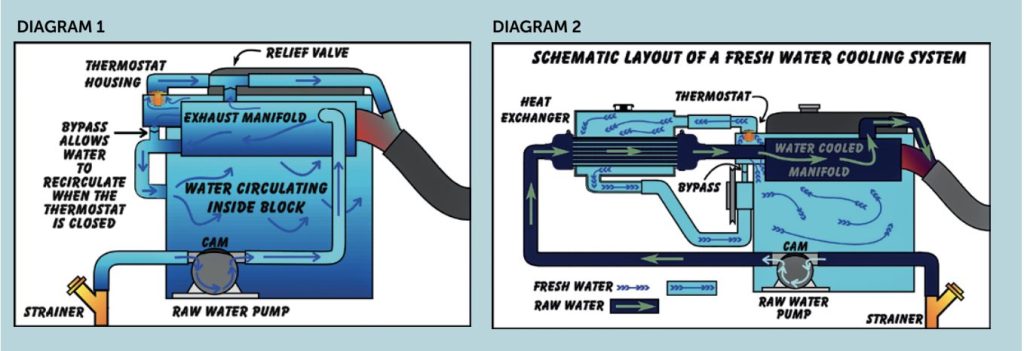
Diagram 1
For raw water-cooled engines, the normal recommended running temperature is about 52 degrees Celsius, as this cuts down on the amount of salt and sediment deposits that cling to the cooling system walls while running. Over a long period, the cooling system gradually becomes clogged, and engine temperature rises, causing hot spots in the areas where the water can least pass through. Having said all this, there are plenty of Volvo ‘B’ series petrol engines, such as the AQ130, that are still running well despite being undercooled throughout their lives.
There is very little that can be done to prevent the silting of the engine block. It is possible to occasionally backflush the engine by removing the hoses and running clean water through the system, which will remove loose debris, and if done regularly from new, it makes a real difference to engine cooling passages.
Diagram 2

Freshwater cooling allows the engine to run at the correct temperature of around 85 degrees Celsius and combined with introducing coolant inhibitors and antifreeze into the cooling system, it provides for long and efficient engine life.
Unfortunately, it is not all good news, as there is a regular service regime required to keep the cooling systems of freshwater-cooled engines working correctly. This mainly concerns cleaning the small tubes in the tube stacks located inside the heat exchanger, the engine and gearbox oil coolers, and, on more powerful engines, the intercooler that cools the turbo and supercharger charge air before it enters the cylinders. In these latter cases it is not only engine temperature but also engine performance that suffers when the tubes become blocked.
Tube stack cleaning
Heat exchangers, oil coolers, and intercoolers come in many designs, so the method of dismantling prior to cleaning the stacks will vary slightly between engines. This is a Cummins heat exchanger with a separate header tank, and it is relatively easy to remove for cleaning. It is just possible to clean the tube stacks while in place, but a much better job can be done with it removed.
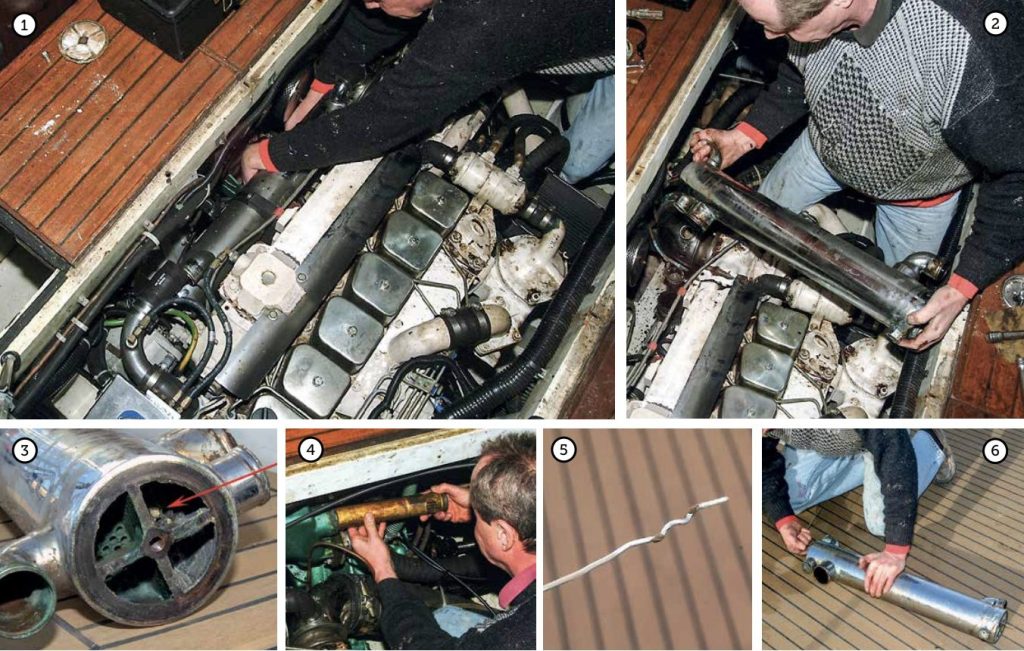
- Once the hoses have been detached, there are four bolts securing the heat exchanger to the engine block.
- With the bolts removed, the whole thing can be lifted out for examination and easy cleaning.
- Although in generally clean condition, some tubes had become blocked with marine detritus. Cleaning every three years or so ensures any blockages are removed before flow is seriously reduced.
- This Bowman heat exchanger is combined with the exhaust manifold and has a removable tube stack that is accessed after removing the rubber end caps.
- An unwound wire coat hanger is an ideal tool for running through the tubes, as the spiral section provides a smooth scraping action.
- It is important to clean each tube individually, but it is worth the effort to keep the system flowing freely.
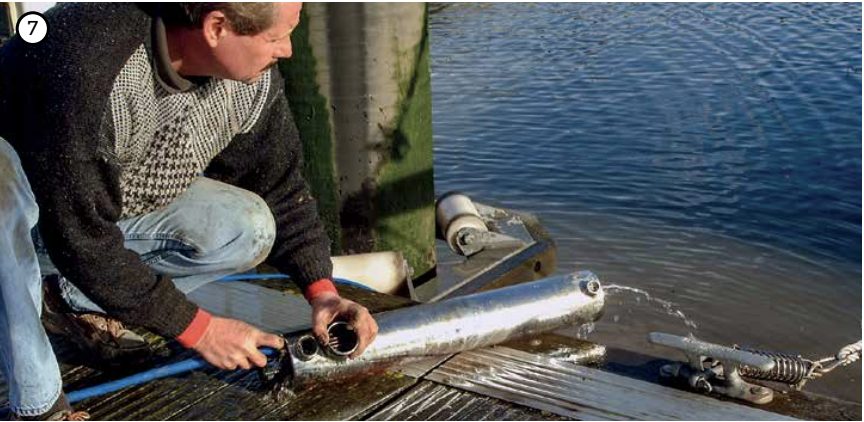


- Flush the tubes through with clean water and flush the heat exchanger body to remove any residue.
Refitting the heat exchanger
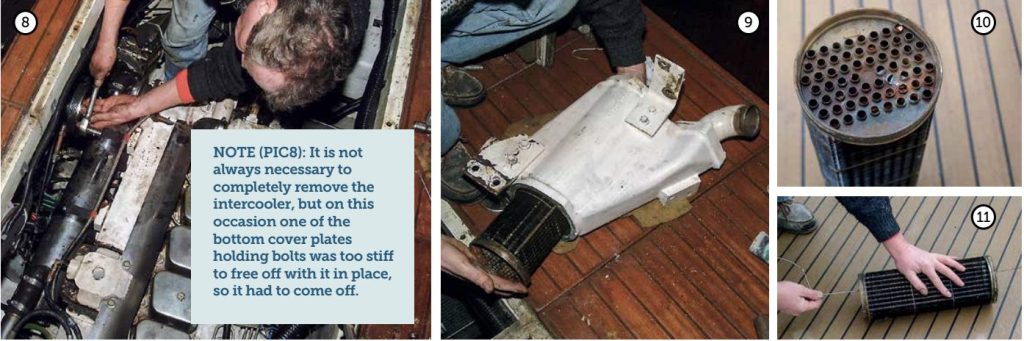
- Refit the heat exchanger end caps, reinstall the heat exchanger onto the engine, and reconnect the pipework.
- The top and bottom plates usually need to be removed to allow the tube stack to be removed by pushing it through from one end.
- Once removed, the stack can be examined and any problems corrected. A couple of tube ends have been damaged by something hard passing through the system, while others are blocked by what looks like cooked prawn.
- The trusty wire coat hanger again proves its worth cleaning the tubes. It also gently straightened the damaged tube ends.
Cleaning engine and gearbox coolers
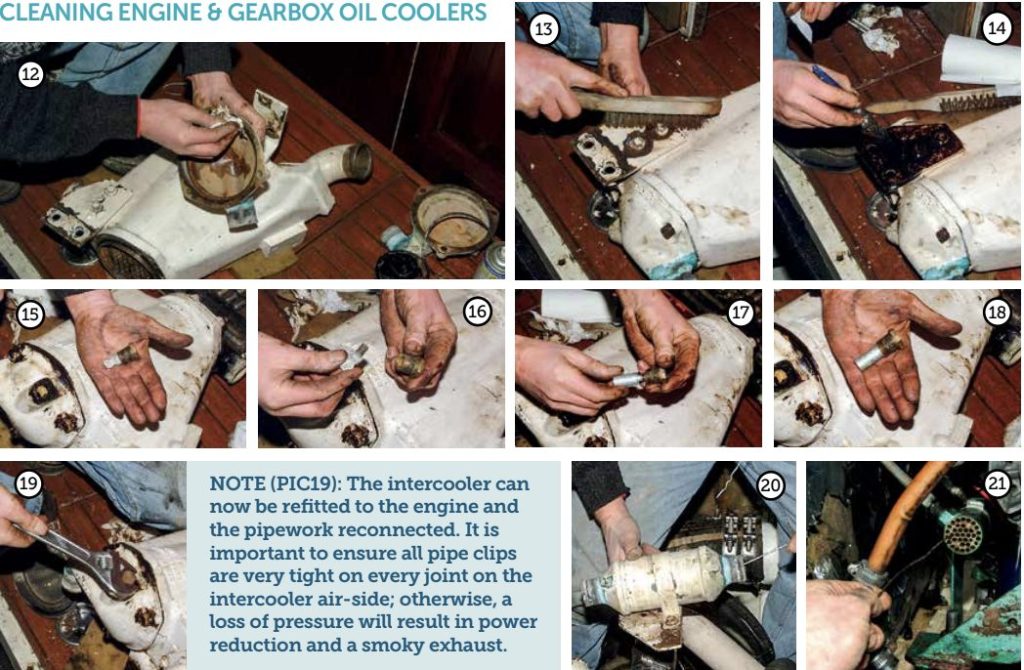
- Clean the tube end covers and refit the seals before fitting the cover plates.
- Any corrosion found on engine parts can now be conveniently dealt with. A wire brush is ideal for removing the worst of the loose rust.
- A coat of Waxoyl car underbody protection totally eliminates any future corrosion in out-of-the-way places like this area, which is inaccessible once the intercooler is refitted.
- Pencil anodes, where fitted, can now be checked for wear and replaced where necessary. Usually every year.
- Unscrew and discard the worn anode section.
- And replace it with a new one, having first applied a little water-resistant grease to the thread.
- Tighten the two pieces with grips and a spanner, and it is ready to refit.
- Apply a little more water-resistant grease to the thread of the fitting and tighten it in position. Pencil anodes in other items such as the heat exchanger are treated in the same way.
- The last items requiring tube cleaning are the engine and gearbox oil coolers. If they can be cleaned without disconnecting the oil pipes this saves additional work.
- This small Bowman engine oil cooler is easily cleaned in situ.
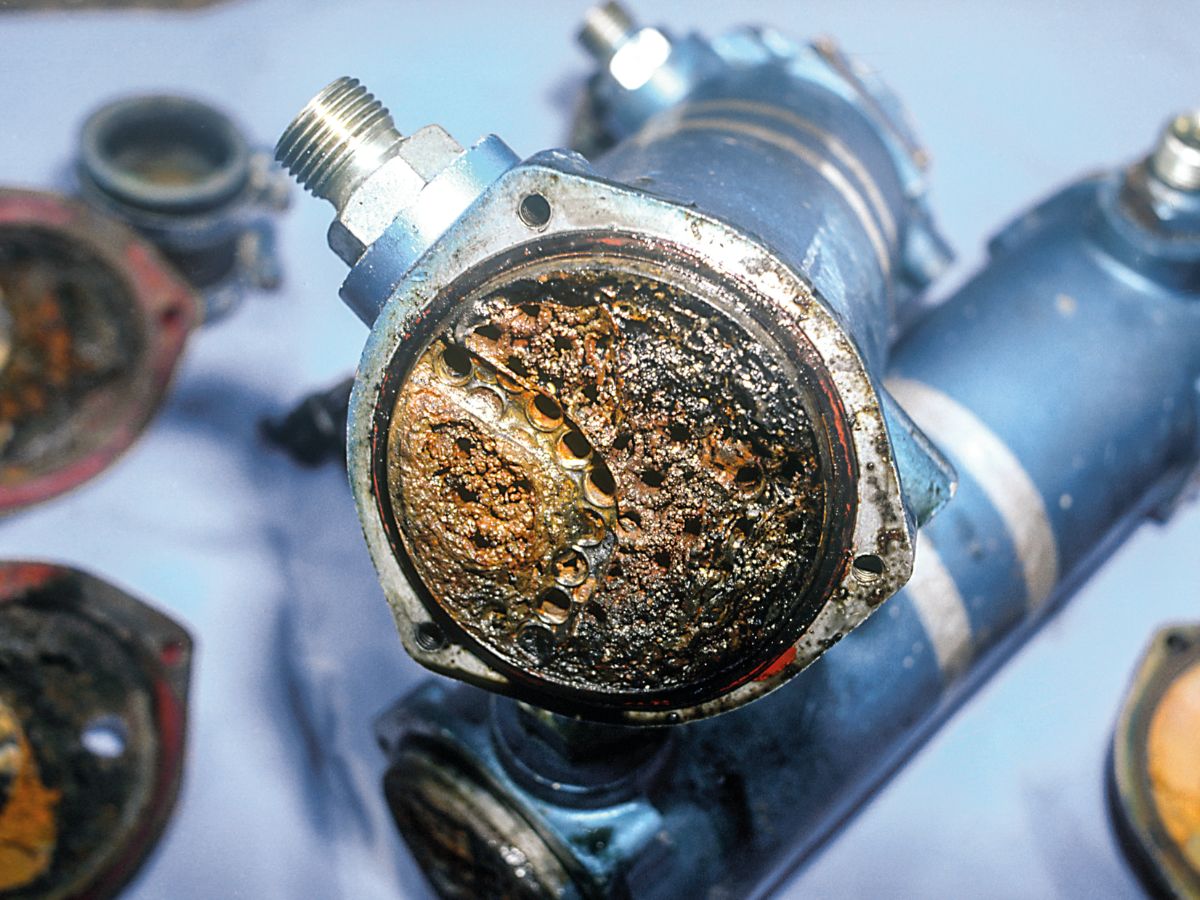
- In case you are thinking that tube stack cleaning is not something worth bothering with, you might like to consider this 15-year-old oil cooler stack that was never cleaned until the engine overheated and almost seized.
Keeping the water system clear is a very important aspect of engine servicing, especially the tube stack cleaning. It is rarely offered as part of the annual engine service, despite the eye-watering prices charged by some companies, but unless it is attended to on a regular basis, say every three years, then it becomes a big problem building year on year.
Conclusion
Keeping the water system clear is a very important aspect of engine servicing, especially the tube stack cleaning. It is rarely offered as part of the annual engine service, despite the eye-watering prices charged by some companies, but unless it is attended to on a regular basis, say every three years, then it becomes a big problem building year on year.
COMPETENCE LEVEL
Intermediate
TIME TAKEN
Average one day