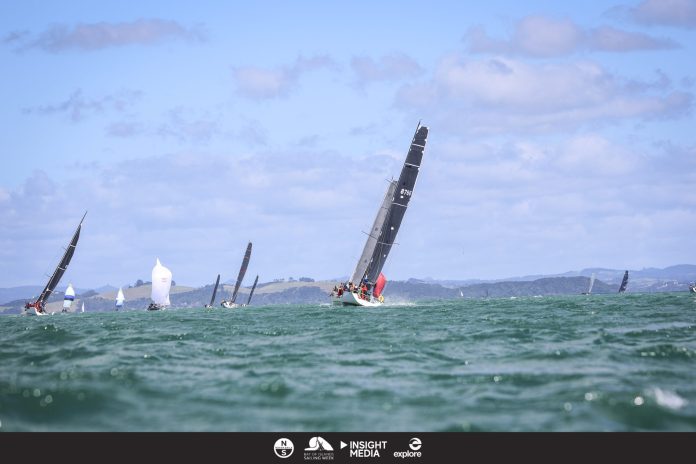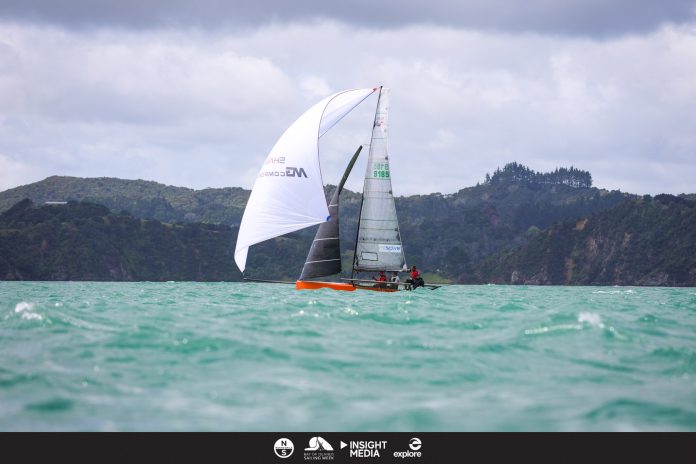
Across three divisions, the Racing A, B, and C fleets delivered a layered regatta that rewarded precision, consistency, and reliability as much as outright pace.
Racing A showcased five proven offshore performers at the sharp end of the fleet, Racing B delivered depth and variety across a tightly matched mid-size group, while Racing C brought together the broadest mix of designs and lengths.
After the opening day was abandoned, the remaining racing produced clear patterns on line honours and far closer battles on handicap. Across all divisions, margins were often tight, and series outcomes were shaped as much by clean execution as raw speed.
Racing A series
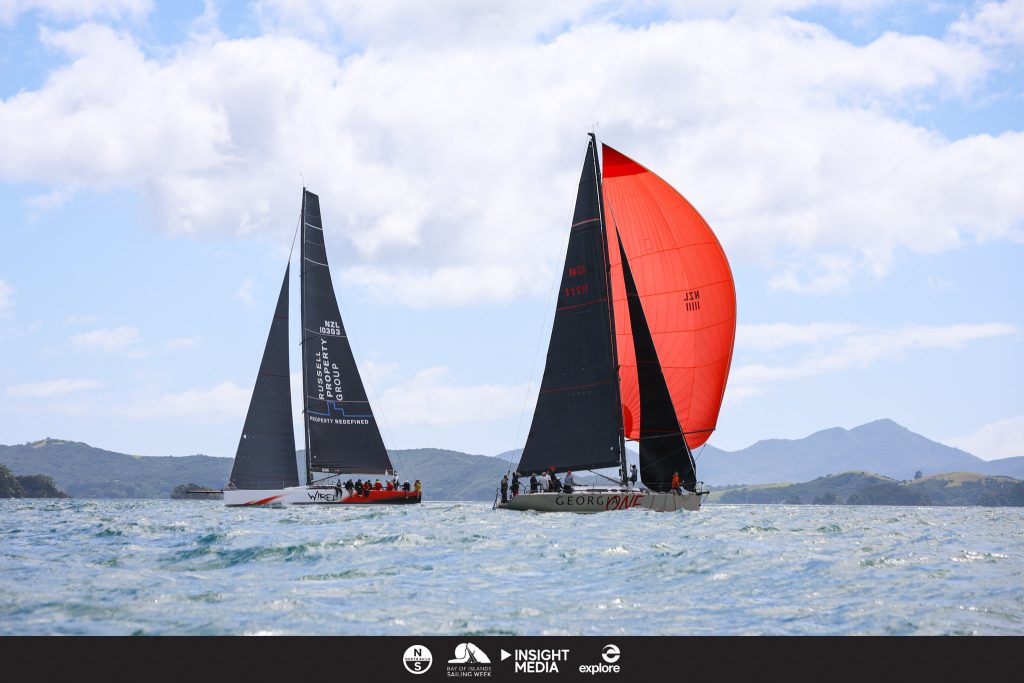
Racing A featured a compact but high calibre five boat fleet, with names well known in New Zealand offshore sailing. The lineup included the TP52 Wired, the Marten 55 Equilibrium, the Elliott 50 Explore Racing, the Farr 43 Georgia One, and the Verdier 40 Vixen Racing.
After an abandoned opening day, the fleet completed five races across the remaining four days of the regatta.
On line honours, Wired was decisive. Sailed by Rob Bassett and Brett Russell, the TP52 won every race and controlled the fleet from the front in all conditions. The winning margins told the story, stretching to 10 minutes 21 seconds in Race 2 and tightening to just 3 minutes 33 seconds in Race 3. Behind on line honours second, Graham Matthews’ Marten 55, Equilibrium, came home in second in Races 3, 4, and 6, with a total of 9 points overall, just edging out William Goodfellow’s Elliot 50 Ss Explore Racing by one point.
On handicap, Equilibrium, Graham Matthews’ Marten 55, proved the most consistent performer across both EHC and PHRF. Not always the first boat home, Equilibrium capitalised on the reduced conditions on Day 3 to win both Race 3 and Race 4 on both handicaps. Not the only entry to come in first on handicap, it was her consistency remaining close to the top that helped bring the desired handicap wins.
Georgia One excelled in the rough, wet conditions in Day 2’s Race 2, scoring a win on EHC. But was only able to repeat that result in the last race of the EHC series. It was enough to sit one point behind Equilibrium on the EHC scoreboard. Wired accomplished a series of seconds and thirds across the EHC series, allowing them to sit in third on the EHC series scoreboard. Explore Racing claimed Race 5 on EHC.
On PHRF both Equlibrium and Wired finished on 7 points. A tight PHRF scoreboard with Georgia One sitting on 8 points, one point behind and in third place on the overall PHRF. On PHRF Equilibrium won twice, Wired once but with a string of second places to bring her overall points in line with Equilibrium’s. Georgia One won Race 1 and Race 6.
For Vixen Racing, a winch failure sidelined the Verdier 40 for two races on Day 3, effectively ending series contention.
Racing B series
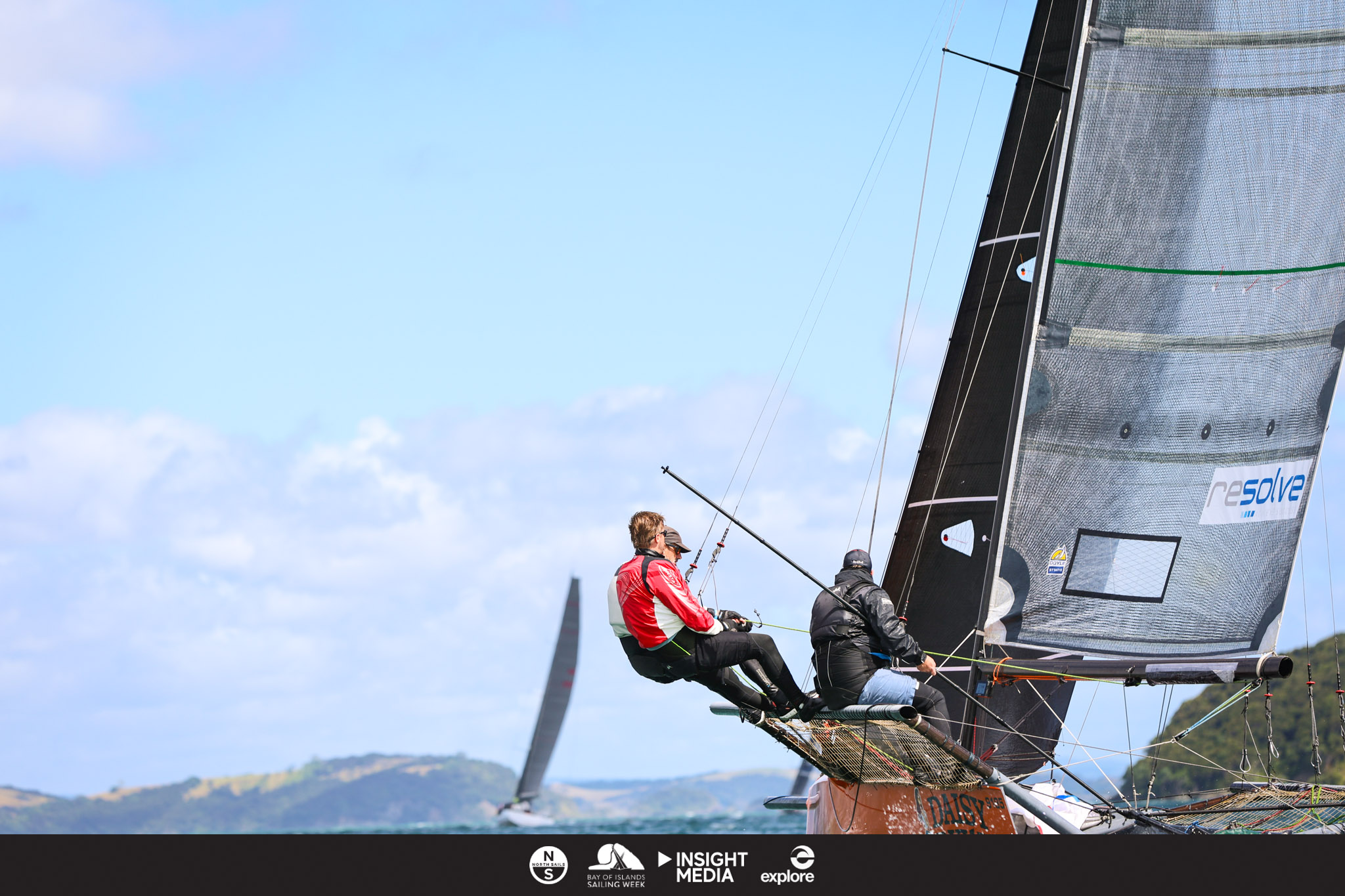
Racing B brought together a compact but varied 12 boat fleet, spanning from sub seven metre sport models through to ten and eleven metre keelboats. Designs range from Hana Hielkema lightweight Shaw 6.5s, Snatch, and Matt Gottard’s Shaw 7s, Daisy Duke, through Ryan McCready Ross 9.1, Physical Favours, and Kevin Peet Ross 9.14, Blackout, one designs, up to larger platforms like the Mike Bennett Ross 40, The Farm, Graeme Lucas’ Elliott 1050, Chain Reaction, and Mark Malpass’ Cookson 12, Akatea. Most sit between 8.5 and 10.6 metres, with EHC numbers clustered in the low to mid 0.8s, reflecting a tightly matched fleet where handling, consistency, and clean racing matter as much as outright speed.
On line honours, Daisy Duke was decisive. The Shaw 7 won five of six starts on the water, taking Races 2, 3, 4, 6, and 7. The margins defined the series. In Race 2, Daisy Duke finished in 15 minutes 25 seconds, and in Race 3, 8 minutes ahead of the Ross 9.14, Blackout. A DNS in Race 5 was discarded, leaving Daisy Duke on five points overall. Blackout, the Ross 9.14 sailed by Kevin Peet, finished second on line, with a win in Race 5 and string of second and third placings in every other race. Bob Still’s Woolley 10.66, Mustang Sally, finished with 16 points in third on line.
Under handicap scoring, both EHC and PHRF produced a series of close, tightly packed times.

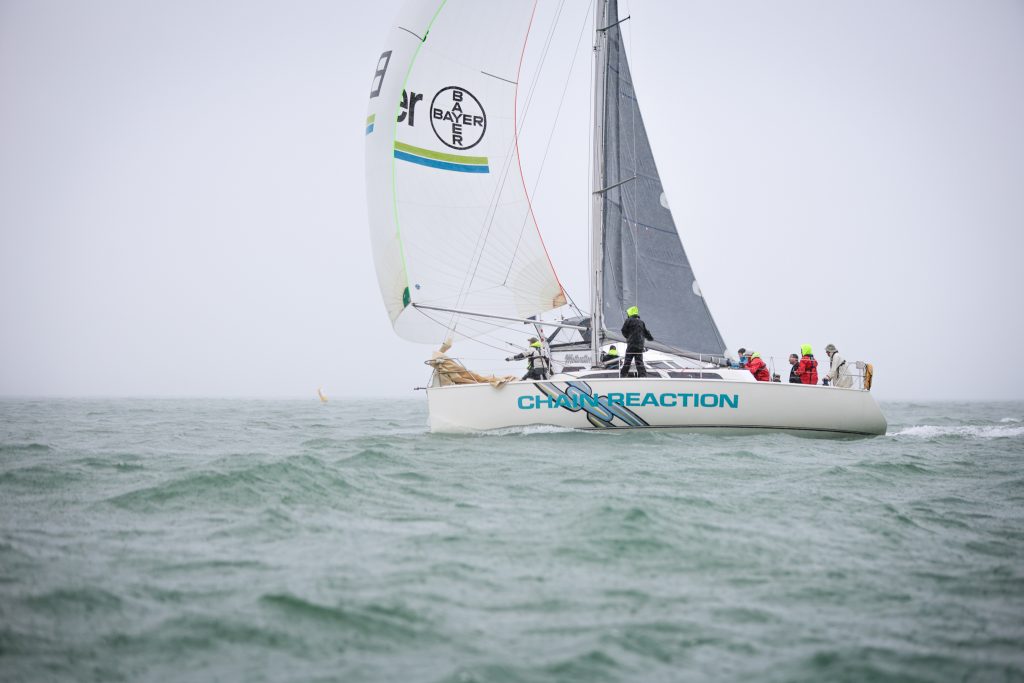
The EHC series was won by Chain Reaction, the Elliott 1050 skippered by Graeme Lucas. She did not dominate individual races but accumulated the lowest total through consistent finishes inside the top six. EHC race wins were shared. Daisy Duke won Race 2 by 5 minutes 8 seconds over Apparition and Race 3 by 1 minute 26 seconds over Chain Reaction. Men At Work 3 won Race 4 by just 19 seconds over Blackout. Apparition claimed Race 5 on EHC by a mere three seconds over Mustang Sally. The Farm won Race 6 on EHC by 2 minutes 59 seconds over Apparition.
The PHRF series was won by Men At Work 3, the Thompson 850 sailed by Hans Wehmeyer. She won Races 3, 4, 6, and 7 on PHRF, including a two second victory over Graeme Lucas’ Chain Reaction in Race 3 and a 1 minute 12 second win in Race 7. Kevin Peet’s Ross 9.14 Blackout finished second overall on PHRF, securing a win in Race 5 and completing every other race in second or third.
Racing C series
Racing C brought together a broad mix of small to mid size keelboats, ranging from compact sport boats like Bill Clifton’s Platu 25 Platupus, and Paul Smith’s Shaw 550, The Racoon, through to cruiser racers such as Dave Campbell’s Beneteau Oceanis 40.5, Opportunity, and Sefton Powrie’s Brin Wilson 44, Ilex. The fleet featured proven designs including Ian Templeman’s Farr 920, Farr South, Giovanni Belgrano’s Young 88s, Young Magic, and Spencer Poborsa Cox’s Ross 930, The Bondi Tram, and Ian Moore’s Beneteau First 36.7, Fifth Dimension. These raced alongside Cees Romeyn’s lighter Whiting 29, Lexus, and Max Newport’s Craig Loomes, Rock N Roll. Most sit between 8 and 11 metres, with EHC numbers spread from the mid 0.6s to mid 0.7s, creating a well balanced fleet where versatility and consistency counted.
On line honours, Paul King’s Beneteau First 36 Nautilass was every bit as decisive as Racing B’s Daisy Duke, but with one key difference. Nautilass raced in every start and recorded perfect scores in every race, delivering a faultless series. Giovanni Belgrano’s Young 88, Young Magic was the constant challenger, coming second in every race except Race 2 when The Racoon came in second place. The margins were not always comfortable. In Race 6, Young Magic finished just 19 seconds behind Nautilass. Ilex finished third in four races and, on that consistency alone, sits comfortably third on the Racing C line honours scorecard.
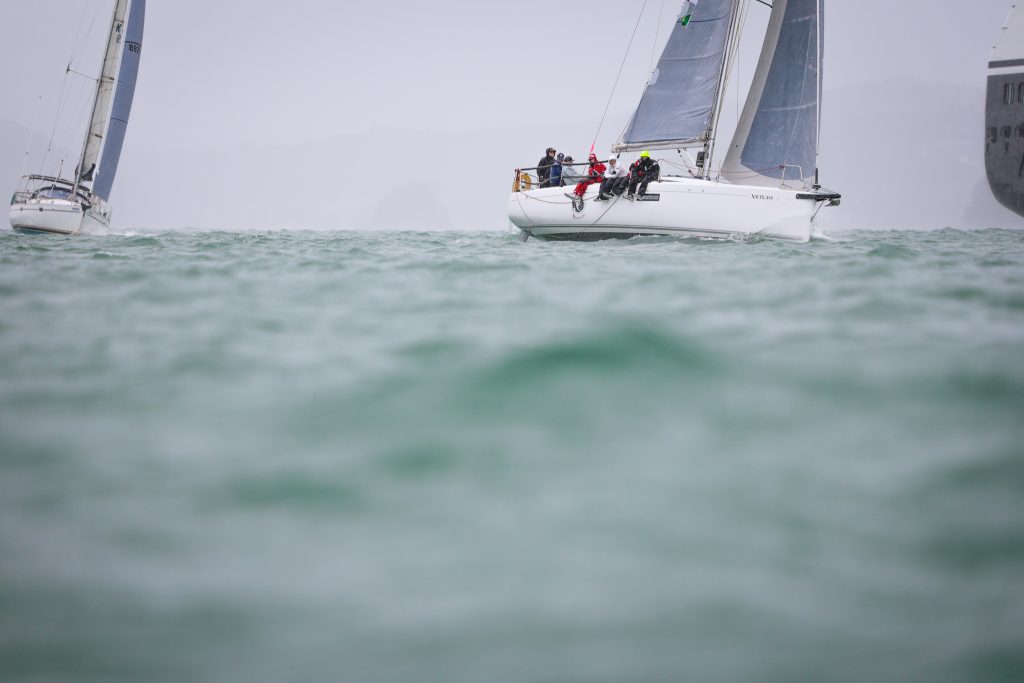
On handicap, Giovanni Belgrano’s Young Magic came out on top.
Only two points separated Young Magic from Dave Campbell’s Beneteau Oceanis 40.5, Opportunity, on EHC. Seventeen versus 19 points. Young Magic came in first in Races 4 and 5, but her constancy in remaining in the top 3 across all 7 races ensured she came out ahead on the PHRF scoreboard. Race 5 was tight, Young Magic only 10 seconds ahead of Opportunity on EHC. Heartlight came third on EHC.
EHC scoring was again tightly contested, adding another layer of intrigue to the racing. In Race 2, Roger Sims and Rhys Cole’s Young 88, Heartlight, arrived only one second ahead of Ian Templeman’s Farr 920, Farr South, and Sefton Powrie’s, Ilex, 2 seconds in front of Doug France’s Farr 10.20, Cotton Bud. The Racoon and Ilex were 3 seconds apart in Race 3, along with a 3 second gap between Cotton Bud and Heartlight. In Race 6, 4 seconds separated Farr South and Cotton Bud. Race 7 saw a 4 second break between Cotton Bud and Fifth Dimension and a 1 second difference between Platupus and The Bondi Tram.
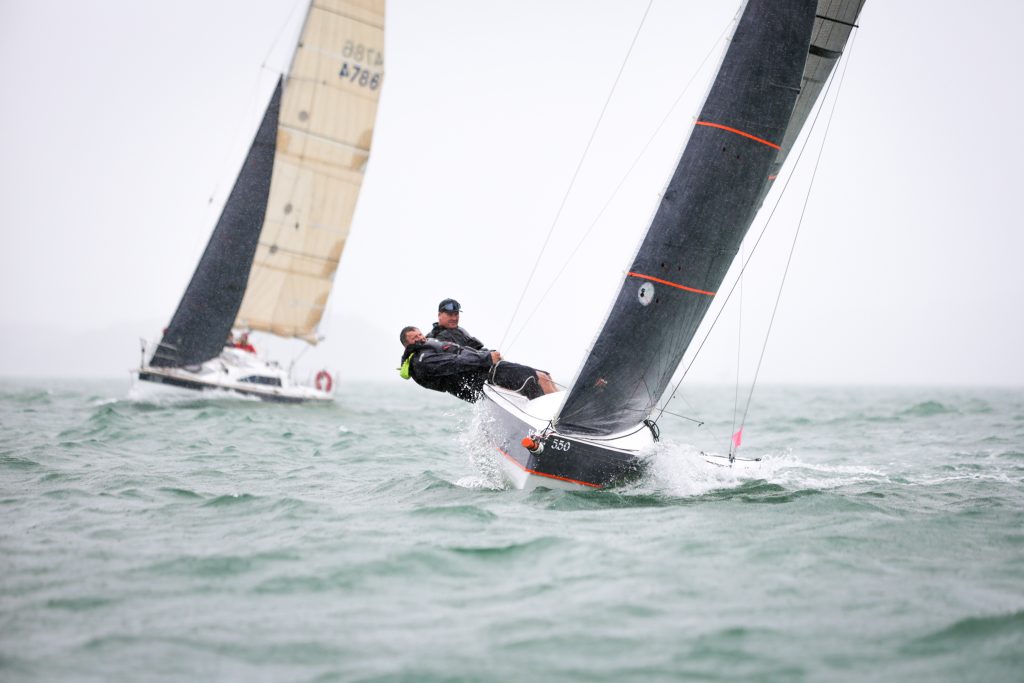
On PHRF Young Magic was a runaway success, winning each of the division’s six races. Ilex finished second in four races and third in one, enough to finish two points ahead of Nautilass, which finished third overall on PHRF.
Looking back
Line honours across all three divisions were decisive, with Wired, Daisy Duke, and Nautilass controlling their respective divisions.
Handicap racing told a different story, with close margins, shared race wins, and consistency proving decisive. Across the regatta, reliability and steady accumulation of points ultimately separated winners from challengers.