
Why is it a problem?
The aquarium type is cold-tolerant, fast growing and, in natural environments, can form extensive, dense monoculture beds that occupy all of the available benthic habitat. It reduces the diversity of benthic habitats and species, which have flow-on effects for fishes and other mobile species. The weed is also easily entangled in fishing gear and boat propellers. In the Mediterranean Sea, fish that consume C. taxifolia accumulate toxins in their tissue.
How to identify this species
Bright Green.
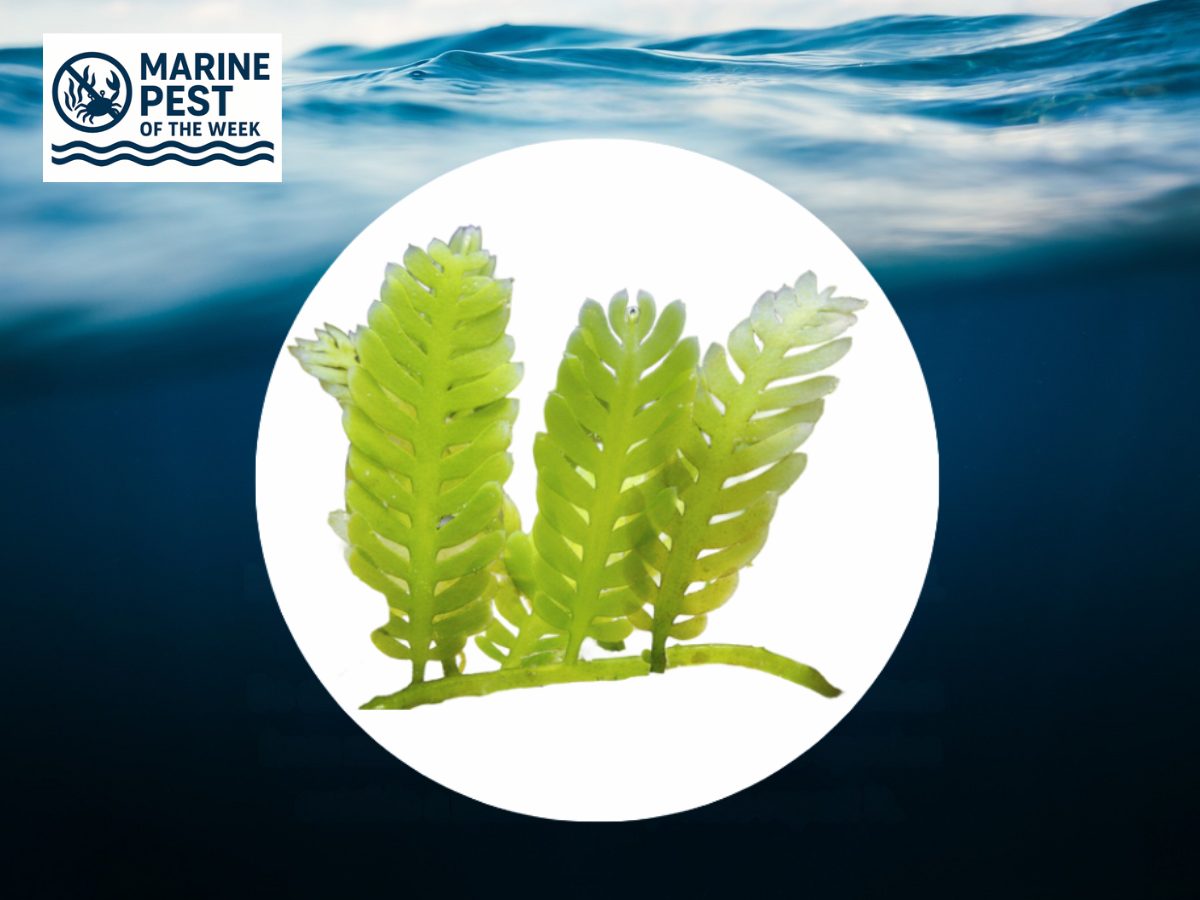
- Its fronds are feather-like and flattened with a smooth midrib and branchlets (pinnules) growing equally spaced, either side of the midrib.
- The fronds grow from a horizontal runner (stolons) that is anchored by root-like structures (rhizoids) to the seafloor.
- Individual fronds of the aquarium type can be greater than 40 centimetres in length.
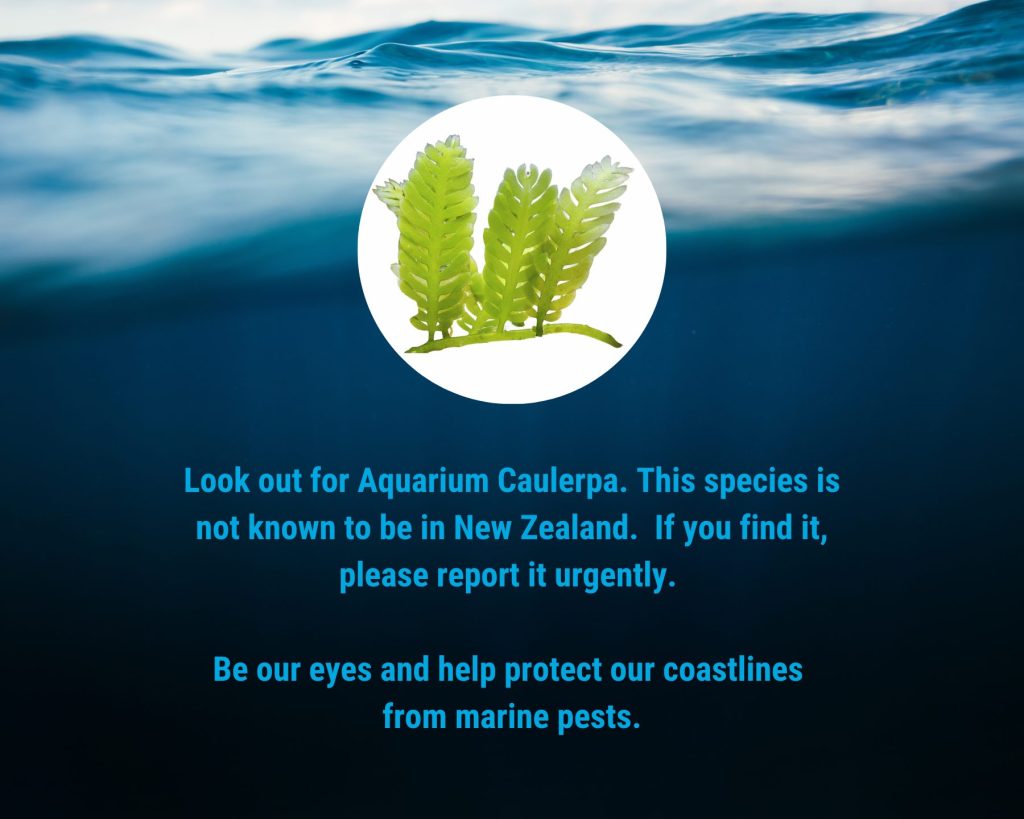
This pest is not known to be in New Zealand. If you see something suspicious, report it to the Ministry for Primary Industries.
For more information on this species visit the Marine Biosecurity Porthole.
Source: Marine Biosecurity Porthole.
 From the team at Clean Below? Good to Go – visit marinepests.nz to get everything you need to know about marine pests ID, boats, rules and more.