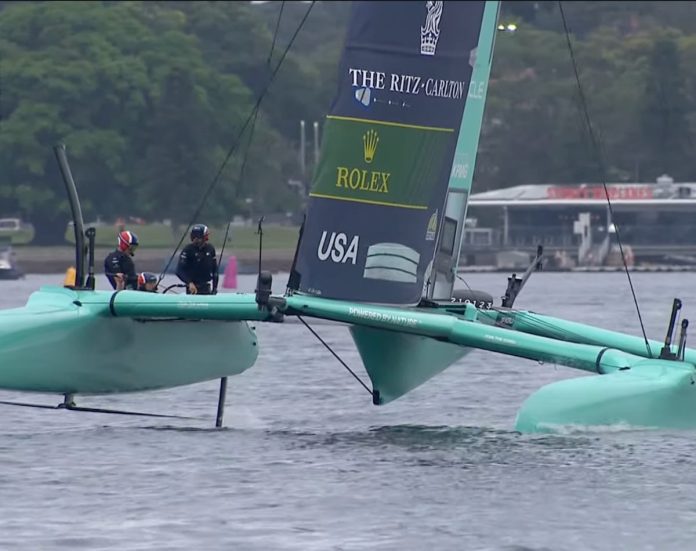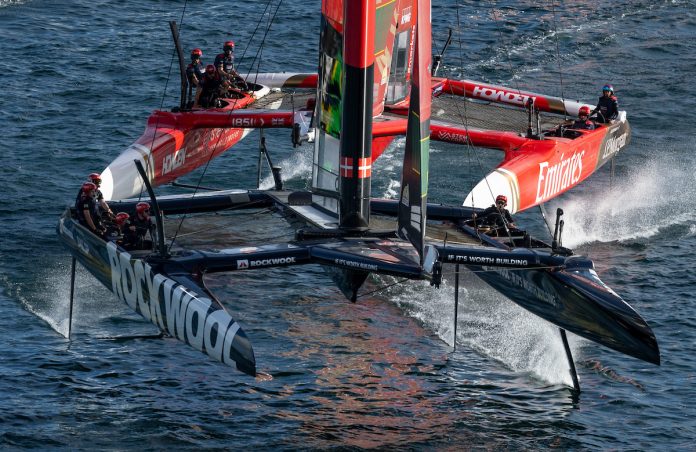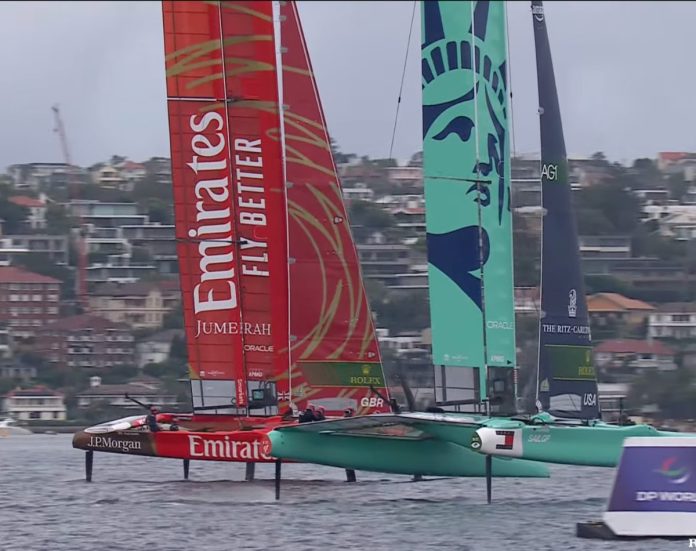
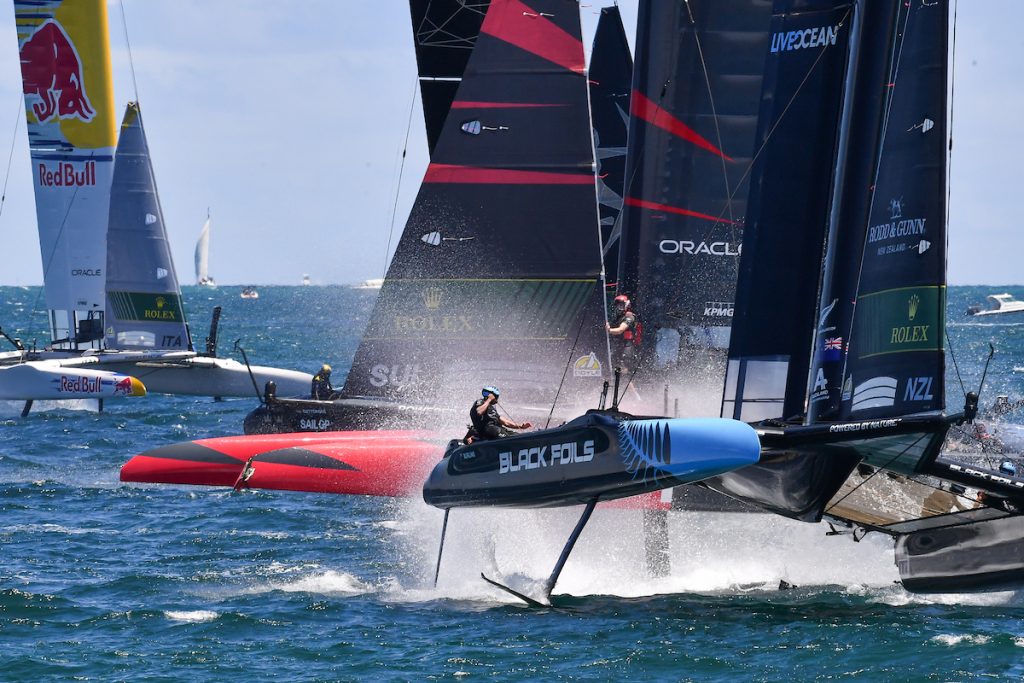
Day one of the 2026 Oracle Perth Sail Grand Prix delivered an early and sobering reminder of the physical reality behind SailGP’s high speed spectacle, following a significant on water collision involving the New Zealand Black Foils F50 during Fleet Race 1.
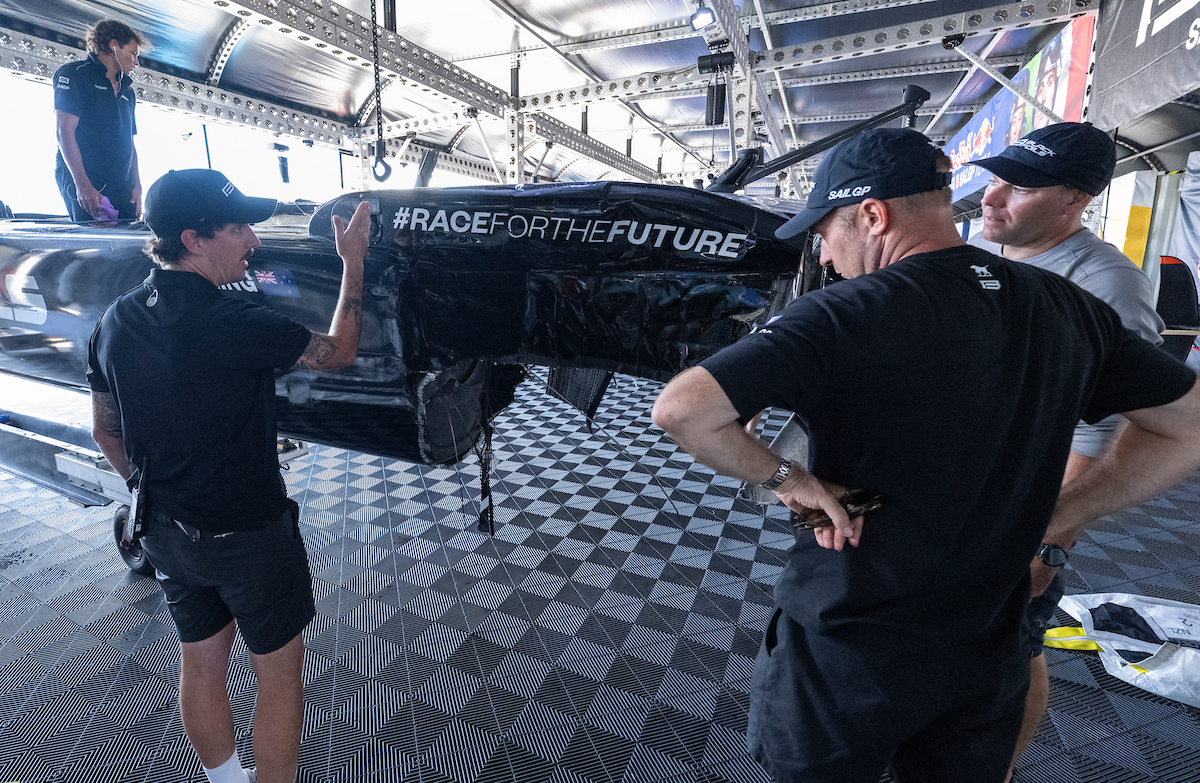
While the incident itself unfolded quickly during racing, its true impact became clear only after competition stopped. Post race imagery released later in the day revealed substantial structural damage to the Black Foils platform, offering a rare look at the forces generated when two F50s make contact at speed.
On the port side of the New Zealand boat, at the lower transom adjacent to the foil cassette, a large section of carbon structure has failed completely. The damage exposes just how lightly built these boats are, with fine strands of carbon fibre visible and internal cabling abruptly ending where structure once existed.

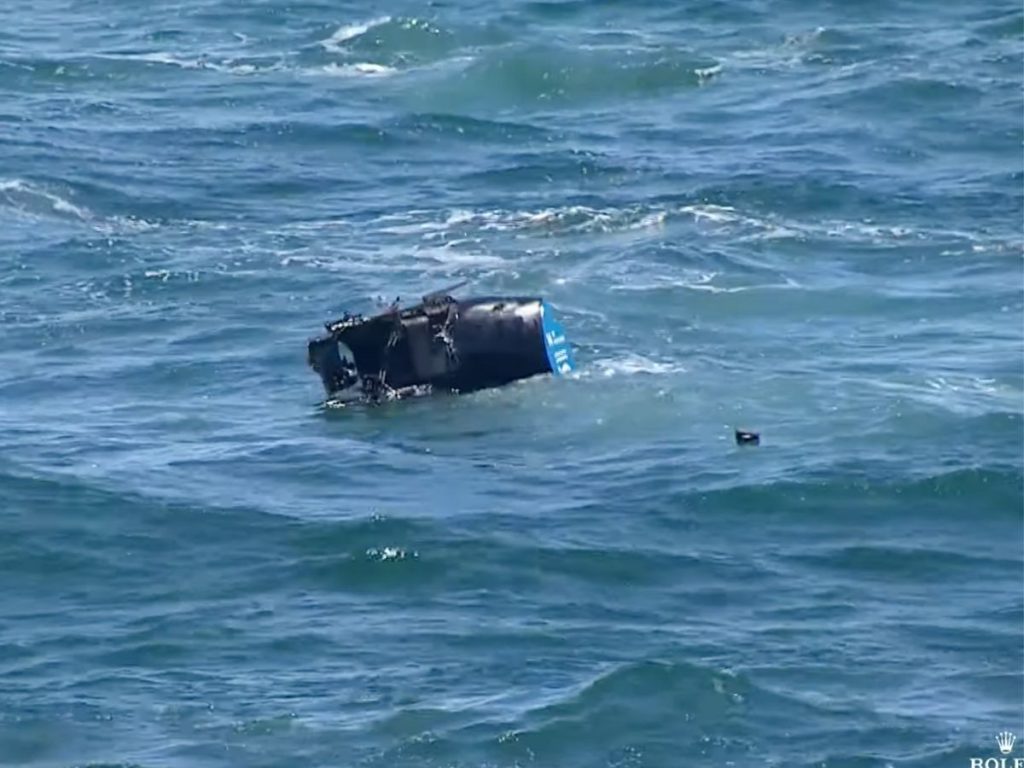
Higher up the transom, additional deformation is evident. The carbon structure is visibly stressed and bent, indicating that the impact loads travelled well beyond the initial contact point. Damage extends forward into the hull toward the Black Foils branding, confirming that the energy of the collision propagated deep into the platform.
The scale of the damage makes the absence of serious crew injury notable.
Speed, force and reality
These boats do not collide gently. At race pace, an F50 carries immense kinetic energy. When carbon fails this decisively, it speaks to violent deceleration. The fact that the crew emerged without major injury is a testament to cockpit protection, restraint systems and modern race safety design.
Peter Burling fronted up quickly after the incident, followed by another video release later in the evening NZ time. Watching closely, one detail stood out. His left ear appeared (to me) to be markedly reddened, enough to prompt a question about whether he had been thrown hard against the cockpit during the collision and hit his head.
Update at 17:11 18/1/26: The Black Foils team has been in touch and confirmed that at this time the ear is all good.
SailGP has confirmed that New Zealand skipper Peter Burling was thrown within the cockpit during the incident. Burling later released a video update filmed after racing New Zealand time. In the footage, he appeared with, in my opinion, visible signs of physical stress following the collision.
While the full extent of the forces experienced inside the cockpit remains under review, the visible structural damage reinforces the magnitude of the deceleration involved.
Penalty applied, consequences felt
On the water, race umpires ruled the Black Foils at fault for the incident with Switzerland. The decision resulted in a seven point event penalty, equivalent to a three point deduction at championship level. As a result, New Zealand ends day one in last place on minus seven championship points. Switzerland received no penalty points from the incident.
Attention now turns to the technical response required to return the New Zealand boat to racing condition. The foil cassette region is one of the highest load areas on the platform. Any repair will need to restore full structural integrity, alignment, and confidence before the F50 can safely return to competition.
Spain remains sidelined in Perth following a pre event practice crash that caused foil and hull damage, ruling the team out of competition for the opening round.
A leaderboard turned on its head
The incident also contributed to an unusually compressed leaderboard at the end of day one.

Three teams sit level on 31 points, with official placings separated by SailGP countback rules rather than raw score. Artemis, USA, and France occupy the top three positions on equal points.
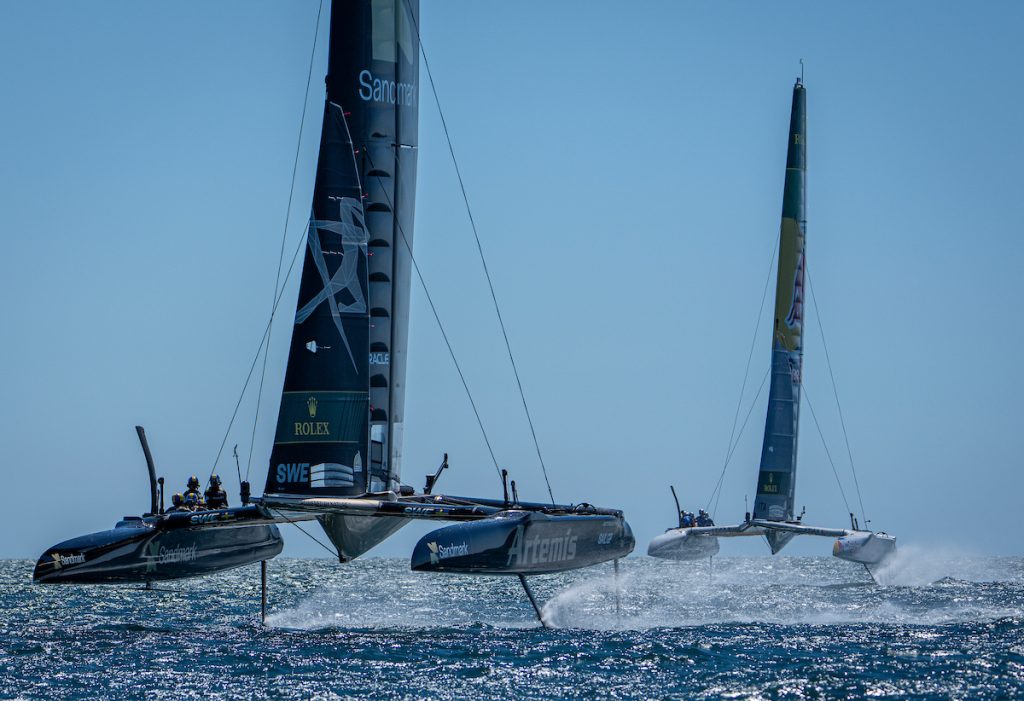
Australia and Emirates GBR follow on 24 points, completing a top five separated by just seven points from first to fifth.
At the bottom of the standings, New Zealand sits on minus seven championship points, while Spain and Switzerland both remain on zero.
Artemis sends an early message
Among the leading teams, Artemis delivered the standout performance of the day. Under driver Nathan Outteridge, the team improved race by race, progressing from ninth in the opener to second, then recording back to back race wins. Calm starts, clean manoeuvres, and controlled exits marked a platform operating with confidence and clarity.
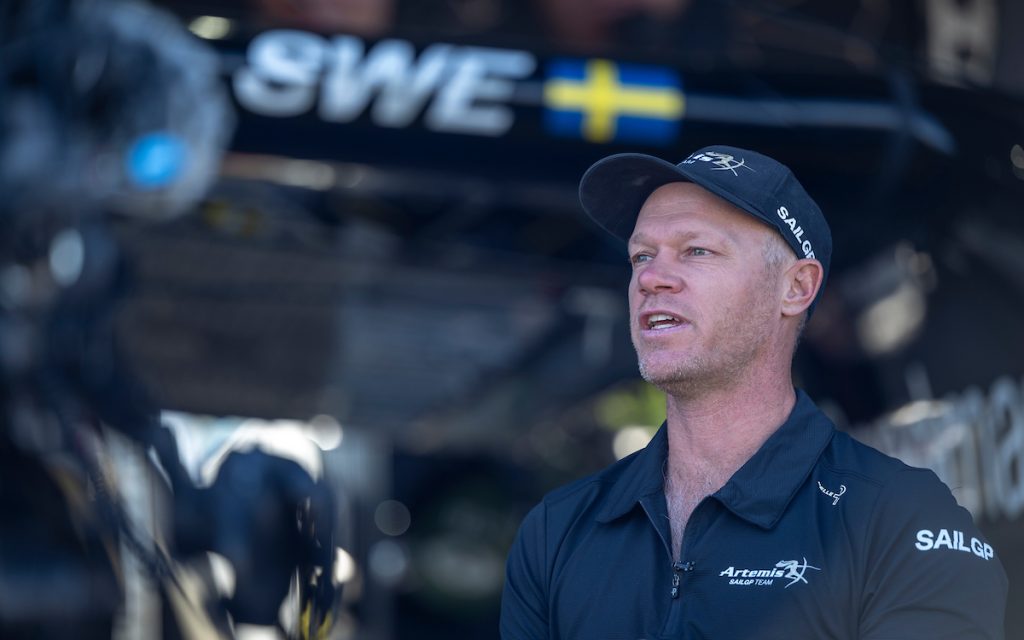
The USA posted a measured points day built on consistent top four finishes, while France remained quietly effective in third. Australia and Emirates GBR completed the top five without major gains or losses.
Day one in Perth delivered a clear message across the fleet. SailGP offers no margin for error when speed and structure intersect.
For New Zealand, the setback is significant but recoverable. Championship points can be regained. The immediate priority is returning the F50 to full race ready condition.
For the rest of the fleet, Artemis has issued an early statement of intent. Consistency remains critical, and the consequences of misjudgement at SailGP speeds are now plainly visible.
One more day of racing in Perth, then Auckland looms as both a reset and a reckoning.