Aotearoa Ocean Racing, New Zealand’s only current hope to have a boat in The Ocean Race 2027, has confirmed a new partnership with charitable trust Ocean Regeneration Aotearoa (ORA), bringing together professional ocean racing and practical marine regeneration, much of it focused on the Hauraki Gulf.
The partnership is built around a simple idea. Offshore sailors spend long periods at sea, often seeing environmental change before it becomes widely discussed. ORA’s role is to take that awareness and turn it into measurable work in the water.
Conrad Colman and a sailing platform with wider purpose
Aotearoa Ocean Racing was co founded by skipper Conrad Colman, best known in New Zealand for completing the Vendée Globe without burning fossil fuel. For Colman, the connection between offshore sailing and ocean health is direct.
“Sailors are the eyes of the ocean. We see the changes long before they reach the headlines,” he said.

“Working with ORA gives us a way to support action, not just observation.”
While racing remains central to the programme, Aotearoa Ocean Racing’s leadership has been clear that the campaign is not only about results. The team intends to use its profile, sponsors, and stopovers to draw attention to credible, New Zealand led restoration projects.
Recent racing and the road to The Ocean Race
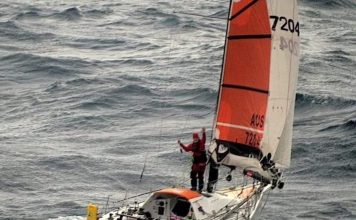
Colman’s most recent offshore outing was the RORC Transatlantic Race, sailed from near Marina Lanzarote to Antigua. He completed the crossing aboard his familiar 60 foot IMOCA, sailing with a French sporting figure he had coached through offshore sailing in the months leading into the race.

In return, his co skipper introduced Colman to a more structured approach to running and land based fitness. It was a small detail, but a useful reminder that modern offshore preparation extends well beyond the boat itself.
Looking ahead, Aotearoa Ocean Racing is building toward The Ocean Race, due to return to Auckland in 2027. The event will once again place New Zealand in front of a global sailing audience, both on the water and ashore.

Restoration work beneath the surface
ORA’s work spans reef restoration, scallop bed recovery, and regenerative seaweed farming through its Greenwave Aotearoa programme. Much of that effort is centred on Tīkapa Moana, with a focus on improving seabed health, water quality, and long-term resilience.

ORA director Dr Nigel Bradley says the partnership helps connect international attention with local outcomes, supporting community and iwi led initiatives while exploring new funding models for restoration.
“Both parties are committed to accelerating restoration, scaling impact, and creating long-term pathways for healthy oceans and resilient coastal communities,” says Dr Bradly.
He continues, “ORA’s mission is to benefit communities through regenerative ocean farming that improves climate outcomes, marine biodiversity and water quality whilst creating economic and social impact for coastal communities.”
Learn more:

![Microplastic beads seen in the central tube of a copepod [their intestinal tract], as evidenced here, fluorescently labelled beads help with visualisation and identification. Credit: Plymouth Marine Laboratory](https://images.boatingnz.online/wp-content/uploads/2026/02/01190204/biological-pumps-how-z-696x461.jpg "Microplastic beads seen in the central tube of a copepod [their intestinal tract], as evidenced here, fluorescently labelled beads help with visualisation and identification. Credit: Plymouth Marine Laboratory")