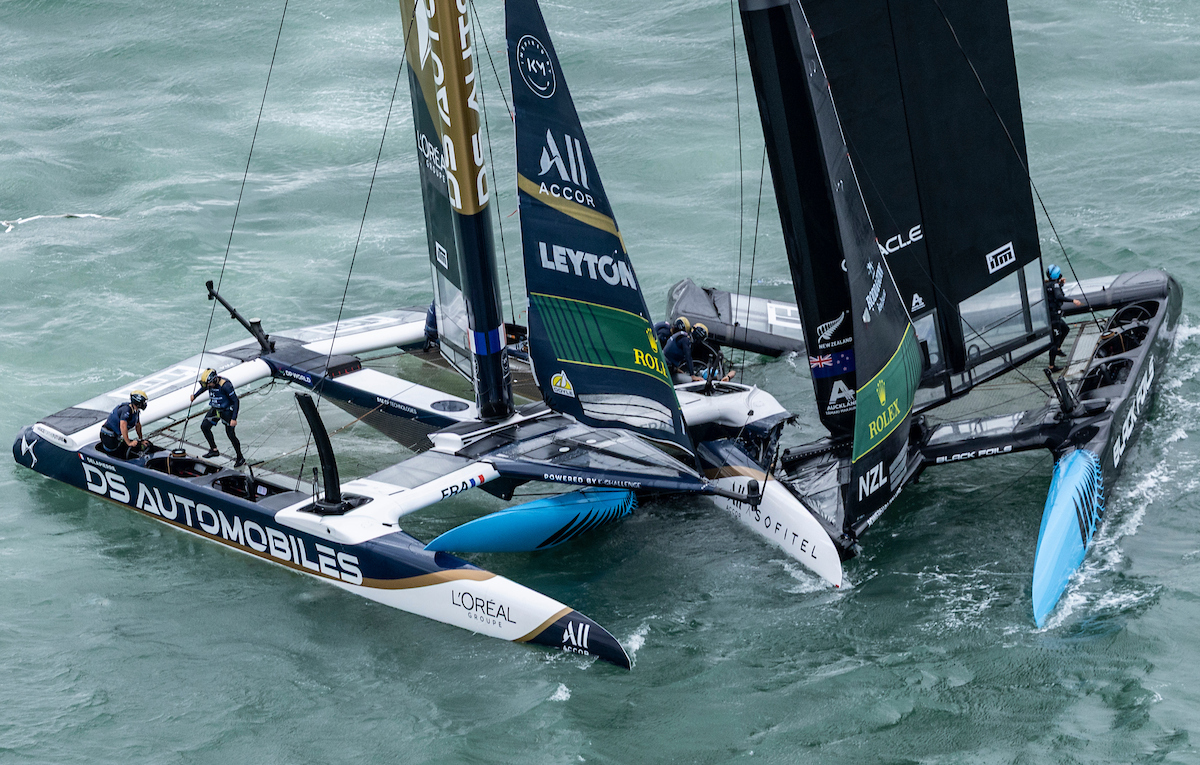
SailGP has released its findings into the collision between the Black Foils New Zealand SailGP Team and DS Automobiles SailGP Team France during Race 3 of the ITM New Zealand Sail Grand Prix in Auckland.
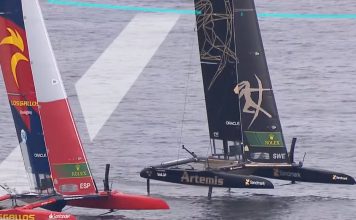
The crash happened 15 seconds after the start. New Zealand was charging toward Mark 1 at roughly 90 km/h. France followed close astern at about 86 km/h. Moments later, the Black Foils lost control and slid across the French bow.
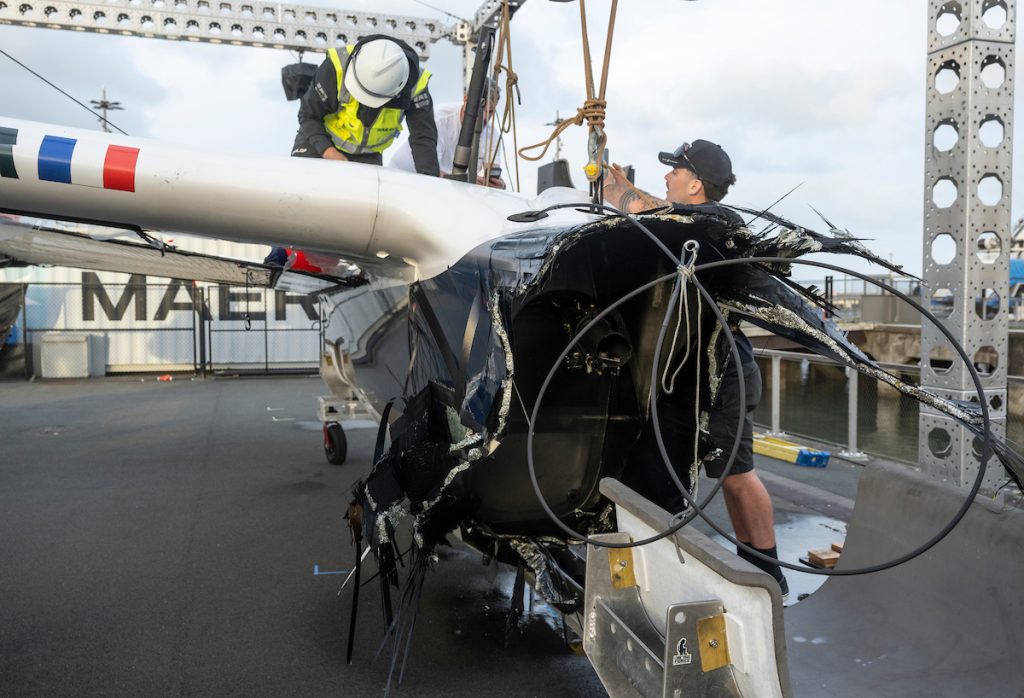
Both boats were left with major damage. Two athletes were injured. The regatta was effectively over for both teams.

What triggered the loss of control
According to SailGP’s engineering review, the sequence began with a gust on the first reach. The added pressure pushed the New Zealand F50 higher on its foils and increased its speed.
As ride height built, the leeward foil breached the surface. At that speed, even a brief breach can change everything.
When a foil draws air down from the surface, the flow of water across it is disrupted. Lift becomes unstable. Control margins shrink fast. The boat began to slide sideways rather than track cleanly toward the mark.

SailGP Director of Performance Engineering Alex Reid said the shift happened almost immediately.

“The data shows the boat accelerated quickly and rose high on its foils,” Reid said.
“Once the leeward foil pierced the surface, the boat entered a side slip where the foil began generating unwanted lift through leeway rather than via rake.”
In other words, the foil was no longer lifting in the direction intended by the crew.
Seconds from start to finish
From that point, events moved quickly.
The crew increased rudder angle in an effort to regain control. Flight inputs continued. But the boat was already sliding. The rudder briefly lost clean flow before reattaching. At the same time, the windward bow dipped. The F50 rounded sharply into the wind and scrubbed speed.

France, following closely, had little room to react.
“There is no evidence of a mechanical or software failure in the systems leading up to the incident,” Reid said. “What we see in the data is a very fast chain of aerodynamic and hydrodynamic events that pushed the boat beyond its controllable envelope at that moment.”
The review drew on high rate telemetry, simulator recreation and video footage. Engineers found no structural failure and no system fault before the loss of control.
Championship consequences
A protest hearing upheld the original decision that New Zealand broke Rule 14, avoid contact. An eight event point penalty followed. France was found to have had no reasonable opportunity to avoid the collision.
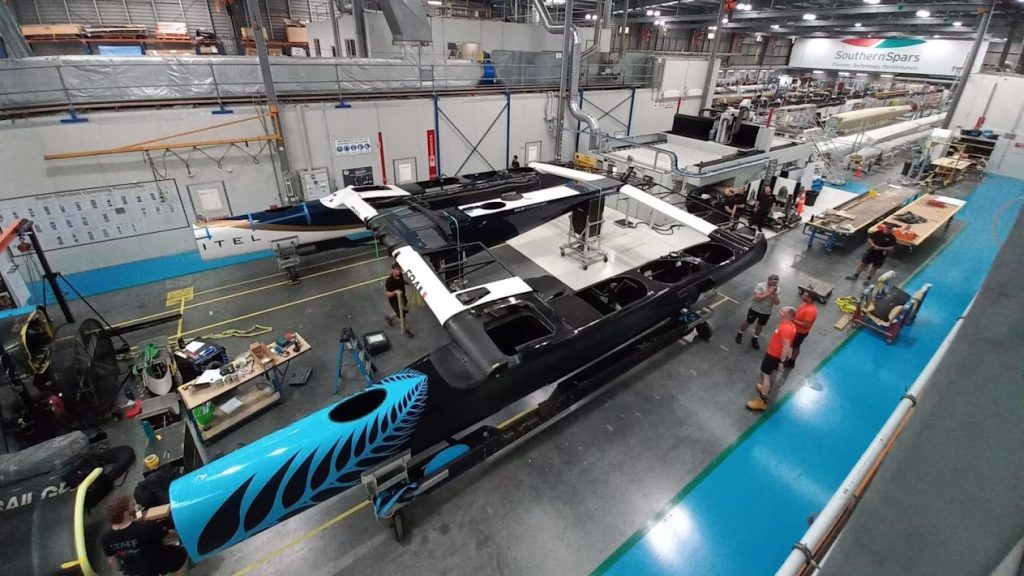
Before the deduction, New Zealand sat on 18 points for the regatta, with France on 17. After the penalty, the Black Foils dropped to 10. France remained on 17, a score that would likely have carried them into the final had they been able to continue racing.
Neither team returned to the water in Auckland. Both will miss the upcoming KPMG Sydney Sail Grand Prix while repairs continue.
What the review means
Foiling at close to 100 km/h leaves little tolerance for error. A brief foil breach can shift the load balance of the entire platform in a heartbeat. Once the boat departs stable flight, recovery options narrow fast.
SailGP engineers are now looking at possible adjustments to help crews manage similar scenarios in the future. Those discussions are underway with athletes ahead of the next events.
The Auckland SailGP collision will stand as a reminder of how narrow the edge is at this level of racing. At those speeds, control is measured in fractions of seconds.
And sometimes, that is not enough.