Next year, in 2027, the Beneteau First 30 turns 50. Few production yachts can claim that kind of longevity, and even fewer have reinvented themselves so completely along the way.
In five decades, the First 30 has appeared in three very different forms. Each reflects the sailing culture and performance priorities of its time. From IOR rule racer cruiser to hard chined offshore machine and now a lightweight planing cruiser, the name has evolved without losing its core intent: accessible performance for keen sailors.
Let’s trace how the First 30 has changed.


1977 to 1982: IOR roots and Half Ton heritage
The original First 30 launched in 1977 and became the pioneering model that established Beneteau’s First range. Its commercial and racing success laid the foundation for the rapid expansion of the line in the years that followed, including the smaller First 22, First 25 and First 28, which broadened the concept of accessible performance sailing across different sizes.
Designed by André Mauric, the First 30 drew directly from his successful Half Ton race boats. To understand the design, it helps to understand what “Half Ton” meant. Under the International Offshore Rule, or IOR, boats were grouped by rating bands expressed in tons under the rule’s measurement formula. The Half Ton Cup was contested by boats designed to measure within that band. Designers shaped hull sections, measured girths and stability factors, keels and rigs to optimise the rating number, often producing powerful upwind hulls with distinctive stern shapes and measured stability.
Mauric based the First 30 on his Half Ton winner Impensable, which took the 1973 Half Ton Cup. For the production boat, he softened the pure race hull, extended the coachroof and created a practical cruising interior. The result was a genuine cruiser racer. Competitive on Saturday, comfortable on Sunday.
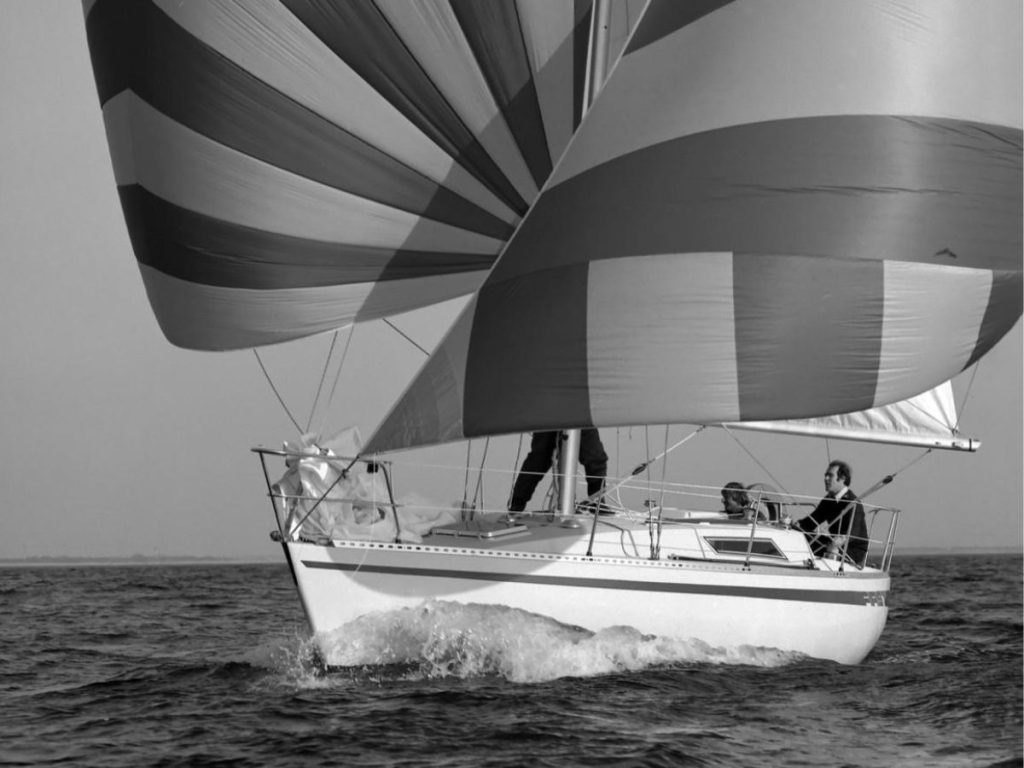
Under IOR, performance rewarded stability and sail carrying power. The First 30 carried a relatively deep fin keel with a substantial ballast ratio for its size, paired with a single spade rudder. Displacement sat closer to 3,500 to 3,600 kg depending on configuration. That gave the boat enough mass to drive hard upwind in breeze while still feeling responsive through the helm.

The later First 30 Evolution variant drew heavily from Mauric’s refined Half Ton race designs. In 1980, the Mauric designed First Lady won the Half Ton Cup. In 1981, King One, another Mauric Half Ton design, took the title with Paul Elvstrøm aboard. These were custom optimised race builds rather than pure showroom production boats, but their hull forms and refinements directly influenced the Evolution model. That link gave the First 30 serious racing credibility.
Production numbers were strong. Eight hundred and twenty four First 30s were built in the first five years, with mention that over 1000 have been built across the standard, Evolution and related variants. Across the broader First line of that era, however, thousands of boats left the yard, cementing Beneteau’s position in the production performance market. For many sailors, the First 30 was their entry into serious racing and cruiser racer ownership. It remains a respected IOR era classic today.
Learn more: https://www.beneteau.com/newsroom-actualite/1977-2022-story-firsts
2010 to 2015: the Juan K reset
After a long absence, Beneteau revived the name in 2010 with the First 30 JK. The contrast with the 1977 boat could hardly have been sharper.
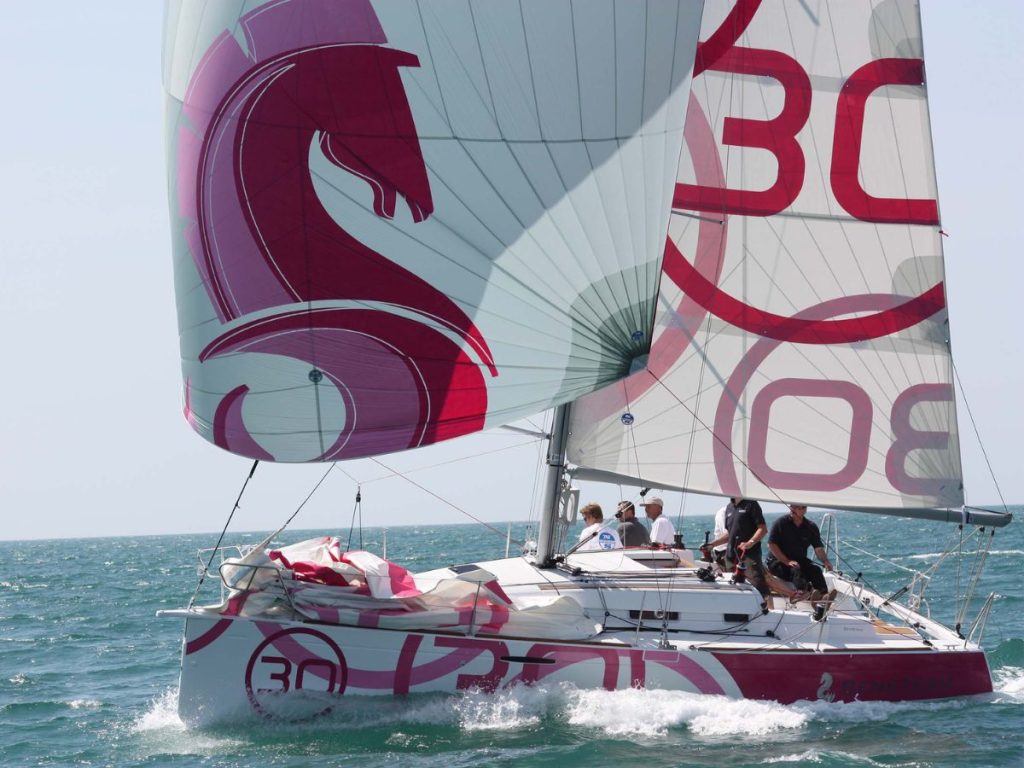
Designed by Juan Kouyoumdjian, with input from Vendée Globe winner Michel Desjoyeaux, the JK embraced modern offshore thinking. At launch it famously wore a bright pink hull that turned heads at Cowes Week. It looked fast before it even left the dock.

Technically, it stepped firmly into the modern era. Twin rudders replaced the single spade. Hard chines ran aft to increase form stability. A T shaped keel with a lead bulb lowered the centre of gravity. The rig dispensed with overlapping headsails and running backstays. The aim was a compact offshore race boat that could still cruise.
At 9.8 metres overall and around 3,750 kg displacement, the JK was heavier than its aggressive lines suggested, but it carried that weight with control. Reviewers praised its power and stability when pressed, particularly reaching and offshore. It was direct, physical and honest under sail.
Below, the interior offered about 1.85 metres of headroom and a contemporary layout. It was practical rather than luxurious. This was a boat designed for sailors who wanted to push hard and sail properly offshore.
The JK never matched the production volumes of the original. However, it reinforced the idea that the First badge was about innovation, not nostalgia.
Learn more: https://www.juanyachtdesign.com/design-by-juan-k/beneteau-first-30/
2025 onwards: the lightweight planing cruiser
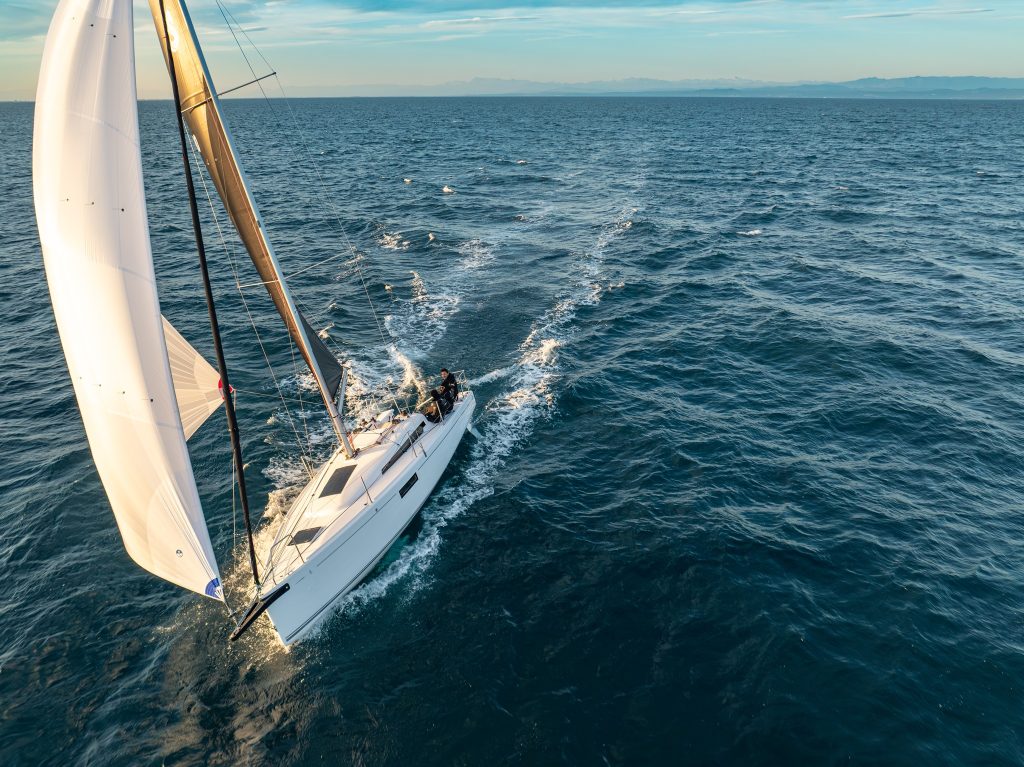
The latest First 30 was unveiled at boot Düsseldorf in January 2025. This time Beneteau partnered with the Seascape team, working with designer Samuel Manuard.
The philosophy shifted again. Rather than designing around a rating rule, the new boat focuses on light displacement performance and accessible planing.
At 10.33 metres overall and approximately 3,150 kg displacement, it is roughly 600 kg lighter than the 2010 JK despite being longer. Vacuum infused construction and a fully cored structure contribute to that weight saving.
The hull form reduces wetted surface and promotes dynamic lift as speed builds. With a higher sail area to displacement ratio than the 2010 model, the boat is intended to transition from pure displacement sailing into semi planing and planing modes in moderate breeze, particularly on a reach or downwind angle. Twin rudders provide grip and control as heel increases and speeds climb, ensuring the leeward blade remains effective when pressed.
Beneteau First 30 and Oceanis 52 nominated for European Yacht of the Year 2026
This is performance defined by acceleration and feel rather than handicap optimisation. It reflects a generation of sailors raised on sport boats and short handed offshore racing, where light weight and responsiveness matter as much as rating success.
Beneteau offers two configurations. The Cruising version keeps the cockpit clean and simple, with oversized winches and straightforward control layouts. The Racing version adds a mainsail traveller and more adjustable sail controls for crews who want finer trim.
Below decks, the interior shows how design priorities have moved on. Two cabins, around 1.85 metres of headroom and sustainable touches such as cork flooring are combined with lightweight solutions like textile lockers and magnetic closures. There is also an electric propulsion option alongside the standard diesel installation.
Three eras, one name
Set the three boats side by side and you see three distinct answers to the same question.
The 1977 First 30 launched the First range and established Beneteau’s performance identity. The 2010 JK embraced offshore race thinking, signalling its intent with chines and twin rudders. The 2025 model chases low displacement speed and planing performance, shaped by modern sailing culture rather than rating bands.
What ties them together is purpose. Each version aimed to give committed sailors real performance in a manageable, production package.
Half a century on, the First 30 name has never stood still. That may be its greatest strength.