
Why is it a problem?
The Asian clam can occur in very high densities; over 25,000 per square metre. In some parts of San Francisco Bay estuary it makes up most of the biomass in the sediments. The Asian clam feeds on plankton and other organic material that is suspended in the water. At high densities, it can reduce the concentration of plankton in the water and its availability to other organisms. In San Francisco the clam is thought to have indirectly contributed to a dramatic decline in the catch rate of some fish species. It also filters toxins present in the water column which may lead to increased exposure of toxins to animals that consume them.
How to identify this species
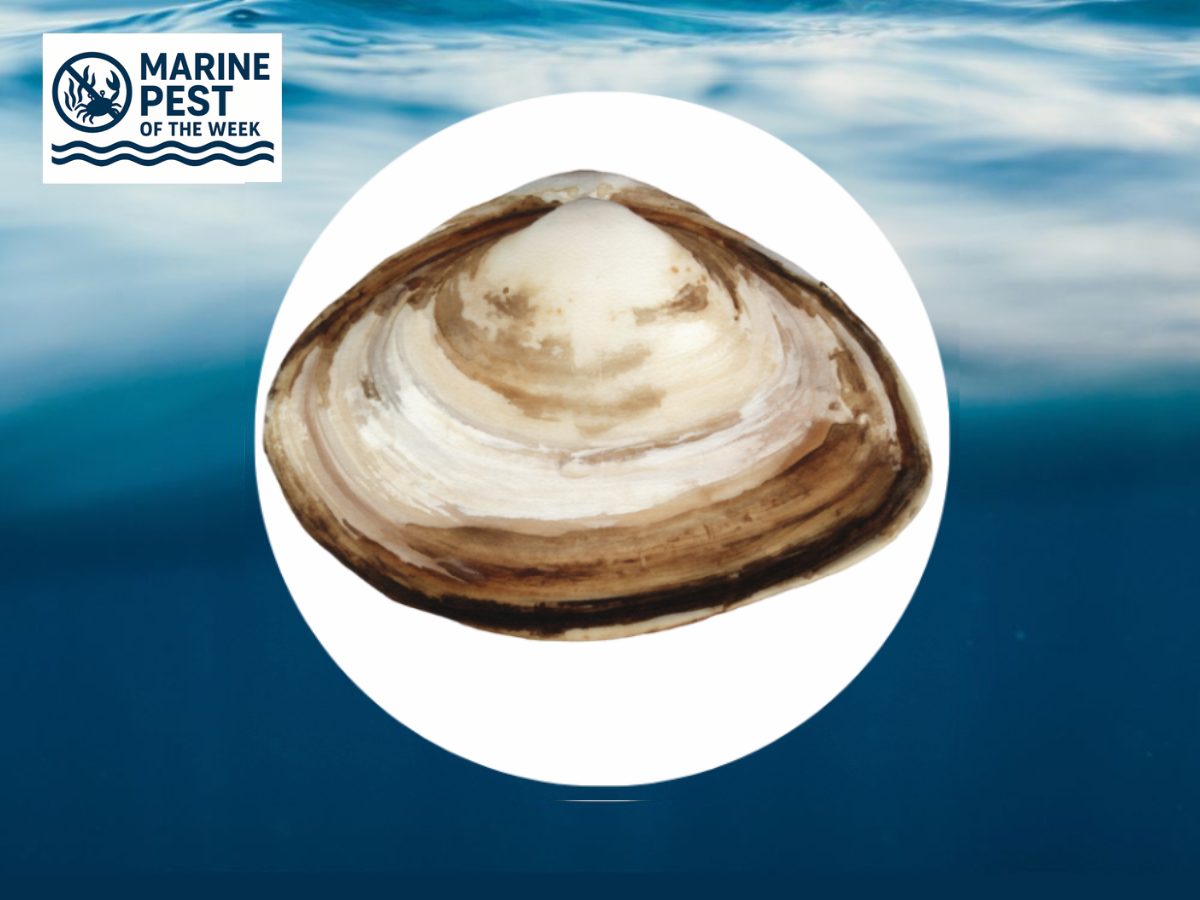
- The shell can be yellow, tan or dirty white with brown staining.
- It measures up to 3 cm in length.
- One side of the shell is larger than the other, resulting in a distinctive “overbite”.
- Old shells may have wrinkled edges.
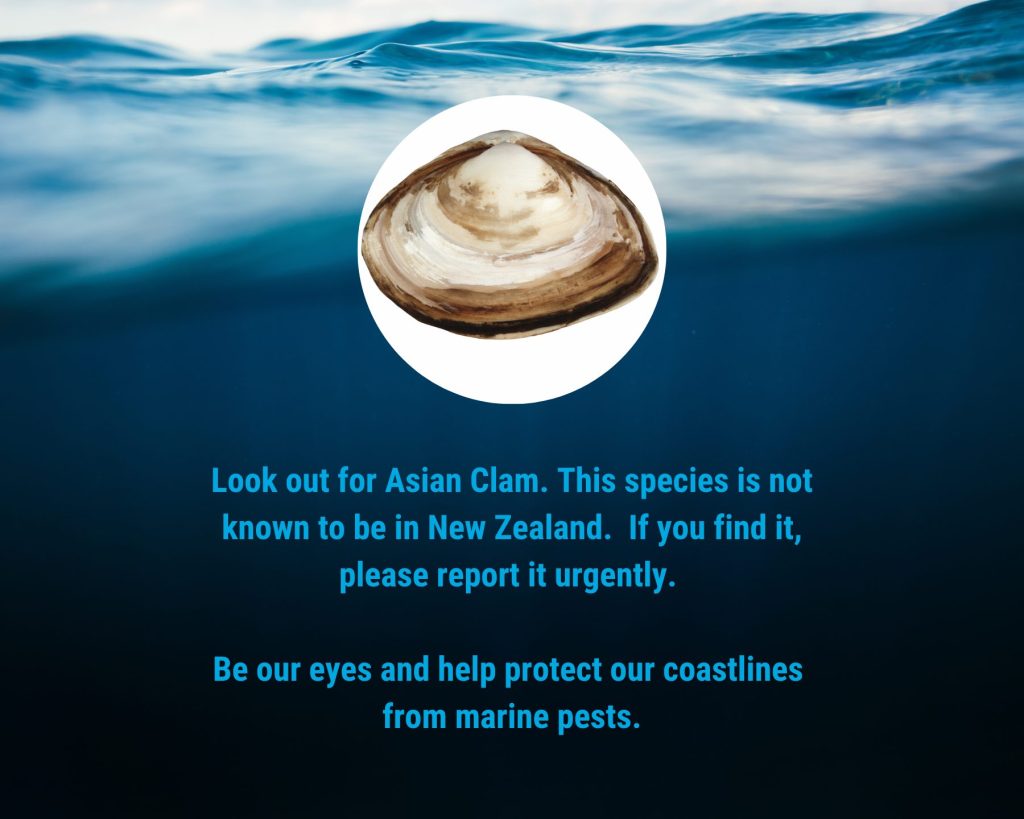
This pest is not known to be in New Zealand. If you see something suspicious, report it to the Ministry for Primary Industries.
Source: Marine Biosecurity Porthole
From the team at Clean Below? Good to Go – visit marinepests.nz to get everything you need to know about marine pests ID, boats, rules and more.