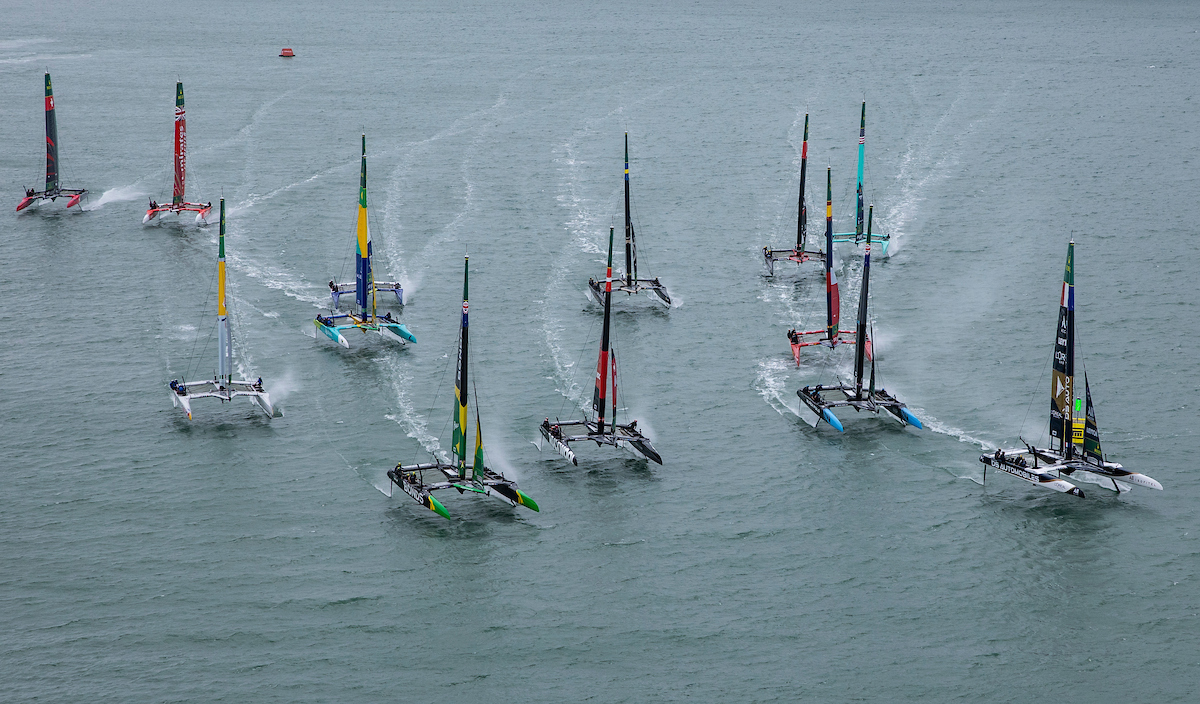
Auckland’s ITM New Zealand Sail Grand Prix will conclude under SailGP’s split fleet format, with 11 teams racing on day two and the Auckland title to be decided by a compressed, high pressure schedule.
With France and New Zealand no longer competing in Sunday’s races, the battle for the top three shifts squarely to the remaining active F50s. Their earlier points remain on the leaderboard, but neither team will add to their totals.
The fleet has been divided based on current standings.
Group A will race with five boats, with Emirates Great Britain emerging from Saturday’s racing as the team best positioned to capitalise on the revised format.
| Pos | Team | Driver | Points |
|---|---|---|---|
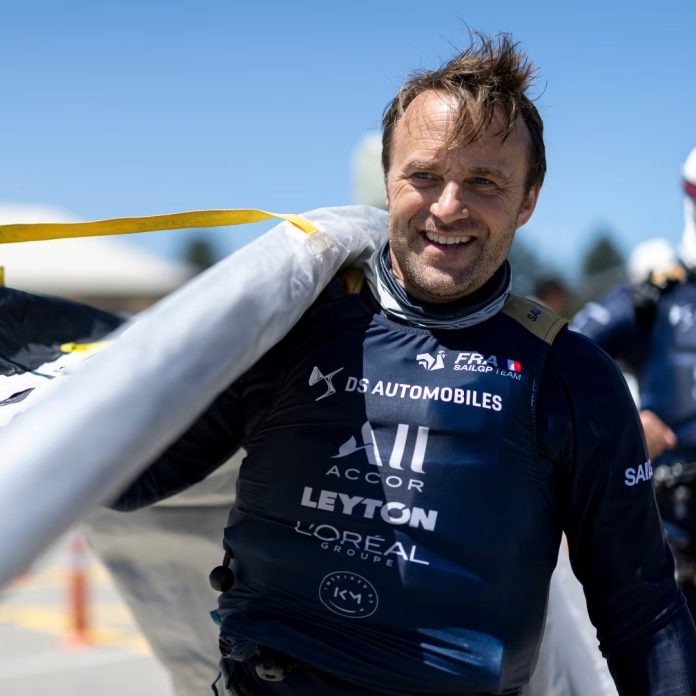
| 1 | DS Team France | Quentin Delapierre | 17 pts |
| 4 | Black Foils (New Zealand) | Peter Burling | 10 pts |
| 5 | Emirates GBR | Dylan Fletcher | 9 pts |
| 8 | Germany presented by Deutsche Bank (Germany) | Erik Heil | 6 pts |
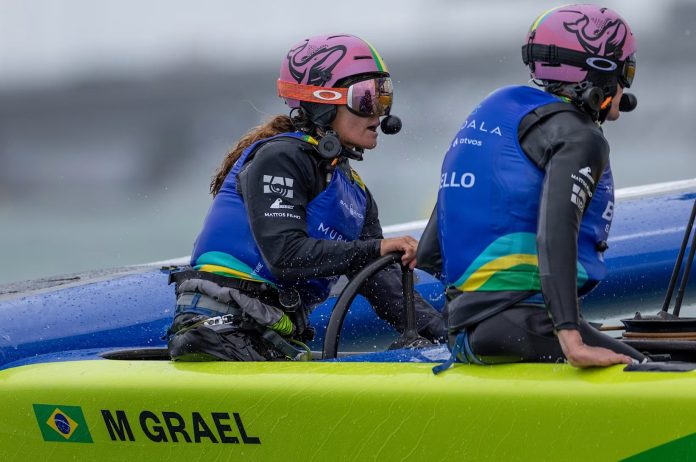
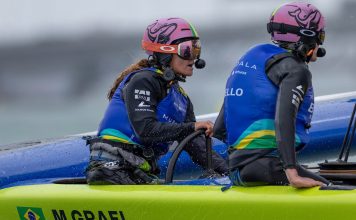
| 9 | Mubadala Brazil | Martine Grael | 4 pts |
| 12 | NorthStar Canada | Giles Scott | 1 pt |
| 13 | Red Bull Italy | Phil Robertson | -1 pts |
Group B will race with six boats:
| Pos | Team | Driver | Points |
|---|---|---|---|
| 2 | BONDS FLying Roos (Australia) | Tom Slingsby | 17 pts |
| 3 | Los Gallos (Spain) | Diego Botin | 12 pts |
| 6 | ROCKWOOL Racing (Denmark) | Nicolai Sehested | 9 pts |
| 7 | Artemis (Sweden) | Nathan Outteridge | 8 pts |
| 10 | Switzerland | Sébastien Schneiter | 3 pts |
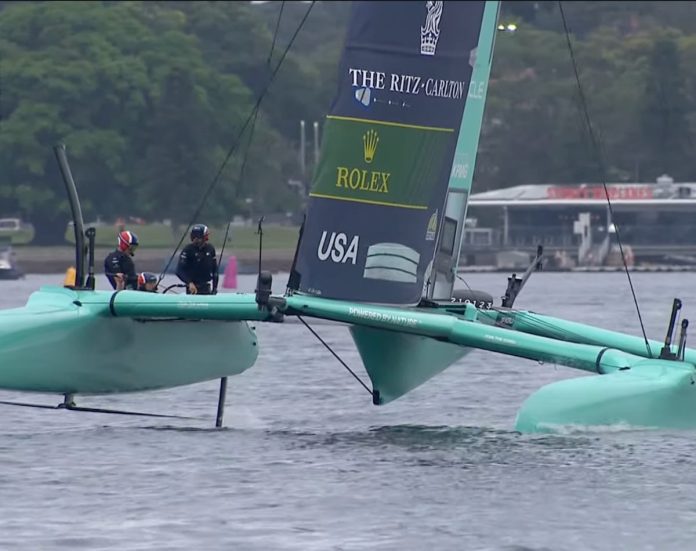
| 11 | U.S. | Taylor Canfield | 3 pts |
Each group will contest two fleet races. Points are awarded within each group on a 5, 4, 3, 2, 1, 0 scale and added to Saturday’s cumulative totals to form one overall leaderboard.
At the conclusion of the four fleet races, the top three teams advance to the winner-takes-all Auckland final.

Compressed schedule raises stakes
With only two races per group, the format rewards fast starts and consistency. There is no opportunity to recover from a poor opening race.
A look at Group B
Group B carries the most immediate firepower. Australia begin Sunday in the strongest position. Two mid fleet finishes could be sufficient to secure a final berth. A single race win would likely confirm qualification.
Spain sit within striking range and have a clear pathway. One win would immediately elevate them into contention. Two strong results would almost certainly move them into the top three.
Denmark and Sweden also remain firmly in the mix. Both require at least one podium finish, and ideally a race win, to force their way into the final equation.
A look at Group A
Group A presents a different tactical landscape. With five boats racing, podium finishes carry heavy weight. Great Britain enter the day well placed to capitalise. Two top three finishes could push them comfortably into final contention.

Germany remain mathematically in the hunt but will need at least one race victory to threaten the top three. Brazil, Canada and Italy would require near perfect scoring combined with favourable results elsewhere.
Most likely scenarios
Based on current standings and scoring structure, several scenarios stand out as most probable:
Scenario one: Australia and Spain qualify comfortably from Group B, with Great Britain emerging from Group A to claim the third spot.
Scenario two: Australia secure one berth, Denmark surge with a race win and strong second result, and Great Britain edge into the final through consistent scoring in Group A.
Scenario three: Spain dominate Group B, Australia qualify through consistency, and the final berth becomes a tight points battle between Denmark and Great Britain decided in the last fleet race.
A full Group B lockout of the final is possible but would require Australia, Spain and Denmark or Sweden all posting commanding results.
What if the teams were split differently?
What would happen if the fleet had been split by position i.e., Group A, Group B, Group A, Group B, etc.
Group A would race with six boats (with France out of play).
| Pos | Team | Driver | Points |
|---|---|---|---|
| 1 | DS Team France | Quentin Delapierre | 17 pts |
| 3 | Los Gallos | Diego Botin | 12 pts |
| 5 | Emirates GBR | Dylan Fletcher | 9 pts |
| 7 | Artemis | Nathan Outteridge | 8 pts |
| 9 | Mubadala Brazil | Martine Grael | 4 pts |
| 11 | U.S. SailGP Team | Taylor Canfield | 3 pts |
| 13 | Red Bull Italy | Phil Robertson | -1 pts |
Group B would race with five boats (with the Black Foils out):
| Pos | Team | Driver | Points |
|---|---|---|---|
| 2 | BONDS Flying Roos | Tom Slingsby | 17 pts |
| 4 | Black Foils | Peter Burling | 10 pts |
| 6 | ROCKWOOL Racing | Nicolai Sehested | 9 pts |
| 8 | Germany by Deutsche Bank | Erik Heil | 6 pts |
| 10 | Switzerland | Sébastien Schneiter | 3 pts |
| 12 | NorthStar | Giles Scott | 1 pt |
With this split arrangement, with France and New Zealand sidelined, Australia would be best placed and would likely qualify through consistent finishes alone. Spain would hold the clearest pathway in Group A, with one strong result potentially moving them into final territory. The third berth would become the key battleground, most likely between Denmark and Great Britain, depending on who secured a race win. A Spain-Australia-Denmark final would look probable, though Australia-Spain-Great Britain would remain equally realistic if Britain converted early opportunities.
A final decided by two mid-event formats
The split fleet format tightens the leaderboard. Five points for a win in a reduced fleet can dramatically alter standings in a single race.
With stronger winds forecast and Auckland’s tight harbour course demanding precision, risk management will be critical.
Once the top three are confirmed, all cumulative scoring becomes irrelevant. The Auckland champion will be decided in one final race, with the first boat across the line claiming the event.