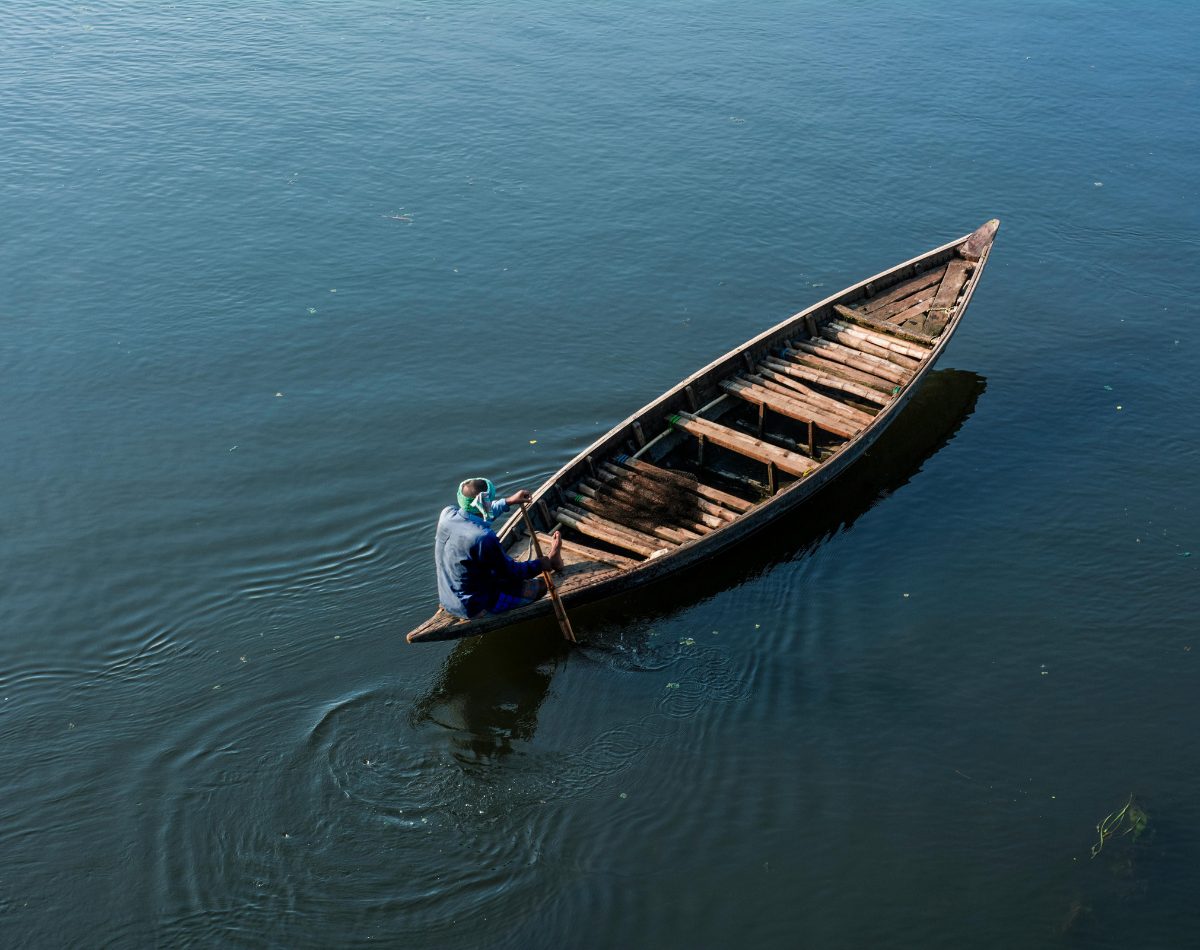
Modern boats carry everything. GPS, charts, sounders, radar.
It wasn’t always like that. Before instruments, navigation sat in the hands of the crew. They worked with what they could see, feel, and remembered. Early on, that meant staying close to the land.
When land was the chart
Coastal boating worked because the land gave crews something fixed. Headlands, peaks, and ridgelines formed shapes that didn’t move. Crews held one feature against another and watched for change. If a gap opened or closed, they’d shifted.

We use the same technique today. Fishos align two marks and maintain their position. We check if our anchor is held in the same way.
The method was simple, but it demanded attention the whole time.
Depth and bottom
Along with the coastline, crews also had to watch their depth. This is when the leadline took over, giving crews depth and ground in one motion.
A leadline a simple tool. A weighted line is marked, say in fathoms—six feet each—with materials spaced along it. Leather, cloth, and knots tell you where you are without needing to see it. You cast the weight forward and let the boat move over it, calling the depth as it comes tight.
Tallow—hard animal fat—was packed into the base; it was sticky and would lift samples from the seabed. Sand, mud, shell, or gravel all came up. As crews moved along the coast and the coastal bottom changed in material, it was easy to determine a shift in position. The material also revealed whether the boat should stop or keep moving. Mud and sand suggested the boat would hold at anchor. Shells and rocks meant the boat should keep moving to better holding ground.

Would you use one today?
Modern navigation is fast and capable, but there is still value in adding a leadline to the mix. It gives a direct read of depth and a clear sense of what sits beneath the boat. Mud, sand, shell, or rock all influence how you move and where you stop. In shallow or changing water, that extra layer of awareness helps build confidence. It also works independently of onboard systems, offering a simple, reliable way to cross check what you are seeing.
A modern leadline is easy to put together and practical to carry. Use a length of low stretch line, around 20 to 30 metres, and mark it at regular intervals so each section feels distinct. Tape, heat shrink, or stitched tags all work well. Add a compact weight to the end, such as a small lead, or a shaped sinker. Pack the base with grease or wax so it lifts a sample of the seabed. Coil it neatly and keep it within reach, and it becomes a useful tool that adds clarity when you need it.
Where it stopped being enough
Food, trade, and distance soon pushed sailors out beyond the coastline. Beyond it, a different way of navigating had to take over. The coastal navigation and leadline system worked well along coasts but failed offshore, where land and seabed cues disappeared, forcing sailors to develop new navigation methods.
References
Navman: History of sea navigation before the GPS
Seahistory: Leadlines
Yachting Monthly: Practical Seamanship – Leadlines