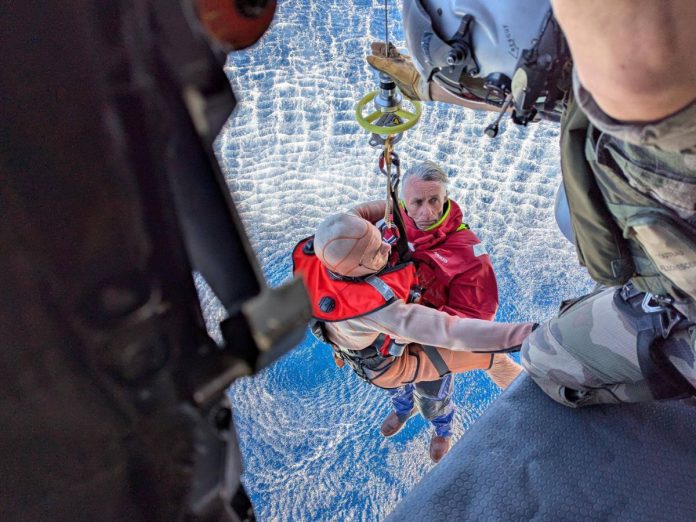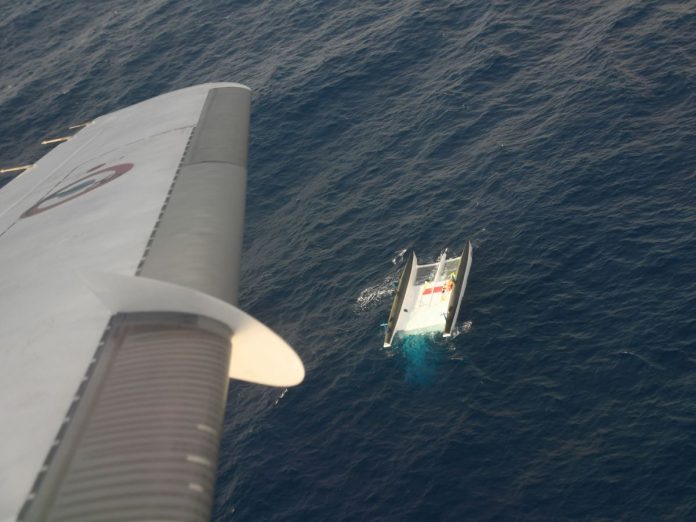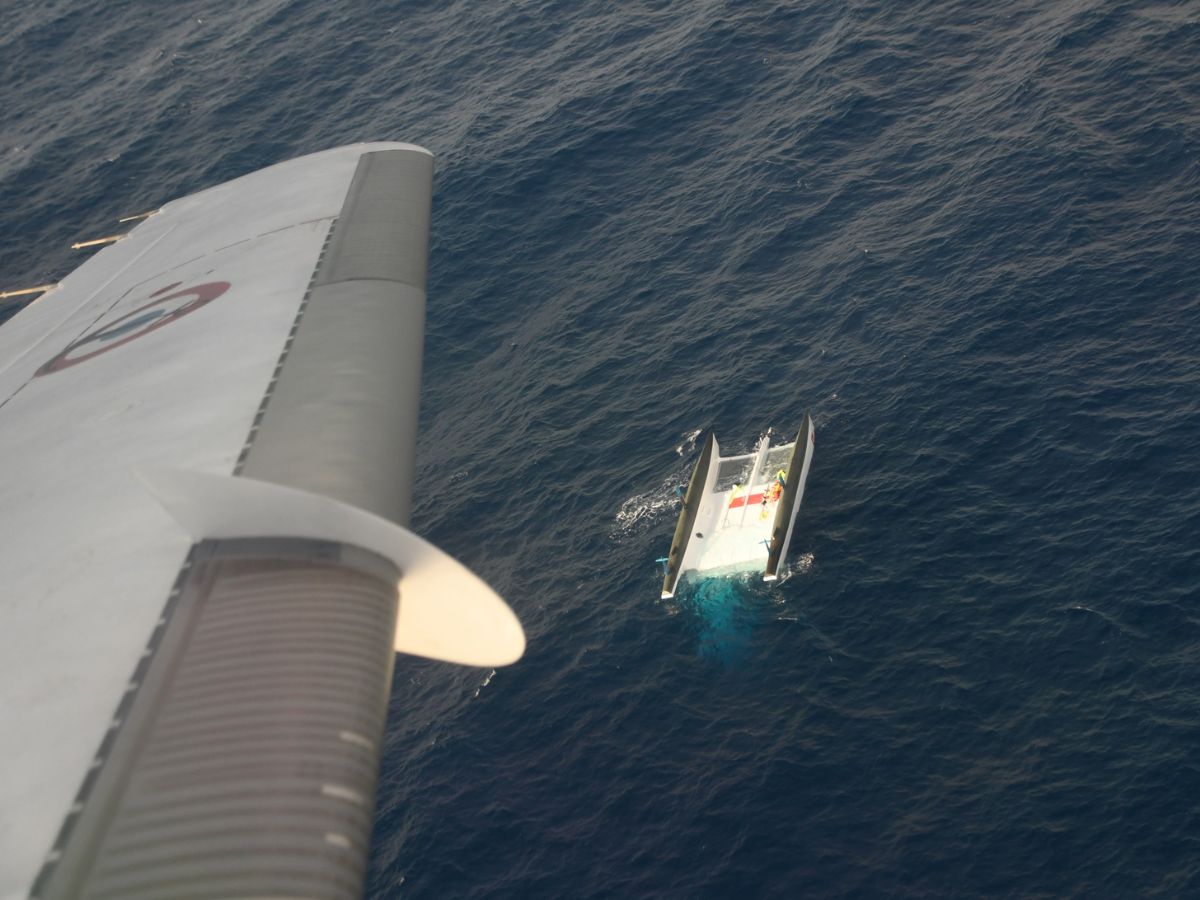
When the multihull Rushour capsized during the 2025 Groupama Race off New Caledonia, its crew were eventually rescued safely. But in the hours that followed, questions emerged—not just about how the incident happened, but about how rescue efforts unfolded, and what role radio communication played.
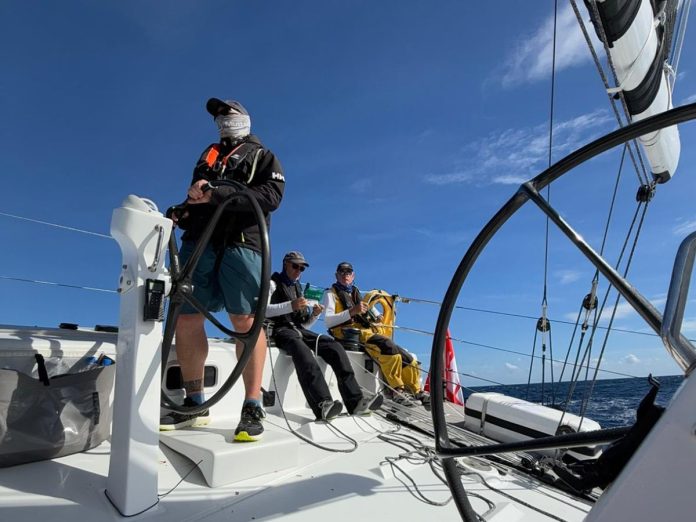
In particular, the spotlight turned to V5 Racing, the yacht closest to Rushour when the capsize occurred. Despite being just 18 nautical miles astern, V5 did not respond to multiple calls from race organisers and the Maritime Rescue Coordination Centre (MRCC) in the hours following the emergency.
The issue wasn’t one of action or intent—it was one of radio contact. And it’s led to a wider conversation in offshore circles: what does it really mean to maintain a listening watch at sea?
What happened
At around 1:15am local time, Rushour capsized. Rescue coordination was taken over by MRCC New Caledonia, which began trying to contact nearby yachts to assess the situation and coordinate support.

According to a race summary, V5—a monohull near the front of the fleet—was one of the closest boats to Rushour. MRCC and Race Committee officials attempted to reach V5 on marine radio channels commonly used for hailing and coordination, as well as on the digital channel WhatsApp. Other yachts, including Roamance, also tried to make contact.
No reply came back from V5.
The race protest
Given the seriousness of the situation and the lack of radio response, the Race Committee filed a formal protest against V5 Racing. The protest centred around the race rule requiring each yacht to keep a listening watch on VHF radio throughout the race.
V5 later released a detailed public statement explaining their side of the story. They said they had maintained a listening watch as required but did not receive any of the calls—likely due to range or radio coverage limitations in that area at the time.

The Protest Committee accepted this explanation. They found that V5 had complied with the race instructions and had not broken any rule. The protest was dismissed, and no penalty was applied.
While V5 Racing followed the rules, the incident raises a bigger issue—one that matters to anyone who sails offshore. That issue is radio range and real-world communication reliability.
On paper, 18 nautical miles doesn’t seem far. But in practice, VHF radios (the standard marine sets used on most boats) rely on line-of-sight. Hills, islands, weather, and antenna height all affect what actually gets through. It’s entirely possible for a yacht to be relatively close and still miss a call, simply because of conditions.
What this incident shows is that in principle following the rules is not always enough. In some parts of the ocean, VHF alone may not cut it. That doesn’t mean every yacht needs expensive satellite gear, but it does suggest a few lessons:
Assume less, test more. Just because you’re monitoring the radio doesn’t mean you’ll receive every call. Build in redundancy. Where possible, carry more than one way to stay in touch—mobile (V5 Racing used WhatsApp), satellite, AIS, or text-based systems. Again, in principle, stay aware of your role in the fleet. If you’re near the front or sailing close to other boats, you’re part of the emergency support system—even if unofficially.
A balanced response
Credit should go to V5 for responding openly and promptly once the questions were raised. Their post-race statement acknowledged the seriousness of the situation and promised to update their onboard communication manual based on what happened.
That kind of approach—transparent, reflective, and proactive—is what builds a safer offshore community.
The Groupama Race incident is a reminder that even the best-prepared crews can run into the limits of what the gear can do. It’s also a prompt for every offshore sailor to ask: is my radio plan enough?