A yacht built for a very unusual brief
When the Max Planck Society set out to commission a research vessel under 25 metres, the usual choices steel or aluminium workboats did not fit the project. The organisation needed something that could wander across entire ocean basins for months at a time, run on low power, operate quietly near sampling sites and still give scientists the space to work.
YYachts took on the challenge, turning what would normally be a long range cruising yacht into a purpose built floating field station. The task was to create a boat that behaved like a research ship without looking or sailing like one.
Construction of Eugen Seibold was completed in 2018, with the yacht launched and christened the same year.
Hull form and materials
The naval architecture is based on the yard’s experience with performance oriented composite yachts. A light laminate schedule was never going to suit scientific work, so the engineering team created a stronger, slightly heavier hull to cope with deep ocean conditions and the additional weight of scientific gear.




The composite construction delivers several benefits. It reduces vibration, keeps the hull quiet when operating sampling equipment, and withstands the stresses caused by deep water winch operations. It also allows smooth underwater surfaces which help when measuring temperature and plankton distribution at the keel.
The hull shape leans towards long range efficiency rather than raw speed. A broad stern gives space for the working deck while maintaining stability under sail. Freeboard is modest but not low enough to complicate operations in open water.
Why a sailing yacht?
Choosing a sailing platform was not simply aesthetic. Under sail, the yacht moves through the water without prop wash, soot or excess turbulence that would interfere with clean sampling. It also enables long passages between research stations without drawing heavily on fuel reserves.
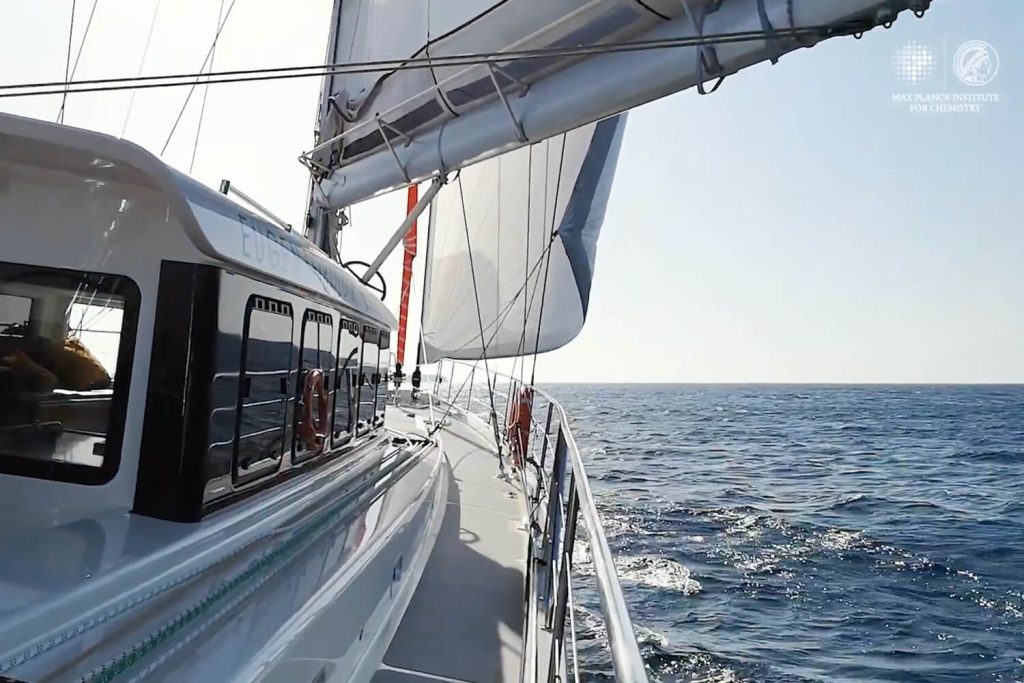

The hybrid power system plays a supporting role. An electric drive handles low speed manoeuvring and quiet station keeping. The diesel component provides range when conditions demand it, yet the two systems together allow the crew to match power output to the scientific work at hand.
Fitting research systems into a cruising hull
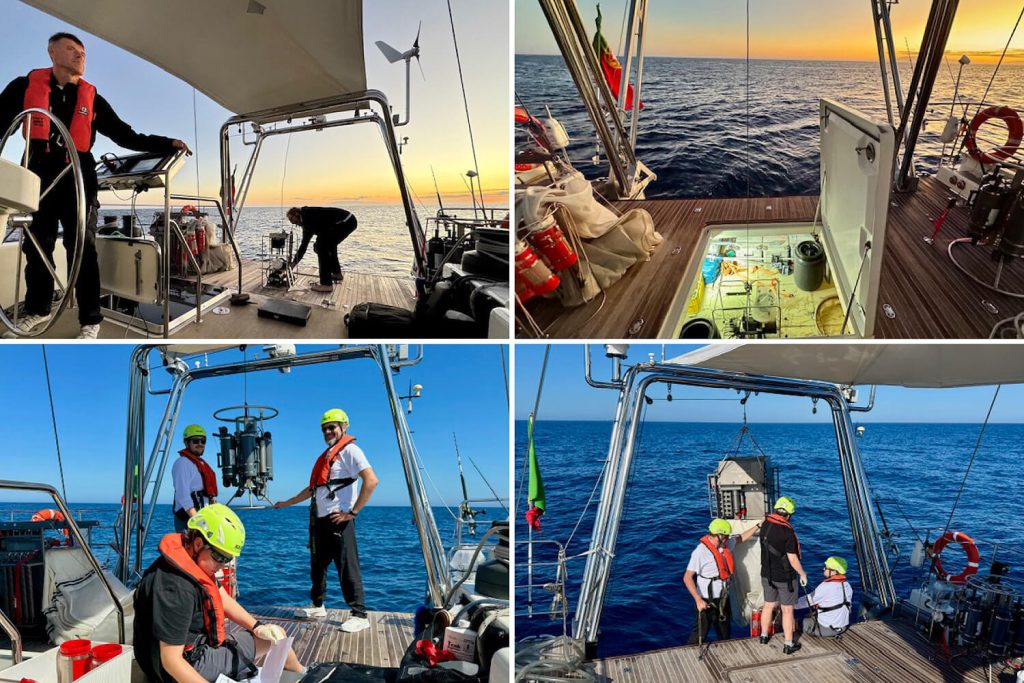
One of the most challenging parts of the project was fitting professional grade science equipment into a 22 metre hull without undermining the yacht’s stability or safety. The deep water winch sits in the aft section beneath the working deck, bolted to reinforced structural frames. It can lower sampling gear to 3,000 metres, a capability usually found on much larger ships.
The keel intake required even more consideration. Engineers needed a route for clean seawater that avoided bilge contamination and did not introduce turbulence. The intake sits well forward, linked to a dedicated pump and pipework isolated from the main plumbing system. All components are easy to reach for maintenance at sea, a crucial requirement given the yacht’s remote duty cycle.
Interior layout: a yacht first, a lab second
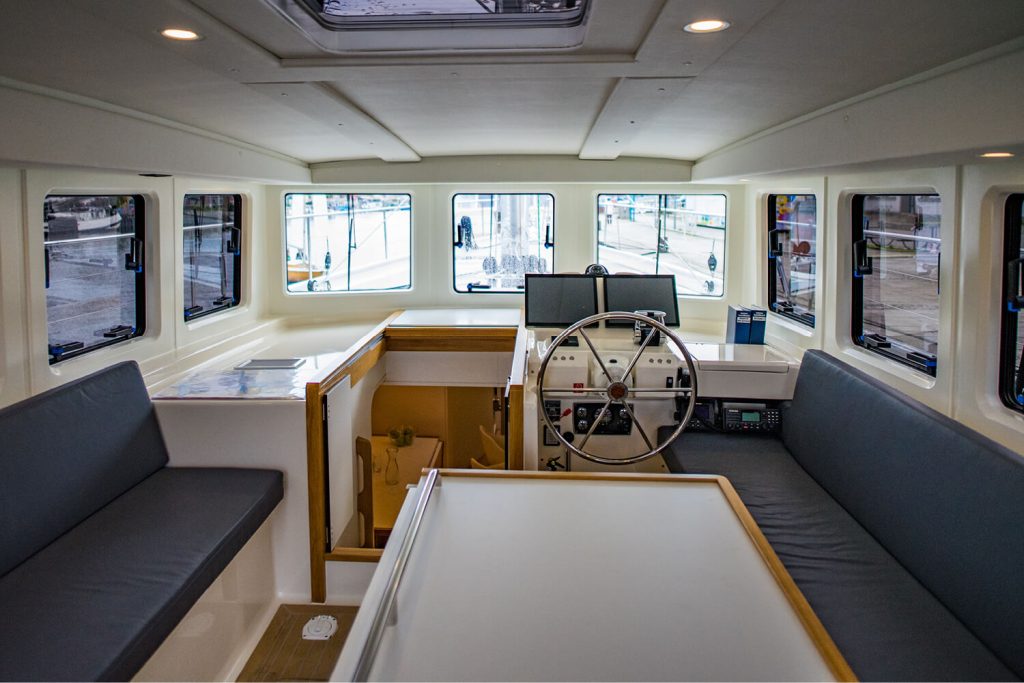
Inside, the design team aimed to keep the yacht’s livability intact while carving out space for a cleanroom laboratory, sample freezers, electronics racks and dry work areas. The lab sits near the centre of the boat, where motion is lowest, and is sealed to protect delicate analyses.
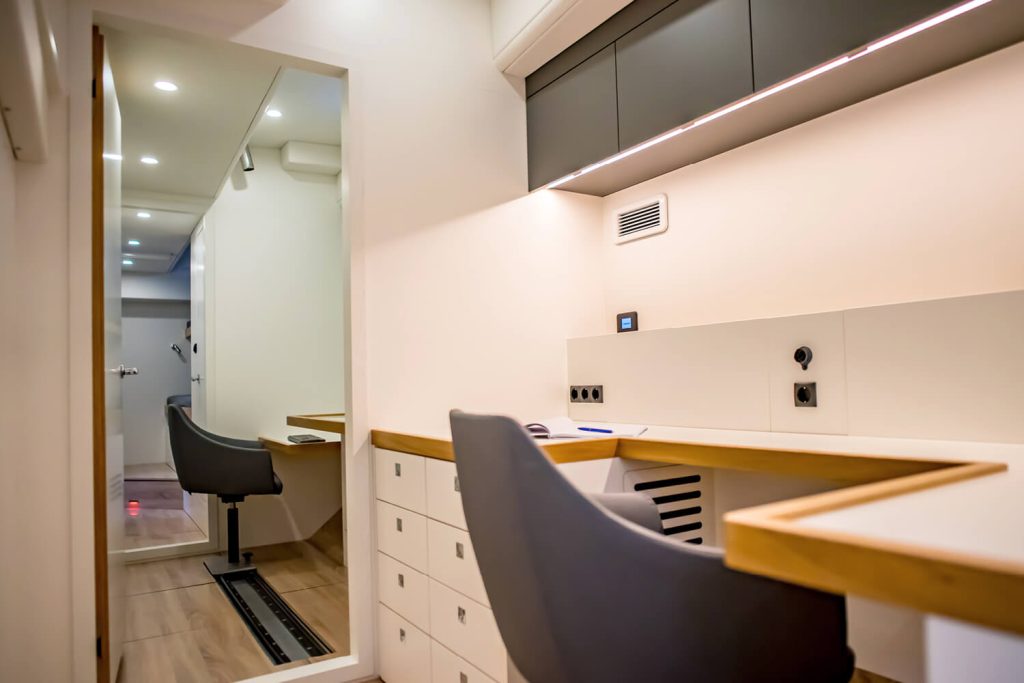
Accommodation is straightforward. Two permanent crew have their own cabins and workstations, while the scientist bunks are arranged to allow quick access to the deck and to the lab. The galley and saloon remain functional cruising spaces but are trimmed back to keep weight forward and low.
YYachts’ usual minimalist style remains visible, though practicality takes precedence over luxury. Surfaces are easy to clean, handholds are placed where wet weather gear is expected, and storage is built in wherever weight distribution allows.
Deck plan and working areas
The cockpit and aft deck are arranged to keep sailing duties and science operations from tripping over each other. Sailing controls lead forward, leaving the transom and working deck clear. The winch, sampling drums and line handling stations sit outboard, and there is enough room for researchers to move gear without interfering with the crew.
A high bulwark aft gives a safer working environment in rough conditions, and scuppers handle the continuous washdown required when handling seawater equipment.
Range and endurance
One requirement stood out above all others: Eugen Seibold had to remain at sea for long periods without support. That shaped everything from tankage to electrics. Fuel and water capacity exceed what most 22 metre sailing yachts would ever need. The vessel carries substantial battery reserves to support the hybrid drive and lab equipment, alongside solar panels that ease the load during settled weather.
Spares storage is generous for a yacht this size. The field team must be able to repair pumps, sampling gear, plumbing and electrical systems far from port. That meant designing access hatches and service spaces into areas usually hidden behind liners.
Handling and sea manners
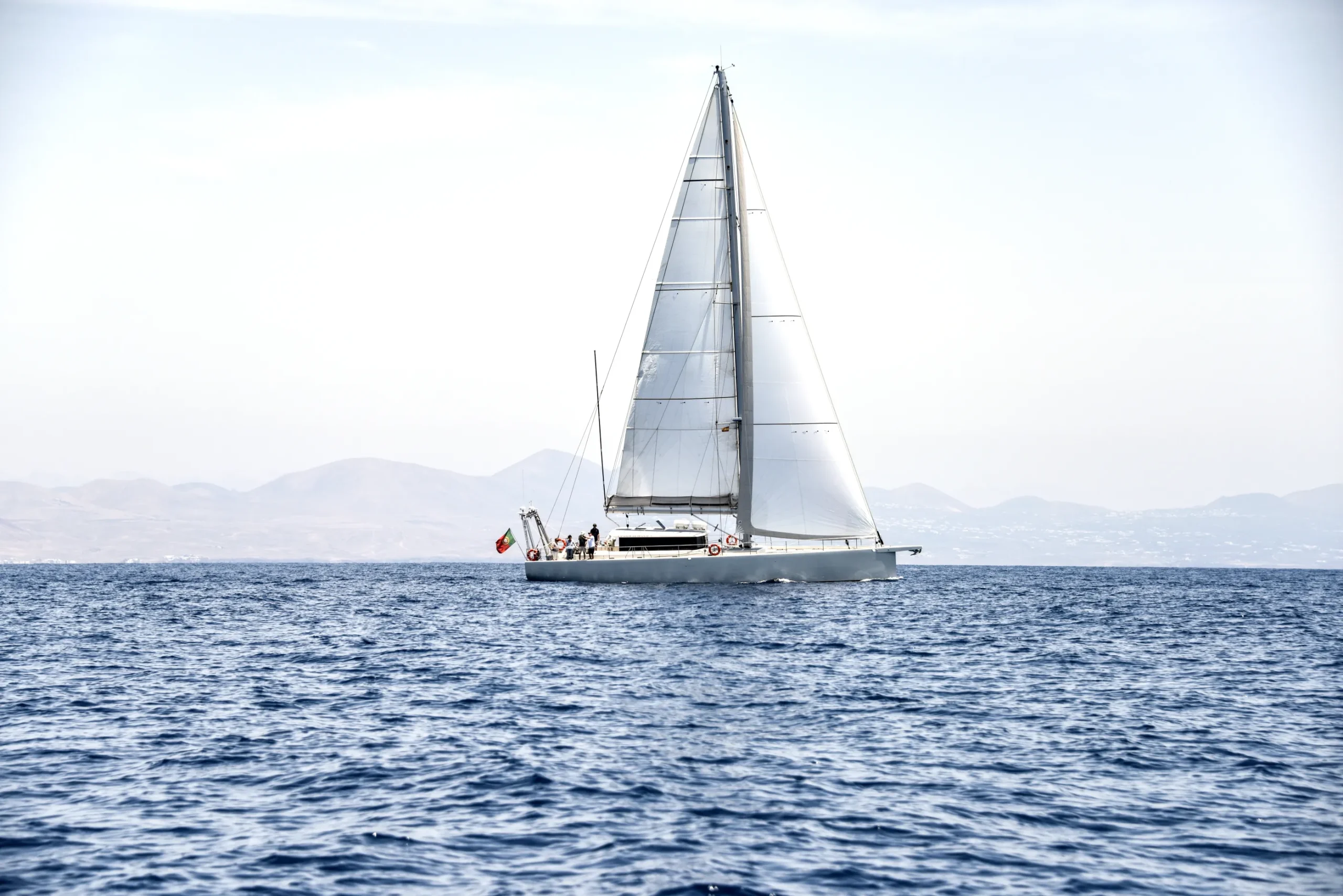
Despite the technical payload, the yacht still needed to sail well enough for long passages. Sea trials in 2018 showed a predictable, stiff motion that keeps the hull secure even with the main lab fully equipped. The sailing plan is conservative, built around a mainsail and headsail combination manageable by a small crew.
Under power the hybrid system delivers quiet, steady propulsion. While it will never match a commercial research ship for brute force, the yacht’s efficiency allows it to make steady progress whether in mid ocean swell or light tropical conditions.
A custom yacht with a clear purpose
Eugen Seibold occupies a rare category. She is neither a production cruiser nor a commercial research ship, but something between the two. Her design shows what can be achieved when a yard adapts its composite yacht building experience to a scientific brief.
YYachts’ role in the build is part of the story, but the vessel’s purpose defines every decision. From the keel intake to the deep ocean winch, from the hybrid drivetrain to the lab tucked amidships, this is a yacht created to work in places where measurements matter and support vessels are far away.
The end result is a boat that extends the reach of science in a practical, seaworthy package. Eugen Seibold may not look like a research ship at first glance, yet she brings modern oceanography to regions where traditional platforms seldom go.
Technical data
- Model Explorer 72
- Length of water line 22 m (72 feet), length overall 24 m (80 feet), beam 6 m, draught
3.50 m - 8 berths, i.e. max. 4 to 6 scientists, plus 2 to 4 crew
- Autonomy up to 3 weeks, 4000 L diesel, 1000 L potable water, plus desalination
- 50 % of the interior are laboratories including wet lab, dry lab, and atmosphere lab
- Gross weight 48 tons
- 210-PS six-cylinder diesel
- 288-volt aggregate of 67 PS
MMSI: 255913282
Call Sign: CRA7241
Flag: Portugal (PT)
Read more at http://www.marinetraffic.com/en/ais/details/ships/shipid:5737181/mmsi:255913282/imo:0/vessel:EUGEN_SEIBOLD#QjrzeSbAdPguUsb0.99