Twenty years after Spirit, New Zealand Yachts is back with a design built for today’s superyacht world.
Two decades after launching one of the most unusual superyachts ever built in New Zealand, New Zealand Yachts is back in the global conversation. New Zealand Yachts reappeared at the 2025 Fort Lauderdale International Boat Show with a refreshed vision and a design story that suddenly feels tailor made for the market it once tried to convince.
For a boat originator that stepped back from new builds during the lean years after the 2008 global financial crisis, the renewed momentum is striking. The questions are simple. Why now, and why does this Kiwi outfit matter again.

A shipyard built on a wild opportunity
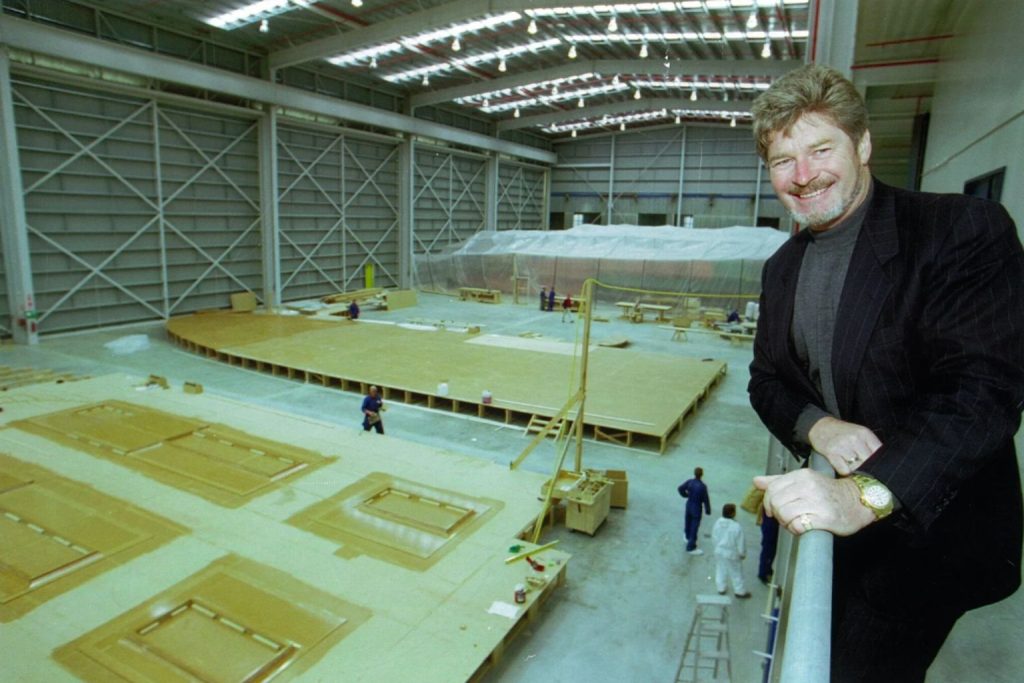
Allen Jones never set out to build superyachts. After selling a business and drifting into retirement in the Bay of Islands, he became restless and drove to Whangarei to ask the port for a small patch of land.

“I thought I’d build a few boats and keep myself busy,” he laughs.
Instead, the port offered him the entire waterfront precinct. He threw out a low number, they took it, and suddenly a hobby became a full scale marine development. Plans grew, the yard grew, and then the post September 11 downturn pulled everything back to a single project: a 35 metre wave piercing superyacht named Spirit.
They had no idea how important that boat would become.
The idea that never quite fit the era
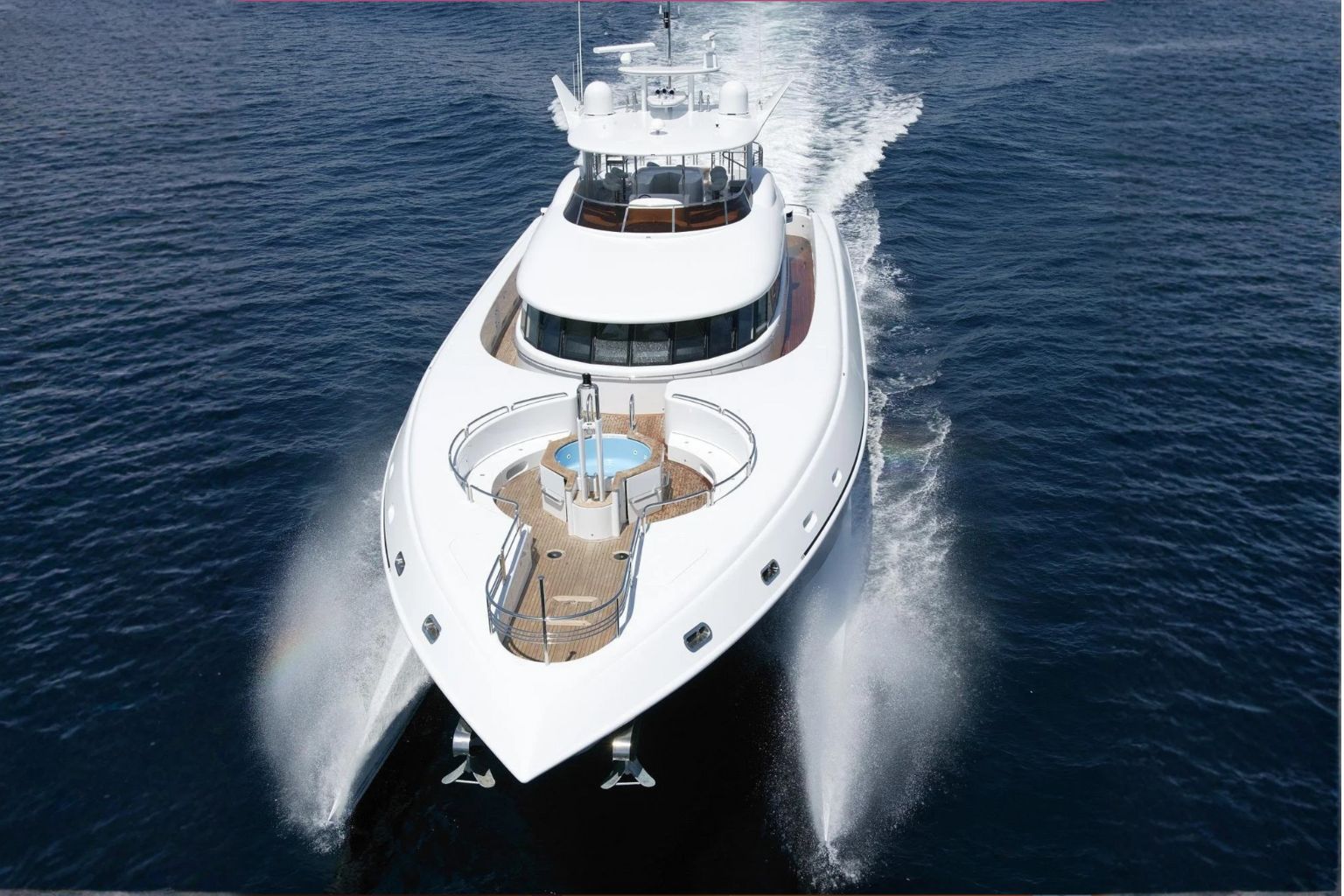
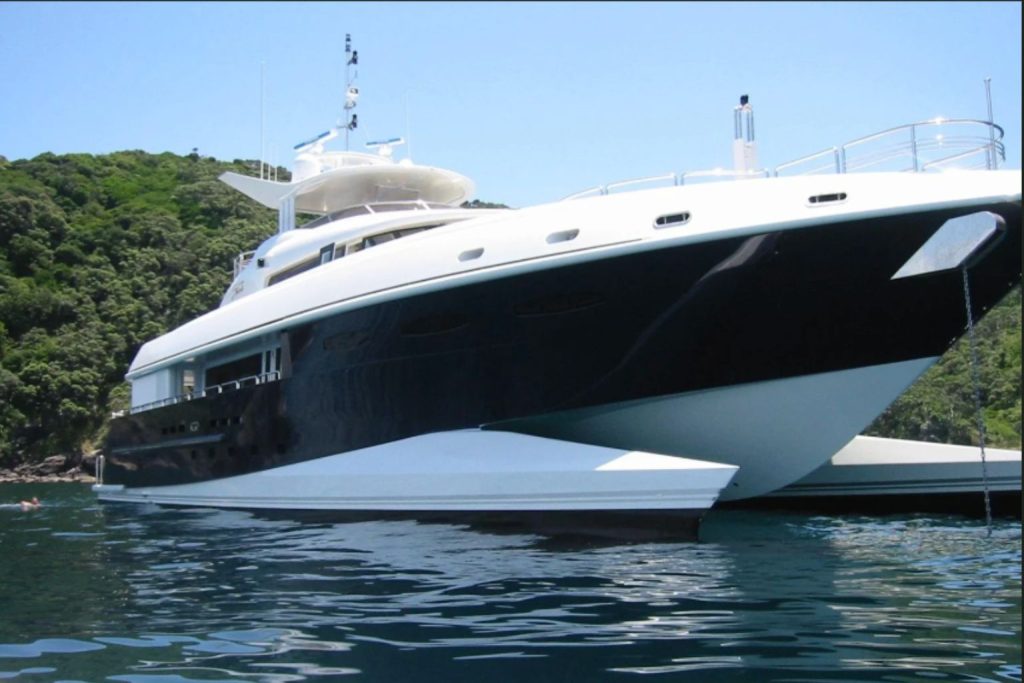
Spirit stood out for one reason. Under its sleek superyacht silhouette sat two narrow demi hulls that behaved more like a commercial fast cat. It sliced cleanly, held its line in rough following seas, and ran long ranges at fuel burns that puzzled surveyors.
“At ten knots she uses almost nothing,” Allen says. “People don’t believe it until they see the hull.”
It was a hybrid long before the word became fashionable. The problem was timing. Twenty years ago, the market did not know what to do with a boat that looked like a monohull but behaved like something else entirely.
Today that blend is exactly what buyers want.
A revived range for a changed world
The new portfolio from New Zealand Yachts spans 30 to 50 metres. The team has retained the core core hydrodynamic principles but continued to refine them. The New Zealand Yachts Wavepiercer hull form has evolved significantly and now delivers greater fuel efficiency and higher performance than was possible twenty years ago.
One concept shown quietly at Fort Lauderdale drew particular attention for its brooding colour and razor edged bow profile. New Zealand Yacht’s have nicknamed it “Darth Vader”, and even from renderings it is clear it carries far more presence and far more volume than Spirit ever could.
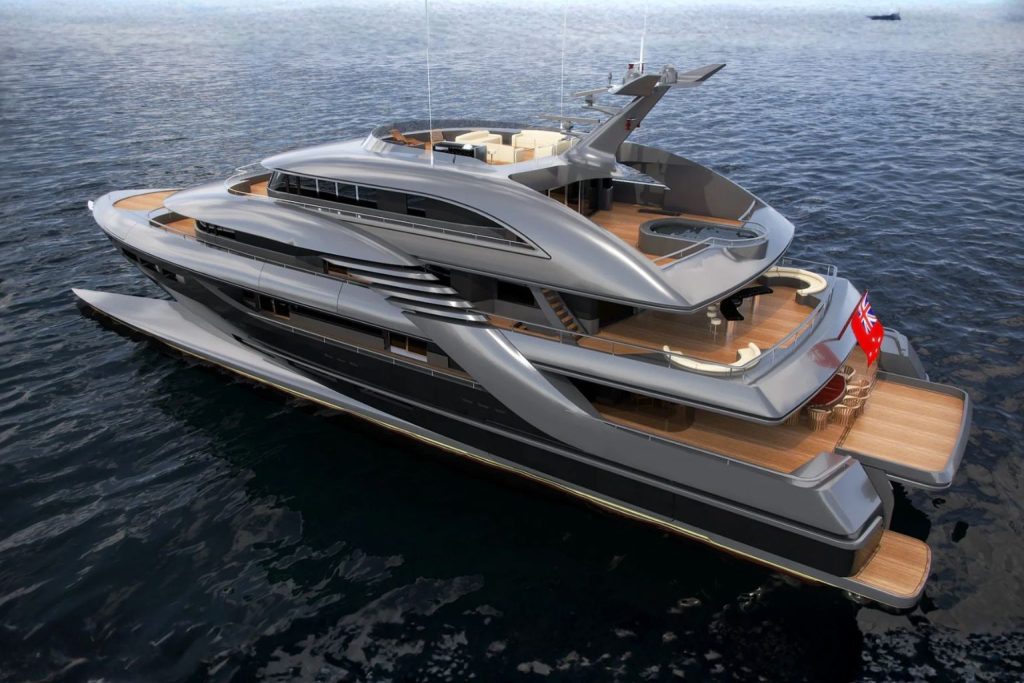
Large multihulls and semi multihulls have surged in the superyacht market. Stability sells. Space sells. Efficiency sells. And efficiency is where the design has always surprised people. At ten knots the original hull could run on what Allen describes as a “teaspoon of diesel”, a line he used often because it captured what the narrow demi hulls were actually doing. The hydrodynamics back it up. Slim hulls reduce drag, the wave piercing bow cuts through steep chop rather than climbing over it, and the vessel holds its course with a steady, rail-like motion.
What once felt radical now fits the moment perfectly.
Time has caught up with the vision
To turn these designs into hulls, Allen has partnered with Yachting Developments Limited in Auckland. Ian Cook’s team brings deep composite experience and the production scale required for a vessel of this complexity. The hull forms are well suited to composite construction, which allows the structure to remain light without compromising strength or stiffness.

Interest is already coming from the United States and the Middle East, where owners are looking for long range vessels that charter well and stand apart from conventional shapes.
A garage that makes sense of the whole idea
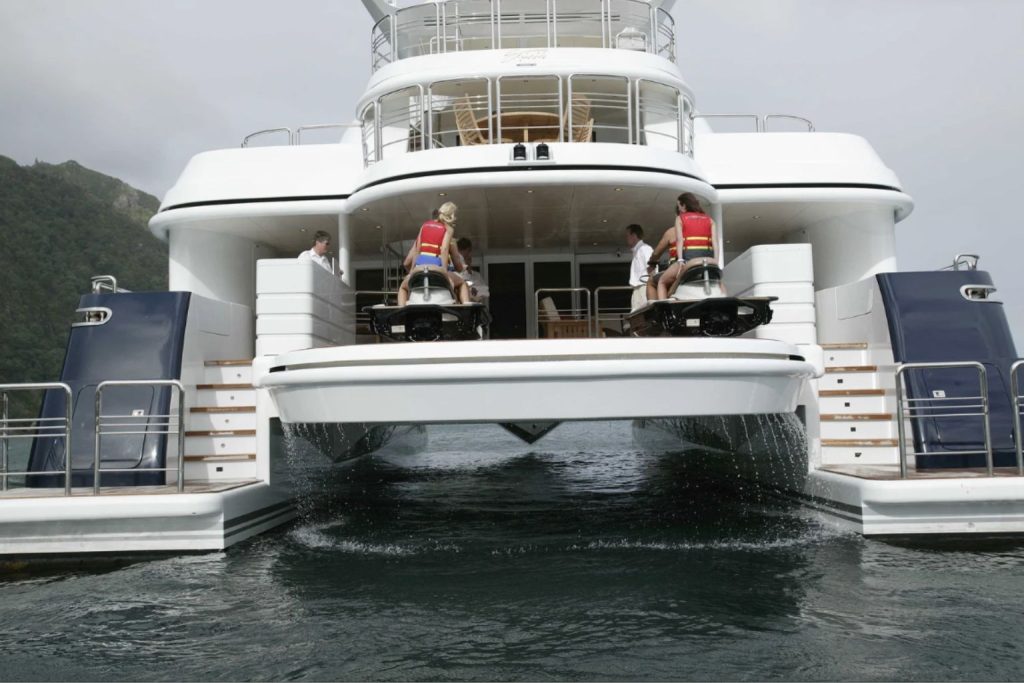
One feature continues to grab attention. The central garage sits below the main deck with vertical doors that open like a cargo bay. Lower the aft platform and crew can walk under the hull to deploy tenders directly into calm water. Guests board at deck height, out of the wind, without the sideways chop that plagues side launchers.
“Everything gets easier,” Allen says. “It changes how people move around the boat.”
For charter operators, that is gold.
Why the timing is finally right
The world has shifted. Buyers want comfort without bulk, performance without burn, and a vessel that feels composed on the wrong day. New Zealand Yachts now has a design that sits between categories but borrows the best from each.
It is proven. It is recognisable. And for the first time, it matches where the market has moved.
For a company born out of an impulsive conversation in a port office, the comeback feels better timed than anything that came before. New Zealand Yachts is building again, and this time the world is paying attention.
Learn more about New Zealand Yachts.