A seasoned crew, a rebuilt racer, and a circuit that remains New Zealand’s toughest offshore test.
Motorboat III sets the pace for a classic Kiwi challenge
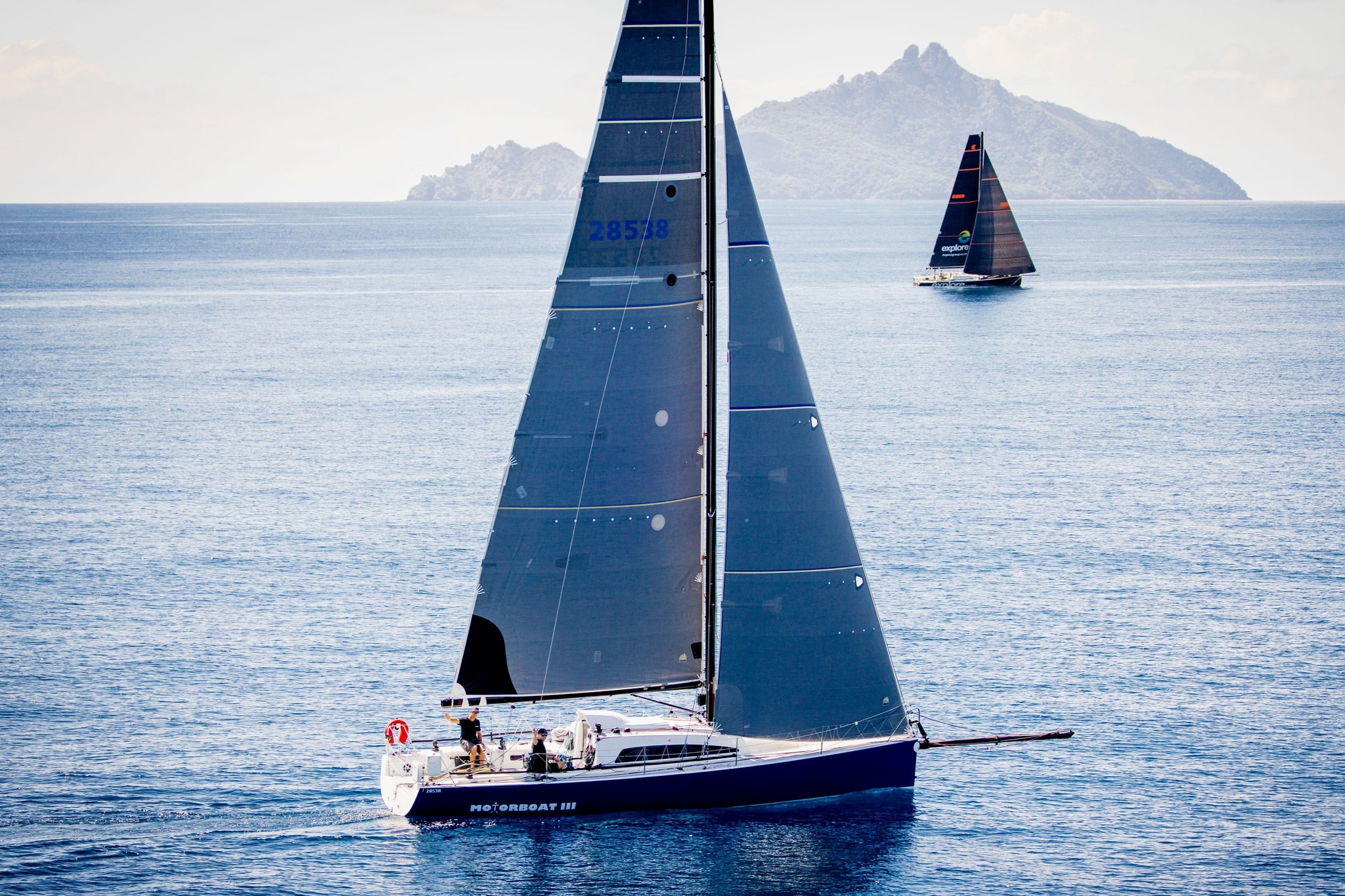
The Round North Island Yacht Race has long been the benchmark for two handed offshore sailors. It is the event that shapes reputations, tests judgement, and reminds every crew that New Zealand’s coastline remains one of the wildest in the world. For the upcoming edition, few boats embody that spirit as clearly as Motorboat III, the 2005 dark blue 11.6-metres Thompson 1150 sailed by Josh Tucker and Damon.
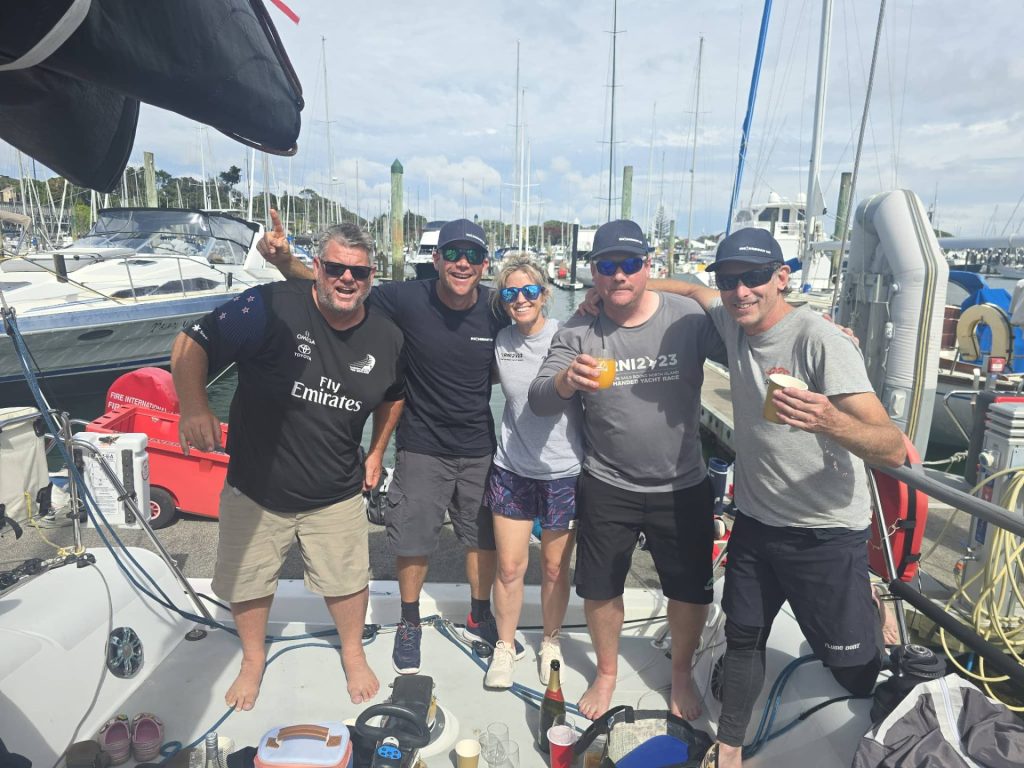
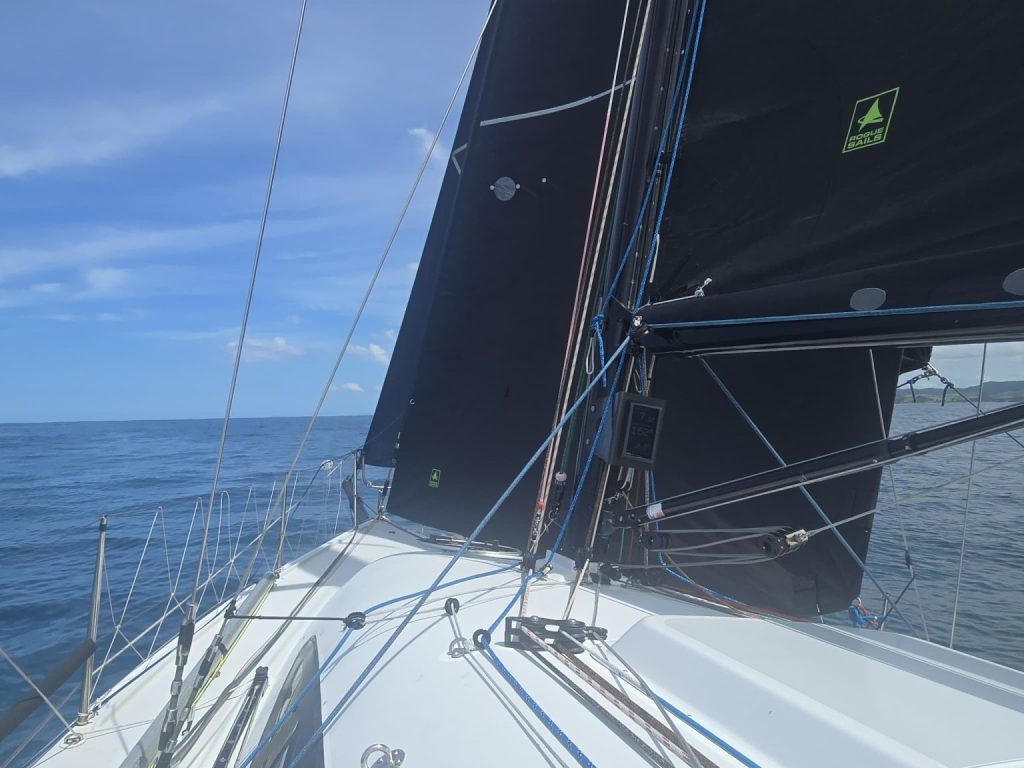
Fresh from taking line honours in the Doyle Sails Cavalli Islands Race, Motorboat III returned to Auckland, loaded food and gear, and immediately headed back to sea. The task was simple on paper. Complete a 250 mile non stop qualifier with the same two crew, Damon Jolliffe and Josh Tucker, who will sail the Round North Island. In practice, the voyage became a full shake down, zigzagging through the Gulf and north toward Little Barrier as the pair trialled new sail plans and stress tested the boat’s recent upgrades.
“It was all about learning,” Josh says. “We wanted to try every sail combination we could. We ticked off as many of the qualifying checks as possible and made sure the boat was ready.”
That mix of intent and grit is exactly what the RNI demands.
The qualifying path to the RNI
Every entry in the Round North Island Yacht Race must complete the same core requirements. A non stop 250 mile voyage. Sea Survival certificates for both crew. At least one offshore First Aid qualification. AIS and VHF checks twenty miles offshore. The list is not short. The reason is simple. Once the race starts, there are few exit points.
Many crews use the Cavalli Islands Race as their qualifier, which explains the heavy two handed turnout this year. Others complete the Northern Triangle (covering about 510 nautical miles from Auckland to Mangonui, then to Tauranga, and back to Auckland) or a set of long haul Short Handed Sailing Association of New Zealand (SSANZ) events. Whatever route they choose, the aim is the same. Prove the crew. Prove the boat. Prove that both are ready.
Josh understands the process as well as anyone. He has done five Round North Islands. Damon has done four. Together they have done two. It is a record built from commitment rather than comfort, and it began in a place many Kiwi sailors know well: a small boat in rough water.
Doyle Sails Cavalli Islands Race brings Round North Island contenders north

A lifetime shaped by the sea
Josh grew up on a Herreshoff 45 launched the year he was born. His parents raised four children aboard, cruising Hawke’s Bay, the Marlborough Sounds, and the Chathams. Later they sailed to protest nuclear testing at Mururoa and carried out long voyages through the Pacific.
“When you grow up like that, sailing becomes normal,” he says. “A lot of my early memories are from that boat. It was home.”
His own sailing career reflects that foundation: coastal voyages, offshore races, and a long path through the sailmaking world. He has completed four Rolex Sydney to Hobart Yacht Races and has spent thirty years racing out of Wellington, often in the kind of seas that turn newcomers pale.
“You have to be prepared for anything down there. Cook Strait gives you a hiding if the tide and wind line up the wrong way. [Cape] Palliser can be worse. The Wairarapa coast is brutal.”
It is an upbringing that reads like a training programme designed for the Round North Island.
Early Round North Islands and lessons in hardship
Josh’s first Round North Island Yacht Race was on an eight and a half metre sports boat with almost no interior. “Two weeks in a beanbag,” he jokes, but the reality was tougher. The boat was light, wet, and unforgiving. They won their division and learned the oldest lesson in offshore sailing. Hard boats make strong sailors.
Later campaigns followed on a Ross 930, a Sunfast 3600, and Motorboat II (an Elliott 10.5). Each race carried its own rhythm of frustration and triumph. A Cook Strait ride with a gennaker up in forty knots still sits high on the list. “Everything happens in the dark,” he says. “We had to ride it out. There was no other option.”

These stories matter because they explain why Motorboat III’s current campaign feels grounded rather than ambitious. The crew knows what they are walking into.
Motorboat III: old lines, new ideas
Motorboat III is owned by Damon and Jacs Jolliffe and doubles as the family cruiser when the racing schedule eases. That balance shows in the latest round of upgrades. The pair reshaped the interior to give their children more comfort on longer trips, added extra galley bench space and a proper fridge, and fitted a forepeak double berth. The water ballast tanks, so important upwind, switch across to fresh water storage when the boat is in cruising mode.
Motorboat III, once known as Serena, is a twenty-year-old Thompson 1150 with a strong downwind reputation. Her weakness was upwind performance, a common trait for lightweight boats with high horsepower sails. The solution was bold. Damon and Josh installed water ballast tanks, 500 kilos per side, with a transfer rate of about twenty seconds.
“It is like having a rail stacked with crew the whole time,” Josh says. “But locked in place. The boat feels like a tank. It just trucks along.”
The ballast system has raised their handicap, but the gains upwind are clear. It is the kind of modification that signals intent without bluster. Comfortable accommodation, a refined interior, and an experienced partnership tie the package together. Motorboat III is no longer a specialist. She is a complete offshore boat.
The Round North Island route: four legs, four different worlds
The Round North Island Yacht Race runs in late February, when summer patterns settle but tropical systems still lurk. Crews launch from Auckland and immediately stretch into blue water.
Auckland to Mangonui
A long push north past the familiar Coastal Classic route. The stopover lasts a minimum of twenty-four hours once most of the fleet is in. The tone is always upbeat. The race is young and the boats are fresh.
Mangonui to Waikawa
The longest leg. A passage round the top and down the west coast of the North Island. It can be quick and clean, or slow beyond belief. Southwesterlies turn the leg into a grind. Calm spells leave boats drifting. Crews finish at the mouth of the Sounds, then motor twenty miles to the marina for a forty-eight hour break.
Waikawa to Napier
The leg that deserves respect. Cook Strait demands a tide that works. The moment wind and current oppose, the sea stands up. Cape Palliser brings its own pressure with shifting winds and strong current lines. Then comes the Wairarapa coast, a stretch Josh calls “the worst part of New Zealand in general”. There are no safe harbours. You commit and you cope.
Napier to Auckland
A long run past Gisborne and round East Cape. The fleet threads through Colville Passage and finishes back in the Gulf. Napier’s marina shallowed after the floods, but the local community continues to haul boats to make space, creating one of the most spirited stopovers in the race.
A fleet ready for the challenge
Fleet numbers sit in the low thirties with a cap at forty. It is a healthy fleet and a committed one. The Round North Island Yacht Race remains a hard circuit, and every crew knows what the coastline can deliver. Motorboat III steps into that challenge with purpose. A refined boat. A seasoned crew. A campaign shaped by miles and resolve.