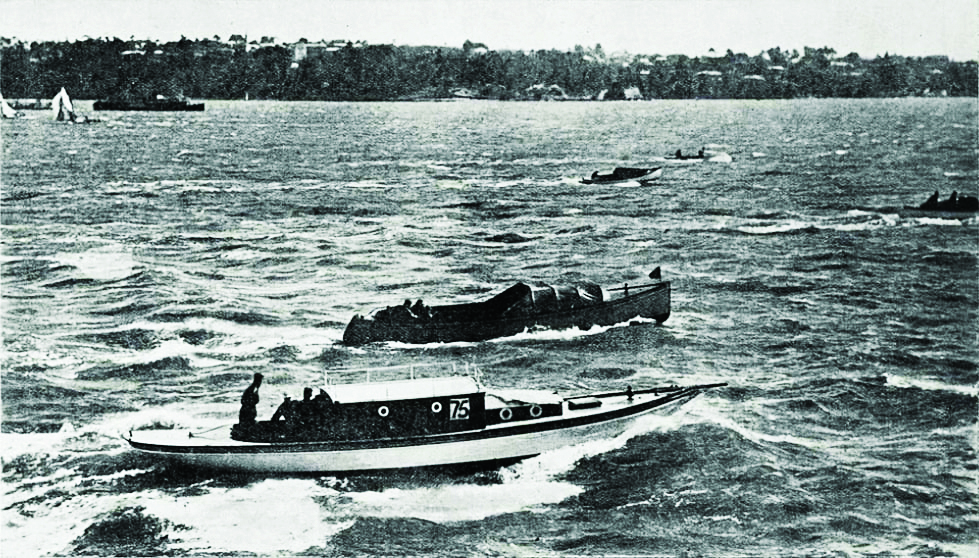
Although many Auckland keel yachts and the bigger mullet boats had been cruising up the Northland coast and taking part in summer regattas at Whangarei and Russell for many years, launches had only just reached enough maturity to follow. The design of internal combustion marine engines had been improving rapidly since 1900 and had achieved a level, although still primitive by today’s standards, that gave launches sufficient mechanical efficiency, safety, and reliability to contemplate such journeys. Explosions and fire from the benzine fuel remained an underlying danger, particularly from the four-gallon tins that had to be carried for constant refuelling in close proximity to liberal sparking from the magneto ignition and almost universal pipe and cigarette smoking.
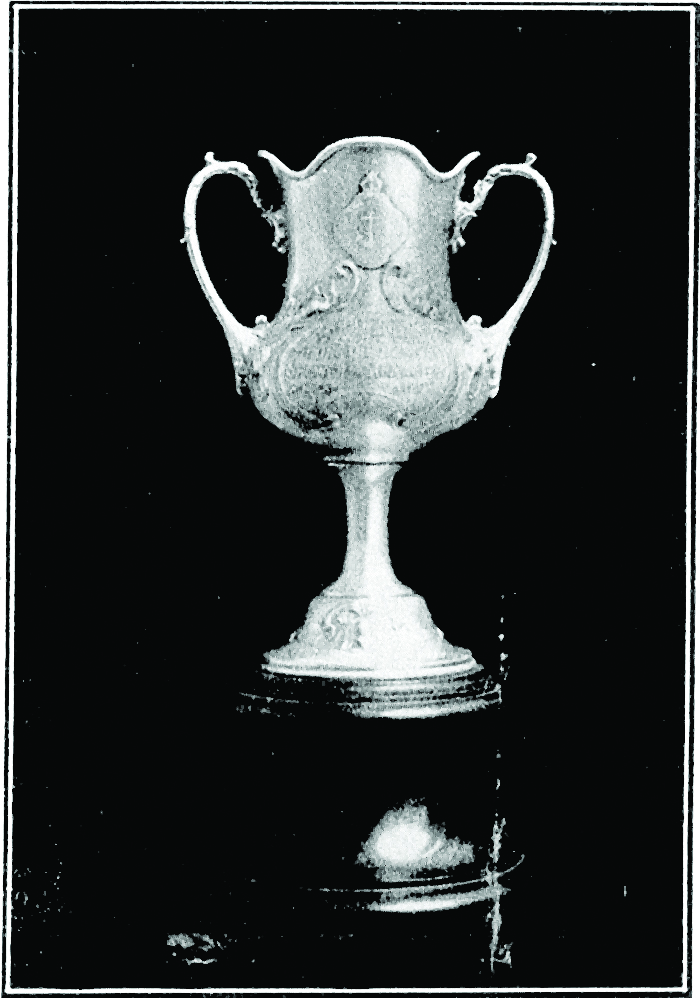
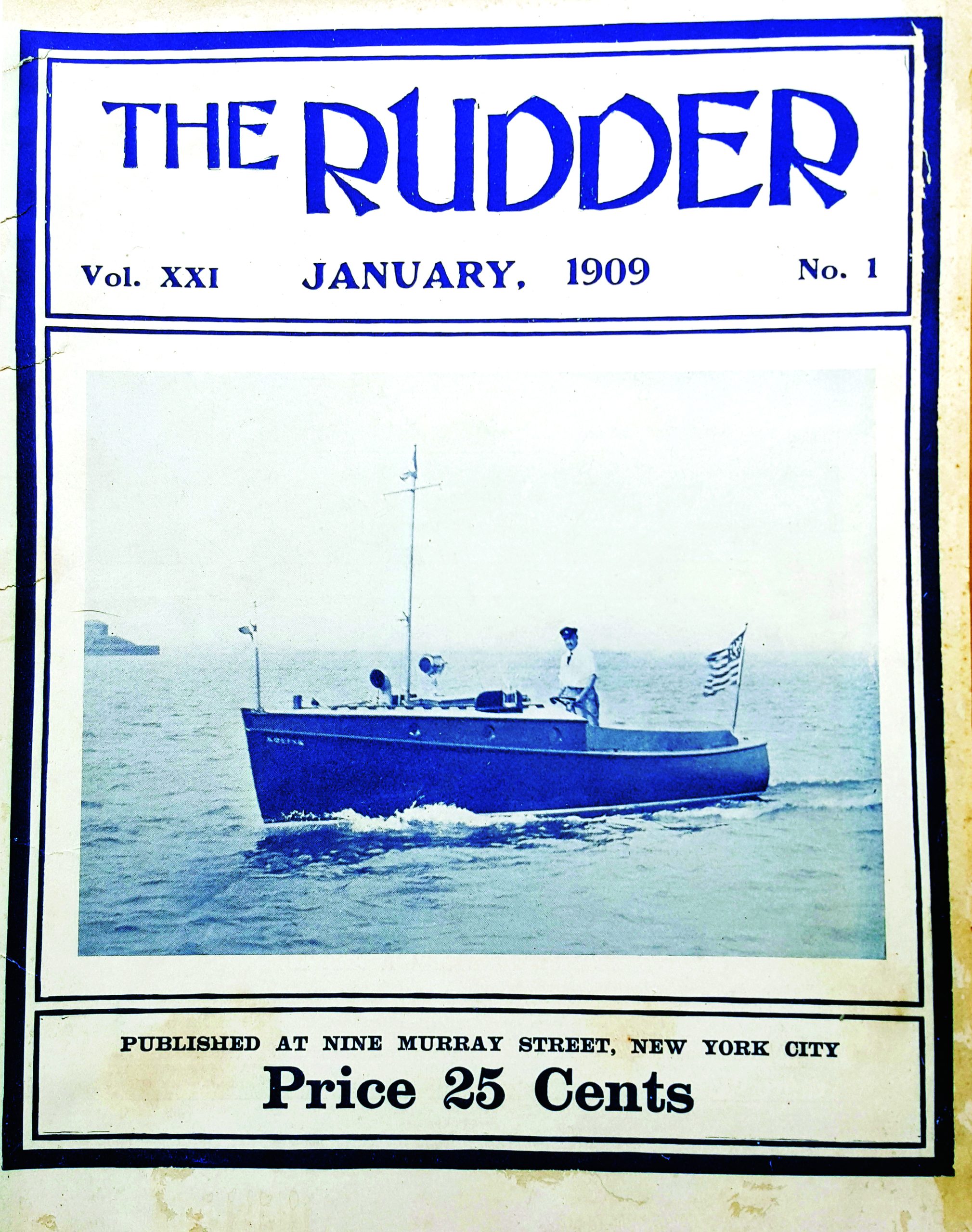
This story is a little complex, but it all started in 1908 when the New York monthly magazine The Rudder awarded a handsome cup to the Royal New Zealand Yacht Squadron for competition in an ocean race for motor launches. Rudder was, without doubt, the yachting publication with the greatest influence in New Zealand at the beginning of the 20th Century.
Edited by Thomas Fleming Day, The Rudder gave very good coverage of all aspects of yachting across the spectrum of pleasure boating, sail and power, from small centreboarders to the motor yachts of the rich and famous. From the 1890s it had promoted the amateur building of square-bilge designs for small centreboarders with a series of ‘skipjacks’ or ‘flatties’ which developed into a catalogue of hard-chine designs. The Rudder’s centreboard designs, like the 14ft Sea Mew and Sea Wren, inspired our centreboard yachtsmen for nearly 60 years, particularly Wellington yachtsmen like the Highet brothers. Without Rudder, we would not have had the flying Wellington 14-footers of the 1910s, the Auckland 14ft Y Class that the Wellington boats inspired from 1919, the Zeddie of 1921, the Tauranga/P Class of 1923, or the Idle Along of 1930.

Rudder was responsible for inspiring hard chine amateur construction worldwide, especially when it featured the Charles D. Mower Sea Bird keel yawl design in its November 1901 issue. It also featured articles on long-distance races and voyages in both yachts and motor launches all over the world, promoting them by awarding quite valuable cups and trophies to leading yacht clubs. For example, in 1907, Rudder had given a 60-guinea Rudder Cup to the Geelong Yacht Club for an Ocean Race across Bass Strait, which is still held annually.
As a result of representations Auckland yachting publicist ‘Wilkie’ Wilkinson made to the magazine, Thomas Fleming Day presented three of these Rudder Cups to New Zealand yacht clubs in 1908, one each to the Royal New Zealand Yacht Squadron, Otago Yacht Club, and Wilkie’s own club, North Shore Yacht Club.
The Otago Yacht Club allotted its Rudder Cup to an ocean race for yachts from Dunedin to Oamaru on December 24, 1909, a race that ended as soon as it started when a sudden, violent southwest blow scattered the fleet at the Otago Heads. During the mayhem, Prof. R.J. Scott’s Robert Logan keel yacht Yvonne was thrown bodily over the rough rock mole at the northern entrance but was unscathed, thanks to her diagonal construction. The event was finally run on October 15, 1910 and won by Iorangi, then the biggest yacht on the harbour by miles.




The North Shore Yacht Club allotted its Rudder Cup to an ocean race for yachts around Canoe Rock, which it held on January 22, 1910. Bill Swinnerton’s big Bailey yawl Heartsease was first home, but the cup was won on handicap by Dale Spencer’s 22ft mullet boat Acacia, which had 5½ hours on Heartsease, from Charles (Barky) Wild’s 26ft mullet boat Calypso and J. McAuliffe’s 24ft linear rater Miro.
However, a year earlier, the Squadron’s Rudder Cup race on Saturday, December 12, 1908 was the first of these races to be run. It was for the very handsome $US400 (then £75) Rudder Cup the magazine had presented to the RNZYS for a long-distance launch race, open to any recognised yacht club in New Zealand. Giving the cup to the Squadron had the effect of upstaging the efforts of the eager, three-year-old New Zealand Power Boat Association in fostering launch racing in the country. In 1908 this was a fresh and exciting sport, which had taken on some of the glamour that Grand Prix motor racing was beginning to generate in Europe. Indeed, motor-boating was seen as the future of yachting, and the bulk of new craft being ordered were launches.
A Squadron committee agonised for some time over the rules and handicapping and finished up with a bias towards cruising launches. No sails were to be used. Curiously, handicaps were to be sealed until the end of the race. The committee imposed a minimum length of 25ft lwl and restrictions on beam/length ratios to bar freak narrow boats like Whitney’s 1905 Grey Witch, thought to have the fastest type of hull before planing was well understood. Grey Witch, with an overall length of 45ft had a beam of only 6ft 8in and two 55hp V8 Antoinette aircraft engines in tandem.
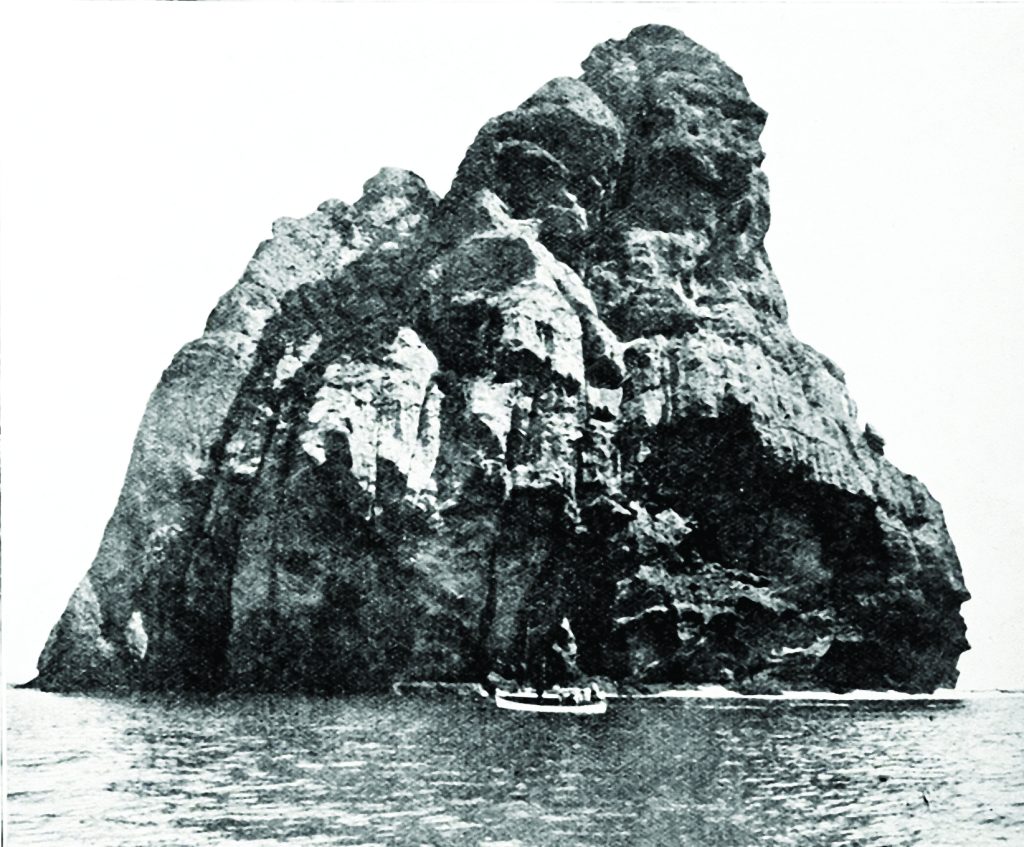
The course was 108nm from Queen Street Wharf, around Tuturu (Sail Rock), and back, recognised to be quite a test for the marine engines of the time. Naturally, it turned into a show-case for Auckland engine agencies and boatbuilders.
There were 14 entries in the race. Some, like Petrel, were older boats; some, like Seabird, were brand-new boats, designed for the race. The pedigrees, the technical details of the hulls, and engines of the entrants were as follows.
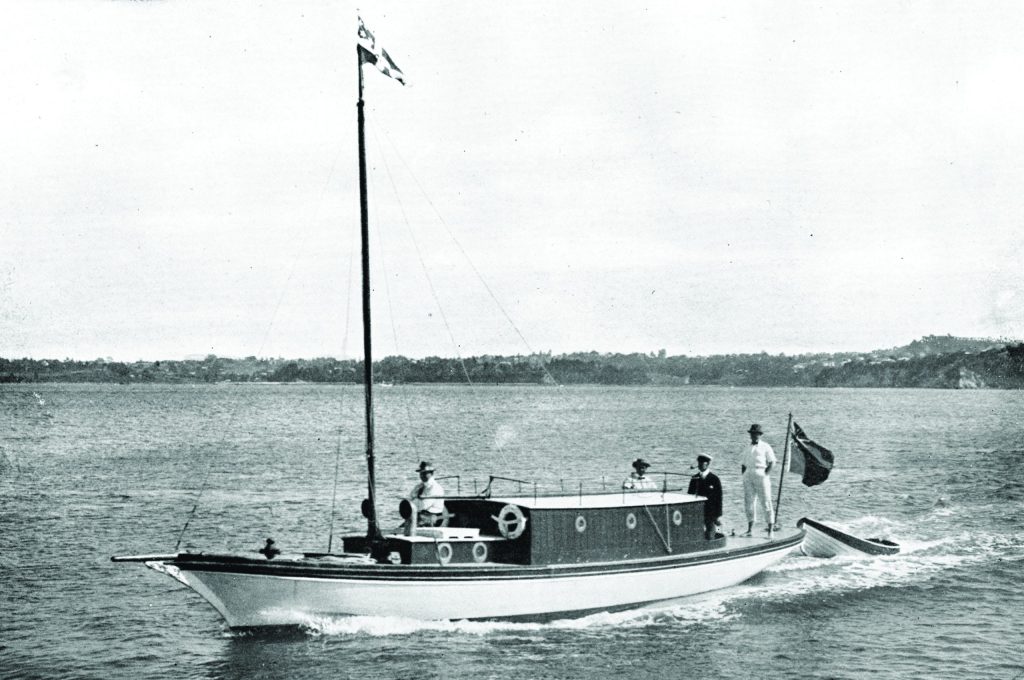
Petrel, the second-oldest and, as it turned out, the slowest entrant, was owned by W. Cecil Leys, a major shareholder in the Auckland Star. Bailey & Lowe had built her for him in January 1903 in their short-lived ‘retro’ style of the period, with a counter stern and a clipper bow. Her accommodation was in a pleasing but box-like structure above the deckline. Her dimensions were 40ft loa with a beam of 8ft 2in. Her first event after launching and the day after her engine was fitted was the Auckland Anniversary Regatta launch race, in which she came second on line, 52 seconds behind the racer Union but first on handicap, giving rise to a challenge by W.A. Ryan & Co., the owners of Union and the importers of her Union engine. Days later Petrel left on a two-week cruise to Mangonui and back. Every summer she took such a long cruise, including one to the Bay of Plenty as far as Opotiki in March 1908. She was more than ready for a race around Sail Rock.
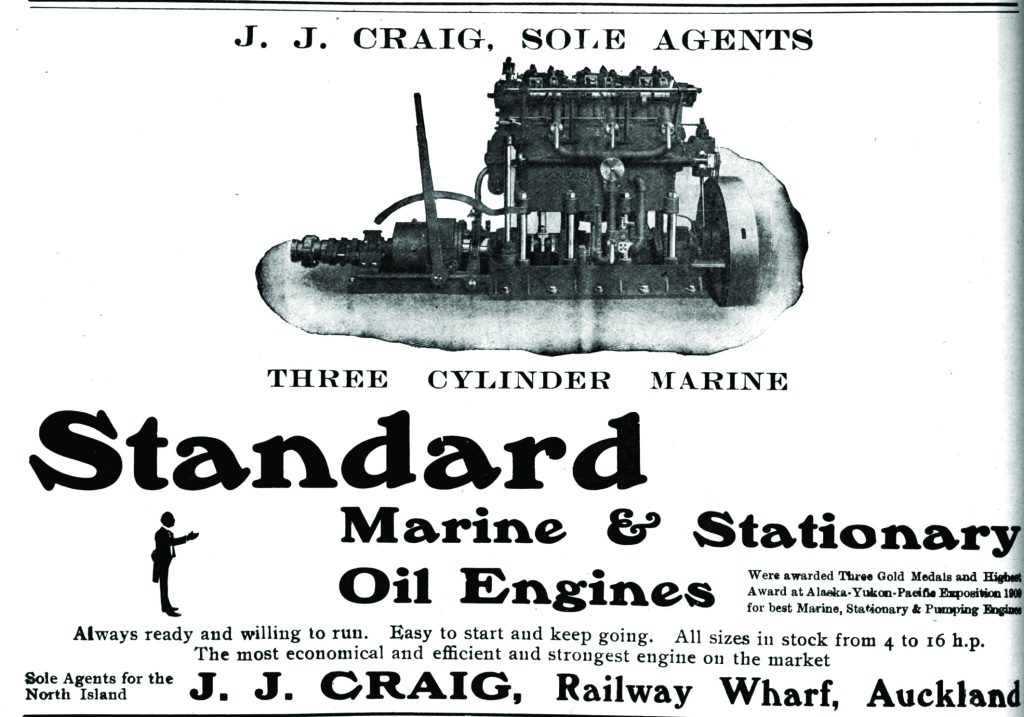
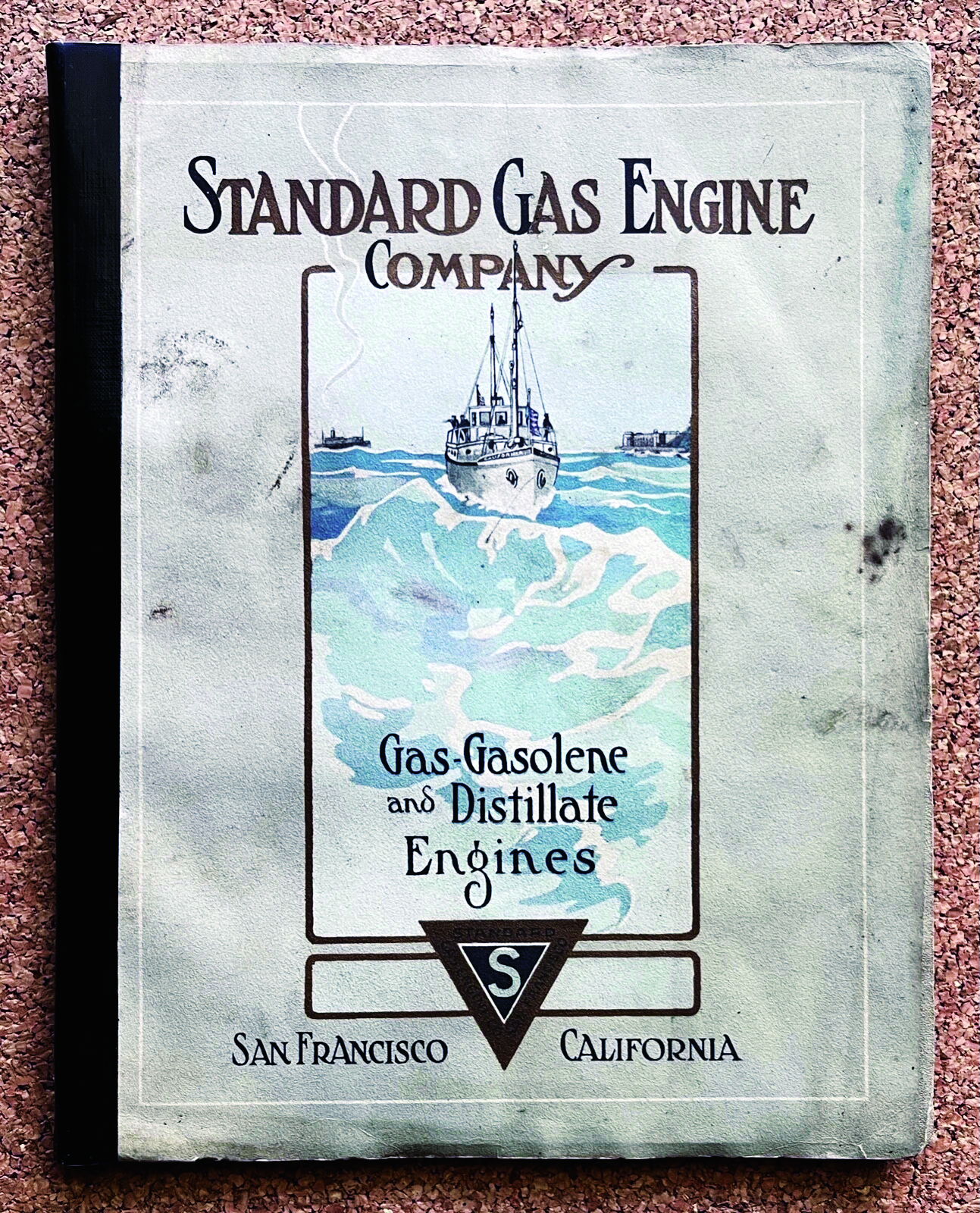
Petrel was powered by a Model F 15hp (rated) three-cylinder engine built by the Standard Gas Engine Co of San Francisco which came to be called the ‘Frisco Standard’ to distinguish it from the Standard engine built by the Standard Motor Construction Co. of Jersey City, New Jersey, referred to as the ‘Jersey Standard’.
The Model F Frisco Standard was one of the first engines produced by the San Francisco company after it was founded in 1901 by ex-employees of the Union Gas Engine Co, which had been closed by a strike. Hadley & Co. was the Australasian agent, but the Auckland agency later went to J.J. Craig Ltd. The engine fitted to Petrel was one of the first of these engines to arrive in New Zealand. The Model F had a bore of 6.25 inches and a stroke of 7.5 inches with a capacity of 696.15 cubic inches or 11.42 litres.

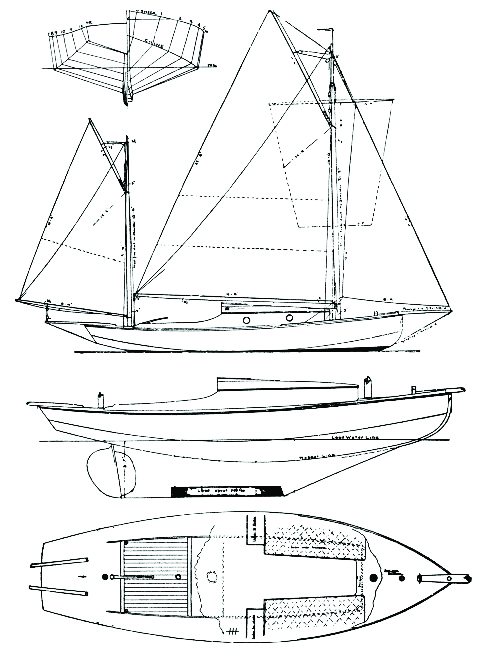
The cylinders were cast en bloc and carried on an open crankcase supported by four pillars a side (known as a ‘four poster’) with side splash plates. The valves were inlet over exhaust, mechanically operated by a camshaft running vertically up the back of the engine. Ignition was by low-tension magneto powered by telephone-type batteries. The maximum revolutions were probably around 400, so the engine was able to be connected directly to the propeller with a clutch and reversing gear but without a gearbox. It weighed 2900lbs (1350.5kg). In modern terms it was a large-capacity engine despite its apparently low horsepower rating.
But why ‘15 horsepower’? Around the turn of the 20th Century the actual horsepower produced by an engine was considered, like a steam engine’s, to be related to its basic dimension, its bore, modified by a factor. This was done not only as a rule of thumb to describe the actual power output but later also for tax purposes in the case of motor vehicles. So, we have this 1901-designed three-cylinder Model F with a bore of 6.25 inches giving a nominal figure of 15 horsepower at 360rpm from 11.42 litres, when it probably developed at least twice that much with a large torque figure. It looks like Standard used the formula; bore in inches x 2 x number of cylinders divided by 2.5. As the design of the internal combustion engine rapidly developed from these early days, actual power output increased as much as tenfold.
The target market for the Frisco Standard was the West Coast of the United States and the Pacific on its doorstep. No effort was made to advertise on the Atlantic seaboard. Its main rival was the Union Gas Engine Co. also of San Francisco, from where its personnel had recently come. All these early US-built engines were well-made and meant to last and be readily maintained in harsh environments, especially in fishing vessels. Since the materials used and the tooling were little advanced from those in steam engine technology, New Zealand engineers soon cottoned on and produced a series of marine engines that rivalled the American products. Engines like the Anderson and Zealandia (1905), Kapai (1906), Viking (1909, Price (1911), Twigg and Shacklock Orion (1912).
Next month I will carry on with an examination of the other 13 entrants.