A reset for northeastern lobster fisheries
The Government has confirmed a new set of sustainability measures for rock lobster fisheries across northeastern New Zealand, introducing large area closures and revised recreational limits aimed at rebuilding stocks and improving reef health.
The decisions, announced by Minister for Oceans and Fisheries Shane Jones, affect the Northland spiny rock lobster fishery (CRA 1), parts of the Hauraki Gulf and Bay of Plenty fishery (CRA 2), and the national packhorse rock lobster fishery (PHC 1).
All measures will take effect from 1 April 2026.
East coast CRA 1 to close completely
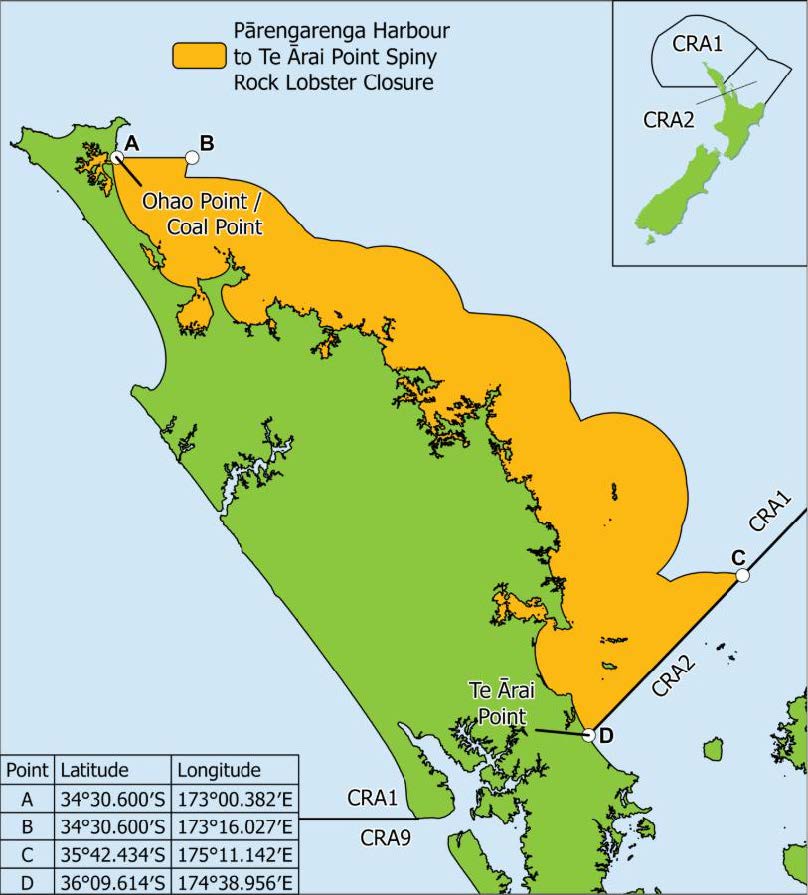
The most significant change is the closure of the entire east coast of CRA 1 to spiny rock lobster fishing.

From Pārengarenga Harbour in the far north to Te Ārai Point north of Auckland, all commercial and recreational harvest of spiny rock lobster will be prohibited out to 12 nautical miles offshore.
The Minister cited evidence that lobster abundance along this coastline is critically low, alongside concerns about the expansion of urchin barrens linked to reduced predator numbers.
Urchin barrens form when dense populations of sea urchins strip kelp from rocky reefs, leaving behind degraded habitats with lower productivity and biodiversity.
Voluntary measures replaced by regulation
Commercial fishing effort along the east coast of CRA 1 has already dropped away, following an industry-led voluntary closure put in place in response to declining stocks.




While that action was acknowledged, the Government concluded it was no longer sufficient. Formal regulation was required to meet Fisheries Act obligations and support recovery of lobster populations.
The closure applies equally to recreational and commercial fishers, reflecting the scale of the decline and the need for a consistent management approach.
Effort shift addressed in northern CRA 2
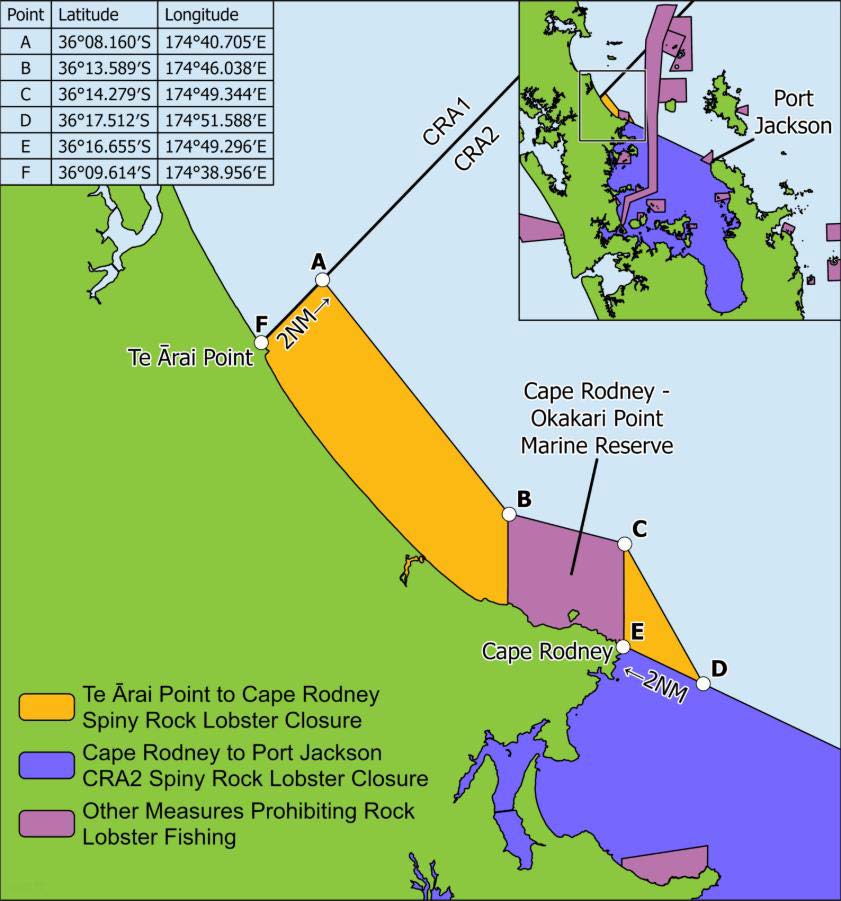
To prevent fishing pressure concentrating immediately south of the CRA 1 closure, a further closure has been confirmed in northern CRA 2.
This area runs from Te Ārai Point to Cape Rodney and covers both the coastline and adjacent coastal waters. The aim is to avoid increased harvesting in areas expected to benefit from stock recovery further north.
Once implemented, the combined closures will place most coastal waters from Northland through to the Coromandel Peninsula off limits to spiny rock lobster fishing.
Recreational limits tightened
Changes have also been made to recreational daily limits.
In CRA 1, the daily limit for spiny rock lobster will reduce from three to two per fisher. When combined with packhorse lobster, the total daily limit in this area will drop from six to five per person.

A new national recreational daily limit of three packhorse rock lobster per fisher has also been introduced.
The decision reflects concerns raised by iwi fisheries forums about localised depletion of packhorse lobster, particularly in parts of the far north during peak periods of recreational effort.
Packhorse lobster are also recognised as predators of long-spined urchins, giving them an important role in maintaining balance on affected reefs.
No immediate change in southern CRA 2
Recreational limits for spiny rock lobster in CRA 2, from Te Ārai Point to Waihi Beach, will remain unchanged for now.
The Minister indicated that fishing behaviour will be closely monitored following the closures, particularly alongside the establishment of new marine protection areas in the Hauraki Gulf. Further measures remain possible if pressure shifts significantly.
Five-year review built in
All closures will be reviewed after five years to assess whether they are delivering the intended outcomes.
In the lead-up to April 2026, stakeholders have been urged to act responsibly, particularly given the time lag before the new rules take effect.
What this means on the water
For recreational fishers, the changes mark a clear tightening of access and limits across much of the upper North Island. Familiar grounds will be closed, daily limits will be lower in some areas, and compliance will be under greater scrutiny.
At the same time, the decisions reflect a broader move toward ecosystem-based management, where rebuilding predator populations is seen as central to restoring reef health.
Whether these measures succeed will become clearer over time. For now, they represent one of the most significant interventions in New Zealand’s inshore lobster fisheries in recent years.