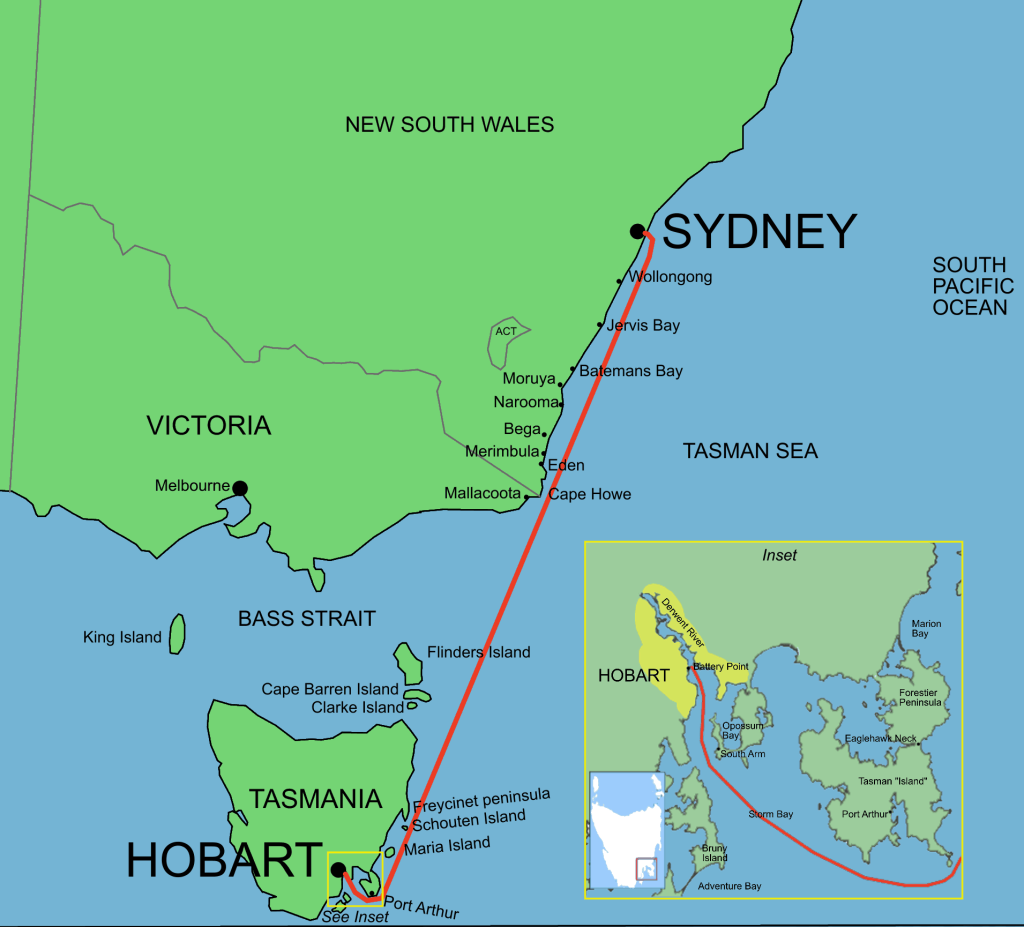
The Sydney to Hobart does not reveal itself quickly. Fifteen minutes after the start, the race is still forming rather than settling. What unfolded as the fleet cleared Sydney Heads was not a pattern, but a series of early signals. Positioning, sail choices, and how crews handled pressure offered the first clues, even though more than 600 nautical miles still lay ahead.
Inside the Heads, conditions remained deceptive. The breeze softened briefly in the lee of South Head, hovering around 15 knots and arriving unevenly. Boats pushed through a short, uncomfortable chop while waiting to reconnect with the offshore flow. Beyond the harbour entrance, the water told a different story. A lumpy seaway was already running, with three to four metre swells forecast to build through the afternoon.
First boats through
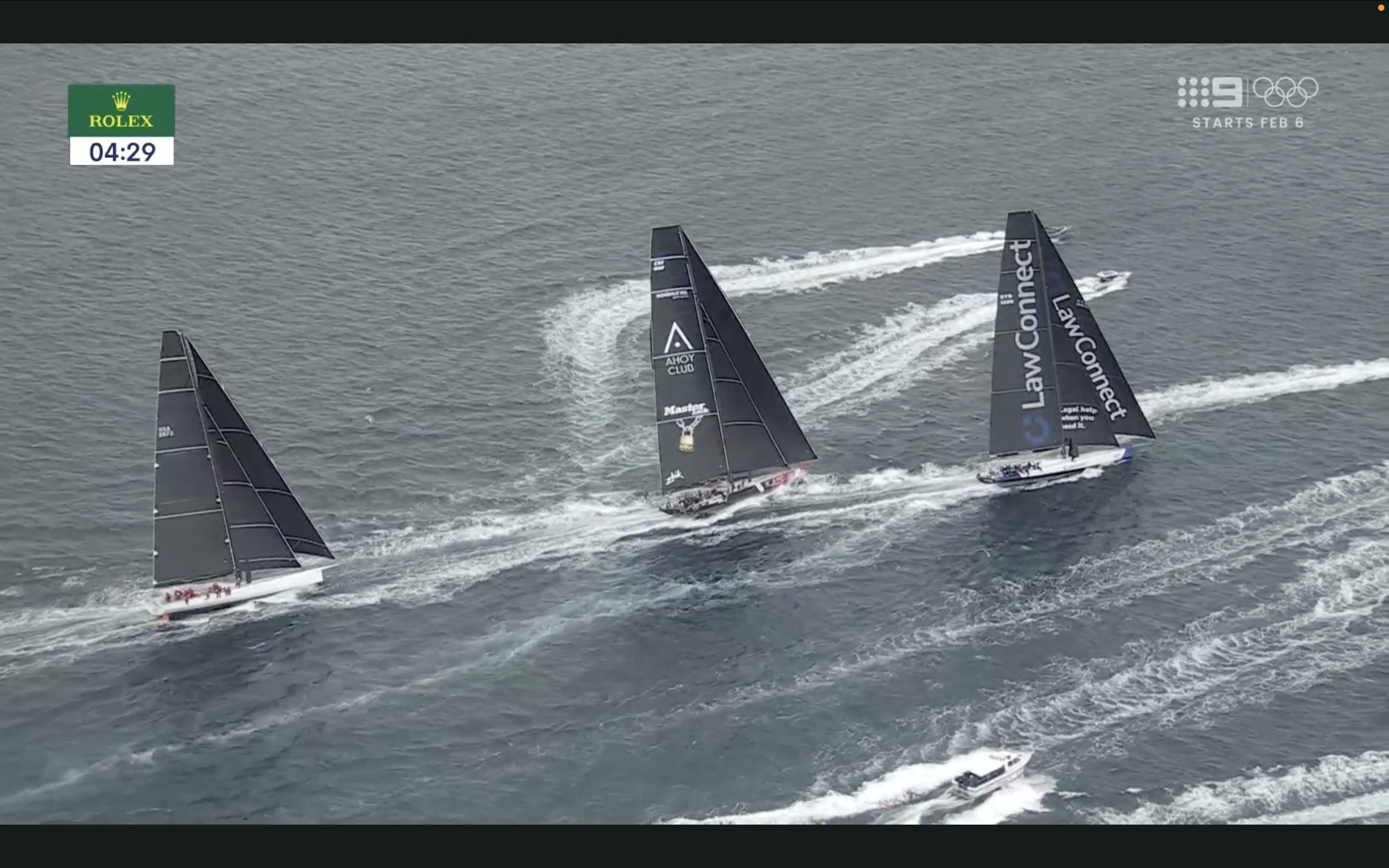
LawConnect led the fleet around the first turning mark, rounding in just under six minutes. The time sat outside the benchmark set by Comanche in 2014, but the emphasis was elsewhere. LawConnect looked composed, tidy, and clearly focused on early control rather than outright speed.
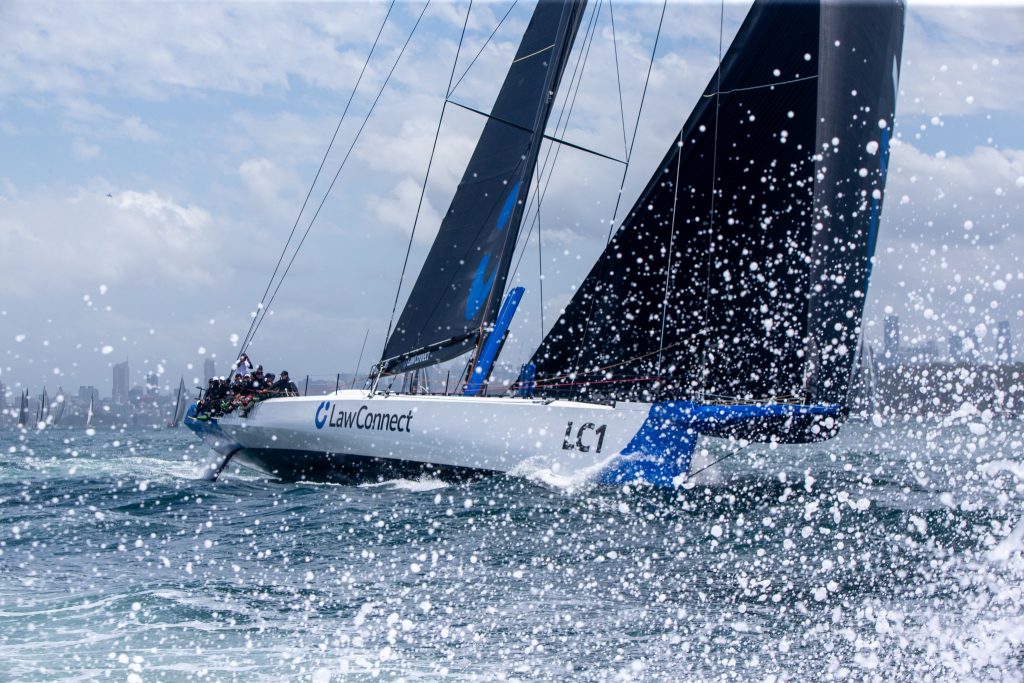
Master Lock Comanche followed closely. Rather than mirror LawConnect’s line, she began to explore a slightly lower angle offshore, trading height for speed. The gap between the two remained small, measured in only a few boat lengths, but the difference in approach was clear from the outset.
Lucky rounded next and continued to impress. Despite giving away length to the super maxis, she looked comfortable in the conditions. Upright and well balanced, Lucky stayed firmly connected to the leaders as the fleet transitioned into open water.
Palm Beach 100 followed, sailing a conservative but disciplined race. With a reef in and clean sail handling, the emphasis was on stability and protecting the boat. It was a measured approach, well suited to the sea state waiting offshore.
SHK Scallywag powered away to leeward, while Wild Thing 100 slotted in behind. Not far astern, URM Group and No Limit underlined how competitive the mini maxis remain, holding touch with boats significantly larger.
Pressure builds early
While the front of the fleet remained orderly, the opening minutes were not without excitement. Several boats found themselves underpowered inside the Heads as the breeze thinned and the fleet compressed. Those caught to leeward struggled most, with disturbed air and limited options.
Sail handling also came under immediate strain. Master Lock Comanche spent valuable time working to recover a reaching sail from the bow, while Vixen encountered problems deploying a spinnaker, appearing to have a jam near the head. The result was lost momentum and a slow slide backwards as pressure faded.
These moments may seem minor, but in a race of this length, they matter. The Sydney to Hobart has a habit of amplifying small issues, especially once the weather takes control.
Still forming, not settled
As the leaders reached the outer turning mark, the race began its next phase. The fleet transitioned from reaching to sailing higher, setting up for what is expected to be a long upwind stretch lasting well into the next two days. LawConnect exited with a slender advantage, only two to three boat lengths clear of Comanche.
There was no sense of anything being locked in. What could be seen, however, were priorities. LawConnect favoured control. Comanche looked to apply speed and pressure. Lucky showed she belonged at the front. Palm Beach 100 sailed with restraint, clearly thinking beyond the opening hour.
Fifteen minutes into the Sydney to Hobart, the race was not settled. It was still introducing itself.