Callisto’s owner and skipper James Murray readily admits that their Sydney to Hobart campaign was never about chasing line honours. Rather, he says, it was about sailing the race the boat was built for, protecting the platform, and making decisions that would were right for Callisto‘s race.
That approach delivered an eighth-place finish across the line and an IRC Division One win on corrected time.
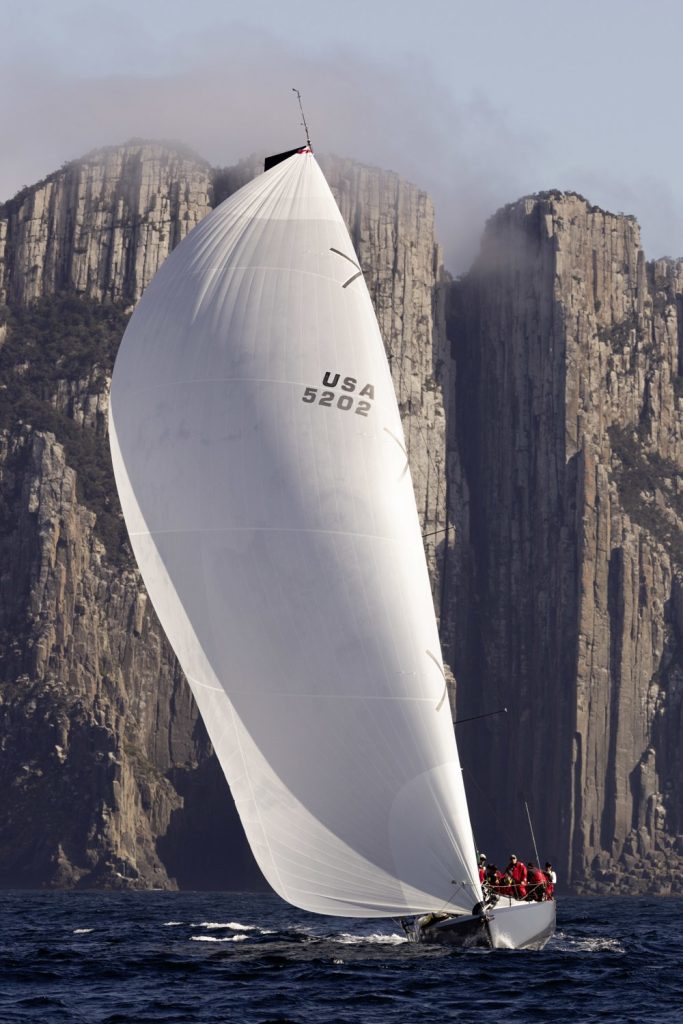
Murray describes the race as one of constant pressure rather than isolated moments.
“There really weren’t any easy phases,” he said. “Once we turned south, it stayed physical. That’s when preparation and discipline matter more than anything else.”
A boat that came through intact
In a year where roughly a quarter of the fleet were forced to withdraw mostly due to boat damage, and crew illness or injury, Callisto finished the race without harm to crew, sails, or structure.
“We walked a very fine line between performance and preservation,” Murray said. “The goal was to sail hard, but never past the point where you start trading safety or the boat itself for a few extra miles.”
Water ingress was minimal, limited to what Murray described as one or two buckets per six-hourly watch cycle, cleared routinely from bilges and pockets below. Compared to some of his past offshore campaigns, it was a remarkably dry ride.
“The boat lived exactly as we expected,” he said. “That’s a credit to the design, the preparation, and the way the crew sailed her.”
Trusting judgement over forecasts
Murray is candid about the limits of modern weather modelling, particularly in offshore racing.
“There’s a belief that forecasts are precise and authoritative,” he said. “They’re not. Once you get beyond real time, confidence drops quickly. A day out is uncertain. Three days out, it’s basically guesswork.”
Rather than blindly following modelled routing, the team defined clear risk thresholds before the start. When conditions pushed close to those limits, they adjusted accordingly.
“We got to about eighty-five or ninety percent of our comfort level, then tacked back toward flatter water,” Murray said. “Could we have pushed harder offshore? Probably. But what are you gaining for that risk?”
In a handicap race, that calculation proved decisive.
Kiwi experience where it mattered most
Callisto‘s core sailing group included Dean Barker as tactician, Stu Bannatyne as strategist, Justin Ferris, who designed and built the Doyle Sails inventory carried aboard, and Jared Henderson in the pit.
Murray describes Henderson’s role as critical.
“If your job is preventing chaos, that’s the position,” he said. “Jared helps us execute the hardest manoeuvres cleanly, and under pressure.”
Ferris’s contribution went beyond trimming.
“Justin didn’t just design the sails, he built them,” Murray said. “He knows them inside out, and he’s constantly refining. That depth of knowledge matters offshore.”
Between them, the group brought decades of offshore and America’s Cup experience, allowing Callisto to be sailed confidently without overreaching.
Winning the race that mattered
Murray is clear-eyed about objectives.
“We were never going to win line honours,” he said. “That was never the goal. In offshore handicap racing, the best you can do is win your division. Everything else depends on the wind mix.”
Callisto did exactly that.
Eighth across the line, fastest finisher under 60 feet, and first in IRC Division One against a fleet dominated by TP52s. It was a result earned through good strategy and consistency.
Sailing home and the next chapter
With Hobart behind them, Callisto’s Southern Hemisphere programme is already moving forward.
The boat will sail back across the Tasman to Auckland, delivered by a mixed crew that includes Murray’s niece, Isabel Dixon, a college sailor at Maine Maritime Academy. It will be her first Tasman crossing, and one Murray admits he is slightly jealous to miss.
Once home, Callisto will be hauled out and given what Murray affectionately calls a “spa treatment”.
“She needs to be stripped down, inspected, and reset properly,” he said. “No rushing. That’s how you keep a programme healthy.”
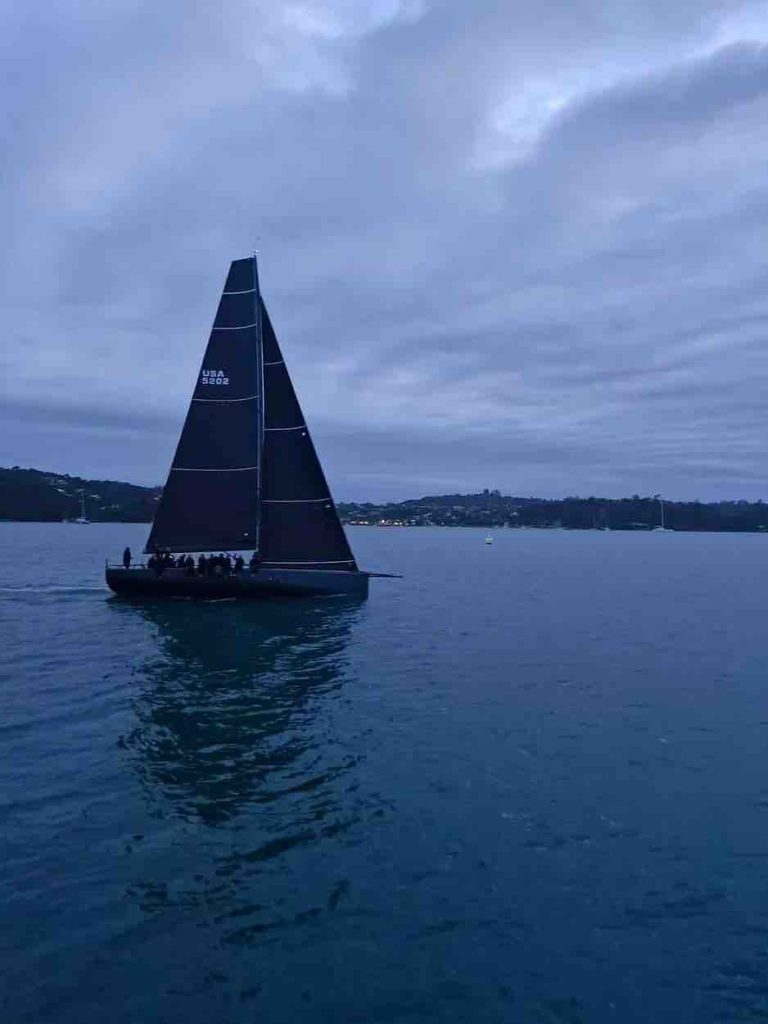
The boat will be laid up in Auckland through winter, before returning to the water ahead of the 2026 New Zealand season, including a confirmed return to the PIC Coastal Classic.
A programme built for longevity
While Callisto settles back into New Zealand waters, Murray will return to the United States to begin a J70 Worlds campaign, racing through the Bacardi Series in Florida before heading to Europe later in the year.
It’s all part of a broader approach that treats offshore racing as a long game rather than a single event.
“You’re building teams, systems, and judgement over time,” Murray said. “That’s what lasts.”
In a Sydney to Hobart that punished haste and rewarded restraint, Callisto’s campaign stood as a reminder that the quiet programmes often get the last word.