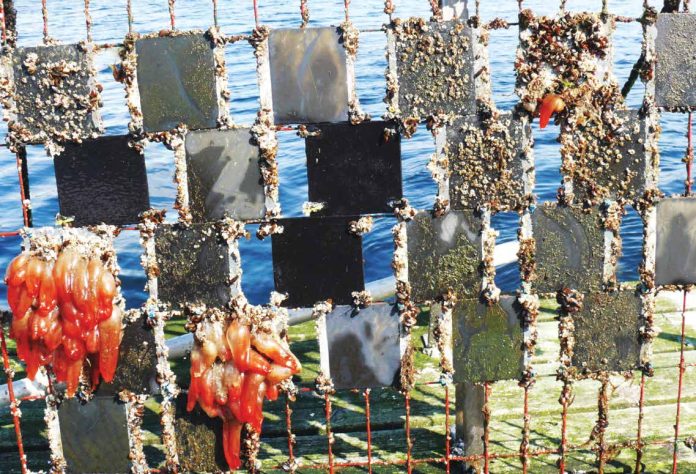


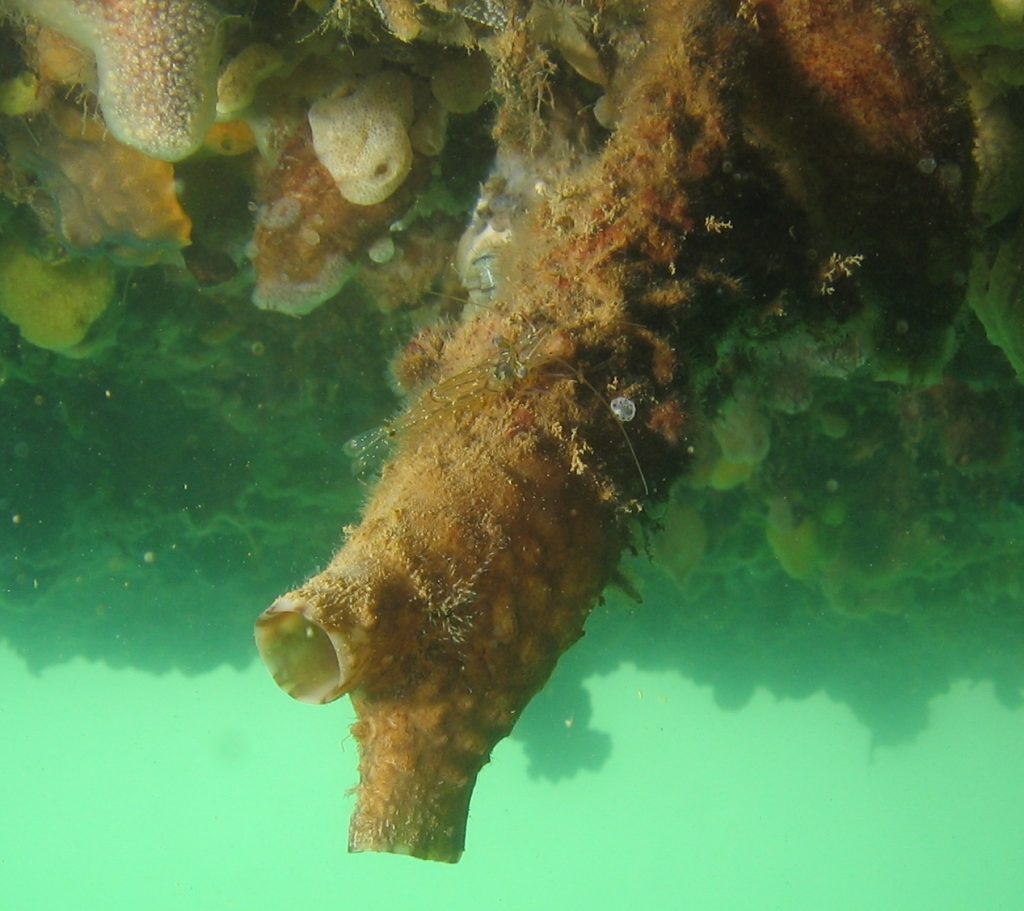
The clubbed tunicate prefers to grow on marine structures and boat hulls, affecting your boat’s performance and hitchhiking to other places. It is disliked by the aquaculture industry because it grows in large densities on oyster and mussel lines, suffocating their shellfish, competing for space and food and adding to processing costs.
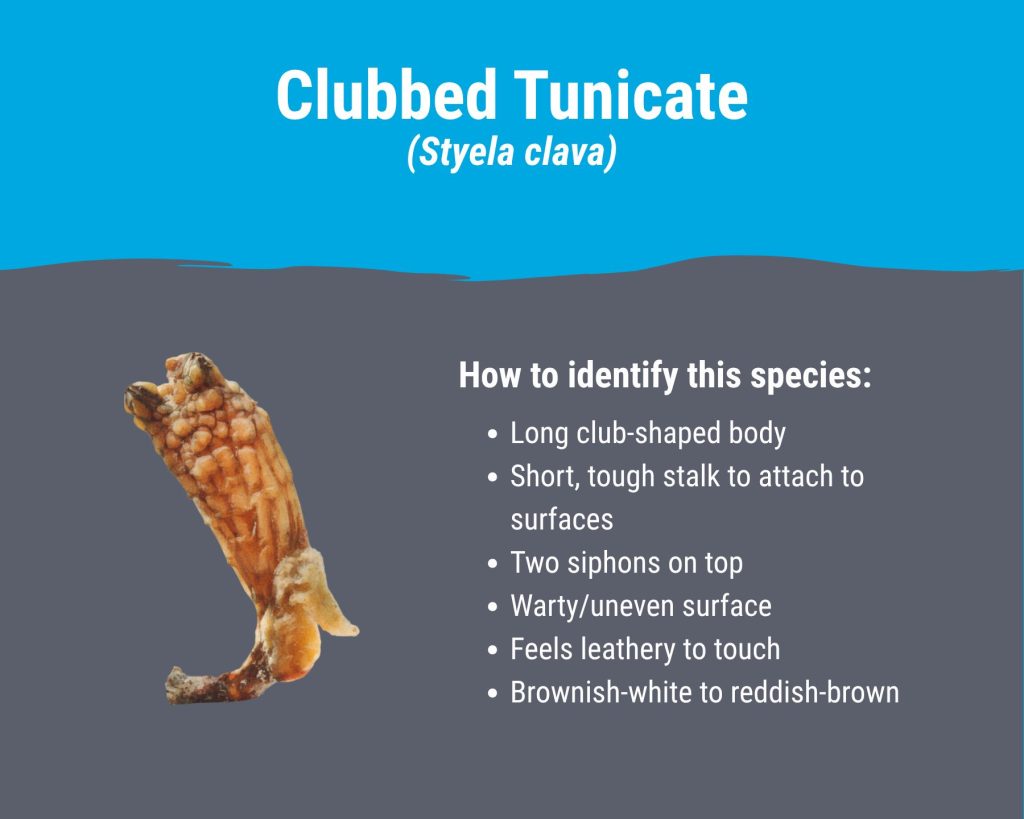
How to identify Styela clava
- Long club-shaped body
- Short, tough stalk to attach to surfaces
- Two siphons on top
- Warty/uneven surface
- Feels leathery to touch
- Brownish-white to reddish-brown
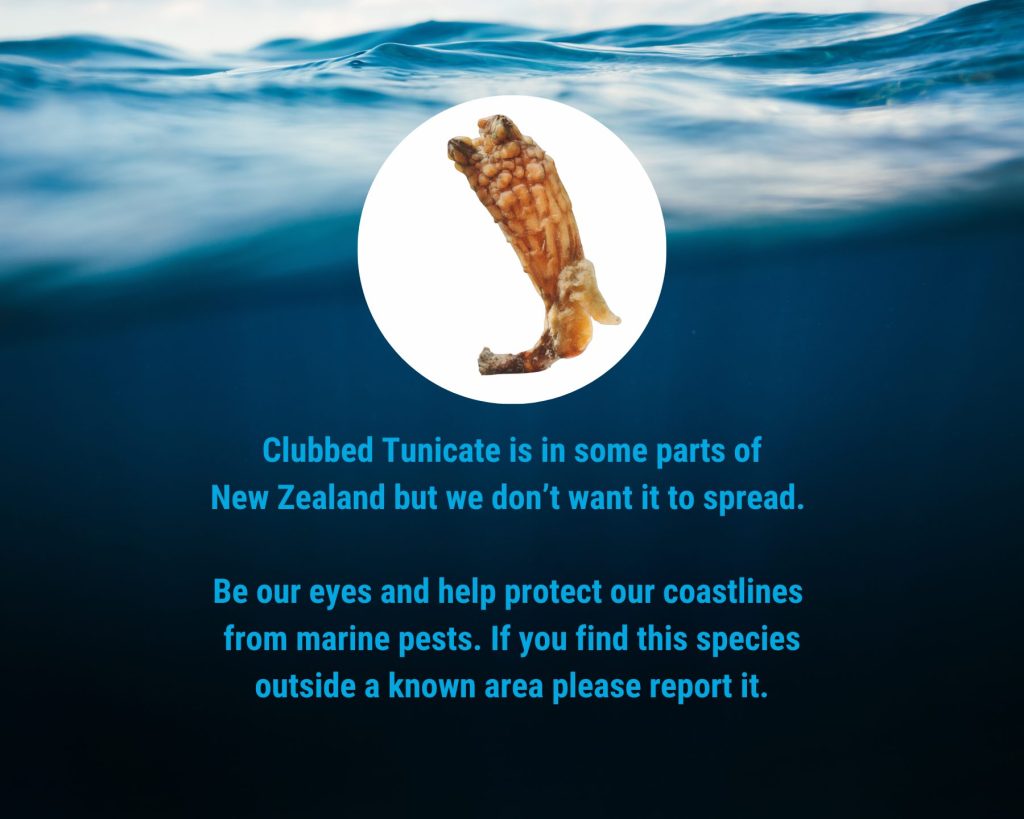
This species is known to be in the following locations in Northland, Auckland, Nelson, Tasman, Marlborough, Canterbury, Wellington. If you find it outside this area, please report it.
Bay of Islands, Whangārei Harbour, Waitematā Harbour, wider Hauraki Gulf, Port Fitzroy – Great Barrier Island, Port Taranaki, Porirua Harbour, Nelson Marina, Picton Marina, Marlborough Sounds, Lyttelton Harbour, Otago Harbour
This list is correct to the best of our knowledge at the time of publishing – for a full list of marine pest locations, please go to the Marine Biosecurity Porthole.
From the team at Clean Below? Good to Go – visit marinepests.nz to get everything you need to know about marine pests ID, boats, rules and more.