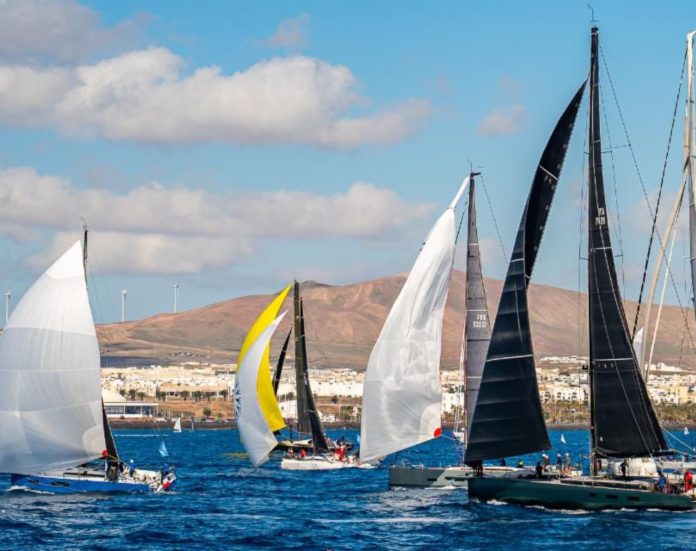
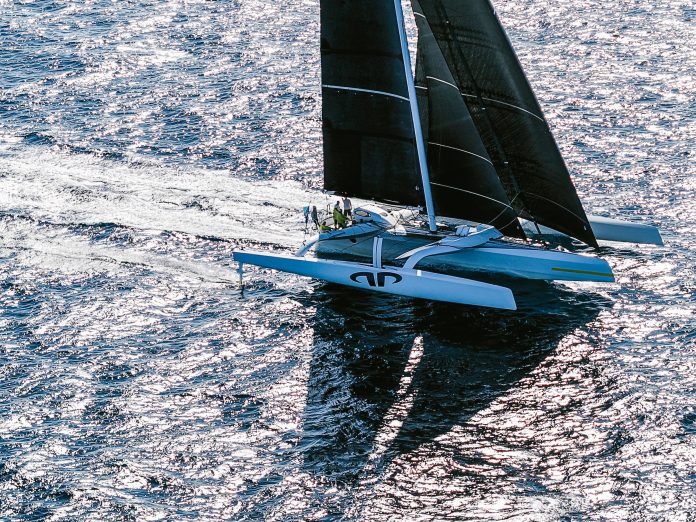
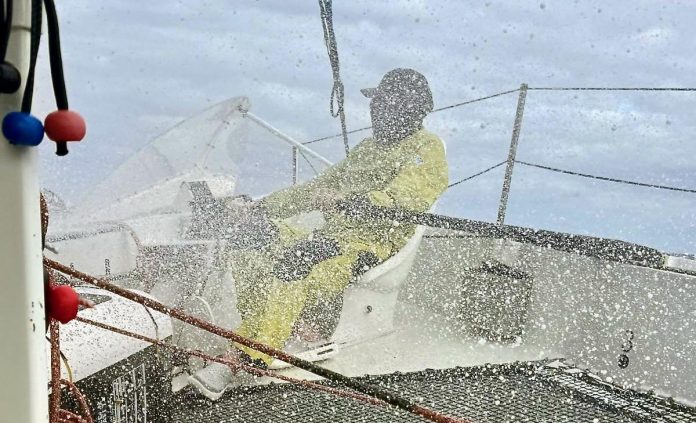
While much of the fleet remains at sea, the numbers are now settled. None of the boats still racing can overhaul Palanad 4’s corrected time. The French flagged Mach 50 completed the 3,000 mile course in an elapsed time of 8 days, 5 hours, 55 minutes and 50 seconds, locking in overall victory well before the final finishers arrive.
Owned by Olivier Magre and skippered by his son Antoine Magre, the result carries weight beyond the trophy itself. It marks overall honours for a radical new design in only its second major offshore race, following the boat’s competitive debut at the 2025 Rolex Fastnet Race.
For Olivier Magre, the achievement was personal as well as competitive. Racing alongside his son added a layer that few campaigns ever experience.
“As a father, this is a dream,” he said. “On the boat Antoine is the skipper. He makes the calls and the crew follows. I was happy to be a crew member and to share that with him.”

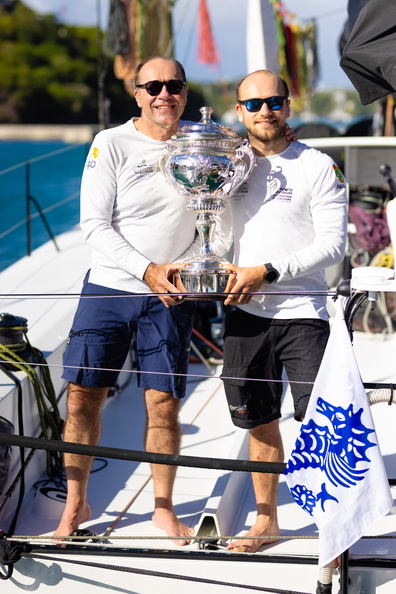
From the skipper’s perspective, the win offers clear validation of the Mach 50 concept and its scow bow canting keel configuration under IRC.
“We believed in the potential, but it had to be proven offshore,” Antoine Magre said. “Winning overall here shows the boat belongs at this level.”
Preparation was a major factor. Unlike the Fastnet, where the team had limited miles, Palanad 4 arrived on the start line with a full autumn of training behind it. That showed across a race dominated by VMG downwind sailing, not traditionally the design’s strongest angle.
Equally important was reliability. Despite being a relatively new platform, the boat crossed the Atlantic without major issues, allowing the crew to focus on sailing rather than problem solving.
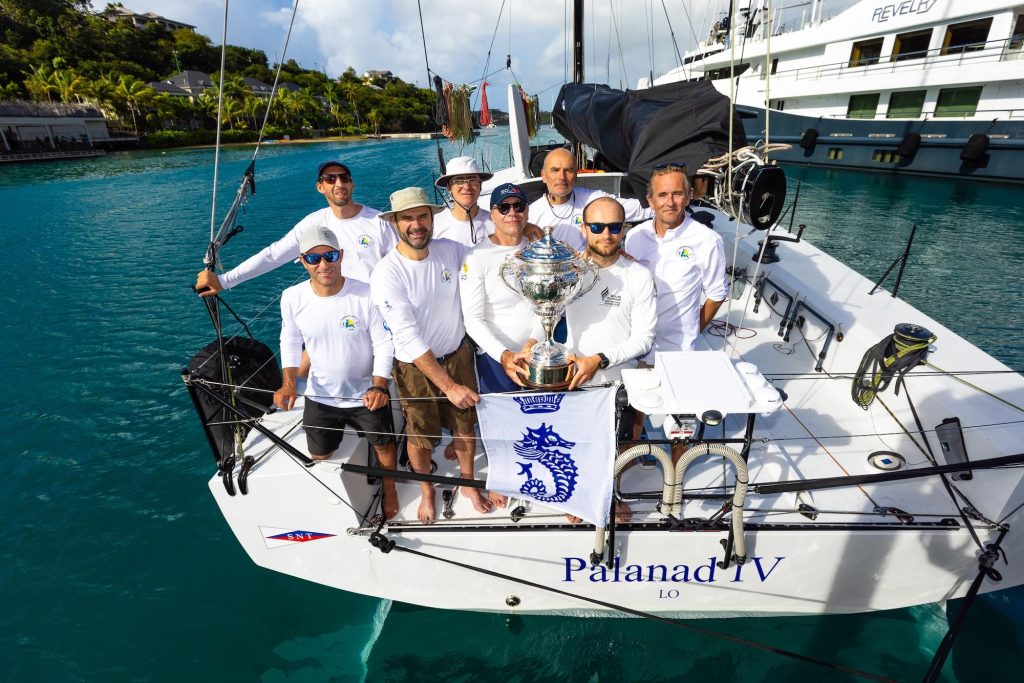
With Palanad 4 now secured in Antigua, attention turns to the RORC Caribbean 600. It will be a very different test, shorter, sharper, and more transitional, but confidence within the team is high after a defining Atlantic result.