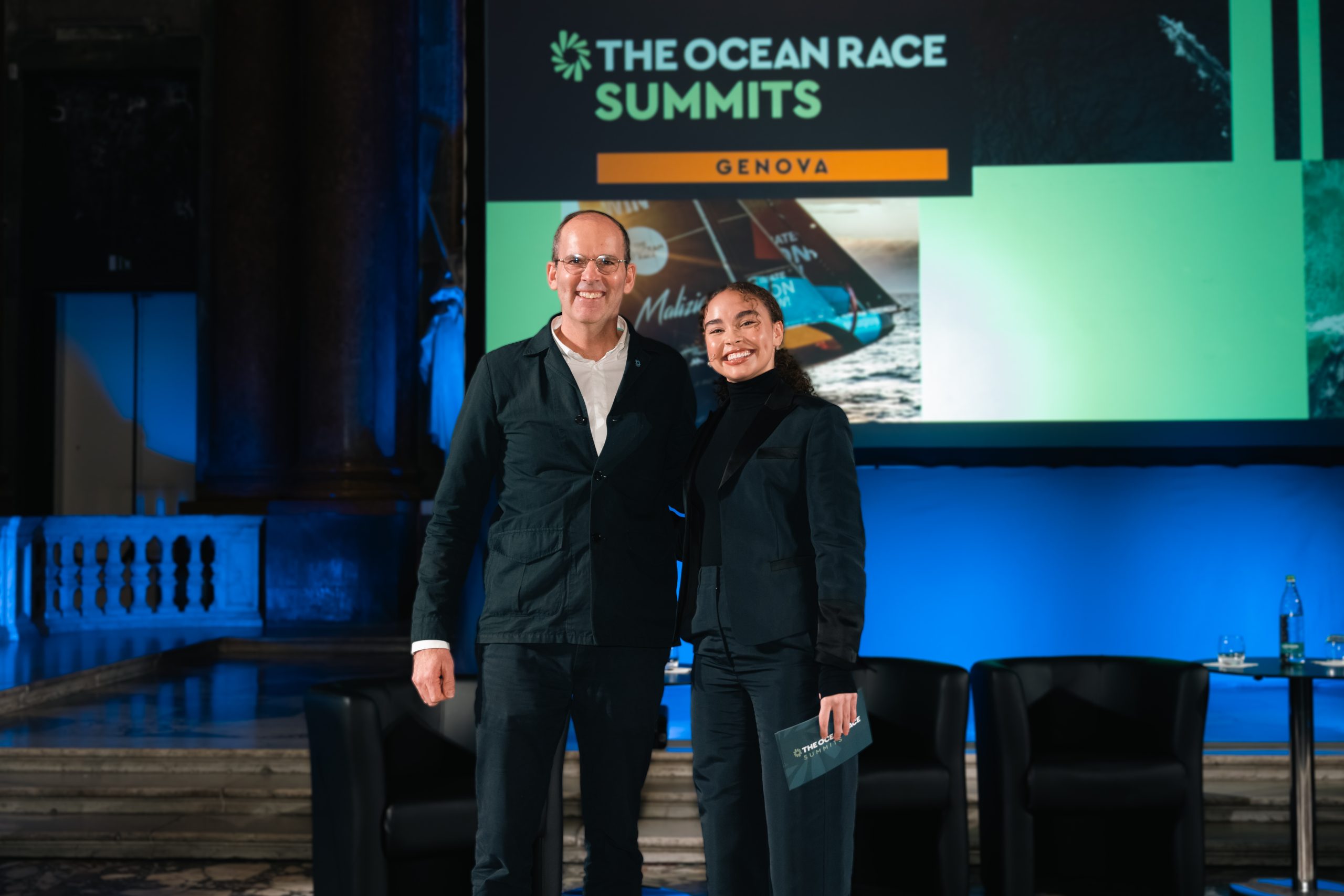
More than 200 participants gathered last week in Genoa, Italy, for The Ocean Race Summit Genoa 2026, a one-day forum examining ocean protection and society’s relationship with the sea. Hosted at the Palazzo Ducale, the event brought together youth advocates, scientists, sailors, creatives, and political leaders from across Europe and beyond.
The Summit formed part of The Ocean Race’s wider sustainability programme and was structured to encourage direct engagement rather than formal presentations. Live polling, open questions, and audience-led discussion placed young participants at the centre of the day, with decision-makers expected to respond in real time.
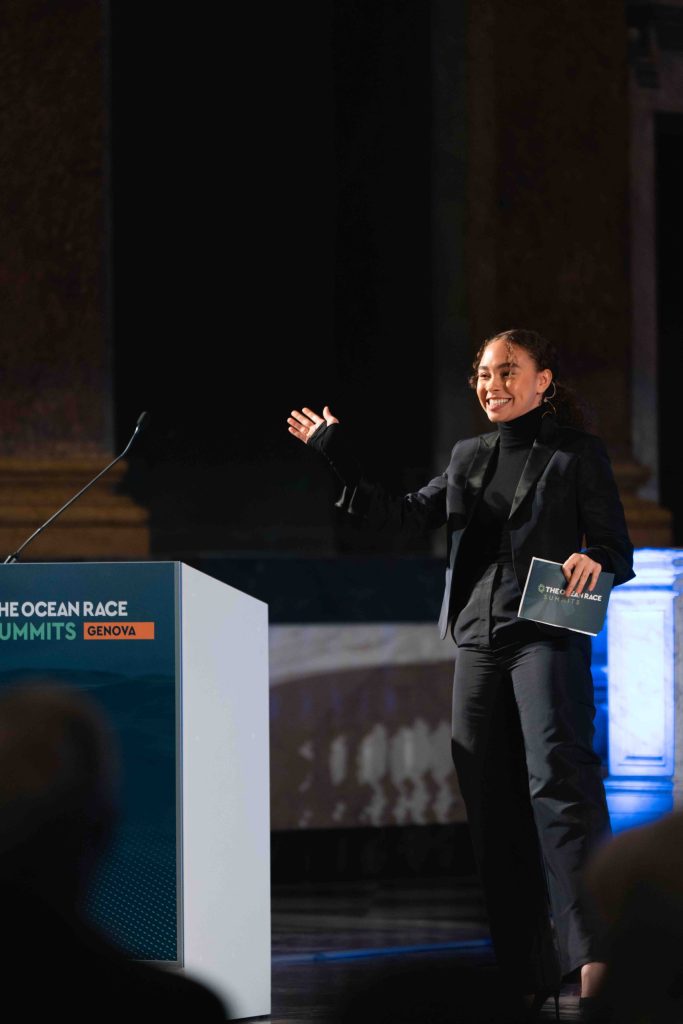
The event was hosted by actress and environmental advocate Bailey Bass, who set the tone early by encouraging attendees to reflect on their personal connection to the ocean.
“The Summit invited participants to connect with their own ‘blue mind’, the personal space where the ocean lives within each of us,” Bass said in her opening remarks.
Genoa’s role as host city reflected its growing involvement with The Ocean Race. The city has previously hosted the 2023 round-the-world race finale, earlier summits, and stopovers for The Ocean Race Europe, reinforcing its position as a long-term partner in the event’s sporting and sustainability programmes.
The Ocean Race chairman Richard Brisius outlined how the race has evolved beyond elite competition into a broader platform for ocean science, education, and policy engagement. He emphasised the value of using sport and storytelling to connect offshore realities with public awareness on land.
Marine biologist Mariasole Bianco, president of Worldrise, addressed the current state of ocean health, while noting recent international progress, including the entry into force of the High Seas Treaty. Her contribution focused on balancing scientific urgency with practical momentum.
Later in the day, Genoa mayor Silvia Salis highlighted the need for institutions to take youth input seriously as environmental policy develops.
“Young people are not just calling for change, they are already driving it. Institutions, cities, and leaders need to listen,” Salis said.
Two interactive panels closed the Summit, allowing young participants to question leaders on policy and conservation, before reversing the format and asking what support youth need to be effective. The message was consistent: meaningful ocean protection depends on long-term participation, education, and shared responsibility across society.