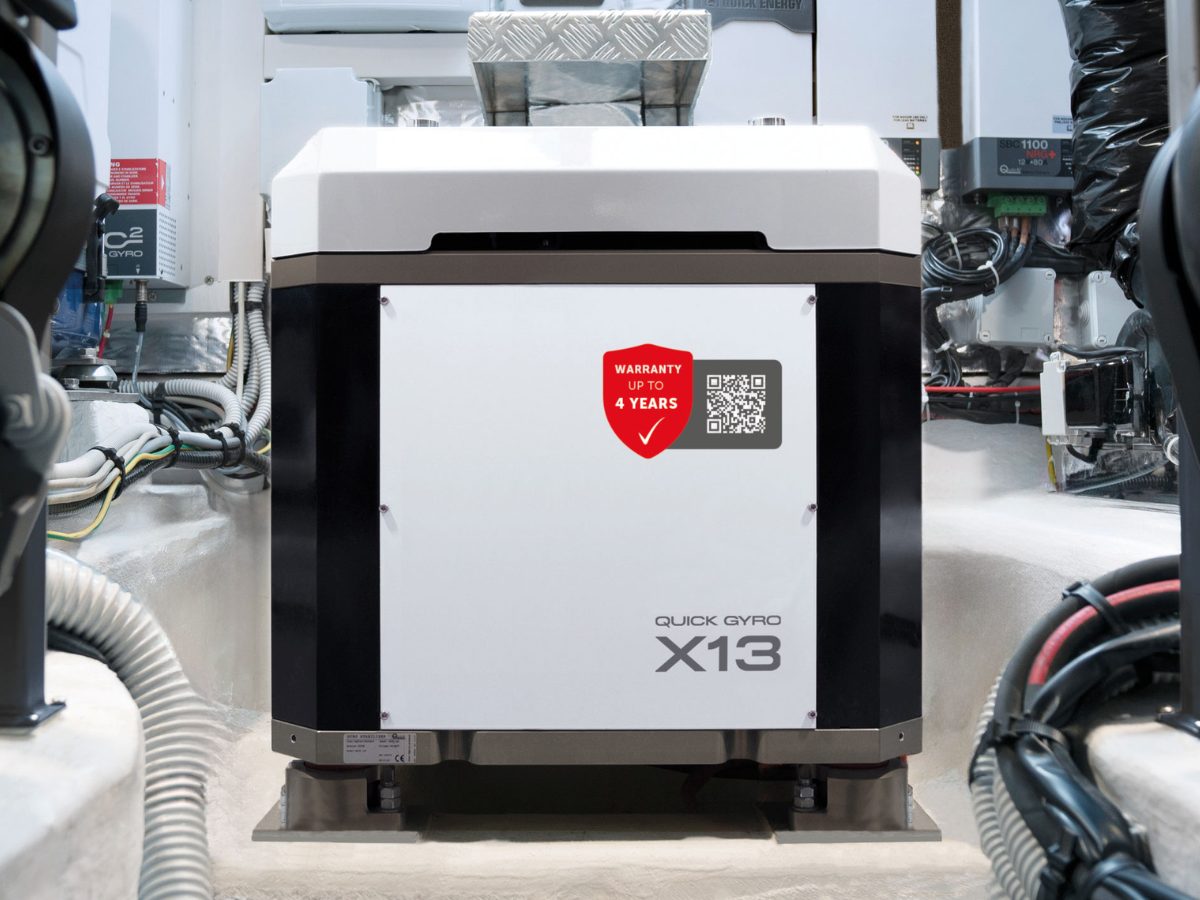
Quick Group has unveiled a new extended warranty programme for its Quick Gyro stabiliser range, reinforcing confidence in one of the marine industry’s most widely adopted gyro stabilisation systems.
Announced during boot Düsseldorf 2026, the programme allows customers to extend the standard two-year Quick Gyro warranty to a full four years by registering their product online through a dedicated portal. The extension applies to eligible units and remains valid when periodic maintenance is completed by an authorised service centre or certified technician.
The extended warranty reflects the continued technical evolution of the Quick Gyro range. Ongoing refinements across mechanical design, electronics, and dynamic control systems have delivered measurable gains in stabilisation performance, reduced power draw, improved electrical efficiency, and optimised spool-up times.
“The extended warranty programme for the Quick Gyro stabiliser range reflects our commitment to product quality, reliability, and long-term customer support,” said Andreas Karlsen, Chief Commercial Officer at Quick Group. “It is a clear reflection of the confidence we have in our gyro technology.”

Quick Gyro forms part of Quick Group’s wider SeaCentric ecosystem, designed to integrate multiple onboard systems within a coordinated platform. This includes Intercepta trim systems, Viator fins, Xenta propulsion, steering and manoeuvring controls, and Quick Nautical Equipment thrusters, delivering unified vessel control across a wide range of yachts and superyachts.
“The new extended warranty reinforces our philosophy of continuous development,” added Karlsen. “It protects owners’ investments over time while strengthening the long-term relationship between Quick Group and our customers.”
For further information on the Quick Gyro range of gyroscopic stabilisers and the extended warranty programme, visit www.quickgroup.com.