Nathan Outteridge, driver for Emirates Team New Zealand’s AC38 campaign and previously co-driver alongside Peter Burling during AC37, spoke to Boating New Zealand after the ITM New Zealand Sail Grand Prix concluded today.
What stands out about Outteridge is how calmly and clearly he reads an F50. He carries a deep familiarity with the platform and a genuine respect for the speed and risk that come with modern foiling.
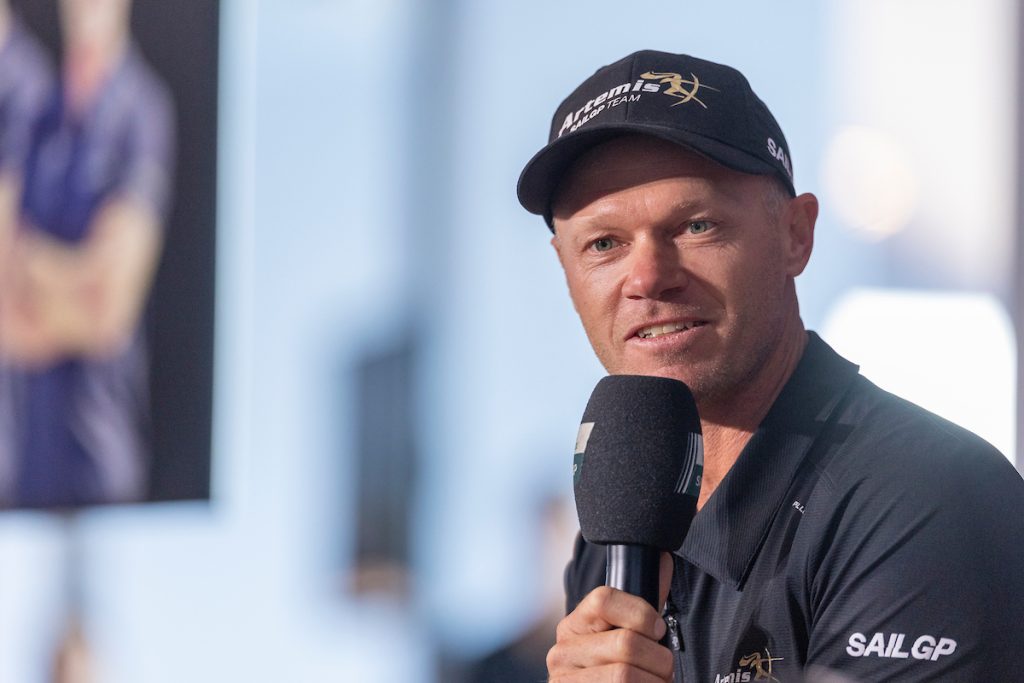
After racing wrapped up yesterday, and once the collision between the Black Foils and DS Automobiles France had been dealt with, Outteridge made a point of going directly to check on Peter Burling. He described the scene as intense, noting that in moments like that the gravity of what has happened can take time to sink in.
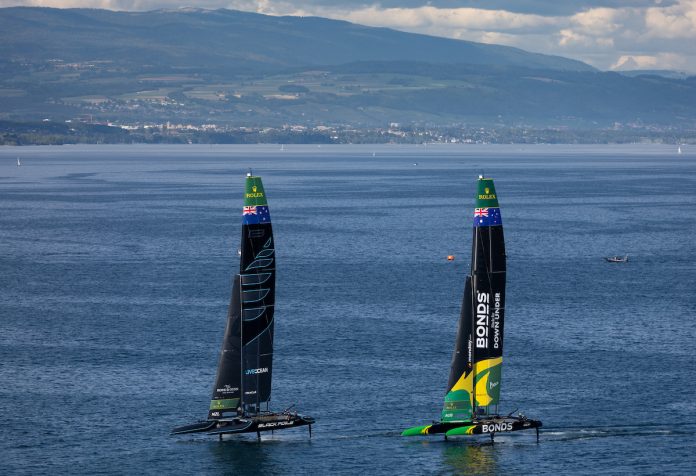
He also pointed out just how quickly things unfold at SailGP speeds. On the first reach alone, boats were brushing close to 100 kilometres per hour. These F50 catamarans are moving at motorway pace while turning, crossing and manoeuvring inside tight race boundaries.

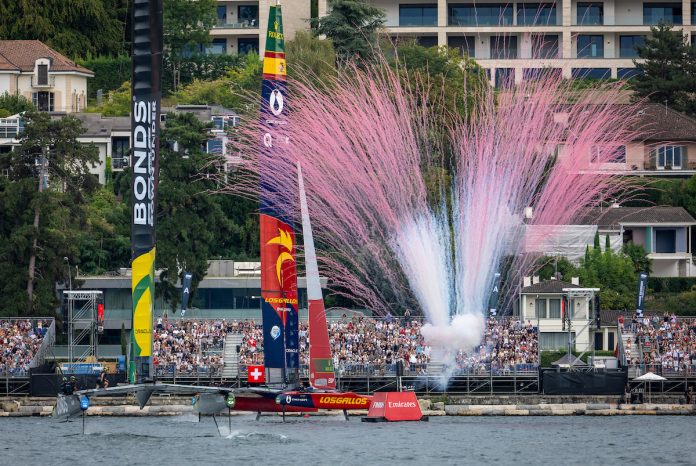
He went on to break incidents down into two distinct types. One occurs when a boat drops off its foils and comes to a sudden stop, a violent but contained event that the crew manages internally. The more concerning scenario, he noted, is when two boats come together, and in his view that usually stems from a lack of available space on tight courses where closing speeds leave little room for correction.
There was no attempt to speculate or assign fault. Instead, Outteridge framed the discussion around course design and fleet density, particularly in relation to the split fleet format that has been trialed. He suggested that on smaller venues, splitting the fleet allows crews to concentrate on sailing the boat properly rather than constantly scanning for a dozen converging angles, whereas a significantly larger race area would make a full 13-boat fleet more manageable. It was a practical assessment rooted in race craft rather than politics.
Already two events into the start of their inaugural SailGP campaign, Artemis SailGP has become a focal point for New Zealand observers. Looking through the crew, it is not difficult to understand. Andy Maloney and Brad Farrand, both raised in Northland’s Kerikeri, progressed through New Zealand’s Olympic and offshore sailing pathway and remain closely associated with the country’s high-performance ecosystem. Their shared background is more than geographic; it reflects years of overlapping campaigns, Olympic preparation, and America’s Cup integration.

Outteridge’s presence strengthens that connection further. Although Australian by birth, his ongoing role within the Emirates Team New Zealand programme places him firmly within the Kiwi performance framework, and his familiarity with the systems, language and personnel makes Artemis feel less like a distant European outfit and more like a parallel branch of the same competitive tree.
The wider crew adds further depth. Chris Draper, formerly wing trimmer for Great Britain, Japan, Canada and Australia in SailGP and previously CEO of the British SailGP team, brings a rare combination of technical wing knowledge and campaign leadership. Julia Gross joins from Red Bull Italy with America’s Cup foiling experience through the Artemis Women’s programme, while Julius Hallström arrives after three seasons with ROCKWOOL Denmark, contributing both physical power and Cup development exposure.
Taken together, Artemis SailGP represents an international roster with significant Kiwi influence, and in the absence of a fully competitive Black Foils campaign, that influence matters. For New Zealand’s sailing audience, the attraction lies not in sentiment but in familiarity: familiar voices, familiar training systems and a familiar approach to high-performance racing.
Nathan spoke about speed, space and decision-making without embellishment, describing the realities of foiling catamaran racing at extreme pace in confined water. For a New Zealand audience accustomed to direct, technically grounded analysis, its refreshing to hear.
Artemis SailGP may not fly the silver fern, yet at this point in the season it carries a distinctly Kiwi thread through its structure, and that alone is enough to keep local eyes firmly fixed on its progress.