In April 1968, on the long freshwater reach of Lake Rotoiti near Nelson, Flak Too became the first boat to exceed 100 miles per hour on the lake. It was a defining moment in New Zealand powerboat history and a milestone that still resonates with hydroplane enthusiasts today.
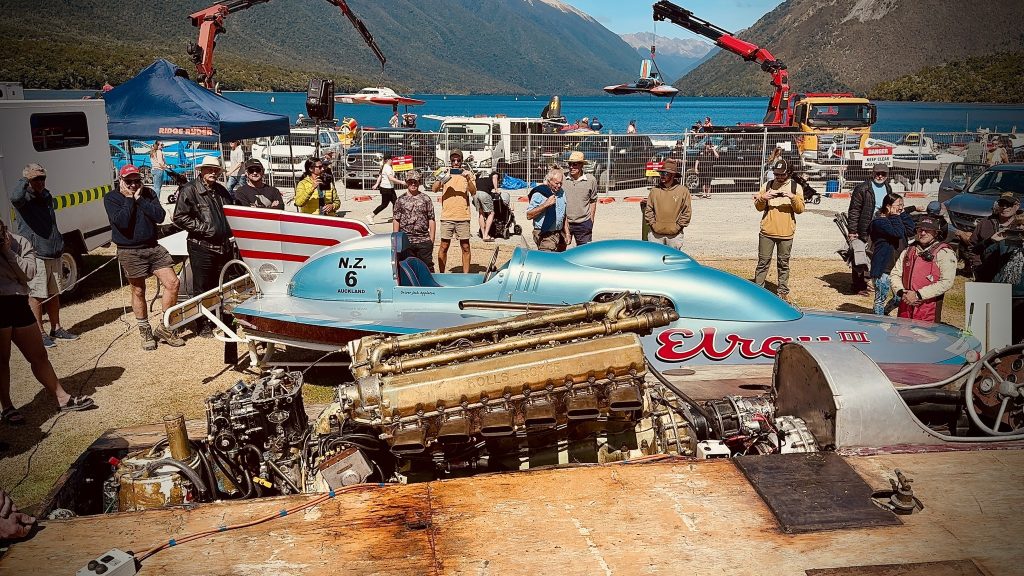
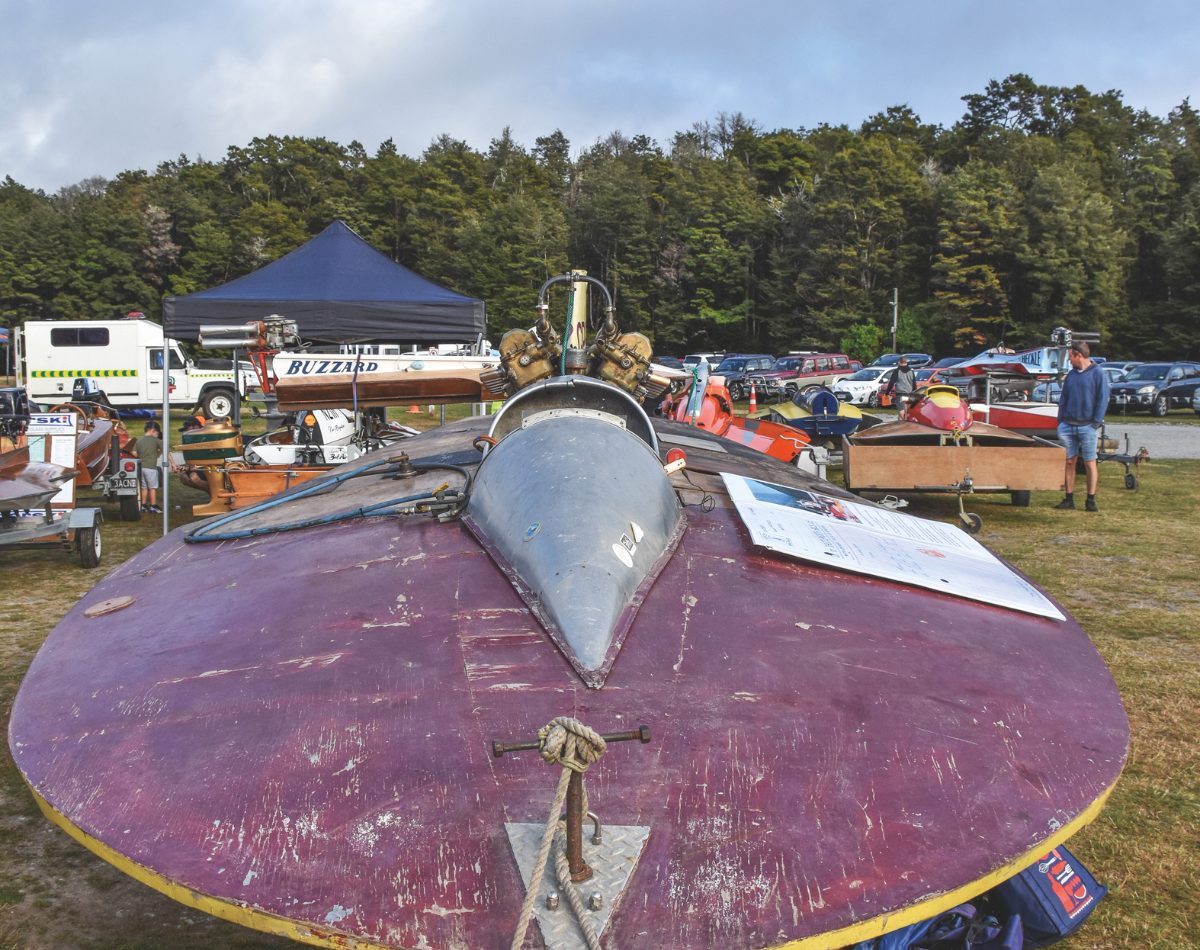
As discussed in an earlier article written by Lawrence Schäffler, Flak Too, built in 1952, is a 20 foot timber hydroplane formed in the classic three point configuration, with twin bow sponsons and a single propeller driving from the transom. She was reportedly designed by an American powerboat champion, though his identity remains uncertain, and constructed in Nelson by Joff Kroening.
From the outset, her story became closely linked with Lake Rotoiti and the post war surge in New Zealand speed boating. In those formative years, performance came first and refinement second. Boats were developed in sheds and workshops, modified repeatedly, and pushed hard in the pursuit of ever higher numbers on the stopwatch.
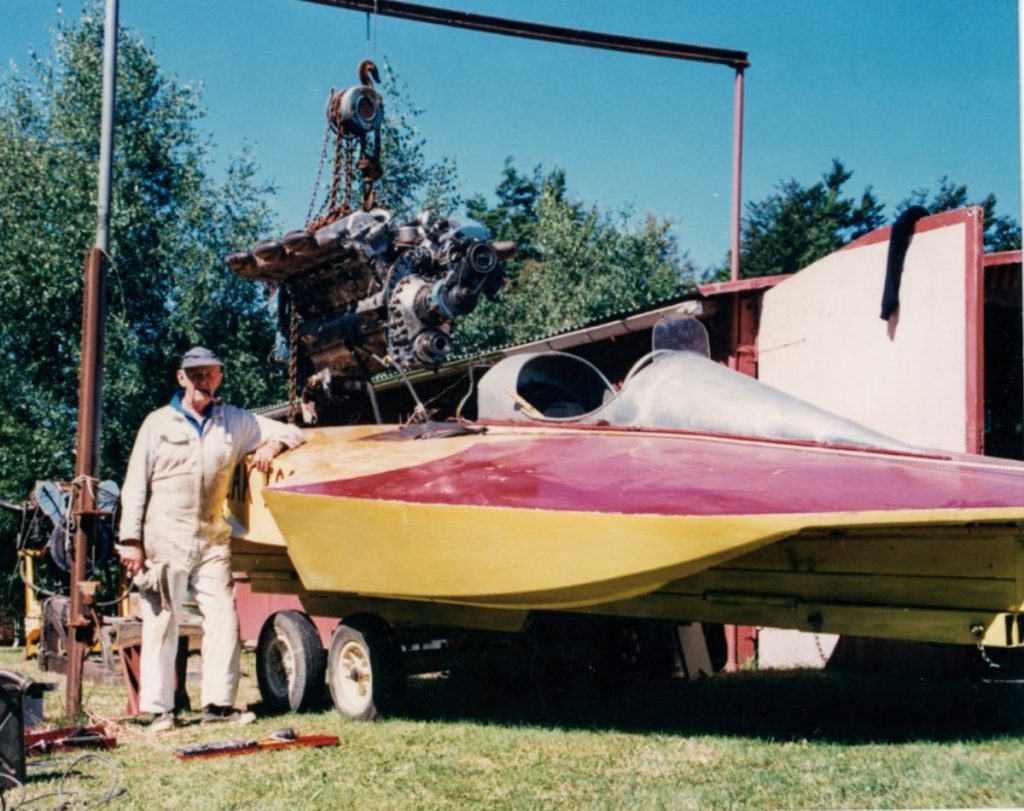
Flak Too was no exception. During her competitive life she caught fire three times and sank six times. Such incidents were part of the era, when timber hulls flexed under load and high output engines were often adapted from other industries. It was a time when innovation and risk went hand in hand.

Originally powered by a 225 cubic inch flathead Ford V8, she later received a 265 cubic inch Chevrolet V8 as her owner sought more performance. Her original owner, Dick Shuttleworth of Wakefield, ran a local garage and became known for his relentless pursuit of speed.
As his son Jack Shuttleworth recalls:
“She was and still is a wonderful vessel. Dad just kept looking for more speed.”
At one stage, Shuttleworth experimented with a Rolls Royce V6 derived from halving a V12 Kestrel aircraft engine. While innovative, the V6 proved less than ideal. The decisive step came with the installation of a complete 1928 Rolls Royce Kestrel V12, displacing around 22 litres and originally developed for military aircraft.

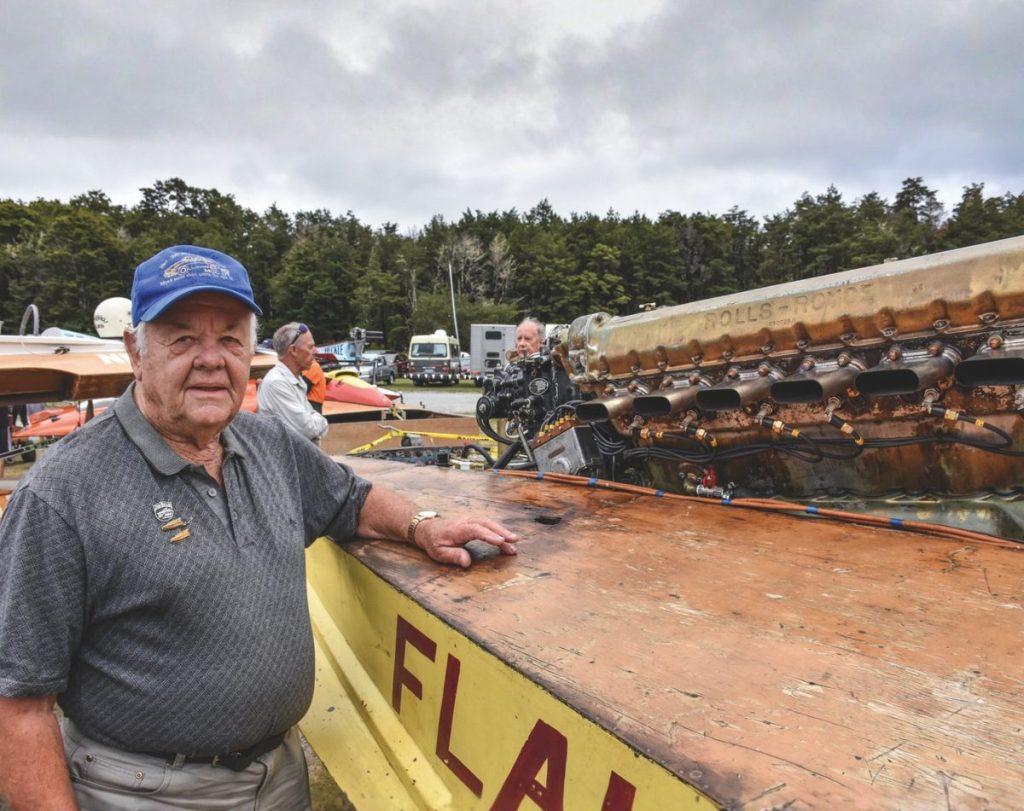
As the story goes, she sank in February 1972 at Lake Rotoiti when the motor died during a 100 mph run and the boat was swamped by its own wake. Undamaged she was towed ashore.
The Kestrel delivered approximately 750 horsepower in period trim. In a lightweight 20 foot hydroplane, that level of output was formidable. With the V12 installed, Flak Too exceeded 140 miles per hour and went on to win the South Island championship at New Brighton.
Starting the engine was itself an exercise in ingenuity.
“The load was usually too much for the starter batteries, which were on an attendant launch, so we hooked up her engine to a chainsaw,” Jack Shuttleworth remembers. The chainsaw is needed to start the massive V12 engine due to the heavy load on standard batteries.
The Rolls Royce Kestrel occupies an important place in aviation history. It preceded the more widely known Rolls Royce Merlin engines that powered the RAF’s Hurricanes, Spitfires, Mosquitos and Lancasters during the Second World War. While the Merlin would later produce more than 2,000 horsepower, the Kestrel laid the engineering foundations delivering between 450 hp and 750 hp depending on the model.
In a historical footnote, Kestrels were also supplied to Germany in the early 1930s and fitted to early prototypes of the Messerschmitt Bf 109 and the Stuka dive bomber. Decades later, that same lineage of engineering would echo across Lake Rotoiti in a Nelson built hydroplane.
Flak Too’s survival into the present day is due to the efforts of dedicated enthusiasts. Having lain in the Nelson region for many years, the boat was at one stage reportedly close to being sold to an Australian syndicate interested primarily in the Kestrel engine. Instead, local advocates Pete Rainey and Glenn Common acquired the vessel, ensuring that both hull and engine remained in New Zealand.

Today, thanks to the expertise of Nelson engineer Don Walker, the Kestrel is once again running. Numerous components have been machined from scratch, including new cylinder liners, in work that reflects the same spirit of craftsmanship that defined the boat’s early years. While the hull requires significant restoration, the engine, the heart of Flak Too, lives again.
At the 2023 and 2024 New Zealand Antique and Classic Boat Show, Flak Too stood not merely as a restored exhibit, but as a tangible link to a pivotal chapter in this country’s hydroplane and powerboat heritage. Her record breaking run in 1968 remains a benchmark for Lake Rotoiti and a reminder of the ingenuity that characterised New Zealand boating in the post war era.
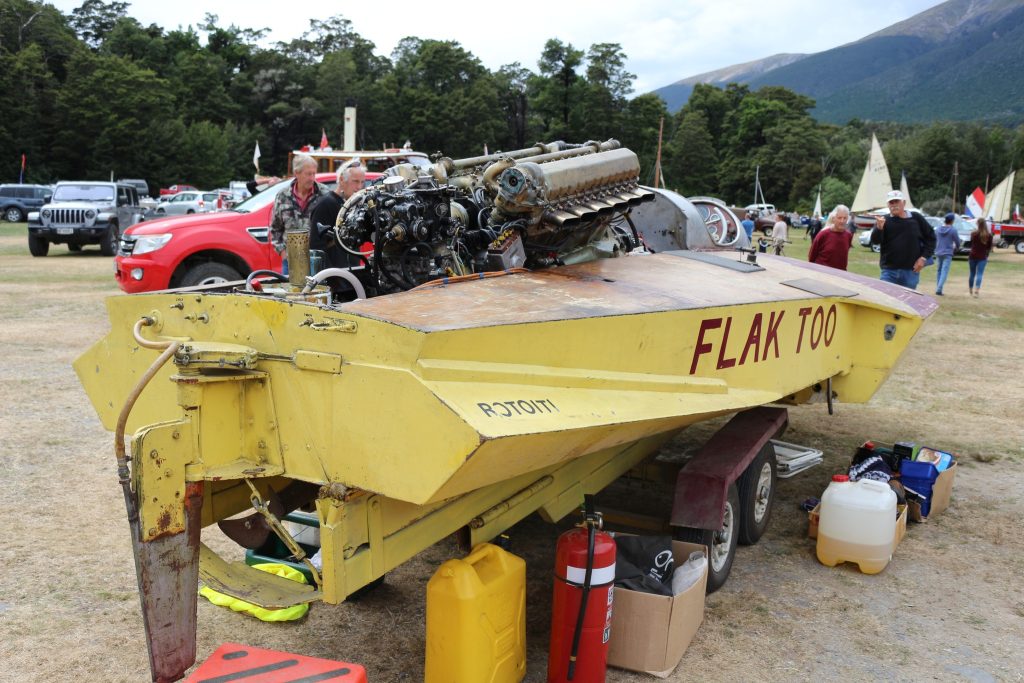
More than seventy years after her launch, Flak Too continues to represent the determination, mechanical skill and bold ambition that shaped early hydroplane racing in Aotearoa. Her wake, first carved across Lake Rotoiti at three figure speed, remains firmly etched in New Zealand maritime history.
The New Zealand Antique and Classic Boat Show is scheduled to take place at Lake Rotoiti, Nelson Lakes, on 7–8 March 2026.
https://www.nzclassicboats.com/