
Why is it a problem?
The Northern Pacific sea star is a voracious predator that will feed on a wide variety of other marine animals, including shellfish, crabs, worms and even dead fish and other sea stars. Because it can occur in very large numbers and also feeds on wild and farmed shellfish, it could have a serious impact on our aquaculture industry and our marine environment generally.
How to identify this species:
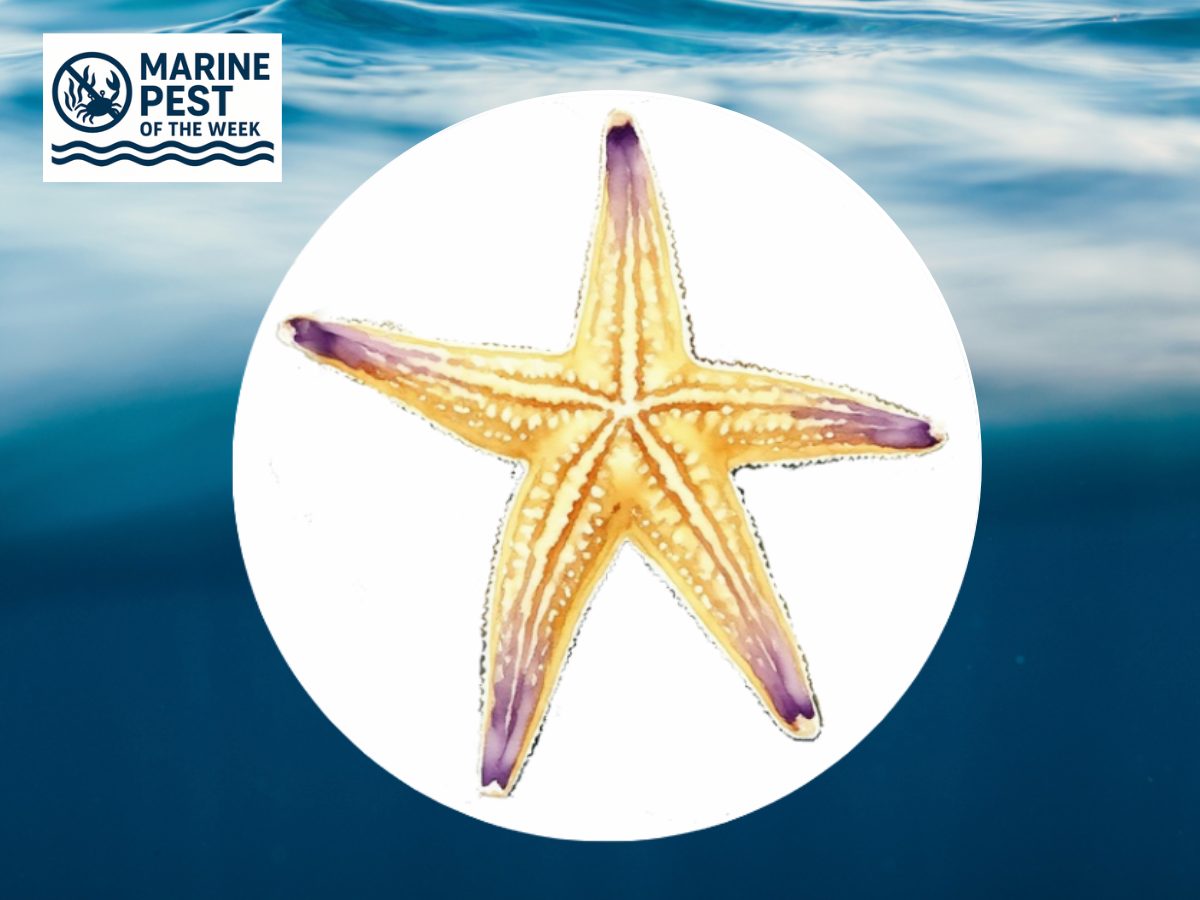
- Generally five arms which have pointed and often up-turned tips.
- Arms join a central disc and are covered by clumps of small chisel-like spines.
- Adults are ~10 cm diameter, with individual arms sometimes up to 40-60 mm long.
- The topside of the seastar varies in colour and can be yellow, orange or have purple markings.
- Underneath, they are generally yellow with spines in a single line either side of the groove where the tube feet lie.
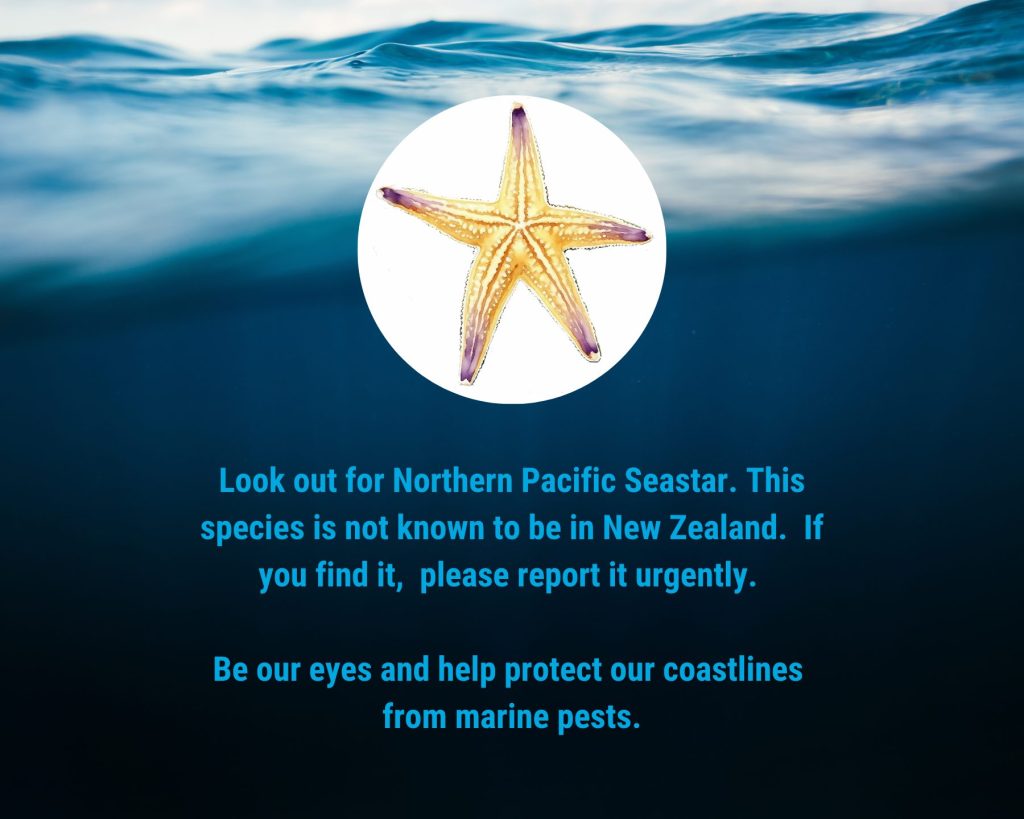
This pest is not known to be in New Zealand. If you see something suspicious, report it to the Ministry for Primary Industries.
For more information on this species visit the Marine Biosecurity Porthole.
From the team at Clean Below? Good to Go – visit marinepests.nz to get everything you need to know about marine pests ID, boats, rules and more.