A quiet change with purpose
There’s been a quiet update on Taihoro, easy to miss unless you know where to look.
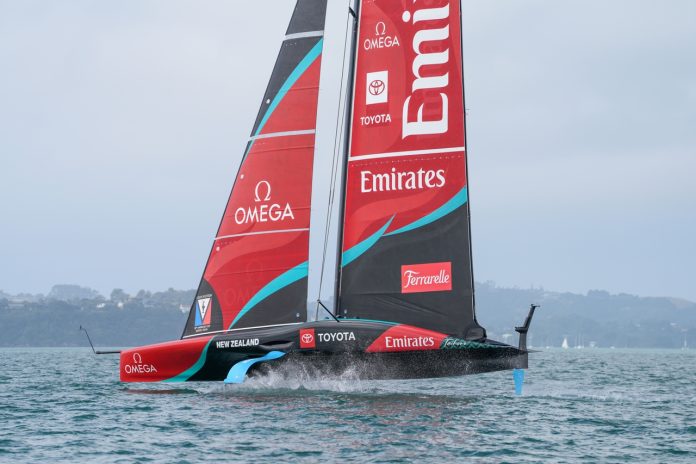
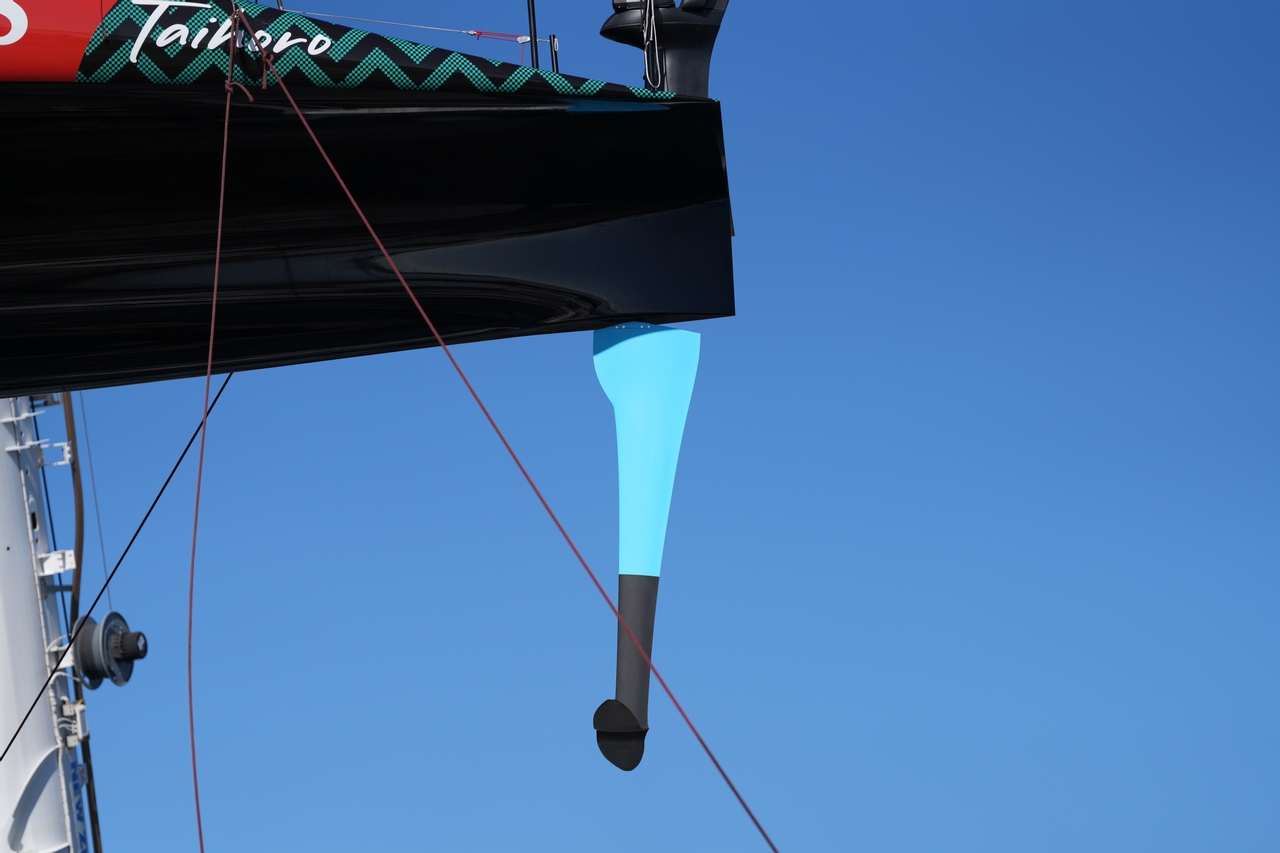
Emirates Team New Zealand has modified the boat’s legacy rudder, the same unit it relaunched with earlier in March. At first glance, little appears different. Look closer, and the changes become clear.
The earlier version carried a visible gap between the top of the rudder and the hull, most noticeable at the leading edge. Further down, the trailing edge stepped before tapering into the blade.

That has now been refined.
The step is gone. The rudder runs straight down in a continuous line, and the rake has been pushed forward. The leading edge now sits much closer to the hull, almost flush.
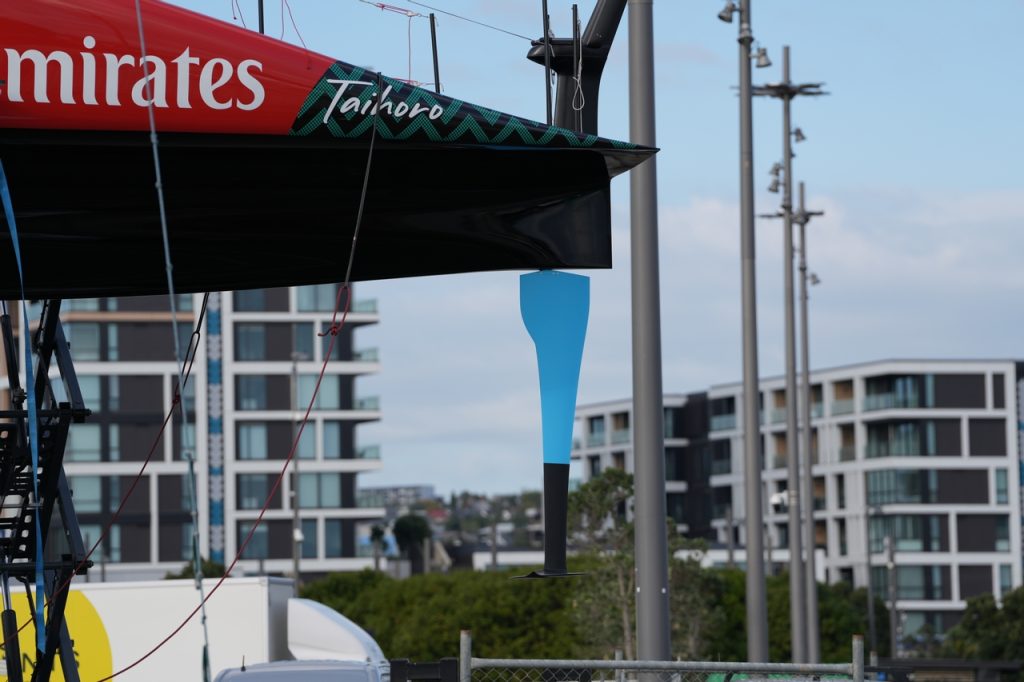
It is a small adjustment, but not a casual one.
Light airs exposing the edges
The conditions explain it.
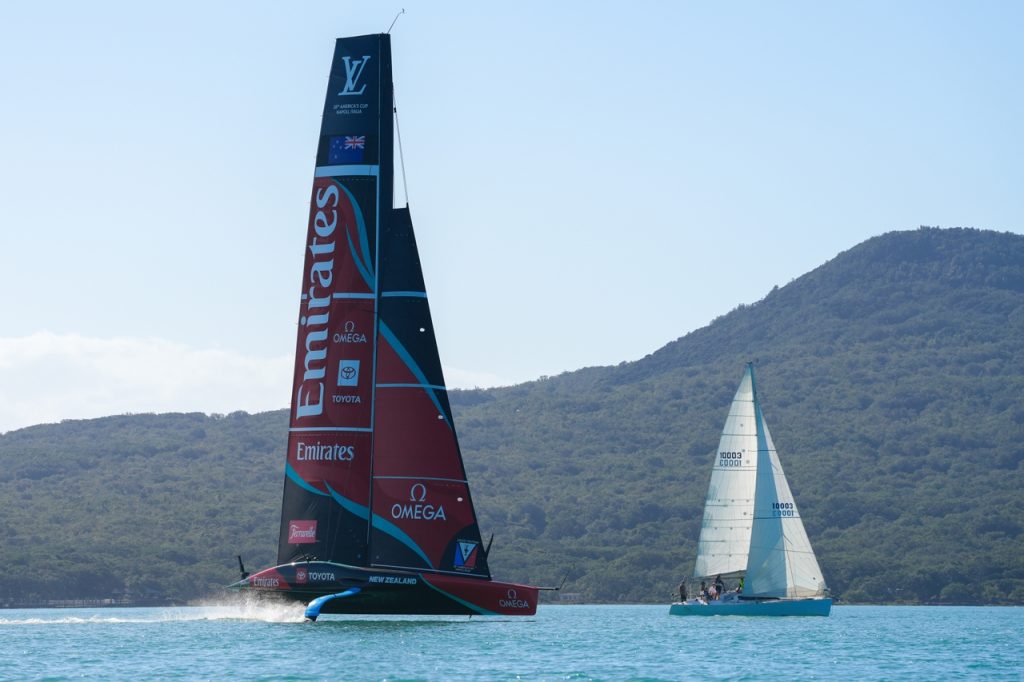
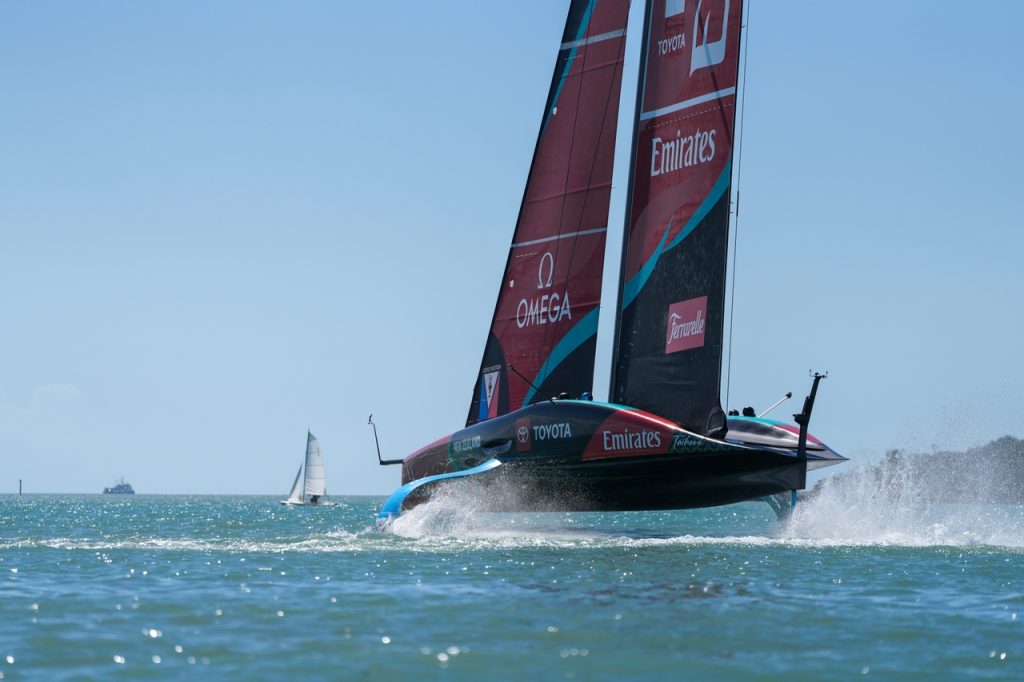
Recent training has taken place in lighter winds, and that is where Taihoro has been under pressure. During those sessions, the recon team observed repeated cases of rudder ventilation, most often during aggressive turns.
Push too hard, and the rudder lets go. The loss of grip shows immediately in the boat’s stability.
On the helm, Nathan Outteridge and Seb Menzies adjusted their approach. Sharp inputs gave way to slower, more deliberate turns. Timing became critical, especially through gybes.
Drop the board too early and the boat loads up. Leave it slightly longer, and the manoeuvre settles.
Once they backed off, the improvement was clear. The boat stayed more stable, and exits were cleaner.
This is not theory. It is what the boat is doing on the water.

One shot at getting it right
That makes every session count.
Teams are allowed just one new rudder for this cycle. There is no room for guesswork once that decision is made.
This was Emirates Team New Zealand’s seventh permitted sailing day. There are not many left to refine the package.
Coach Sam Meech summed up the challenge:
“It’s a bit marginal. The weather at this time of year hasn’t been quite as settled as we could have hoped, so finding good sailing days, the days that we can make the most of like today, is a little bit harder. But hopefully a couple more days next week.”
They are not just chasing time on the water, they are waiting for conditions that expose weaknesses.
Where races will be decided
This session was not about outright speed. It was about control at the edge of flight.
Light air work continues to centre on manoeuvres, take-offs, and how the boat behaves when it is only just flying. Trim remains sensitive, with small jib and slot adjustments making a noticeable difference.
Work continues on onboard systems as well, particularly automation linked to sail control.
Reliability is part of the picture. Battery changes were frequent, a reminder that these boats rely as much on systems as they do on structure.
None of it is dramatic in isolation. Together, it points to where this campaign is being built.
Naples is unlikely to offer steady breeze. Races there will favour the crews who can keep the boat moving when others drop off the foils.
This rudder change sits directly in that space.