The Three Kings Offshore Yacht Race is now just over a week away, starting on 16 April. Early signs point to a fair start, but the long range outlook suggests a more unpredictable race as the fleet heads north past North Cape.
We’ve already seen a version of that run north.
The opening stages of the recently completed 1,200 nautical mile 2026 Doyle Sails Round North Island Two Handed Yacht Race, the longest race held entirely within New Zealand this year, took crews north. The first leg ran from the Waitematā to Mangōnui, before the fleet rounded Cape Reinga and headed down the west coast toward Cook Strait.
The Three Kings Offshore Yacht Race takes a different line once the fleet reaches Surville Cliffs at North Cap, the northernmost point of mainland New Zealand. Instead of rounding Cape Reinga and turning south, the fleet pushes further northwest toward the Three Kings Islands.
Three Kings Offshore Yacht Race 2026 nears start with fleet taking shape

This is where the Tasman Sea and the Pacific Ocean meet, a convergence often visible from the Cape Reinga lighthouse, where differing water colours, surface patterns, and colliding seas mark the boundary.
This part of the race breaks into two clear segments, the run north to the Three Kings, and the return south. Each includes an open water crossing of around 90 kilometres, pushing crews well beyond the coast and into fully exposed water.
Most sailors never make it this far north. We haven’t, and we wondered what it is like to sail in this part of the country.

What it’s like beyond Cape Reinga
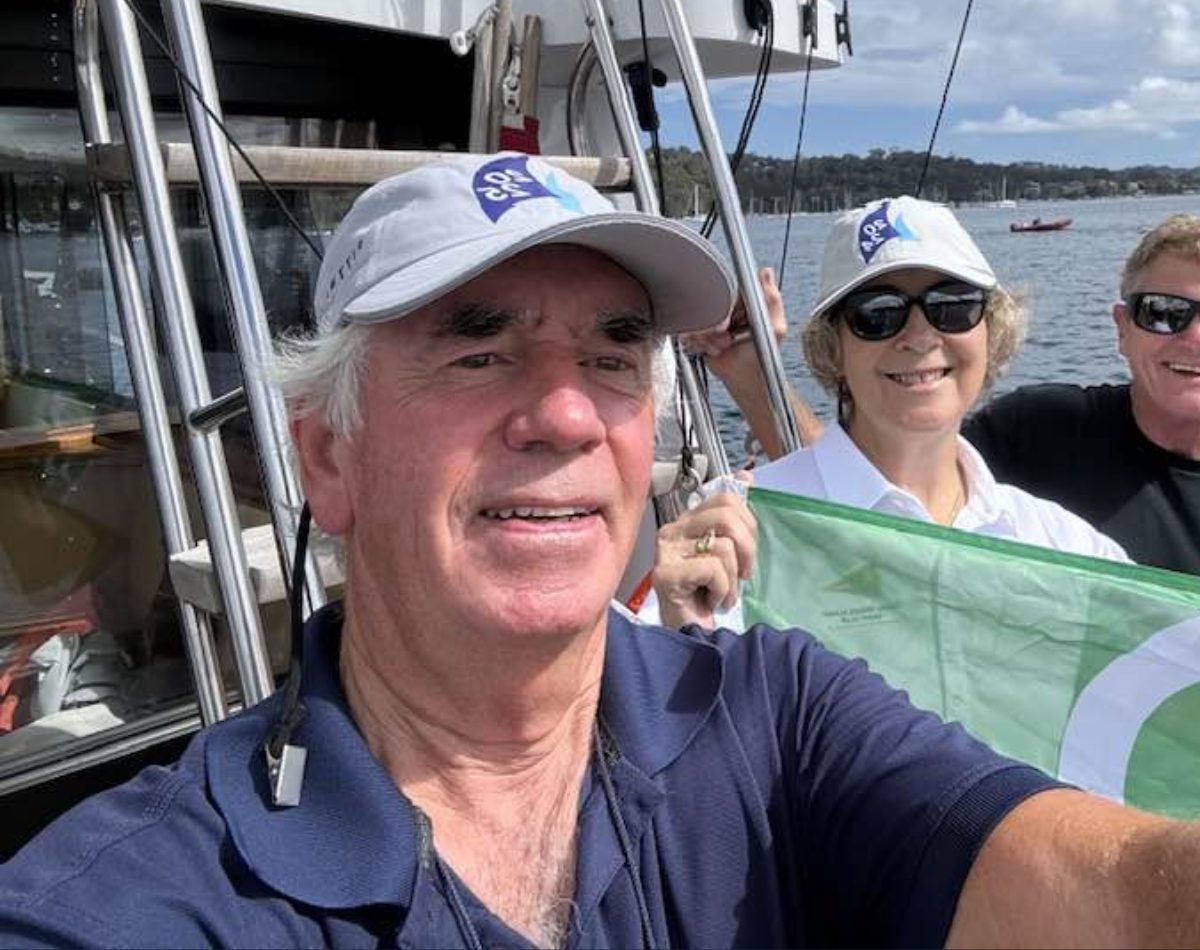
We reached out to Robert McClelland, Commodore of the Royal Prince Alfred Yacht Club, for an offshore perspective. He has passed through this stretch of water multiple times on deliveries and race passages between Australia and New Zealand.
Here’s how he describes what it’s like to sail that part of the coast.
His first experience of the Three Kings came more than five decades ago.
A first encounter in heavy weather
“My first real encounter with the Three Kings Islands was in January 1975 during the New Zealand Admiral’s Cup trials. I was about twenty years old and crewing on Barnacle Bill. The trials themselves had been a frustrating series sailed mostly in very light conditions, and the fleet had effectively been waiting for a proper offshore test.
That came in the final race, a 560 nautical mile course from Auckland, out past Great Barrier Island, up to North Cape and the Three Kings, and back again.
We started that race in 35 to 45 knots and it built significantly through the night, with what was effectively a cyclone approaching New Zealand. By the time we were up around the Three Kings the wind was well over 60 knots. The seas were enormous and I can clearly remember being close to the islands and, in the troughs, not being able to see them at all. It was spectacular, exciting, and a very early lesson in how serious that part of the ocean can become.”
That was his introduction to the place. Not every passage looks like that, but it leaves a mark.
What lies beneath the surface
“I did not return to that area for many years. The next time was in 2016, arriving into New Zealand from New Caledonia. Then again in 2017 heading north from New Zealand to New Caledonia. In 2019 I came across from Australia, and then again in 2023 and most recently in 2025 on Sydney to Auckland passages.

Those later trips gave a very different perspective, not just of the conditions but of the underlying geography that drives them. No matter which direction you approach from, whether it is North Cape, Cape Reinga, or the Three Kings themselves, the seabed rises very quickly from ocean depths of several thousand metres up to a few hundred metres or less. That compression of water has a profound effect on the sea state.
It accelerates current, distorts wave patterns, and when wind opposes tide or current the sea can stand up sharply and become steep and confused. It is often what you cannot see beneath the boat that creates the most difficult conditions, not just the wind strength above it.”
It helps explain why this area feels different, even when conditions look manageable on the surface. And once past Cape Reinga, that difference becomes a commitment.
Once you go north, you’re committed
“On one passage from New Caledonia into the Bay of Islands we passed well to the east of the Three Kings, about thirty miles offshore, and did not see them at all. Even at that distance the sea had a different feel to it, and you were conscious of the current patterns running through that area.
On other occasions, particularly approaching from Australia, we have come in closer to Cape Reinga. That is where there is a clear mental shift.
Once you round the Cape and commit north you are effectively committed. There are limited options for shelter or retreat and that changes the way you sail the boat. You plan earlier, think further ahead, and sail more conservatively.”
That sense of commitment comes up again and again. It is not just about distance, it is about what options you no longer have.
Not always extreme, but never simple
“Most recently, in 2025, we rounded to the north of the Three Kings, about eight miles offshore, during the Sydney to Auckland race. We arrived at dawn in a steady 12 to 15 knot nor’wester and it was a beautiful passage, calm and controlled, which shows the other side of that area. Even then there is always a strong underlying respect for what it can produce.”
And just as easily, it can settle. That is part of the challenge, you do not always get a warning.
“Across all of these passages the consistent feature is complexity. You have the Tasman Sea, the Pacific Ocean, and Coral Sea influences all meeting in that region, combined with strong tidal flows and rapidly changing seabed topography.
When those elements come together, particularly with opposing wind and current, conditions can change quickly and become very challenging.
The lack of shelter reinforces that. It is not a place to be reacting late. Decisions around sail plan, timing, and crew management need to be made well in advance because once you are up there there is no easy way out.
If I had to summarise that stretch of water, it is a place that demands planning, respect, and caution, where what lies beneath the surface has as much influence as what you see above it.”
Early outlook: settled south, unstable north
The early run north may look manageable, but the further the fleet pushes offshore, the less predictable it becomes. The forecast already hints at that, with stable coastal conditions giving way to a more unstable west to southwest pattern around the Three Kings.
There is no single way this segment plays out. And it may well shape the race.