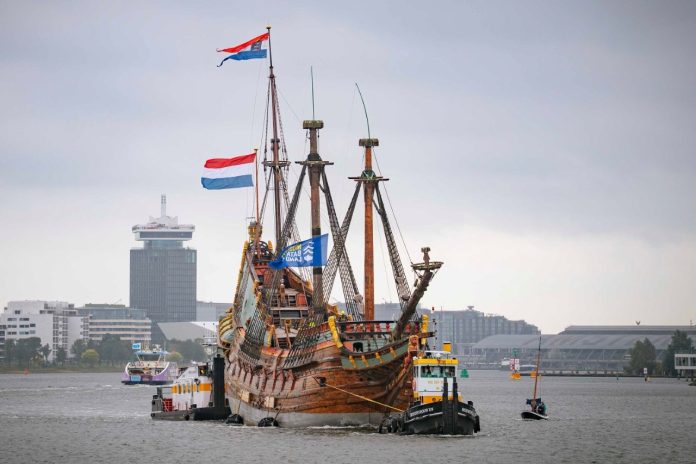
You’ll notice over the next few days that our offshore coverage ramps up. We’re following the eight boat fleet in the Three Kings Offshore Yacht Race, taking crews from the Waitematā Harbour up around the Three Kings Islands and back again. It is a 500 nautical mile course and the second longest yacht race in New Zealand for 2026.
Also keep an eye out for an upcoming piece on a spearfishing run up at the Three Kings Islands aboard a customised Stabicraft 2100, recorded and documented by Michael Campbell from Epic Mission. The aim is simple, to inspire and enable ocean based adventures.
The Three Kings Islands have always held a certain pull. Sitting roughly ninety kilometres north of North Cape, they carry a real sense of isolation. For some, that is exactly the attraction. For others, it exceeds their comfort limits.
You do not head up there without solid navigation and weather tools. They shape your decisions. But they only get you there. They do not solve the problem if something goes wrong.
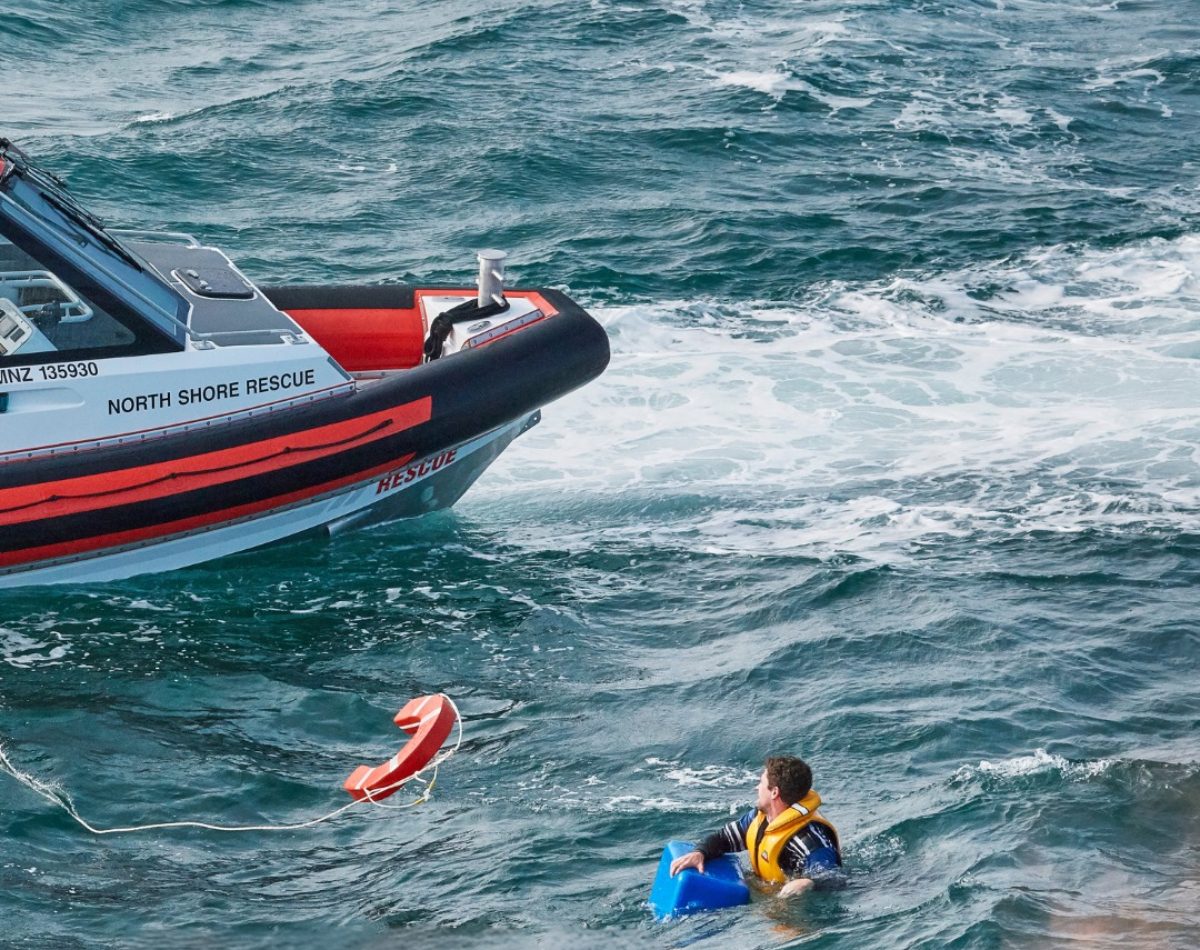
And things can go wrong quickly. Not just at sea. Even getting ashore, if that is possible at all, comes with its own risk. Swell builds fast. What looks manageable at the start can turn into something you cannot climb away from once you’re onshore.
That is the reality crews plan for and the same reality that rescue crews respond to.
When something does go wrong, whether you are still on the boat or suddenly in the water, personal safety gear stops being a checklist item and becomes everything. The one piece of gear you should always have on you is a Personal Locator Beacon. No exceptions.
If you go overboard or transfer to a life raft, and both scenarios happen, this is the device that gives you a position. It turns you from someone missing into someone located.
And that distinction matters. From a rescue perspective, it is the difference between searching an area and responding to a position.
The important point is this is not just about offshore extremes. The same risk exists closer to home. Canoeing on Lake Wakatipu on a quiet day. Fishing alone off the Coromandel east coast. A float down the Hutt River through Kaitoke Regional Park. It does not take much for a routine trip to shift into something more serious.
That same principle applies to Charlotte Porter and her crew, who will row the Atlantic later this year as part of a four woman team in the World’s Toughest Row. Different water, different vessel, same reality.
If something goes wrong, you need a way to be found.
A PLB is simple. You activate it, and it transmits your location through the Cospas Sarsat satellite network. From there, the signal is picked up by search and rescue. Position, identity, and a clear message that you need help, and quickly.
Personal Locator Beacons in New ZealandA Personal Locator Beacon (PLB) is designed to do one job well, send your exact position to rescue services as quickly as possible. It operates on the 406 MHz frequency, monitored globally, which means your distress signal can be detected anywhere in New Zealand waters. Most modern PLBs include GPS, often accurate to within a few metres, giving rescuers a precise location rather than a search area. They are built for the marine environment, waterproof, shock resistant, and often buoyant, so they continue transmitting even if separated from you. Battery life is designed for emergencies, typically lasting at least 24 hours. Activation is simple, usually a single action, even if you are injured or under stress. - Advertisement, article continues below -
 In New Zealand, that signal feeds directly into the search and rescue system through agencies like Coastguard New Zealand and RCCNZ. Once activated, it is picked up, assessed, and acted on. For Coastguard crews, that signal changes everything. It gives them a position to run to, rather than an area to search. https://www.coastguard.nz/boating-essentials/safety-on-the-water/safety-articles/emergency-beacons |
If you want to see how that plays out in real terms, look at what happened during the 2024 Rolex Sydney to Hobart.
Aboard Porco Rosso, in heavy conditions and darkness, crew member Luke Watkins was washed overboard. An initial AIS alert was dismissed as accidental. It was only when a second signal, from a PLB, was detected that the crew realised it was real. By then, the yacht had sailed on.
They turned back and began the search, guided by the beacon signal. In those conditions, at night, that signal made the difference. The crew member was recovered after a prolonged time in the water.
Or go further offshore.
Or the 2023 United States Coast Guard Boating Safety article by Brian Daugherty. It follows ocean rower Aaron Carotta, alone in the Pacific in a 23 foot boat. His communications failed first. Then the boat rolled.
He ended up in a life raft with almost nothing. No vessel, no systems, no support. What he did have was a PLB.
Within hours, an aircraft was overhead. Soon after, a merchant vessel was diverted and lifted him out of the water, more than 1,400 miles from Tahiti.
Incidents like these mirror what rescue crews deal with here. Calls where time matters, visibility is low, and the search area is the difference between minutes and hours.
As Coastguard guidance reinforces, a registered beacon turns a search into a response. It gives crews a position to work from, not a guess.
The point is, it doesn’t take a Three Kings trip for things to turn serious. It does not matter where you are boating in New Zealand, or what the conditions look like when you leave. Conditions change, things break, or accidents happen, and suddenly you need help.
That is why the message from Coastguard is consistent. Carry a PLB, and register it. Because when something goes wrong, the difference is not just being in trouble. It is whether anyone knows exactly where you are.
A PLB changes the outcome. It takes you from drifting and hoping someone pieces it together, to being a fixed position with help already moving.