I tried to book an appointment with my old friend John Chapple to discuss his life for these articles in October last year, but he was busy until Christmas writing a history of his home lake, Okareka.
Sadly, his health deteriorated very quickly, and we had to talk about other things. John died on November 26 last year, a few days short of his 90th birthday. I had hoped to provide a definitive list of John’s designs from the man himself but have had to rely on Robin Elliott with his massive database and knowledge of centreboarders in New Zealand and Australia, on John’s wife Pat, and on Beverley Davidson (nee Coles), who were there in Sydney when it all happened.

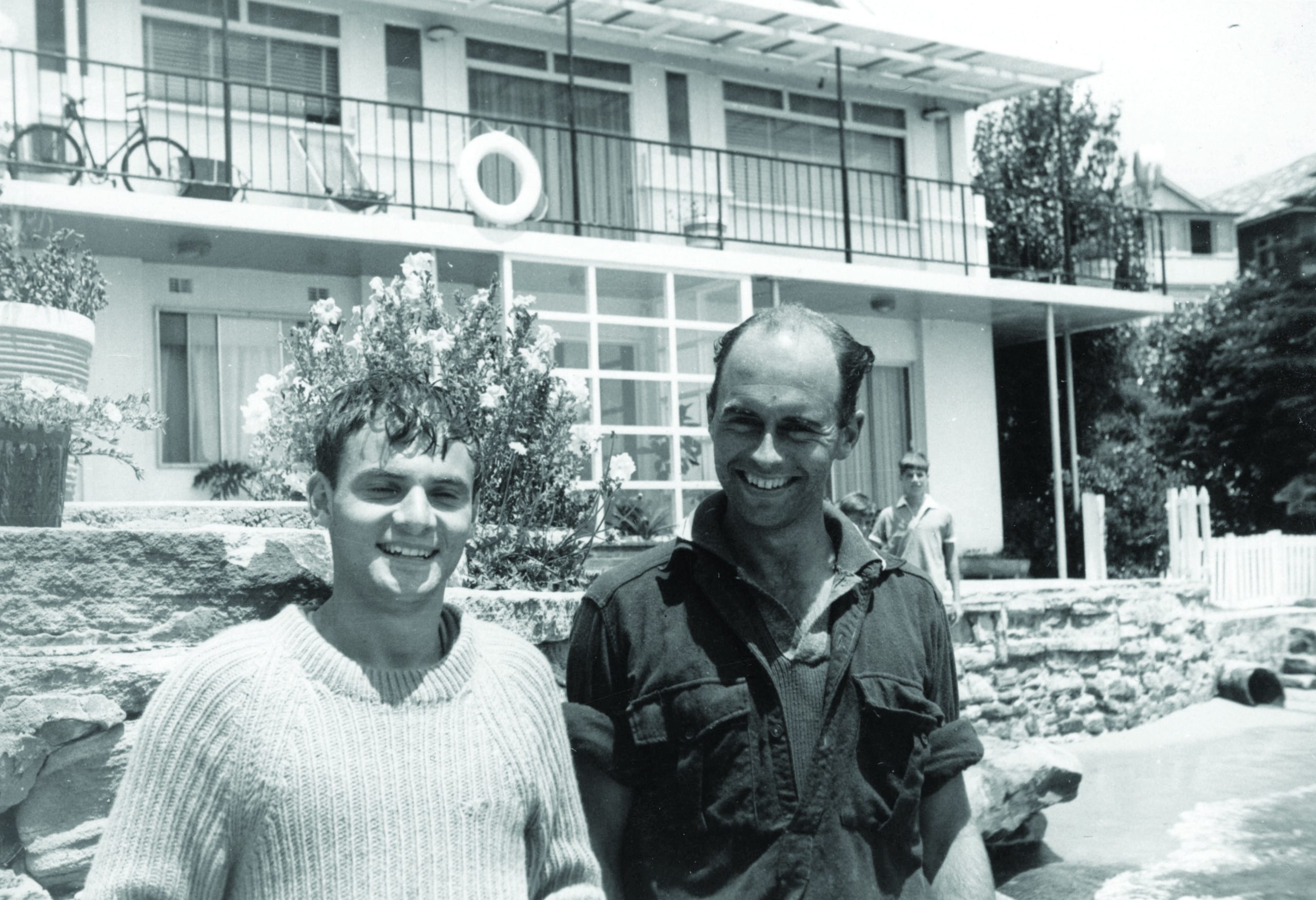
In the last issue of Boating NZ, I left John Chapple and Derek Thomas in Sydney in January 1961 winning the Interdominion 12-foot Championship Silasec Trophy with Flamingo. They had been billeted with Sydney yachtsman John Pearson and his mother Ruby in their waterfront cottage in Watsons Bay. John formed a bond with the Pearsons.
Back in Auckland, in the winter of 1961 John joined the engineering branch of architects and engineers Thorpe Cutter Pickmere & Douglas. Ray Thorpe had deep roots in our yachting community in Herne Bay with Richmond Cruising Club whose iconic art deco clubrooms at Westhaven he had designed in 1940. Ralph Pickmere was a cousin of Hereward Pickmere, the famous Whangarei yachtsman. John’s future wife, Pat Sawbridge, was working in the architectural division of the firm. They did a lot of skiing and tramping together.
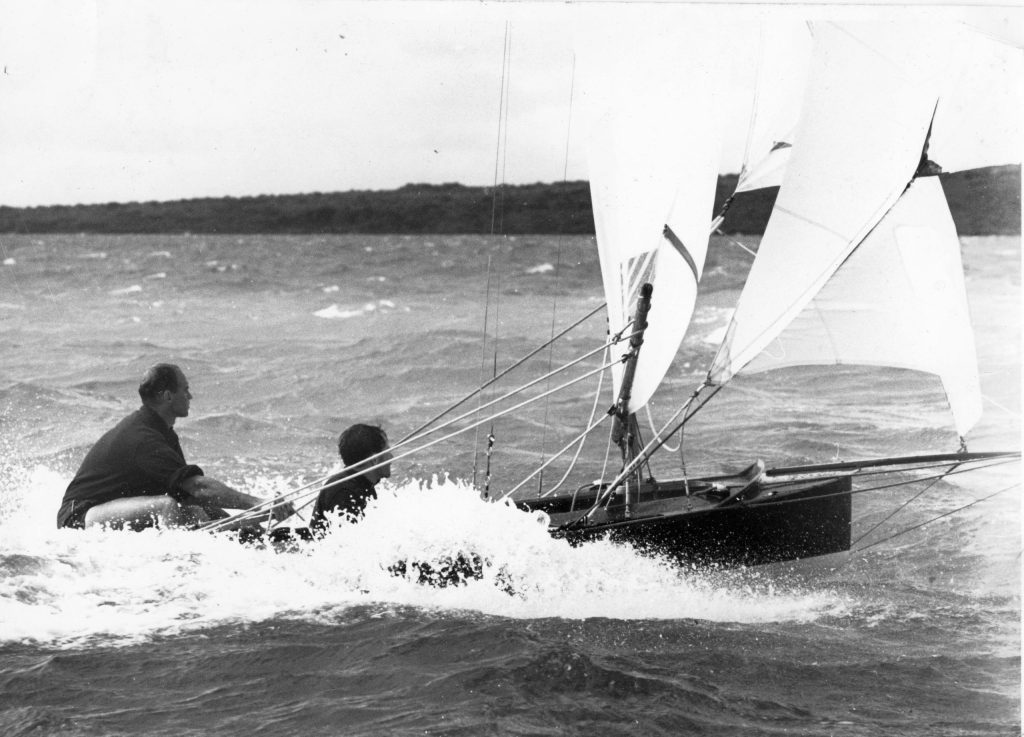

In early 1962 John’s employers sent him to Sydney to supervise the engineering for a large building they had designed in North Sydney. John was pleased to go back to the Pearsons at Watsons Bay as a boarder. He had already designed Rhythm, Q58, for John Couch in Auckland and the sail-plan for Don Brooke’s 18-footer Jezebel; he now designed Skip, a multi-chine 12-footer, for John Pearson which they built together at Watsons Bay. Chapple kept his hand in by sailing a Finn.
During 1962 the Q Class Association invited him to defend his title in the January 1963 Interdominion 12-foot Championships at Auckland representing New Zealand with Flamingo, even though he was then resident in Australia. John had left Flamingo in storage in Auckland, so it was just a question of getting Derek Thomas on board again as for’ard hand and recapturing their old teamwork.
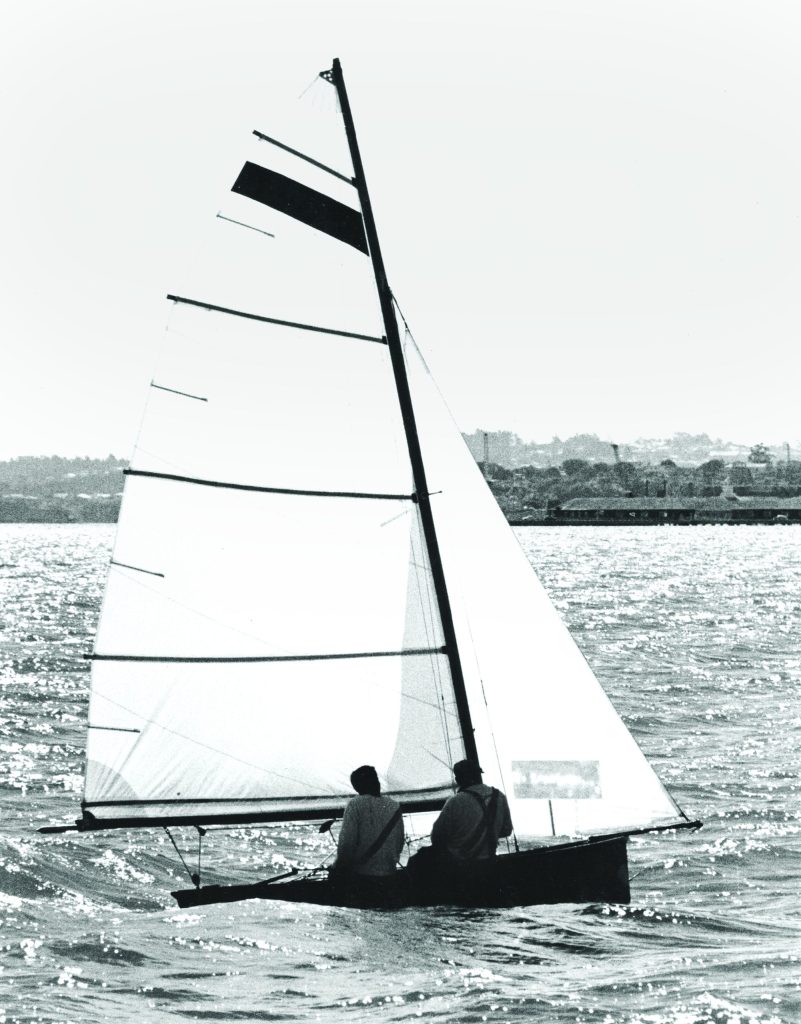
Twenty-five 12-footers contested the series off Tamaki Yacht Club in five races, twelve Australians, six Q Class, six Cherubs and the defender Flamingo. Flamingo won the Trophy again. Sea Spray magazine reported, “Chapple built Flamingo six years ago and she was probably the oldest boat in the contest, but by now he knows her well and she is exceptionally well tuned and geared. This was a major factor in their victory and others were the superior tactical ability and consistency of John Chapple and the excellent crew work of Derek Thomas.” Warwick Goldsworthy was second with Troglodyte, a Cherub with a big rig. John was very pleased about the third placegetter, his good friend Australian John Pearson from Watsons Bay in Skip.
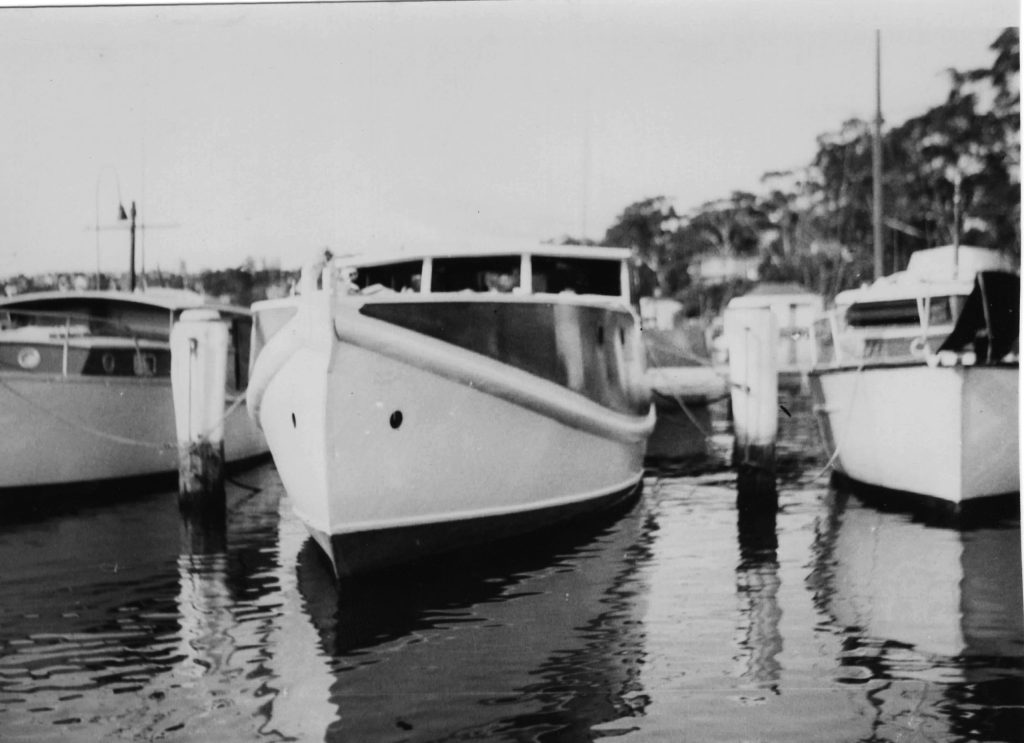
John and Pat got married in Auckland on January 31, 1963 and left for Sydney. After a bleak spell in a high-rise flat to house themselves economically, John bought the Watsons Bay lifeboat which had a low cabin and built up a miniature houseboat superstructure. They moored the boat at Cammeray Marina at Long Bay in Sydney’s Middle Harbour. John designed a radical 12-footer for himself to contest the 1964 contest to be held in Sydney, a multichine development of Skip, which he called Sopranino. Wally Munce built the hull. Although John was aiming to represent Australia this time, Sopranino had a somewhat overweight kiwi as a sail emblem. John Foote had bought Flamingo and was in the New Zealand team.
I tried to book an appointment with my old friend John Chapple to discuss his life for these articles in October last year, but he was busy until Christmas writing a history of his home lake, Okareka.
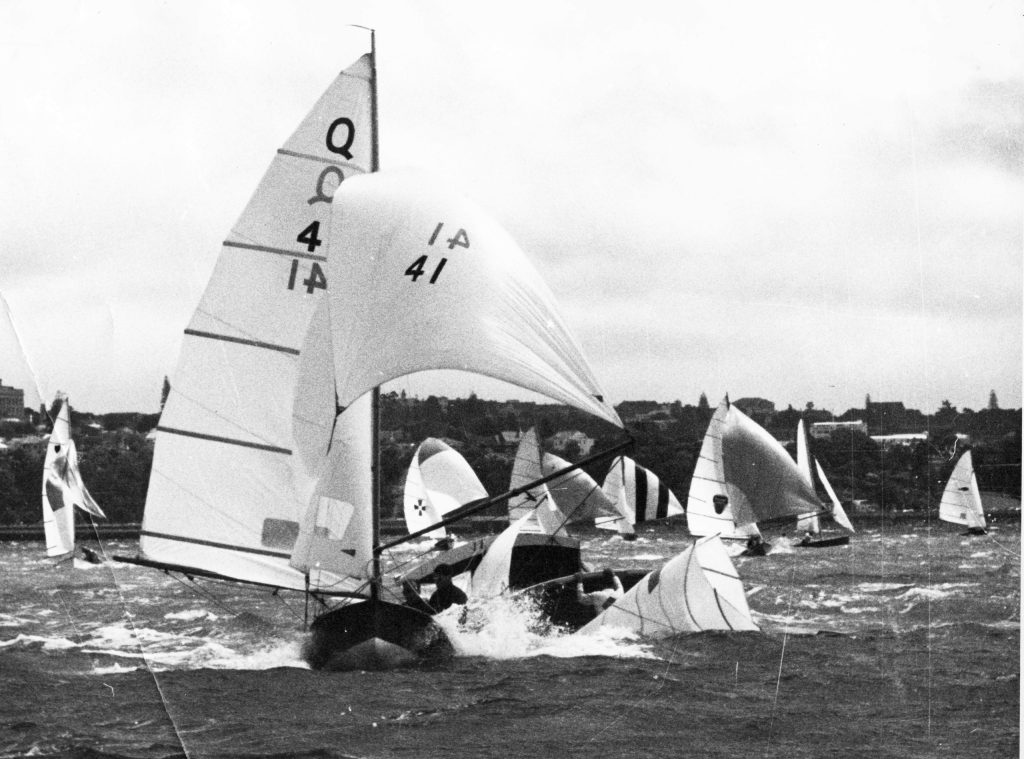
The races were covered for Sea Spray by young Beverley Coles from Auckland. John Chapple’s dominance of the event was not as great as in previous contests. With Dave (Milo) Carr as for’ard hand, after the third of five races Sopranino had a second and two DNFs. But she came across the line in first place in the last two to win the Trophy narrowly on points from Devonport lad Ross Duder’s Screema (Q16) and Aucklander Brian Woods’ Glimmer (Q7).
In her report Beverley made the good point that the Australians were unaccustomed to mass starts as they were brought up on Mark Foy starts where they started on their handicaps “with a clear wind and line to themselves” as she put it. This was a system that Mark Foy had introduced to Sydney yachting around the turn of the century, allegedly to avoid the tactics and confusion of starting on the gun. However, it particularly pleased the large number of Sydney spectators and attendant bookmakers who followed the yachts in ferries (often very closely) as the first boat across the line was the undisputed winner for the bookies to pay out on the spot, except, in the case of protests which were virtually unheard of, as they upset the punters.
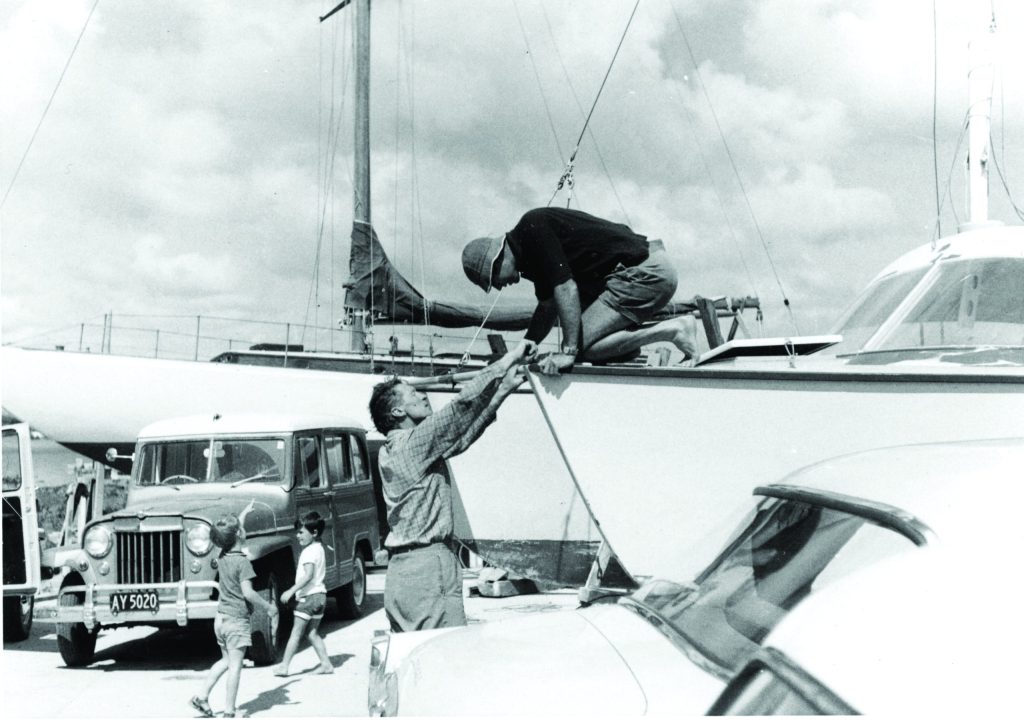
John and Pat Chapple returned to Auckland in June 1964 when their first child, Bryn, was on the way. The little houseboat on the marina was no place to have a child and John decided to devote his energies to raising a family back in New Zealand. John already owned a house on the water’s edge in Norwood Road, Bayswater. It had previously been owned for many years by ‘Babs’ Webster, the famed owner of the crack Logan keel yacht May Belle, E11. The access from the road then was down a steep path which Pat thought was unsuitable for a pram. They sold the property to Ron and Michele Copeland of Ponsonby Cruising Club and mullet boat renown. The Copelands still own this piece of paradise.
At first the Chapples had a house in Roberts Road Glenfield but later bought a cliff top site in View Road Campbells Bay with a tiny bach on it, since developed into a wonderful native bush-clad property with a delightful ergonomic house and sheds. John worked for an architect for some years but later set up on his own account as a civil engineer. Pat and John had two more children, Freya and Theo, and they devoted themselves to giving them experiences both culturally and in the open air. There were many boats, a Cherub, a Flying Ant, a Paper Tiger. In 1979 there was a partially built Jim Young catamaran Te Ngeru (Maori for ‘The Cat’) to finish. I was a joint owner with the Chapples and architect Mike Austin for a while but could never get to like multihulls particularly after I passed out while Everduring the inside of one hull of this one, foolishly without breathing gear. Their final family boat was “a foam sandwich 18-footer hull (ex-Russell Bowler’s gold Benson & Hedges) fitted with a Flying Dutchman rig to make it more sensible for kids to sail”, son Bryn Chapple tells me.
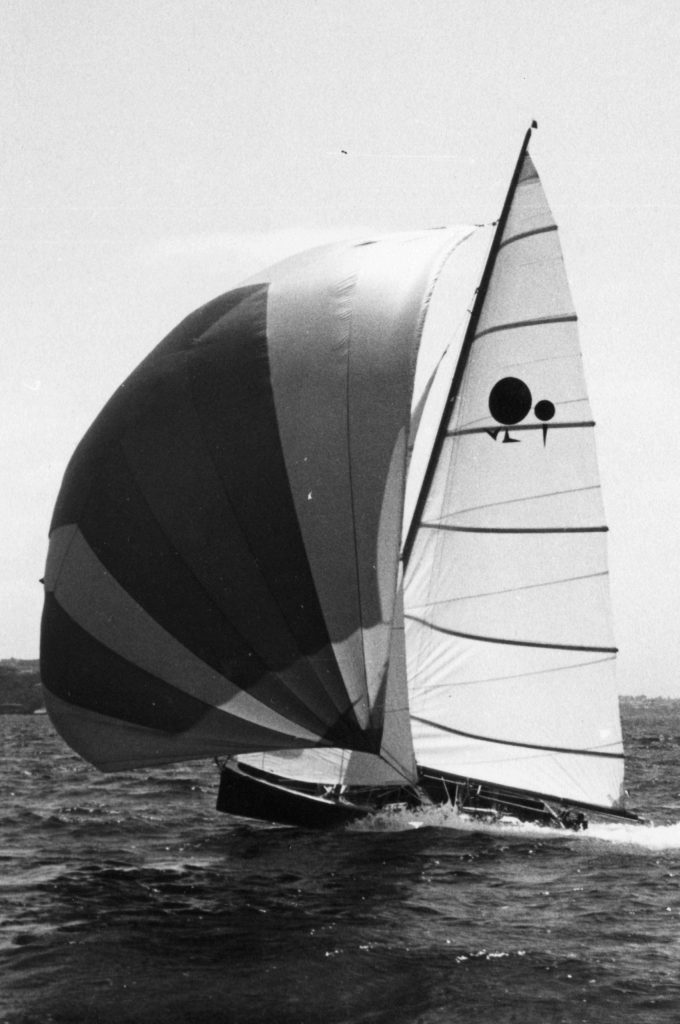
John became in demand as a centreboard designer. In 1963 he designed a Q Class for Peter Hinton of Rotorua, in 1965 Quahlee (Q111) for Bev Coles, built by Jim Mackay, and in 1966 the foam and fibreglass El Matador (Q46) for Ken Stevens, Montrose of Penrose (Q92) for John Abbott, built by Max Carter, and Miss Holeproof II a double-chine 18-footer for John Lasher.
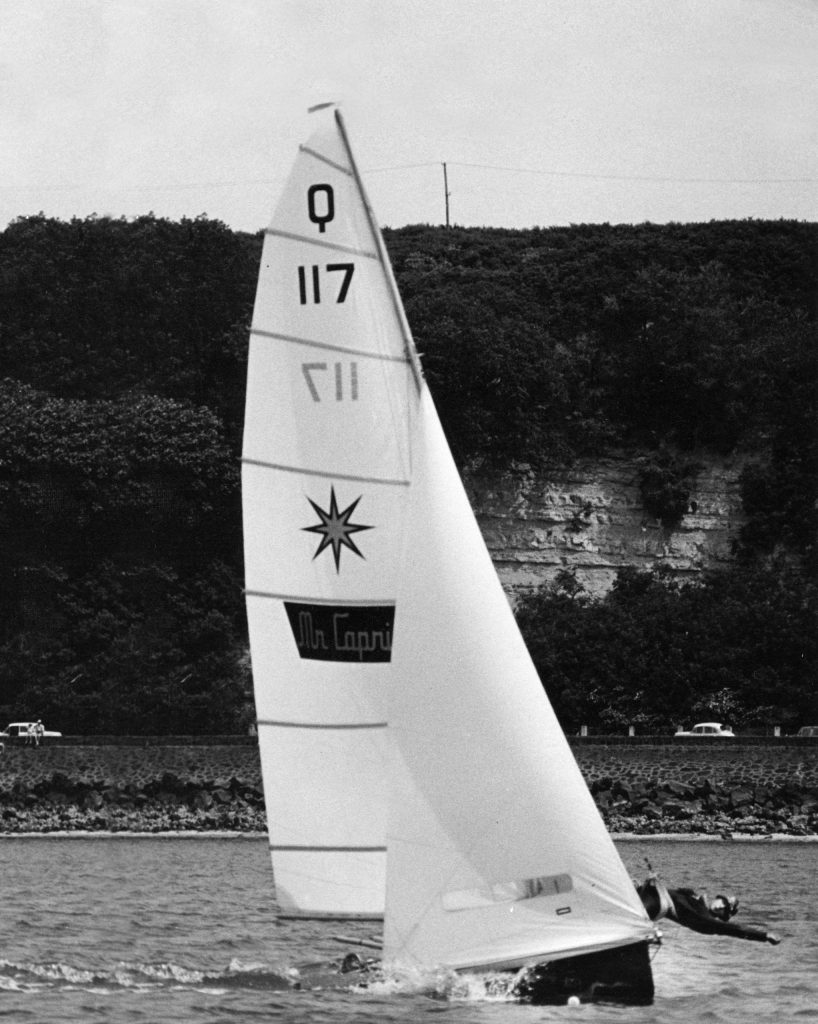
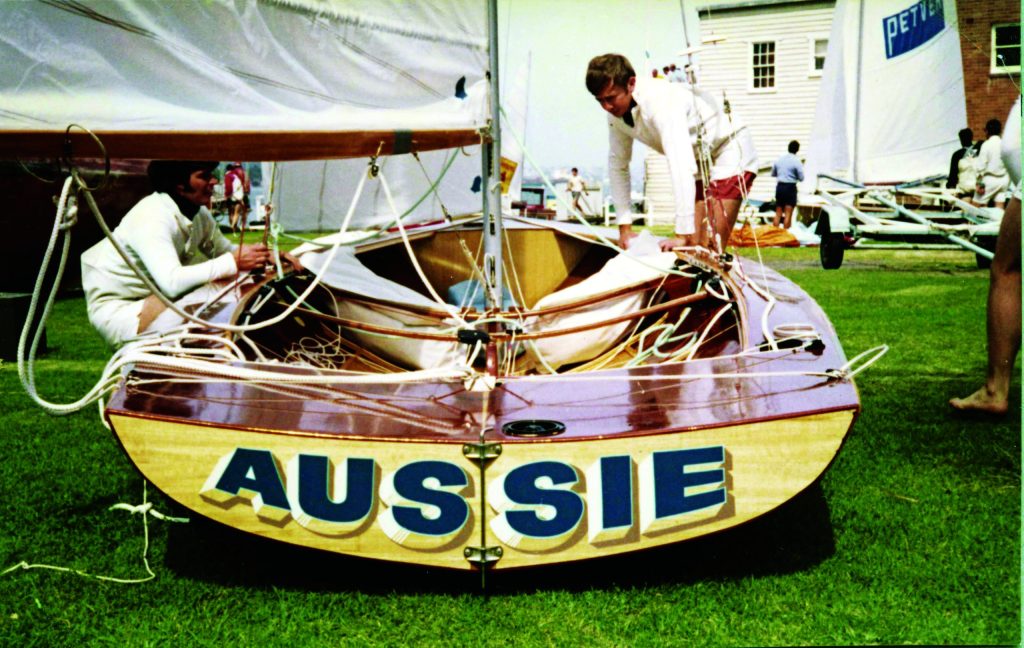
The Interdominion 12-foot Championships for 1966 and 1967 had been dominated by Dave Porter of Sydney with his Aussie. In 1967 John decided to have another crack with John Foote at the 1968 contest being held on the Waitematā. He designed Mr Capri III (Q117) and had Robert Brooke build her. John Chapple skippered her in the contest off Orakei in January 1968.
From the start there were only three boats in contention, Query sailed by the Sanders Cup winners Don Lidgard and Tony Bouzaid, Josephine, a Sydney boat sailed by John Gale and Dave Carr, Chapple’s 1964 Sopranino crewman, and John Chapple and John Foote in Mr Capri. With some brilliant sailing, Query won the contest, followed by Mr Capri and Josephine.
John’s success with the 18-footer Aussie led to further design commissions for 18s.
In 1968 John designed a foam and fibreglass 12 Blackjack (Q116) for surfboard builder Rodney Davidson. Rodney went on to build two more clones, Stella Homes (Q119) for P.A. MacNaughton and Quahlee II (Q121) for Beverley Coles, soon to marry Rodney. In 1969 John designed Yogi Bear, an 18-footer for John Lasher, built by Bob Hart.
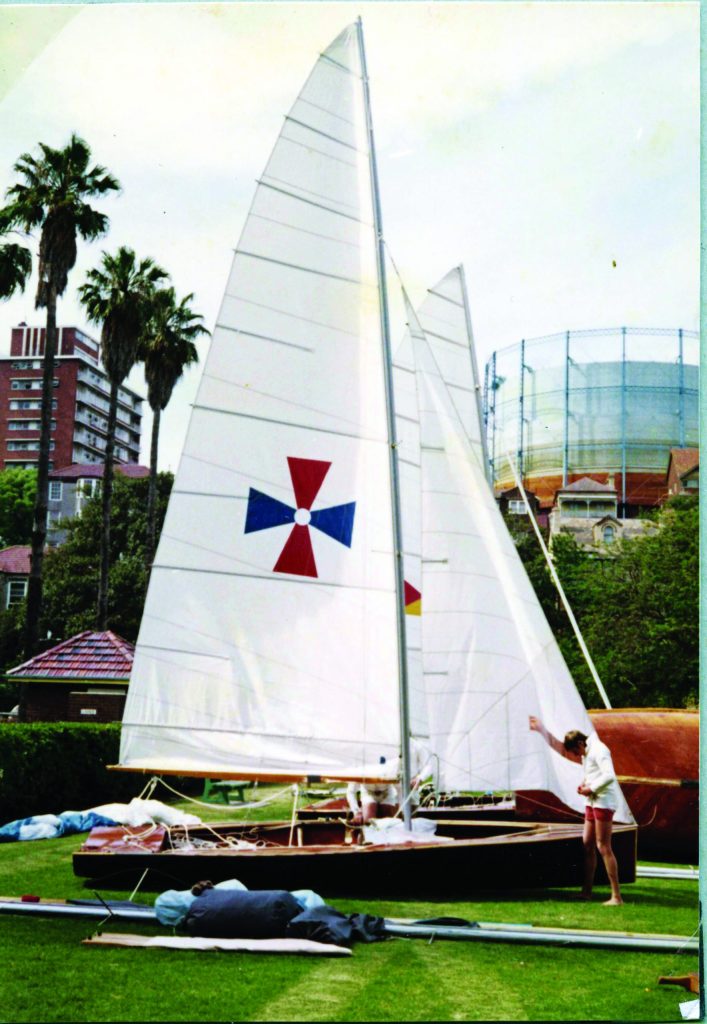
In 1970 John Porter came back to centreboarders to race with the Sydney Flying Squadron with an 18-footer he asked John to design. This was another Aussie, a radical round bilge boat built in cedar veneer by Ian Perdriau which immediately became almost ‘unbeatable’. John Porter says, “She had no runner stays, only side-stays to support the rigs, and had her side deck extended over the gunwales by 17.5cm forming a wing to give the crew more righting moment. This initiative was the start of the future expanding development of the three-handers.”
John’s success with the 18-footer Aussie led to further design commissions for 18s. In 1971 John designed Yogi Too for John Lasher, built by Roger Binns; in 1973 Bits and Pieces for Chub Davidson, Captain Morgan (later Kiwi Bacon) for Wayne Innes and Smirnoff III for Don Lidgard, built by Kerry Alexander; and in 1974 Captain Morgan II (modified by Wayne Innes) built by Kerry Alexander.
In 1972 John had done another Q Class design, Nivea Girl for A. Davies of Auckland. In that same year Chapple could not resist entering a competition for a 22ft L Class mullet boat design sponsored by Ponsonby Cruising Club. The club had updated its design and scantling regulations in an effort to revitalise the class which had once been one of the more vigorous classes on the Waitematā since the turn of the 20th Century, racing for the hugely prestigious Lipton Cup. The class did revive but largely because of the construction of several fibreglass clones of the 1939 Charles Collings design, Taotane (L38) with modern rigs. The winner of the contest, Bo Birdsall’s design, was built as Blossom, later Snatcher (L54). John did a raised deck 22-footer for Robert Warring of Auckland but it seems it was never built. A few years later Brian Vaudrey commissioned John for a 22-footer. It was an attractive design but skirted the regulations. Vaudrey built her as Outlaw (L59) for Bob Hinds.
John Chapple lived a life of excellence in all things but always with modesty and humility.
John Chapple lived a life of excellence in all things but always with modesty and humility. John’s mentor, Jack Logan, a man of similar skills and intellectual and ethical standards, did not suffer fools gladly but John was blessed with a broad sense of humour and a human kindness that was not judgmental. Sadly, in the modern world, there are few men like him.