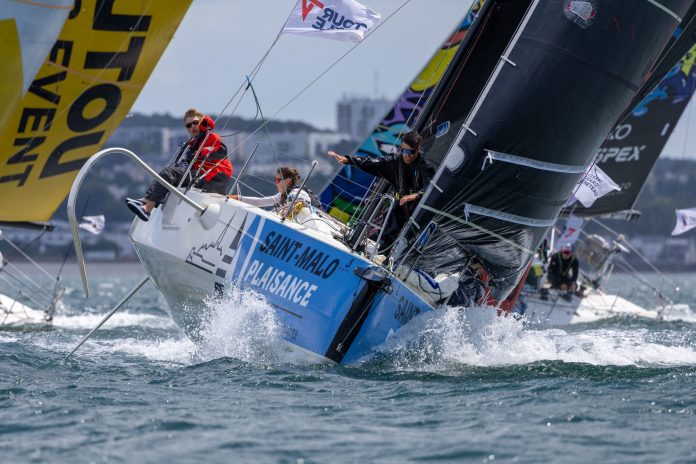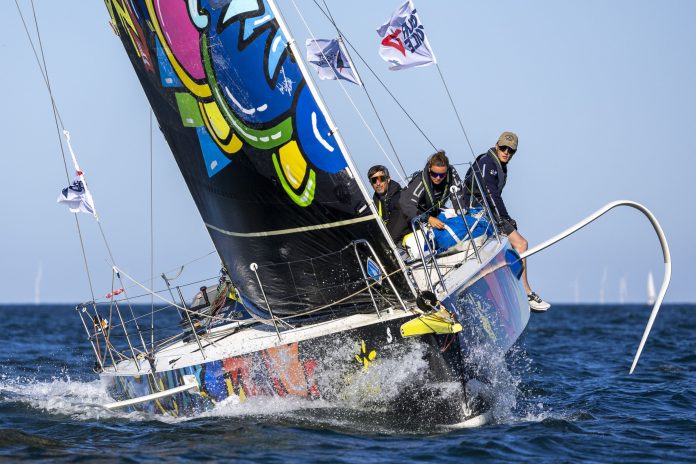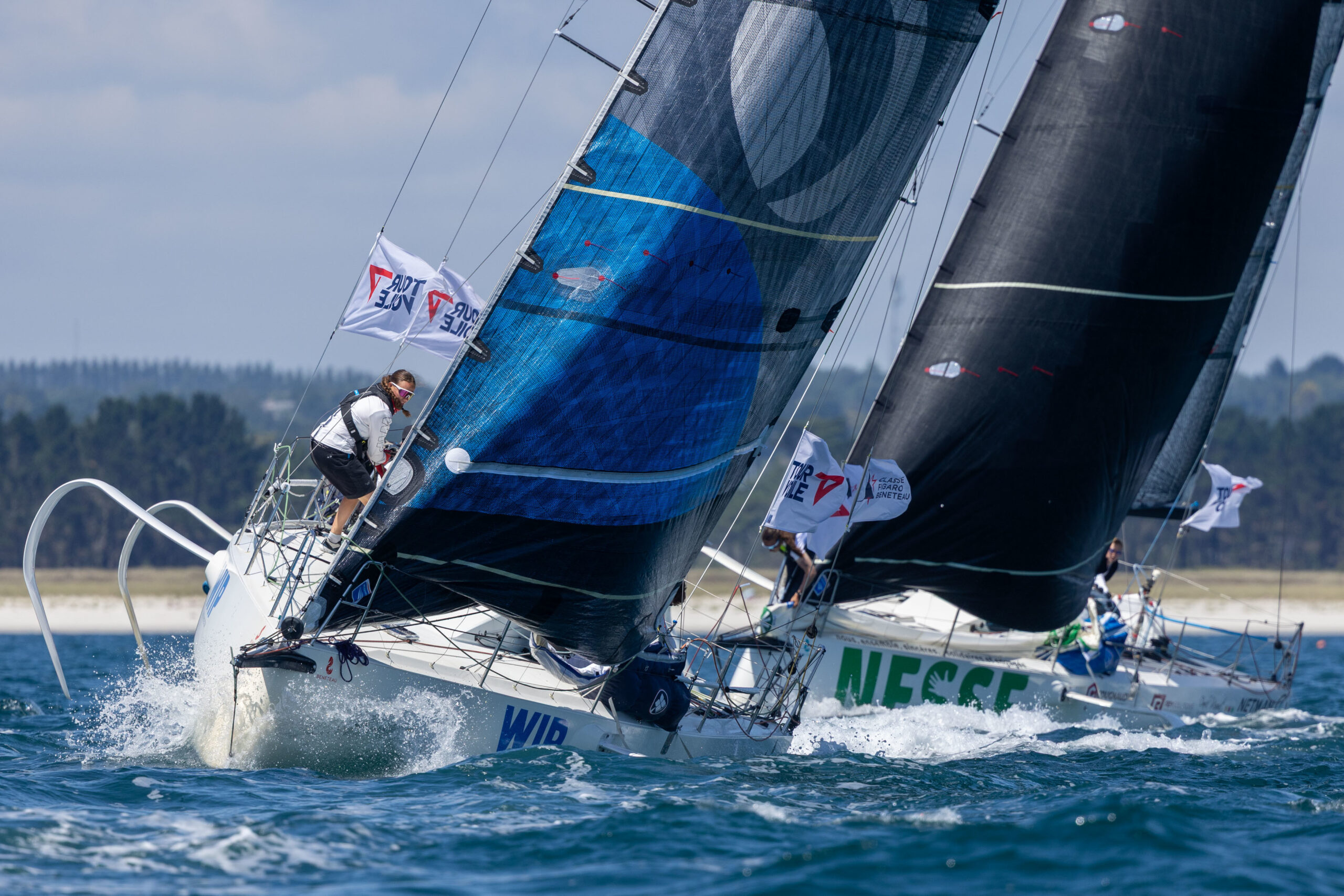
The Tour Voile 2026 will launch from Cherbourg-en-Cotentin on 24 June and conclude at Larmor-Plage on 12 July, carrying crews on an ambitious passage through Normandy and Brittany that tests every dimension of offshore sailing competence.
Designed by Ultim Sailing with race director Yann Chateau returning for a second consecutive year, the course blends coastal navigation, tidal management, channel crossings, and open-water passages into a single gauntlet. Five host ports anchor the competition: Cherbourg (24–28 June), Saint-Malo (29 June–1 July), Plérin in the Bay of Saint-Brieuc (2–5 July), Camaret-sur-Mer (6–9 July, hosting Figaro Beneteau 3 boats for the first time), and Larmor-Plage as the decisive finish. A single rest day falls on 4 July at Plérin; otherwise crews race through roughly thirty competitions—a mix of coastal regattas, constructed courses, and offshore legs—over the full span.
Each stopover weaves sporting intensity with public engagement and territorial connection. The effect is a compressed education in boat handling, crew coordination, weather interpretation, and competitive strategy.
A proven blueprint for developing maritime excellence
Figaro Beneteau 3 teams field four sailors per boat: one woman and two crew members under 26 years old (potentially including the female crew). This composition reflects the event’s commitment to equity, mentorship, and youth development in offshore racing.

Tour Voile has long served as a crucible where young mariners learn to handle boats in open water, navigate weather and tactical decision-making, and build resilience at sea. Previous editions have launched the careers of notable offshore sailors. Organisers frame this year’s event as continuing that legacy—formation, knowledge transfer, mixed crews, and inclusive opportunity all woven into the racing itself.
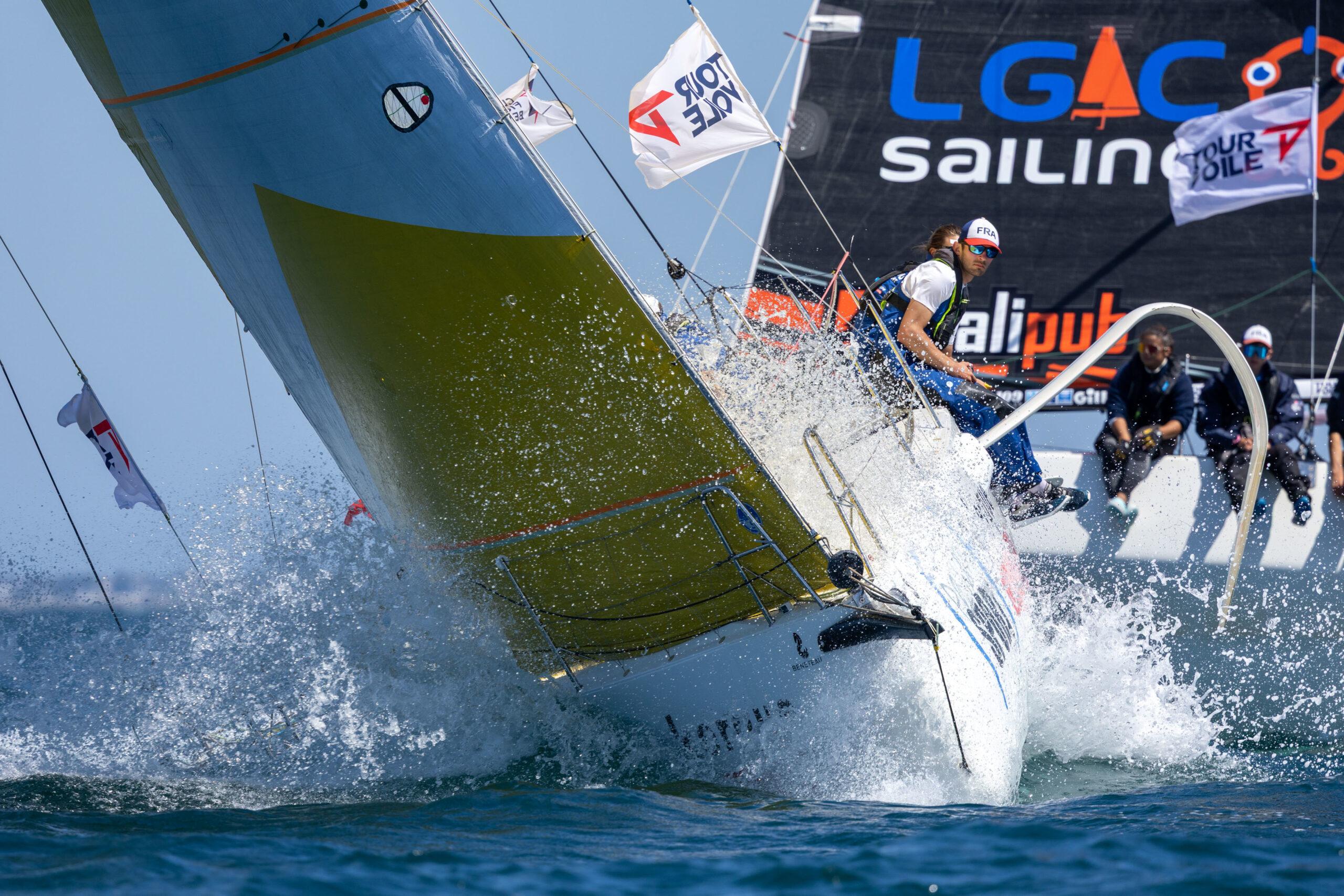
Navigators will confront the full spectrum of challenges, from structured racing in protected waters to autonomous passage planning offshore. The single-sex restriction is notable only in its absence: crews are expected to work as mixed teams, a rarity in competitive sailing and a deliberate design choice.
Growing appetite and rising standards
Organisers Emmanuel Bachellerie and Mathieu Sarrot report that returning competitors arrive with visibly improved skills, while new entries show serious competitive intent. Among the 2026 fleet, at least one boat is expected to sail with podium ambition rather than learning-focused modesty—a sign that Tour Voile has repositioned itself as a trophy worth winning, not merely an educational milestone.


“We are quite impatient to see the 2026 cohort,” the organisers said. “One of the finest rewards of running this event over the past years is seeing that sailors come not just to raise their level, but to take home the trophy. That was a shared goal when we rebuilt Tour Voile with the French Sailing Federation and the Figaro Beneteau class: to create a competition that matters, one sailors want on their palmares.”
Larmor-Plage will host the decisive finish line. Mayor Marianne Rousset emphasised the occasion as both a sporting milestone and a moment of community celebration, with 12 July marking the coronation of the 47th edition’s winning crew.