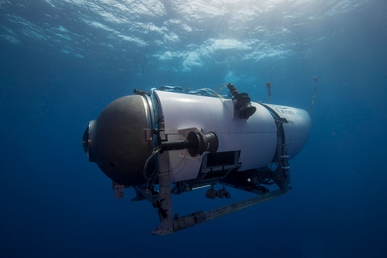
When the Titan submersible imploded back in 2023, the world wanted answers. Now, the Transportation Safety Board of Canada (TSB) has released its final investigation report, and it strips away the mystery to reveal a tragic mix of unvalidated engineering shortcuts and a total lack of regulatory oversight.
Essentially, OceanGate built a deep-sea submersible based on theoretical designs but never actually tested the real-world properties of the novel carbon fibre hull to see if it matched the math. When the TSB lab examined a piece of the cylinder cut off during manufacturing, they found severe defects, including wavy carbon fibre layers and structural porous gaps. This drastically weakened the hull’s strength.
Instead of doing what standard engineering dictates – like putting a full-scale prototype through hundreds of intense pressure tests before letting people inside – the company skipped right to deep dives. They relied on custom acoustic and strain monitoring systems to warn them of danger, but neither system was ever proven to actually give enough advance warning to surface. Because of this, the hull quietly accumulated progressive damage every time it went down, a problem made worse by minor operational bumps and storing the vessel outside in freezing winter weather. By its 14th deep dive, the carbon fibre cylinder simply couldn’t take it anymore.
The report also paints a frustrating picture of OceanGate’s inner workings. It was a small company where the CEO held all the power, creating a textbook environment for groupthink and confirmation bias. Safety warnings from their own engineers and external industry experts were ignored or brushed aside. The team even shrugged off major warning signs on previous dives, like a loud bang heard during an ascent just a year prior. To make matters worse, because the Titan was never registered with any country or certified by an official classification society, it flew completely under the radar of international maritime safety inspectors.

To make sure this never happens again, the TSB issued six major safety recommendations. They want the International Maritime Organisation to turn voluntary submersible guidelines into mandatory international laws. They also urge local regulators to expand oversight to track uncertified commercial operations, share information across border and environmental agencies, and force support ships and diving teams to use formal “bridging documents.” This ensures everyone is on the same page during an emergency and gives the support ship’s captain ultimate authority to stop a dangerous dive.
You can read through all the findings and data in the full TSB Marine Transportation Safety Investigation Report M23A0169. Further information about the implosion can be found on Wikipedia, Titan (submersible).