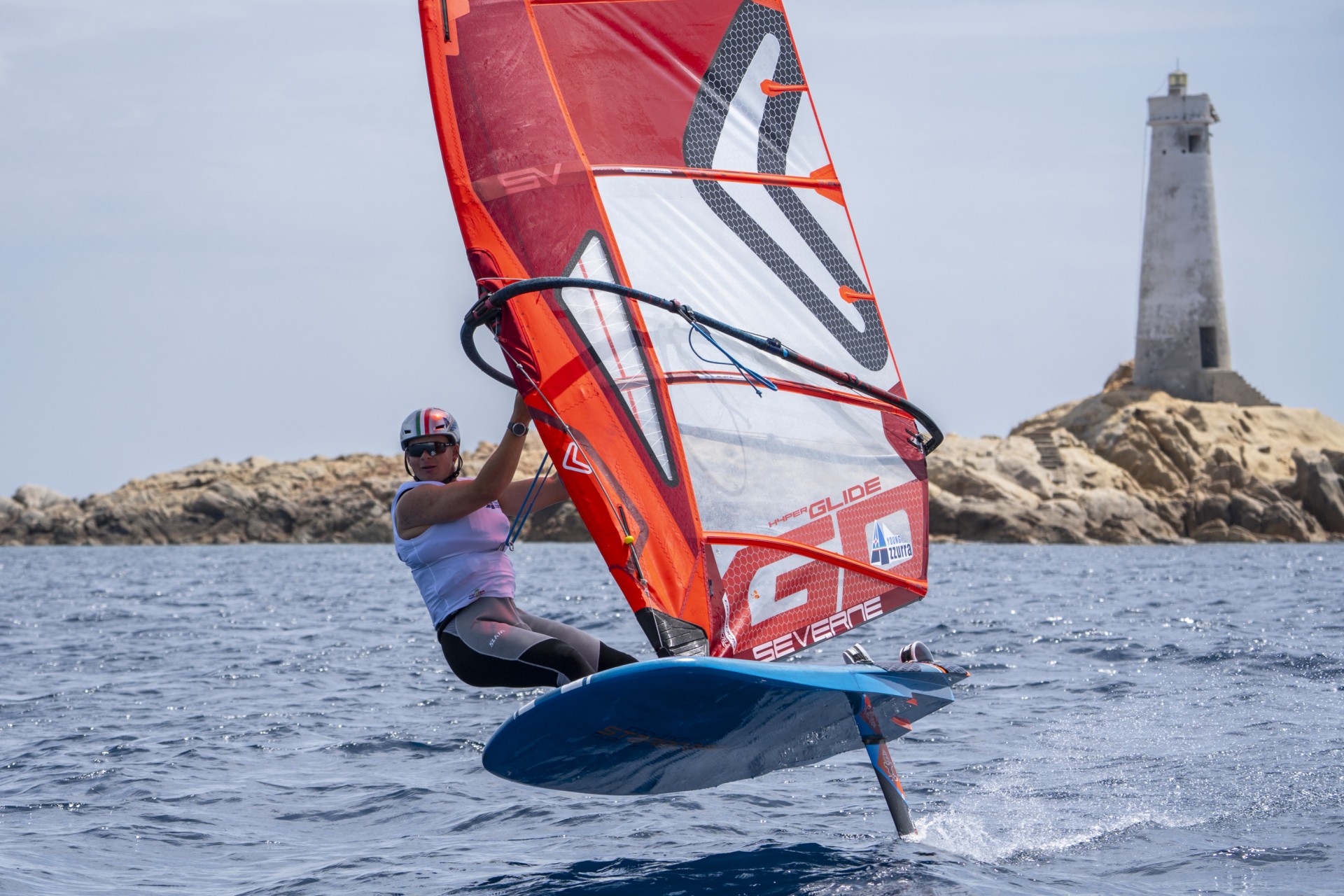
Two Italian sailors from Porto Cervo’s elite youth programme have earned selection to compete at the 2026 Mediterranean Games, a validation of the development pathway being built along Sardinia’s Costa Smeralda. Federico Pilloni will race iQFOiL, the Olympic foiling windsurfing class, while Cesare Barabino contests the ILCA 7. Both trained under the Yacht Club Costa Smeralda’s Young Azzurra banner, which has become known for producing sailors capable of competing at continental level.
Pilloni, who performed strongly throughout 2026, will make his debut at a major multi-sport event when racing begins on 27 August in Taranto. “I’m extremely happy and grateful for the opportunity to take part in the Mediterranean Games representing Italy,” Pilloni said. “It will be my first experience at a major multi-sport event, and wearing the national jersey in such a prestigious setting is a source of great pride. At the same time, I feel a great sense of responsibility. Events like this go beyond the individual level, because you have the honour of representing your country. Contributing to the Italian team’s results is a privilege and a special motivation.”
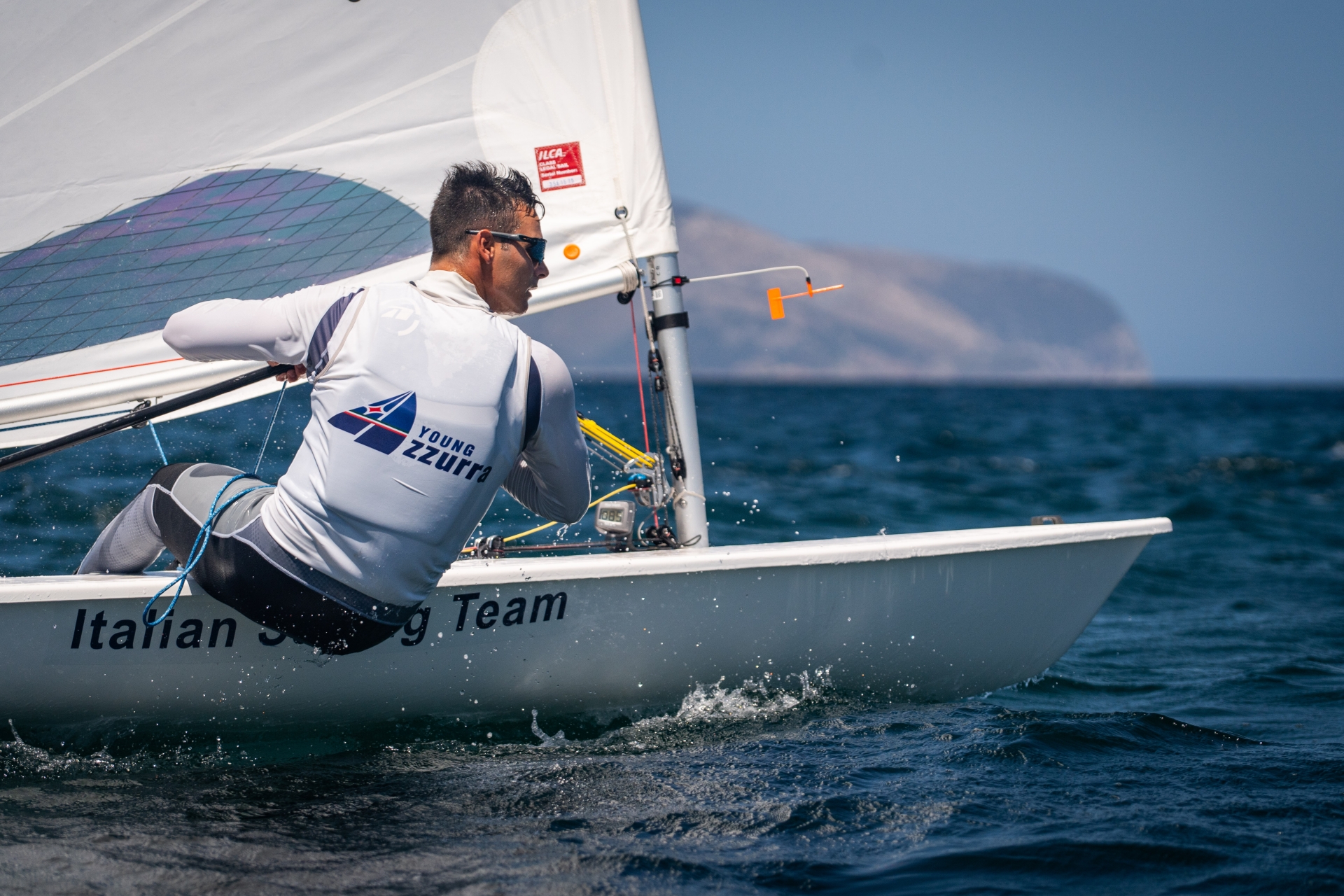
Barabino described the selection as the result of years of dedicated work. “Being selected by the Italian Sailing Federation to represent Italy at the 2026 Mediterranean Games in Taranto is a great honour and a significant responsibility,” he said. “Taking part in such a prestigious event represents a significant milestone in my career, a sort of culmination of the work I’ve put in over the years, the sacrifices I’ve made and the progress I’ve achieved. My aim now will be to focus fully on my preparations for the Games, concentrating on every technical and physical detail to ensure I arrive in the best possible form.”
The Mediterranean Games, running from 21 August to 3 September 2026, bring together nations from around the Mediterranean basin. Recognised by the International Olympic Committee since 1952, the event mirrors the Olympic structure and provides a testing ground for young talent before the international calendar intensifies.

Young Azzurra has become a consistent source of competitive sailors across foiling disciplines and offshore racing. The programme’s dual focus on youth development and high-level performance continues to pay dividends, with athletes regularly selected for national teams and progressing to European and world championships. For New Zealand readers following Olympic sailing pathways, the Italian model offers lessons in how club-based programmes can feed sustained talent into national systems.