# STAGE 1: REWRITE
The middle days of Cowes Week reveal what the regatta is really about. While opening day brings the fanfare and closing day the champagne, it’s Wednesday when the fleet finds its rhythm. The competition sharpens. Tacticians earn their keep. And the sailors who came to win start separating from those who came to be seen.
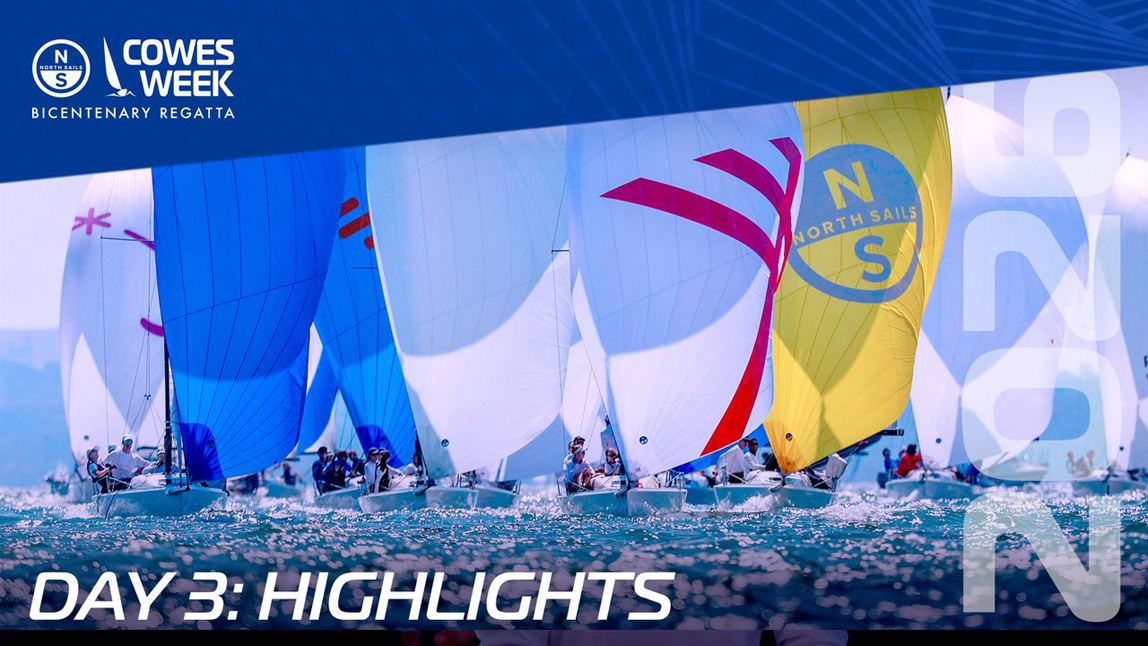
North Sails’ coverage of day three captured exactly that intensity. The footage shows what three decades of British offshore racing have taught competitors: marginal gains compound. A boat handler’s timing on a spinnaker drop. The precise moment a crew shifts weight to gather momentum off the line. The way sunlight bounces off canvas as forty yachts converge on a single buoy.
Cowes Week attracts the sort of sailor who spends winters obsessing over weight distribution and summer months chasing wind shadows off the Solent. The fleet includes former Olympic competitors, wealthy amateurs with professional crews, and semi-retired racers who’ve forgotten more about sailplan geometry than most people will ever know. They bring that obsession to the Isle of Wight every August because Cowes remains one of the few places where different generations of racing sailors gather under the same starting line.

What day three footage tends to show is the moment theory becomes tactile. Wind conditions in the Solent shift constantly. Tide runs hard. The courses demand both speed and positioning, and crews learn quickly that one doesn’t guarantee the other. A boat leading at the first mark can find itself buried three minutes later if the skipper misreads the layline home.
The North Sails documentation gives New Zealand audiences a genuine window into how European racing operates at the top level. The Solent is nothing like the Hauraki Gulf. Boats sit closer together. Mark-rounding becomes almost balletic in its intensity. The photography captures how crews move as single organisms when things are working, and how quickly that unity fractures when something goes wrong.
For keelboat racers in New Zealand, these videos serve a practical purpose beyond mere entertainment. They show what happens when sailors refuse to accept marginal performance. How the best offshore crews train. Where attention to detail actually matters in a race outcome.
Cowes Week runs differently to most Southern Hemisphere regattas. The British approach to boat racing prizes consistency across a week of racing rather than single-race heroics. That philosophy attracts competitors who enjoy the grind. The daily refinement. The knowledge that the fleet’s best boat on day three might be middle-of-the-pack by Friday if the crew loses focus.

North Sails has made those middle-week battles visible to sailors who can’t be on the Solent themselves. For anyone serious about offshore racing, that’s worth watching carefully.
# STAGE 2: DEEP AI SCRUB
The middle days of Cowes Week reveal what the regatta is really about. While opening day brings the fanfare and closing day the champagne, it’s Wednesday when the fleet finds its rhythm. The competition sharpens. Tacticians earn their keep. And the sailors who came to win start separating from those who came to be seen.
North Sails’ footage of day three captured exactly that intensity. The video shows what three decades of British offshore racing have taught competitors: small gains compound. A boat handler’s timing on a spinnaker drop. The precise moment a crew shifts weight to gather momentum off the line. Sunlight bouncing off canvas as forty yachts converge on a single buoy.
Cowes Week attracts sailors who spend winters obsessing over weight distribution and summer months chasing wind shadows off the Solent. The fleet includes former Olympic competitors, wealthy amateurs with professional crews, and semi-retired racers who’ve forgotten more about sailplan geometry than most will ever know. They arrive at the Isle of Wight every August because few places gather different generations of racing sailors under the same starting line.
What day three shows is the moment theory becomes tactile. Wind in the Solent shifts constantly. Tide runs hard. Courses demand both speed and positioning, and crews learn quickly that one doesn’t guarantee the other. A boat leading at the first mark can drop three places by the leeward turn if the skipper misreads the layline home.
The North Sails documentation gives New Zealand audiences a window into European racing at the top level. The Solent bears no resemblance to the Hauraki Gulf. Boats sit closer together. Mark-rounding becomes almost balletic in its intensity. Photography captures how crews move as single organisms when working well, then how quickly that unity fractures when something fails.
For keelboat racers in New Zealand, these videos matter beyond entertainment value. They show what happens when sailors refuse to accept marginal performance. How top offshore crews train. Where attention to detail actually changes race outcomes.

Cowes Week operates differently to most Southern Hemisphere regattas. The British approach values consistency across a week of racing over single-race heroics. That philosophy attracts competitors who enjoy the grind, the daily refinement, the knowledge that the fleet’s fastest boat on day three might finish middle-of-the-pack by Friday if the crew loses concentration.
North Sails has made those middle-week battles visible to sailors unable to be on the Solent themselves. For anyone serious about offshore racing, that’s worth watching carefully.