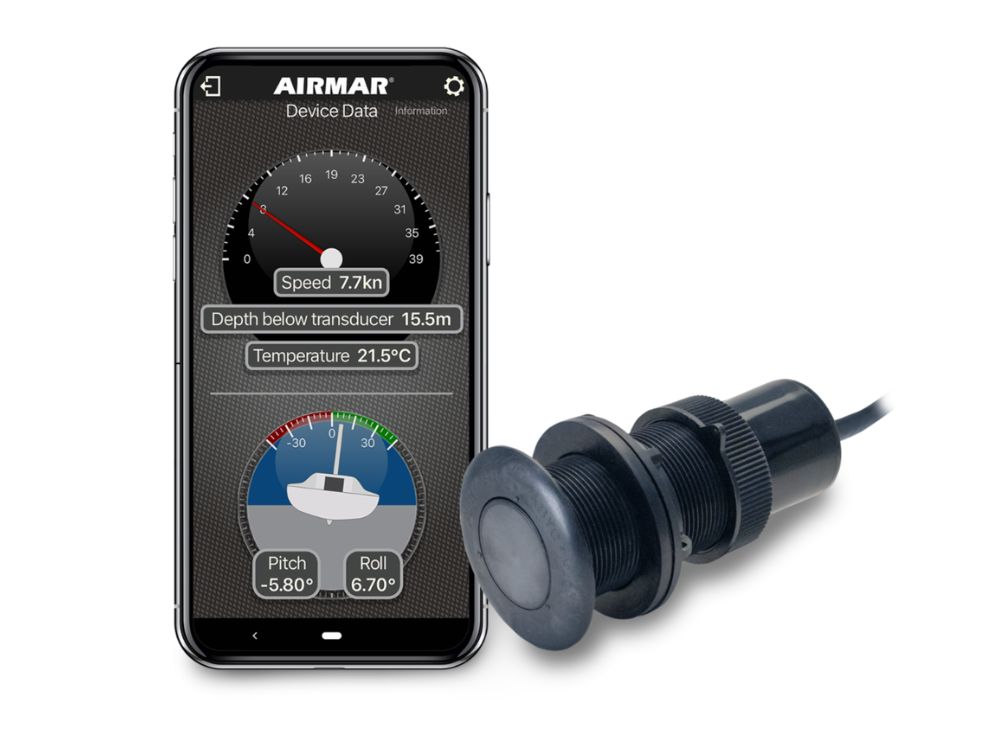
Airmar has canned the paddlewheel. The US sensor maker, whose transducers already sit on plenty of hulls around New Zealand, has released the TriSonic Smart Multisensor, a fully ultrasonic speed, depth and water temperature sensor built to replace the spinning mechanical wheel that’s needed regular cleaning and replacing on boats for decades. Airmar describes it as the only ultrasonic speed sensor currently available in the marine market.
Craig Cushman, Airmar’s Director of Marketing, called it “a major advancement in marine speed sensing.” He said the company has “eliminated moving parts and the burden of paddlewheel maintenance caused by marine growth”, the fouling that’s frustrated anyone who’s had to scrub a speed sensor clean mid-season to keep their readings honest.
The TriSonic runs on patented adaptive digital processing that automatically adjusts for boat speed, water depth and water clarity, and it feeds calibrated speed, depth, water temperature, and heel and trim data straight into NMEA 2000 networks. All the processing electronics are built into the sensor body itself, so there’s no external junction box to wire in, and it drops straight into the same two-inch thru-hull housings Airmar’s older paddlewheel and ultrasonic sensors already use, a genuine retrofit rather than a rip-and-replace job.
Where it gets interesting is calibration. The sensor connects over Bluetooth, out to 30 feet (about 9.1 metres) across the boat, to Airmar’s CAST app, which handles both basic and advanced speed calibration from a phone, including heel-angle adjustments that squeeze the most accurate speed out of a given hull. That’s tuning that used to require expensive PC-based software. Now it’s free and sits in your pocket.

Multihull owners get a dedicated setup. The TriSonic 2 pairs two sensors that talk to each other constantly, working out which one’s sitting lowest and in the least aerated water, then switching automatically between them for the more reliable reading. It’s available now through authorised Airmar dealers worldwide.
It’s worth putting this in context for local readers. Boating NZ covered Airmar’s push into this part of the world back in November 2025, when the company opened a distribution centre in Melbourne stocking its transducer and sensor range with next-day delivery to New Zealand, though that stock list didn’t specifically name the TriSonic or its Smart Multisensor siblings, so don’t read local shelf availability into it yet. What hasn’t changed is the trajectory this masthead flagged back in 2021, when we noted fish-finding technology moving in leaps and bounds from broadband sonar through to CHIRP, chasing the same goal Airmar’s chasing here: less fiddling, better data. A fully ultrasonic speed sensor with no moving parts is simply the next rung on that ladder.
Learn more about the TriSonic from Airmar.