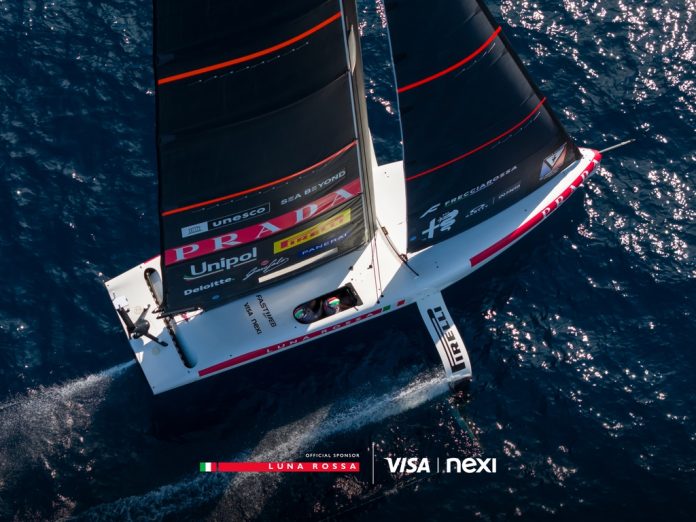
An eventful yet highly productive and intense training day for Luna Rossa who came back to the water after their team summer break with the first new innovation of the cycle in the form of a new rudder that the sailing team and engineers, positioned in the Guest Racer pod, were keen to evaluate.
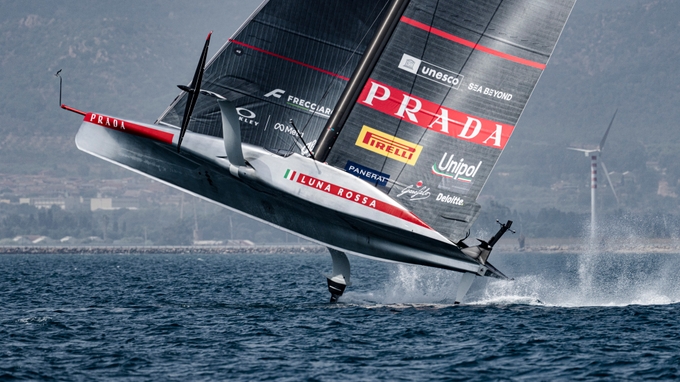
The recon team noted the new rudder looks to have “more blade area at the top extending the leading edge forward, and slightly less area at the bottom of the blade. In terms of length, it appeared similar to rudder R05…” Early tests in the light airs of the morning looked positive and the first session of the day went off with only a minor issue on entering a tack to report that saw the nose of the AC75 go ‘bow-down.’
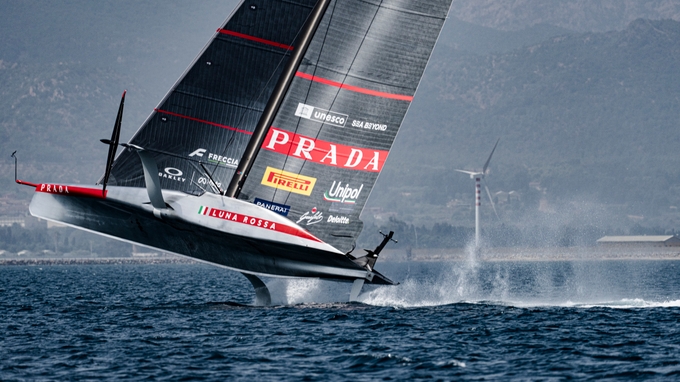
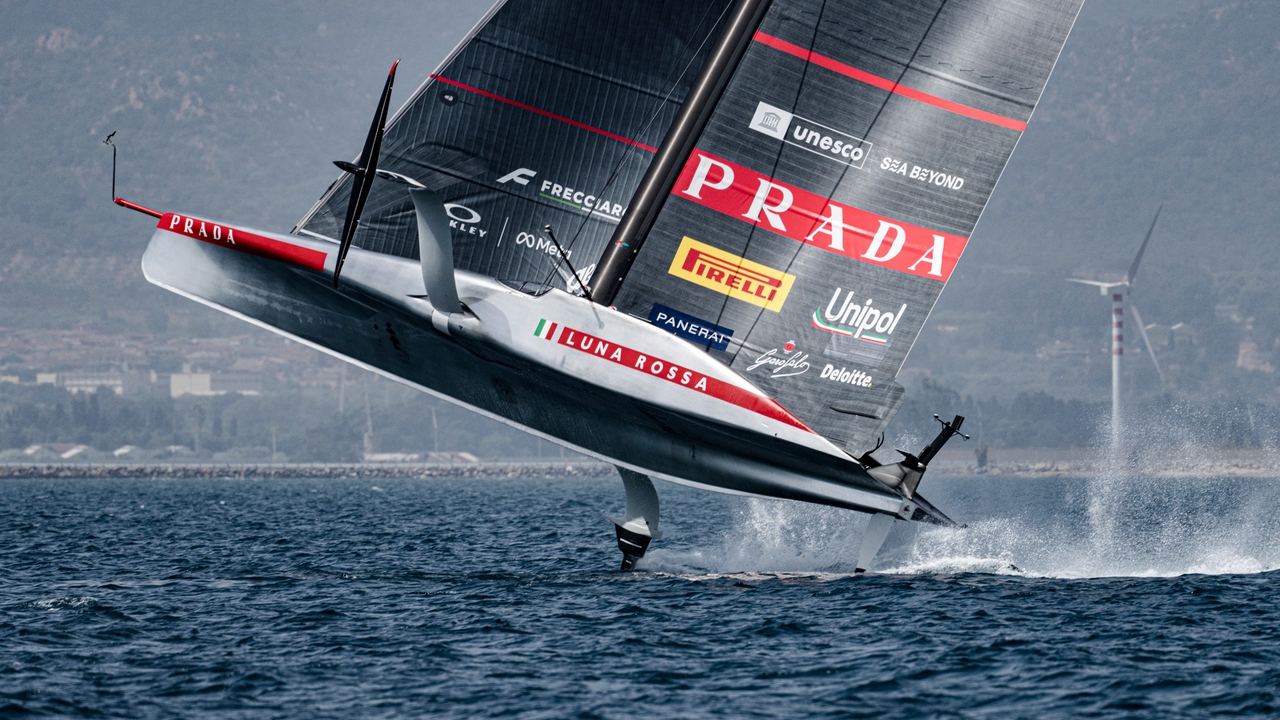
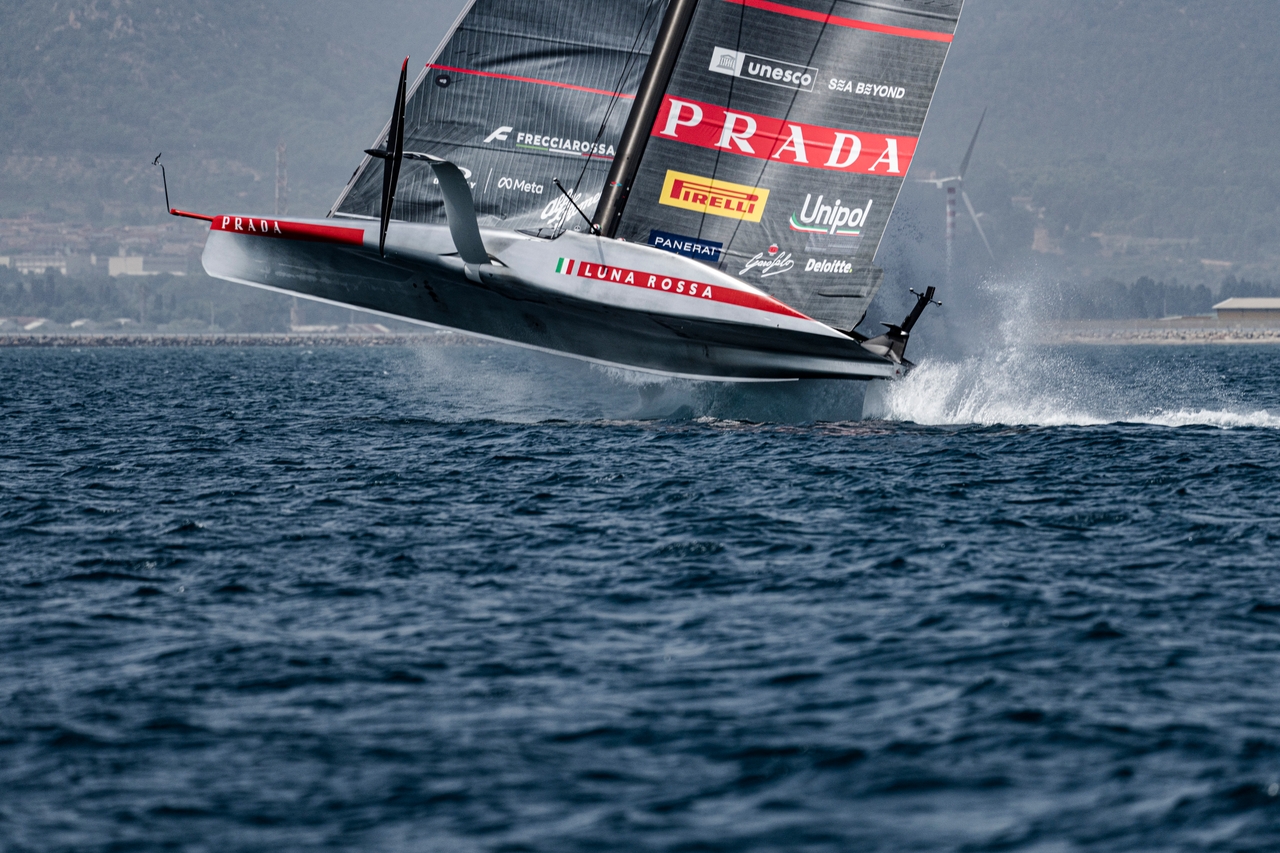
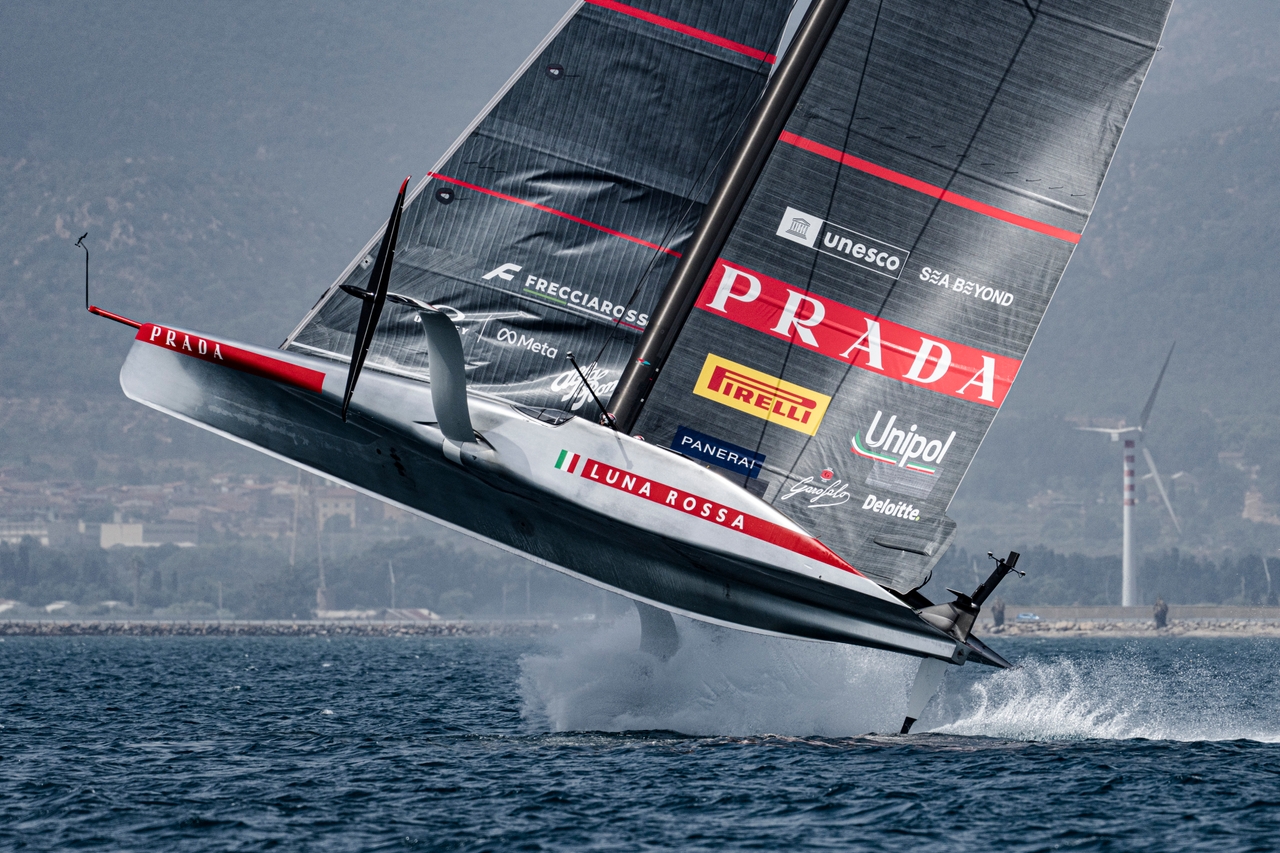
The second session after lunch was where the drama happened with the recon team reporting that: “…the boat practiced some aggressive one-board bear-aways followed by consecutive gybe series before switching back to bear-aways, now with the windward board half immersed. On one of these, the new rudder ventilated and stalled during the bear-away. The boat trimmed bow-up significantly, broaching the water and crashing hullborne. No major damage occurred, as the crew reacted and kept on sailing shortly after. The team then repeated rudder loading on a beam reach before switching to pre-start practice closer to shore in 12 kts of sea-breeze from 165°.”
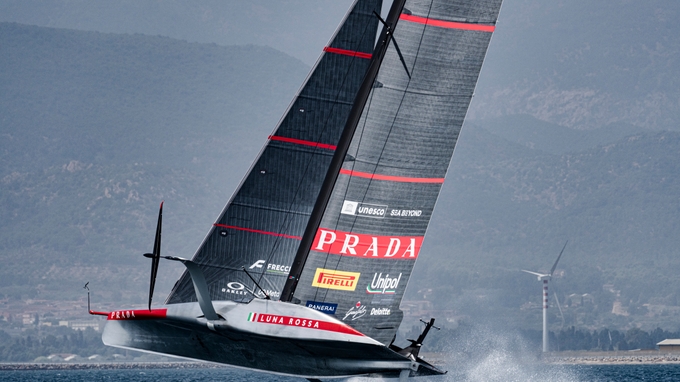
Vittorio Bissarro, one of the most experienced flight controllers and trimmers in the America’s Cup spoke afterwards about the sky-rocket saying: “Well, it was kind of simple, we lost the rudder, so we didn’t have any control of the blade or the yaw of the boat, and that promoted the boat to bear away and pass through the power zone. It was a kind of a dangerous situation. So yeah, the reaction there was just being sure to put the rudder in the water. So don’t care about the bow, the distance of the bow from the water, just keep the elevator in the water because what really can cause damage in that situation is popping the rudder.”

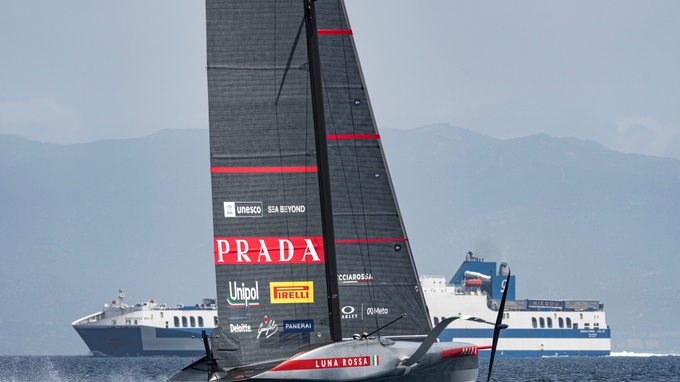
Thankfully no damage was recorded, and Luna Rossa continued an electric session with the team calling it a day just after 3pm. They intend to continue training on Friday 28th August.
ON-WATER RECON REPORT
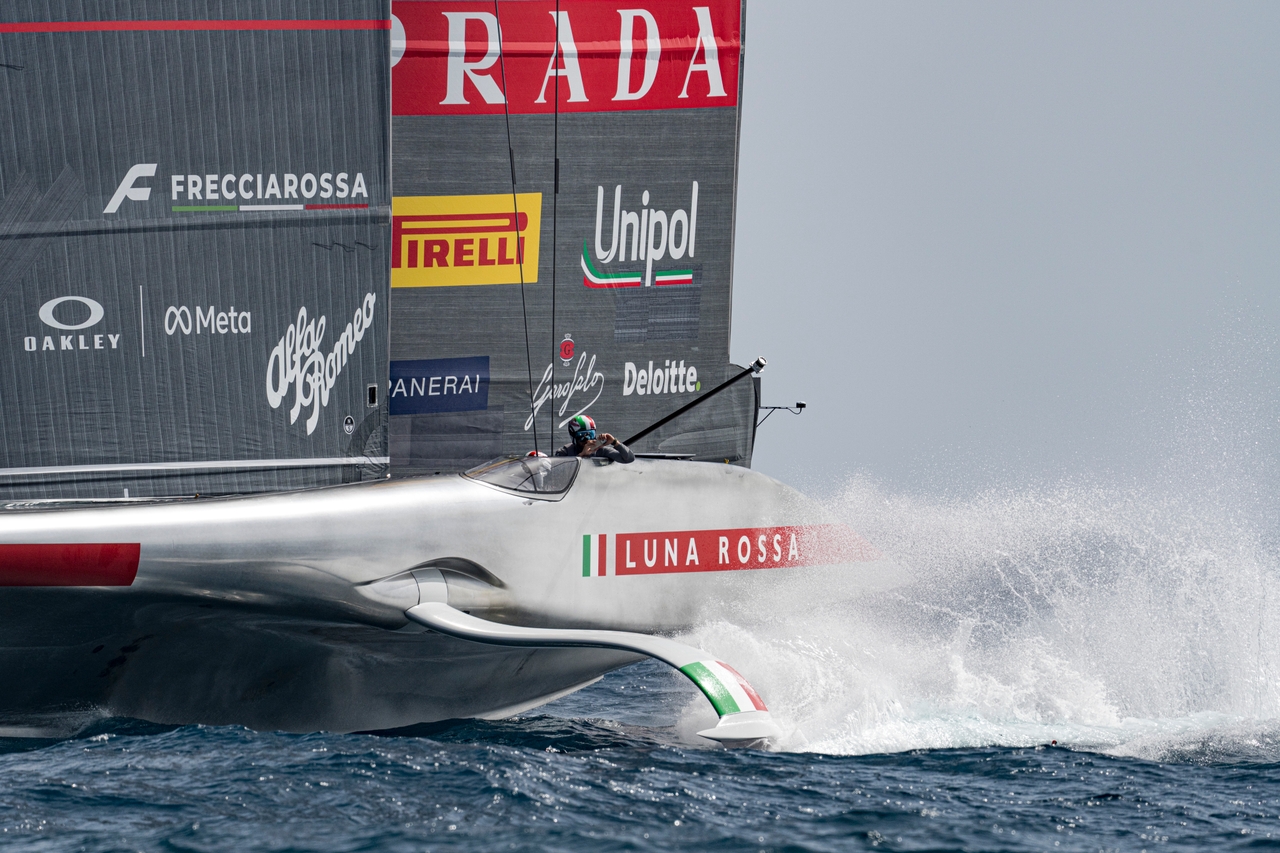
After two weeks, the LR team rolled out the boat at 10:15. The wings were still equipped with slim camera poles on the pressure sides at mid-span. A new iteration of the rudder was noted, with more blade area at the top extending the leading edge forward, and slightly less area at the bottom of the blade. In terms of length, it appeared similar to rudder R05, to be confirmed by measurements for which shots were taken at crane-out.
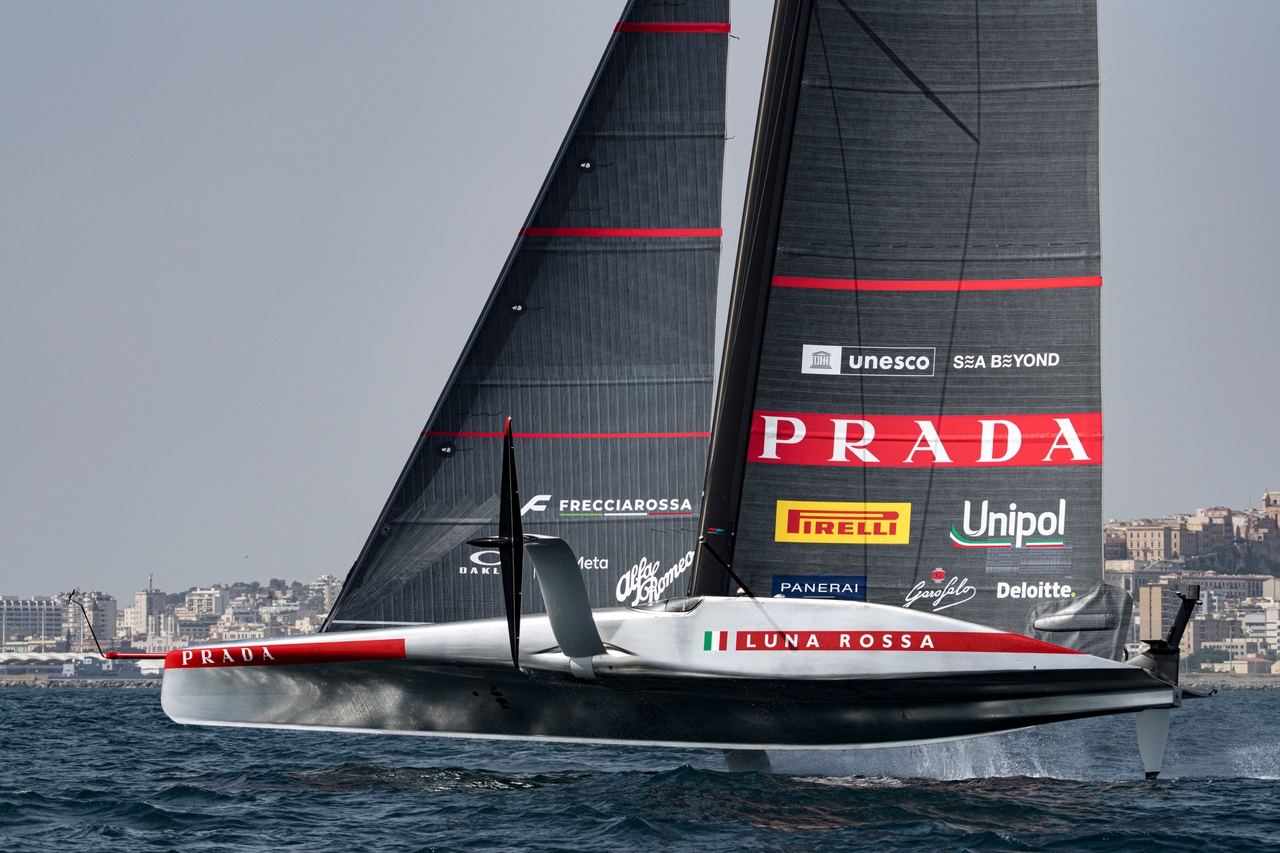
Dock-out was scheduled for 11:30. The legacy mainsail M1-8 was hoisted and paired with the J3-1 before being towed foilborne. The starting crew consisted of Marco Gradoni (helm), Gigi Ugolini (trim), and Maria Giubilei (5th) on port, and Peter Burling (helm), Vittorio Bissaro (trim), and an engineer (6th) on starboard. Later in the day, Ruggero Tita replaced Marco Gradoni, Molineris replaced Vittorio Bissaro, and several engineers rotated through position 6.

Once the towline was spiked at 12:06, the sea-breeze was still quite light, 7–9 kts from 190°, with a flat sea state, both forecast to ramp up quickly in the afternoon. The boat commenced sailing on shorter boards, executing some warm-up tacks on the first upwind. More offshore, the sea-breeze reached 10–12 kts. Beside a minor mistake entering the last tack with significant bow-down trim, tack execution appeared clean and dry, with bulb-to-bulb times of 5.5–6 seconds. After the first bear-away, some gybes followed, appearing well executed, with bulb-to-bulb times of 6 seconds. After the first roundup, upwind manoeuvring practice ramped up, executing consecutive tacks within 10-second intervals. Jib ease appeared to be slower than usual on the bear-aways. Instead, the last downwind manoeuvres appeared slightly more touch-and-go on the exits. Sailing stopped at 12:36.
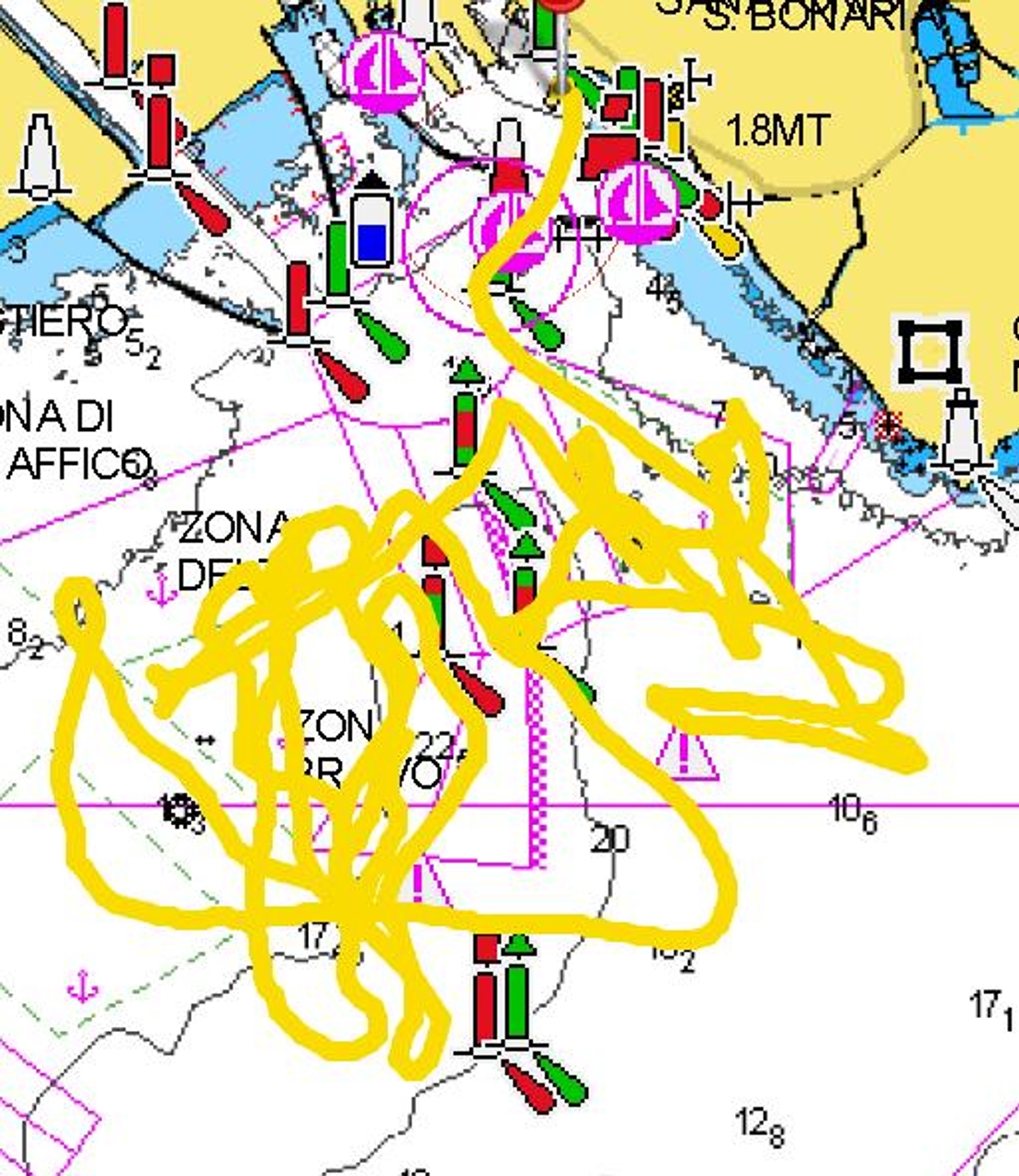
The second foiling stint commenced at 12:52 as the sea-breeze had decreased slightly and began to rotate to SE. Once foilborne, the team proceeded with the usual upwind tacks before switching to beam-reach mode, trimming the boat bow-up and immersing the whole rudder to gather footage of the updated steering system. As these tests were completed, the boat practiced some aggressive one-board bear-aways followed by consecutive gybe series before switching back to bear-aways, now with the windward board half immersed. On one of these, the new rudder ventilated and stalled during the bear-away. The boat trimmed bow-up significantly, broaching the water and crashing hullborne. No major damage occurred, as the crew reacted and kept on sailing shortly after. The team then repeated rudder loading on a beam reach before switching to pre-start practice closer to shore in 12 kts of sea-breeze from 165°.
Before the third session began at 13:59, the sea-breeze had turned to SE 145° at 13–14 kts. The crew rotated as described above. J3-1 was lowered at 13:45 to hoist J4-9, expecting the sea-breeze to ramp up further, while the sea state had increased to short chop of 0.5 m. Once foilborne, the first tacks appeared slick and well executed, while the following gybes were more touch-and-go. Sailing downwind, the boat appeared more unstable while maintaining course compared to the last sailing days, perhaps due to the new rudder iteration. After several upwind and downwind legs, the boat decelerated for a battery swap.
For the fourth session, sailing resumed at 14:33. Several minor rudder ventilations and losses were noted during straight-line sailing and manoeuvring, suspected to have been voluntary as part of testing the new iteration. After short upwind and downwind legs, chase boats were positioned and a total of five prestart routines were practiced closer to shore in less breeze and less chop. The team appeared to focus again on tight, full-circle execution in each routine. Sailing stopped at 15:10. J4-9 was lowered to rehoist the J3-1, as the breeze had decreased again to 12 kts. On the fifth and last sailing stint of the day, the team continued to practice prestart routines until heading back to the harbour and calling it a day, with 135 foiling minutes.