A small Northland business that has spent three years quietly refining a carbon fibre tender range is now taking its first serious steps onto the world stage. ONETenders, founded by Grant and Emma Nelson and based in Marsden Cove, has opened discussions with prospective dealers and distributors in several international marine markets, marking the end of a long development phase and the start of what the company is calling its next chapter.
Three hulls, one philosophy
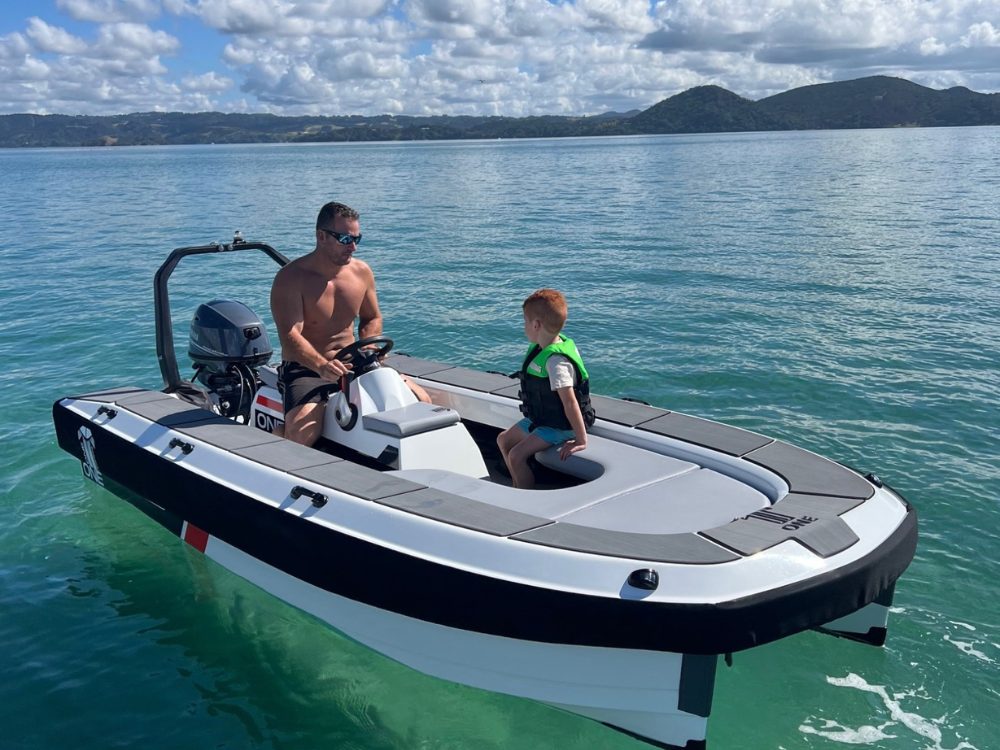
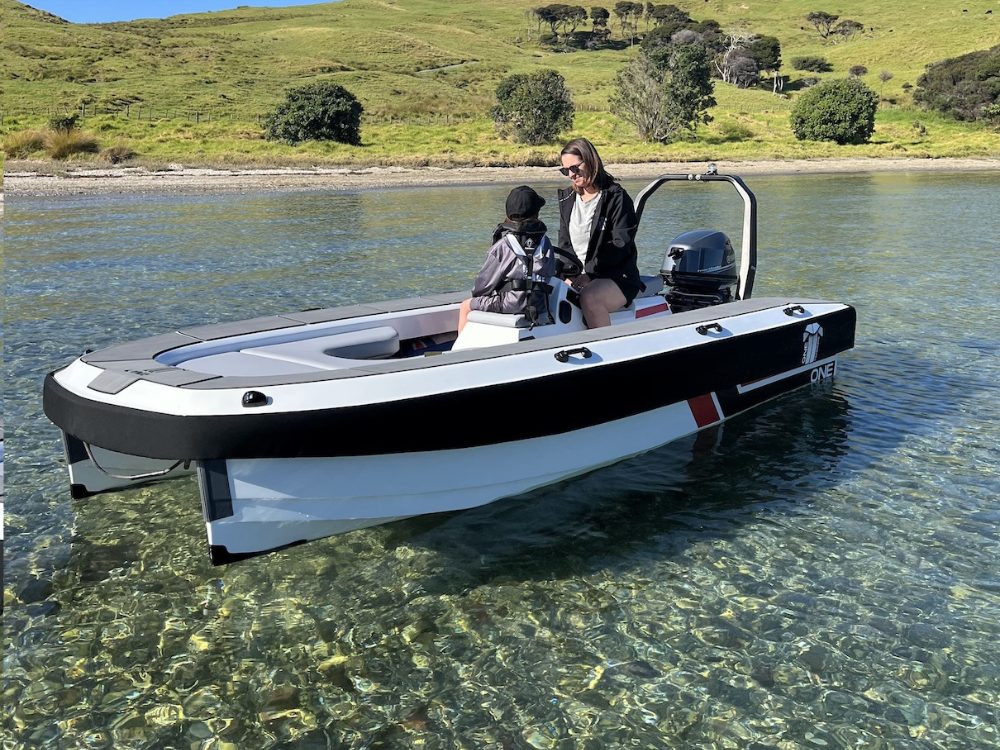
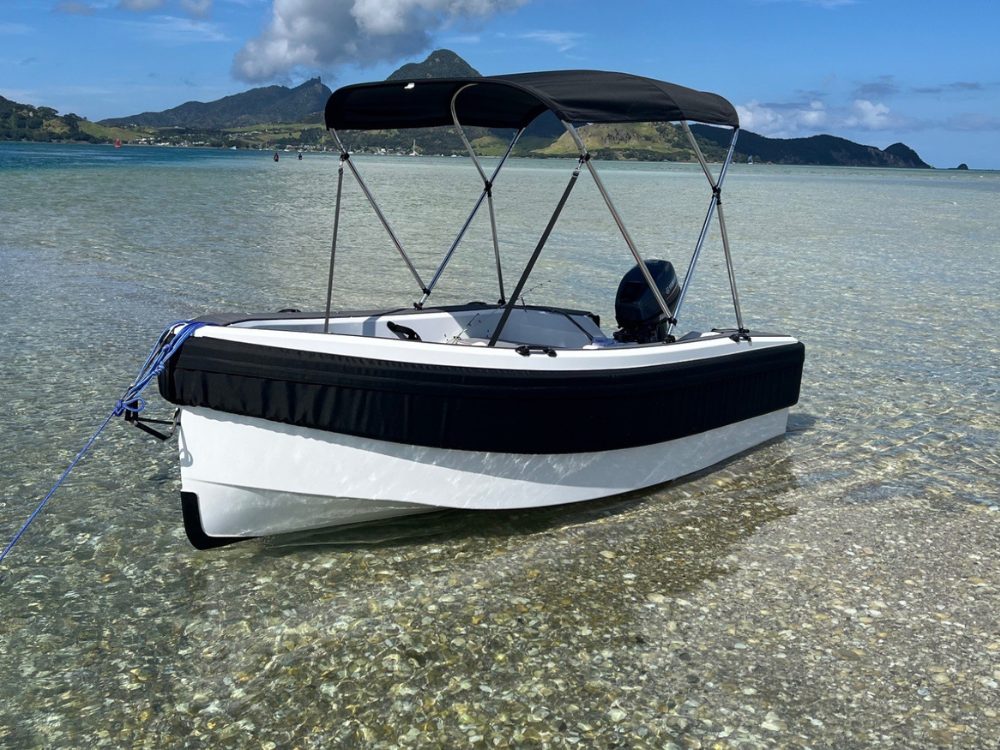
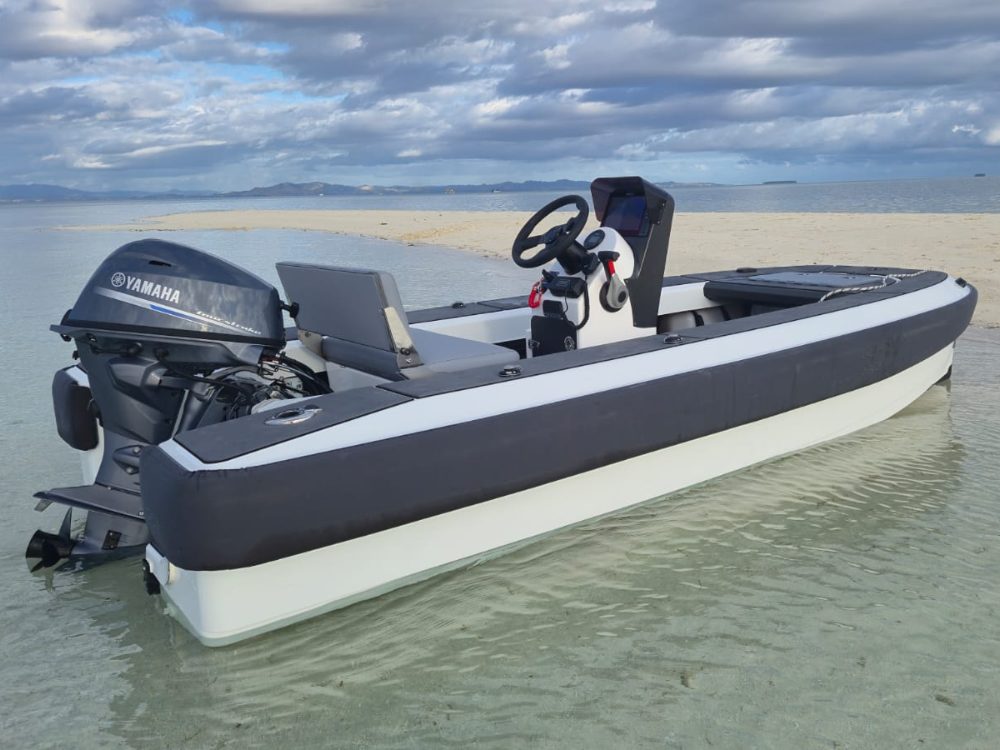
The brand’s proposition rests on a simple idea: one design philosophy expressed across two distinct hull forms. The M-Series is a monohull, currently represented by the 3.5 metre M35, weighing around 45kg in base configuration and rated to 15hp. The C-Series takes the opposite structural approach, using twin hulls to prioritise stability and usable deck space, spanning the 3.5 metre C35 (70kg, up to 15hp), and the larger 4.2 metre C42 (120kg, up to 40hp, seating five to six).
Rather than building a wide catalogue of narrowly specialised craft, ONETenders has chosen to develop two adaptable platforms capable of covering a broad range of roles, from formal yacht tendering through to recreational use.
A clean-sheet approach to an old problem
The company’s starting point was a straightforward audit of the existing rigid tender market and the compromises owners were routinely being asked to accept, whether in weight, interior space, stability or ride quality.

“We looked closely at what was already available and the compromises owners were being asked to accept,” says Nelson. “Our goal was to rethink the package rather than simply produce another version of what already existed.”
That meant treating seakeeping as a core design requirement rather than an afterthought, alongside low weight, usable space and stability. “We wanted to create what we believe is the ideal modern rigid tender: compact and lightweight, but with the ride and seakeeping capability to match the environments in which yacht tenders actually operate,” Nelson says.
One boat, several jobs
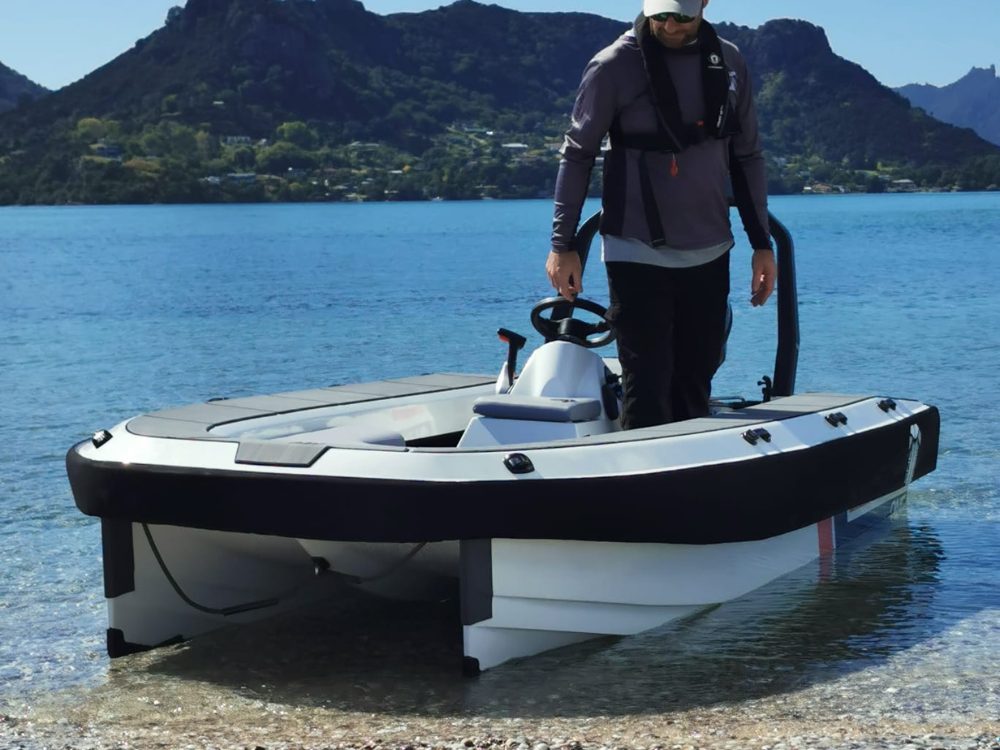
Both platforms are built to do considerably more than ferry guests between a yacht and the shore. The same hull that handles a formal transfer in the morning is designed to cope with family outings, diving, fishing and watersports later the same day, a demand ONETenders says shaped the range from the outset.
Seating, console and open-deck configurations can be varied across both platforms, from simple tiller-steer set-ups through to more developed console layouts, a flexibility particularly relevant in the superyacht sector, where a single tender may need to satisfy the differing requirements of owners, captains, crew and guests.

Carbon, and the case for propulsion choice
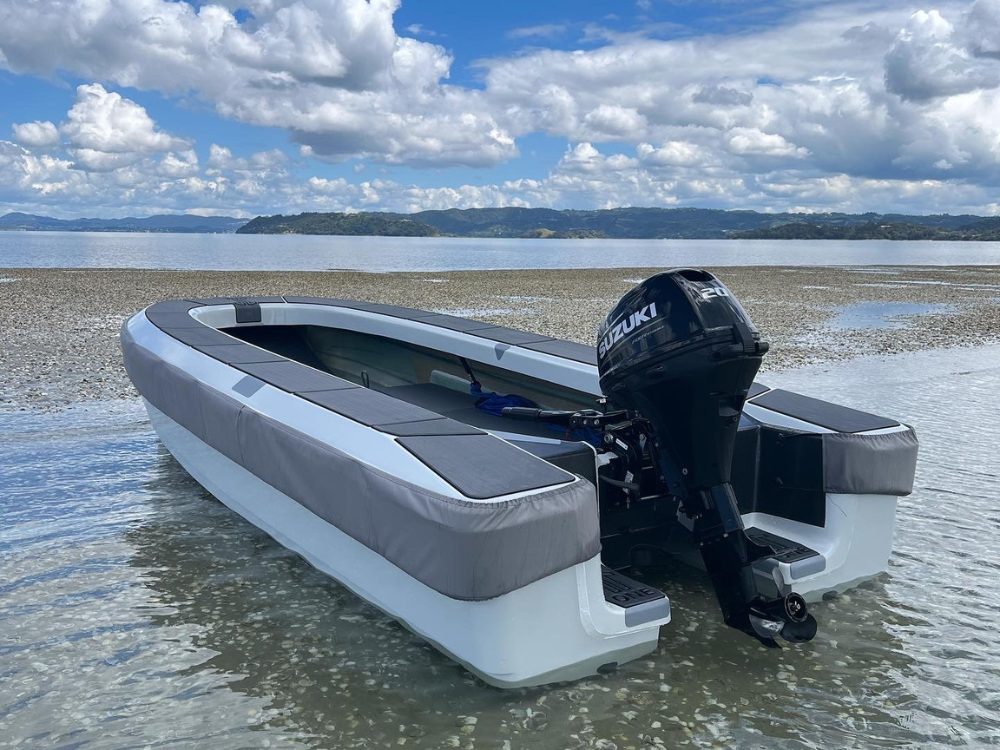
Carbon fibre construction sits at the centre of the ONETenders approach. The range is built using autoclaved prepreg carbon, a construction method that allows meaningful weight reduction while retaining the stiffness and strength required for everyday marine use. For yacht owners and builders, lighter tenders have knock-on effects for davit capacity, tender garage design and overall vessel weight. For the person at the helm, the benefit is more direct: lower weight supports responsive handling without depending on excessive horsepower.
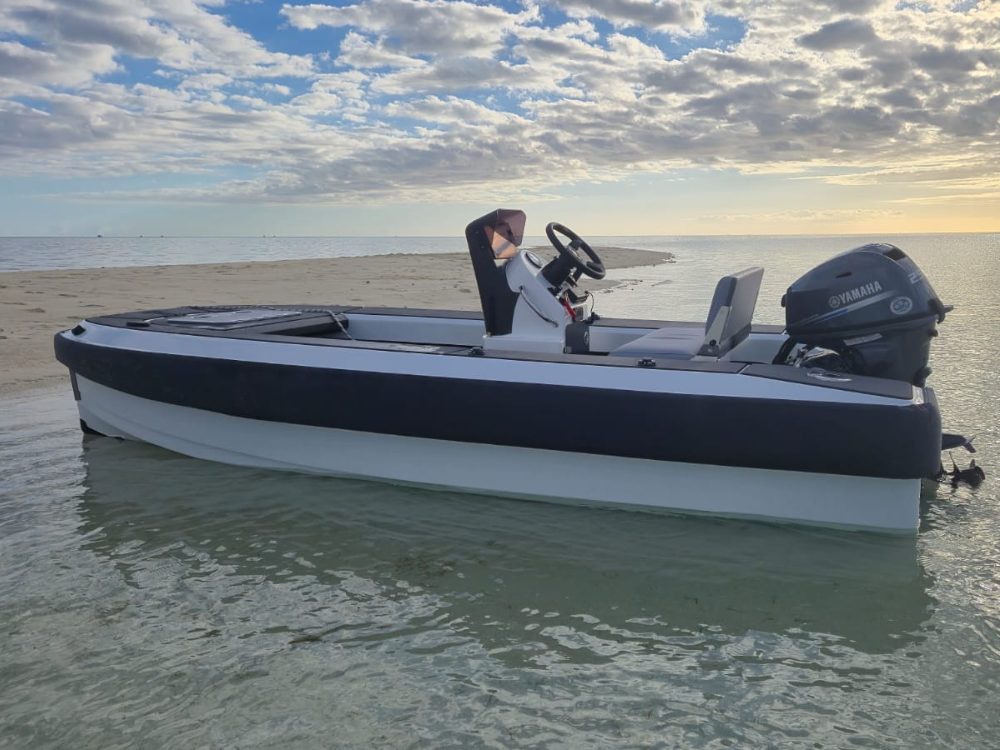
Notably, ONETenders has avoided tying the range to a single propulsion type. Both platforms can be specified with petrol outboard or electric propulsion, a decision the company frames as forward-looking given the pace of electrification across the wider marine sector.
Why the company waited three years
Rather than appointing dealers early and refining the product in the field, ONETenders spent three years developing the range, testing configurations and building a manufacturing platform intended to support future volume before actively pursuing international partners.
“We have intentionally taken our time,” Nelson says. “The priority was to get the product, manufacturing and overall proposition to a point where we felt confident bringing the right international partners into the business.”
Picking partners, not filling a map
The company says its goal is not the largest possible dealer network, but businesses genuinely capable of developing the brand within their own markets. That includes yacht dealers, tender specialists, marine distributors, yacht brokers and operators already connected to yacht owners, captains and premium recreational customers.
“We’re still a family business, and that influences the way we want to grow,” Nelson says. “We’re interested in partners with strong local relationships, good customer service and a genuine belief in the product. We would much rather work closely with the right dealer or distributor in a market than appoint partners simply so we can say we have representation everywhere.”
That partner-led approach extends to positioning: in some markets the company expects premium yacht tendering to remain the primary opportunity, while in others it sees scope for the C-Series’ stability or the M-Series’ lightweight handling to build standalone recreational followings of their own.
A Marsden Cove business setting out to build an international dealer network sits inside a longer New Zealand story. This country’s marine industry has a long track record in advanced composite construction, strengthened by decades of America’s Cup, superyacht and high-performance boatbuilding work. ONETenders, still a family operation, draws on the same base of skills and the same willingness to back a locally engineered idea against an international market.