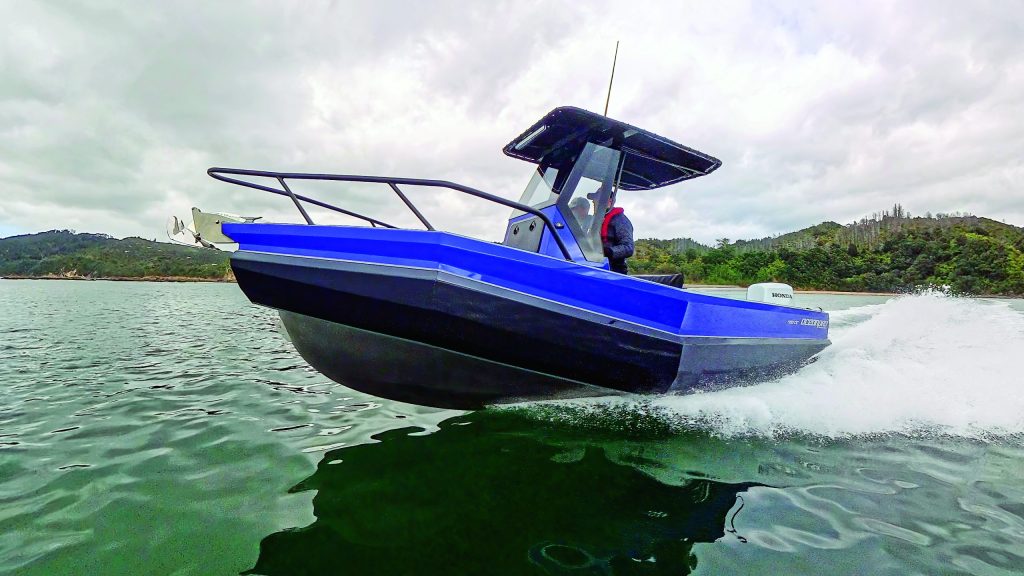
OceanPro is a boutique aluminium boatbuilder based in Pauanui on the Coromandel Peninsula. Producing a range of pontoon-style aluminium boats designed and built by Mike Bush, OceanPro’s boats are different enough to set them apart, and in the company’s relatively short history, they have gained a reputation for excellent ride quality and robust construction.
The OceanPro 580CC (centre console) is Bush’s latest model, both longer and with more internal beam than OceanPro’s 535 Centre Console we reviewed in August last year. It’s a new platform that sits between OceanPro’s 535 and larger 625 Hardtop models, filling a gap in the lineup.
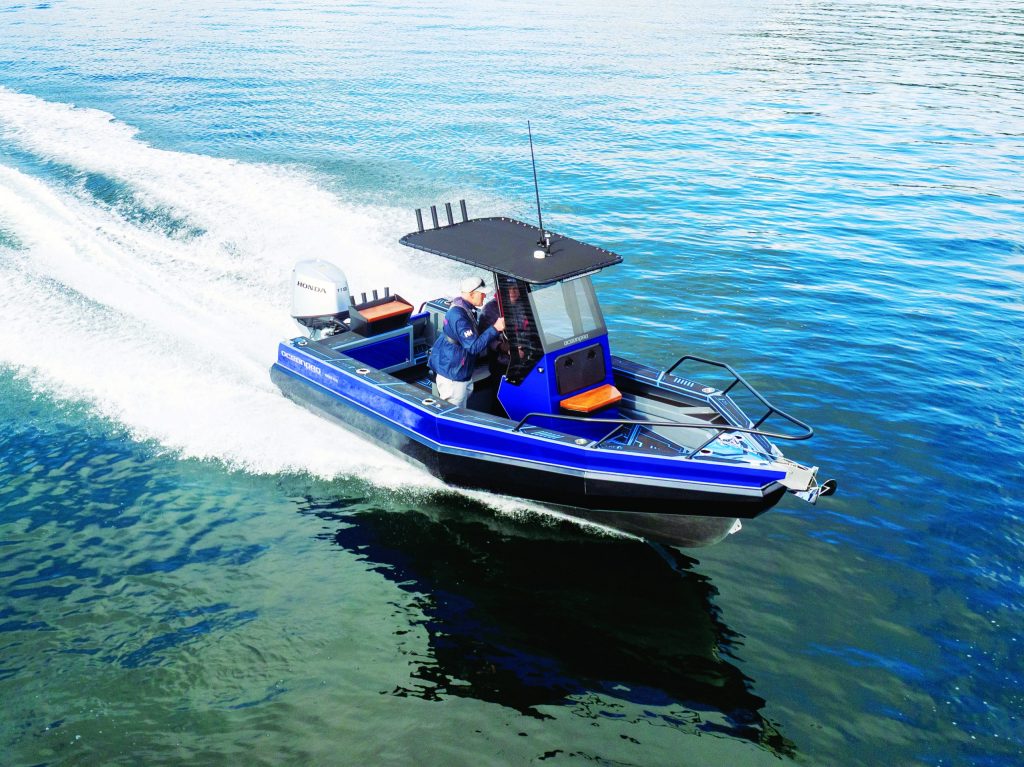
“I just wanted a different platform that we could build a centre console off,” explains Bush, who intends to also build a hardtop on the same platform.
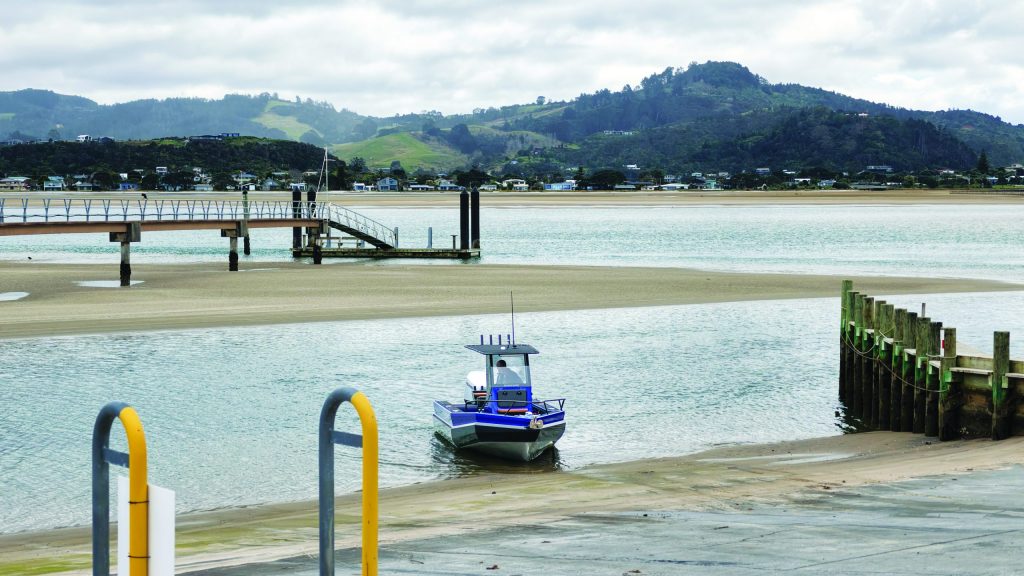
Compared to the 535, this new platform delivers more length and 170mm of additional internal beam, meaning more space for the centre console, more storage space throughout, and a heavier more capable boat overall. The boat is carried on a custom OceanPro aluminium single axle braked trailer. All up towing weight is 1,350kg.
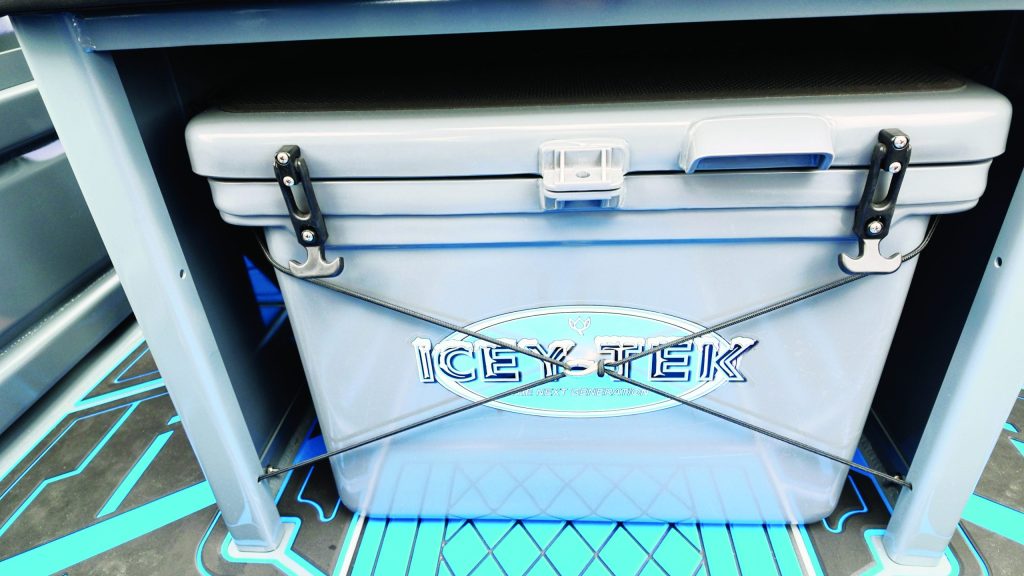
The 580CC is a T-top model, with the powder-coated, box-profile aluminium frame of the canvas-roofed T-top solidly bolted to the fully-painted aluminium centre console. It’s rigid, looks smart and is fitted with handy grabrails, also under the canvas roof, a glass windscreen and glass side windows. The console is relatively wide, so it affords good protection for two people behind the full-height windscreen, with the bench seat comfortably seating two. The diamond-stitched seat’s backrest is also reversible, and its base accepts a 72-litre Icey-Tek ice box (secured with bungee cords) that pulls out into the cockpit.
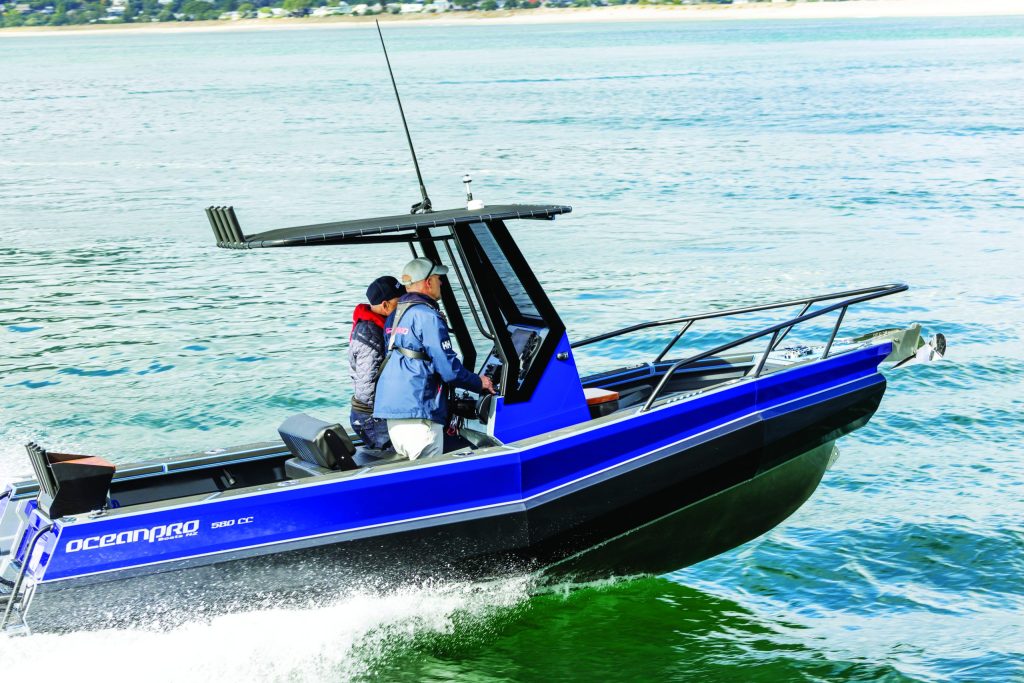
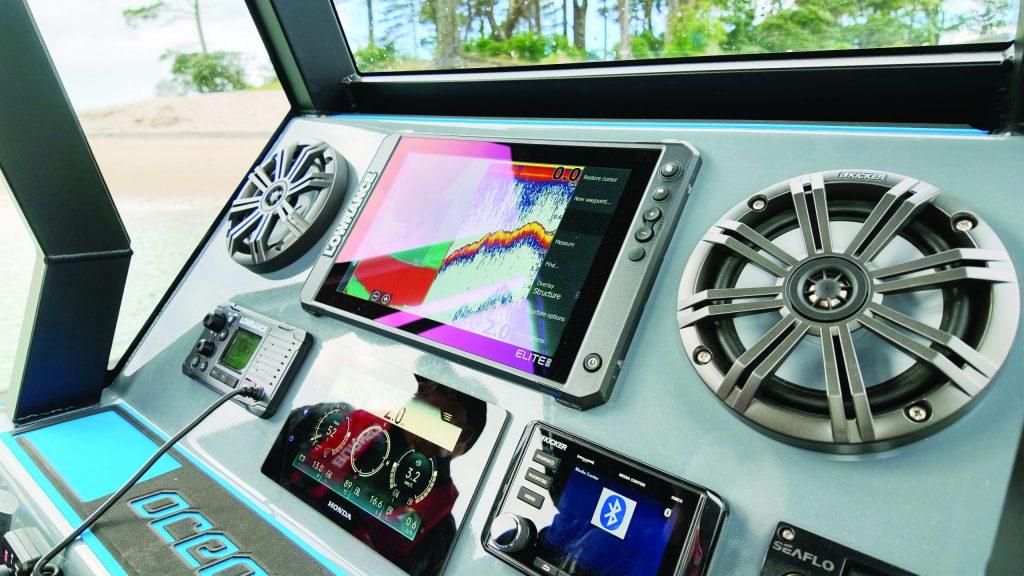
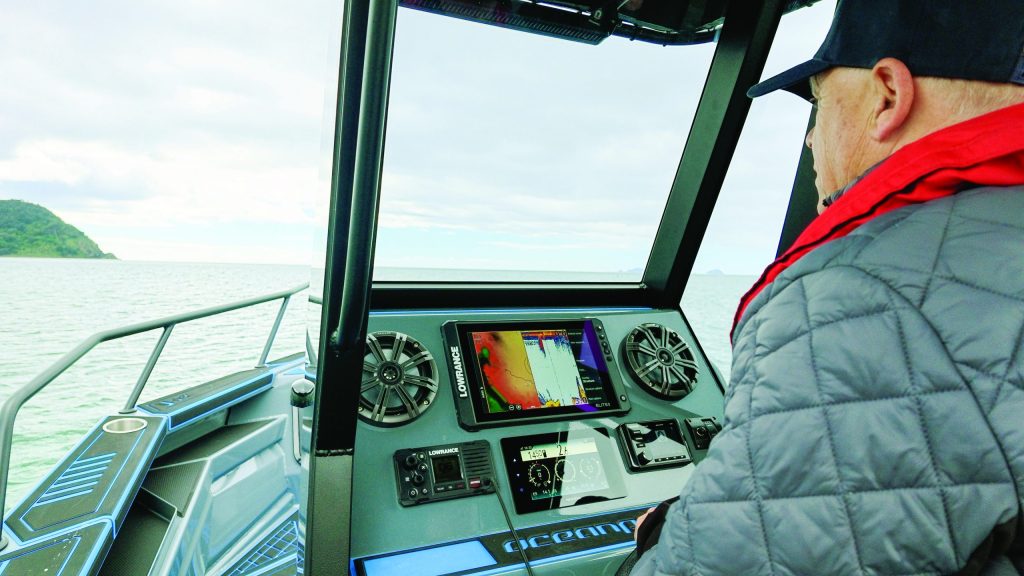
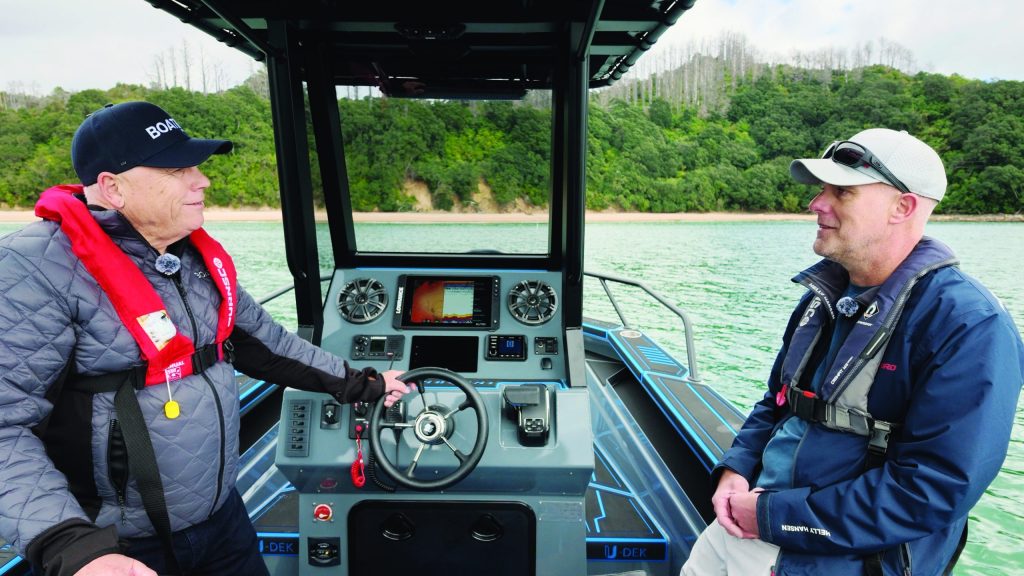
The console also provides useful dry storage in a floor level locker containing the batteries (one start, one house) and more U-Dek on the flat under the dash which includes a recessed area for your phone. The dashboard proper is angled towards the windscreen with ample space for a 12-inch Lowrance Elite MFD, a Lowrance VHF radio, Kicker stereo head unit and two of four Kicker speakers, Honda digital display and Seaflo bilge pump and washdown switch. Below the flat area that divides the dashboard proper from the rest of the console, there’s space on the vertical plane for a switch panel, Maxwell anchor control, Honda ignition key, steering wheel and Honda digital Drive by Wire throttle and shift binnacle. Below them again, Bush has positioned the battery isolation switch and the capstan circuit breaker reset beside the locker.
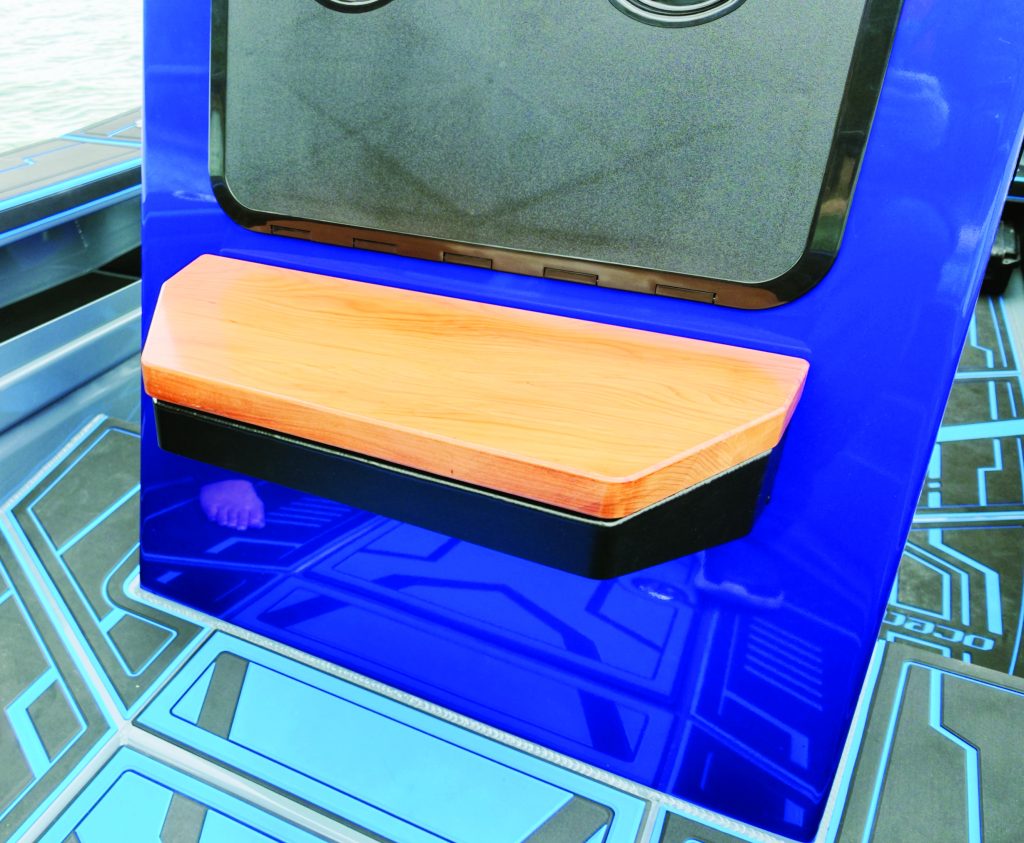
On the front side of the console there’s a solid timber seat – Bush has used teak highlights on this boat to good effect – and a hatch giving access to the back of the dashboard with all its wiring. A net allows this space to be used as storage for clothing items or similar lightweight payloads.
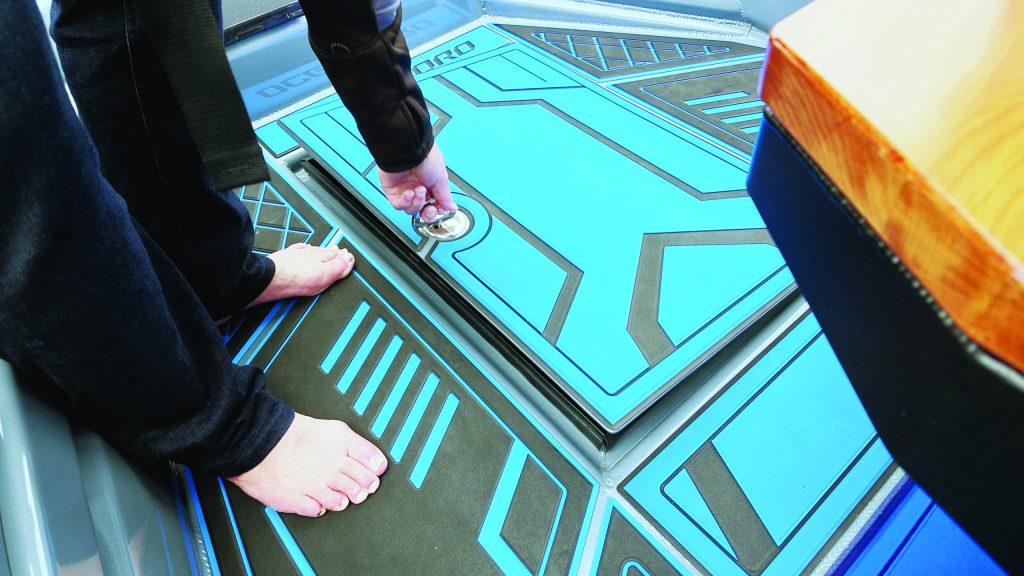
This boat is Bush’s demonstrator and so is well specc’d with electronics and accessories, and finished to a very high standard, including paint (blue and grey) and OceanPro-embossed U-Dek with eye-catching patterned highlights in blue routed into the black surface to complement the paint work. It is used extensively, covering not only the cockpit sole, but also the foredeck, boarding platforms, transom top, side decks and more. There’s cockpit lighting hung off the T-top and an LED striplight floodlighting the foredeck and sea in front of the boat – handy when night fishing and for coming ashore at night.
Centre console designs, with so much usable deck space, a walkaround configuration, and the ability to cast and fight fish from the bow as well as the cockpit, lend themselves to sportfishing applications, but they also make good family boats, says Bush.
“My wife’s not much of a fishing lady, but she loves going boating on centre consoles. She made a bean bag that goes up the front, plus a couple of cushions, so you can hang out there. On our last boat, we made a sun shade that extended off the front of the T-top. So, you know, they’re still a great family boat – take them out to the islands, go swimming off the back, you can have lunch on them, stuff like that. But yeah, they are typically more angled at anglers.”
This boat is well appointed if sportfishing is your jam, with combination rod and cupholders galore, including at the bow, plus a couple of sturdy heavy-duty through-coaming rod holders in the stern corners. A rocket launcher can take four rods stored vertically and the side pockets, which wrap right around the interior of the boat all the way to the bow, are long enough for the longest of soft-baiting rods, gaffs or boathooks, with room to spare for other items.
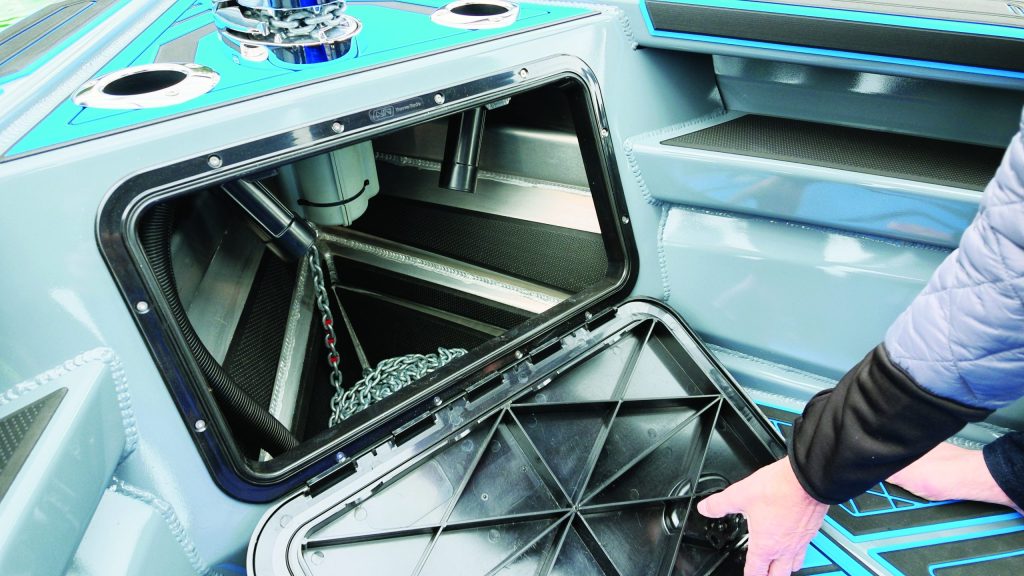
A transom locker is large enough for tackle boxes or other items you need to keep dry. It also protects the fuel filter sight glass and in the open position the hatch is strong enough to use as a kid’s seat. In the bow there’s another useful underfloor wet/dry locker with deep gutters that drain into the aft deck. An angled hatch in the bow provides access to the anchor locker, which has plenty of fall.
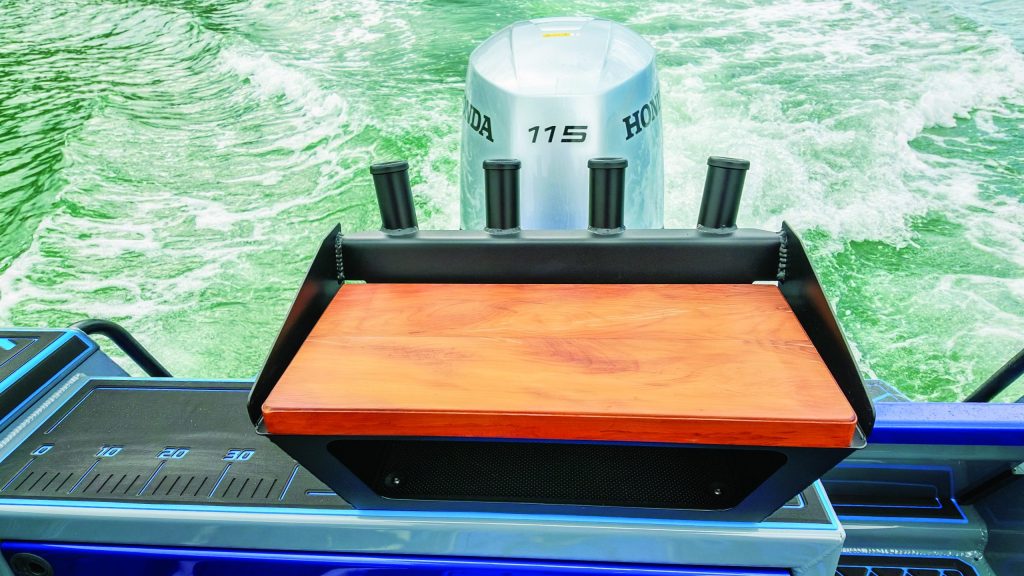
There are additional rod holders across the back of the transom-mounted bait station which, like the T-top and bow rails, is powder-coated in matte black. The cutting board is solid teak and there’s useful storage underneath. The transom step-through (pullout sliding door) and boarding ladder are on the port side, but there’s no live bait tank fitted to this vessel, though it is an option.
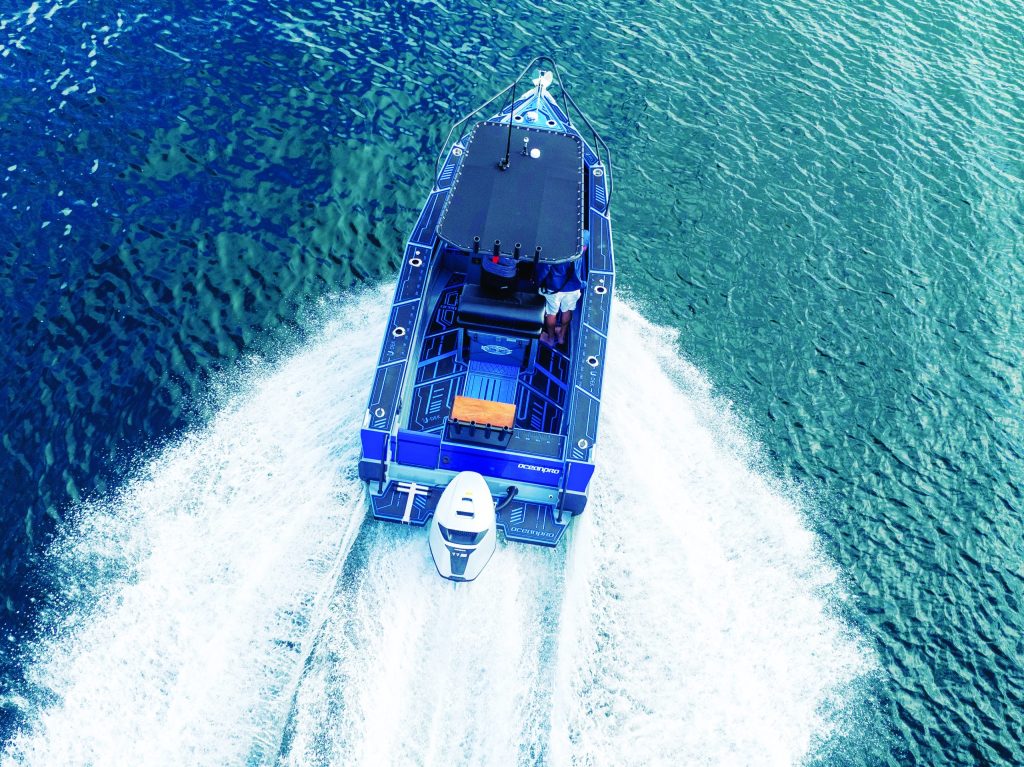
The OceanPro 580CC performs as well as it looks. Power is from a Honda 115hp four-stroke outboard, a relatively large capacity (2.3 litre) motor with lots of torque. Honda uses the same block for engines through to 150hp. Steering is hydraulic Baystar by Dometic and the controls are Honda’s Drive by Wire with the latest binnacle at the console, which includes functions like auto-trim and cruise control.
Hole shots are brisk and the hull feels lively and responsive to helm inputs. It also rides exceptionally well for an alloy boat of this size. Bush’s background is in designing RIBs, here and overseas, most notably for Naiad Inflatables. He’s loves the way RIBs handle and has tried to replicate those qualities by building a RIB hull under a pontoon boat. To this end, all his boats feature very fine entries and, like RIBs, the pontoons, which are effectively tubes but in aluminium, act as big chines, ensuring a dry ride.
And while it’s a relatively deep-vee hull, the 580’s pontoons ensure excellent stability at rest and control the degree of heel in turns. You can feel this when turning the boat at speed, with the 580 leaning hard into the turn, but only so far before the pontoon’s chine takes over and stabilises the hull’s attitude.
We had a bit of wind and chop to contend with at times, but the boat was very comfortable and also quiet underway. This is a smooth, quiet motor, and centre consoles don’t trap and reflect engine noise like hardtops and even cuddy cabins do. Hull slap is minimal, also at rest, and there was very little hull noise while underway. With such a relatively tall and robust T-top, there is some windage, which was noticeable in a cross wind, but Bush intends to fit trim tabs when his budget allows, which would compensate for wind- or sea-induced heeling.
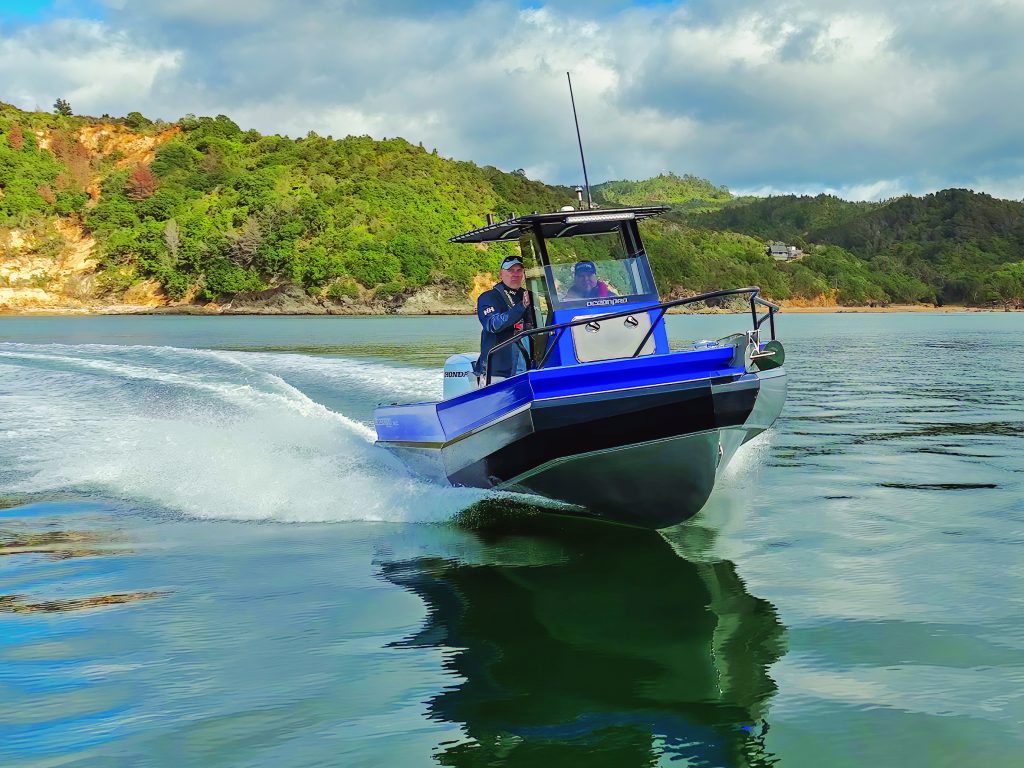
Cruise speed in the conditions was a comfortable 26 knots, but quicker is fine too. Top speed is somewhere near 40 knots and 160 litres of fuel under the floor affords a decent range for offshore missions or a couple or three outings between refills.
The helm position is good with excellent protection from the console and screens. The wheel is in the centre, so you can drive from whichever side you like. Indeed, the seat (and the console) look wide enough for three people at a pinch. Access to the bow is good, with enough internal beam to easily pass the console on both sides, and plenty of room to cast a line off the foredeck. The foredeck is raised a step above cockpit level but still has good gunwale height and wrap-around bow rails, so it offers security when fishing from the bow. This is a very fisher-friendly design.
OceanPro’s new 580CC is a great boat for its size, offering space, shelter, performance and superior build quality in a vessel that stands out in a crowded pontoon boat market. Its eye-catching paint scheme and U-Dek graphics further distinguish it, along with quality finishing, and while it’s undoubtedly aimed at the sportfishing fraternity, with its versatile centre-console layout, good looks and a premium feel, it should appeal to the family market as well.
OceanPro 580 Centre Console – not quite bespoke, but definitely exclusive.