I was most impressed with the Sargo 36 when I reviewed it for Boating NZ, praising its performance, build quality, and amazing packaging. We also liked the Sargo 33. Although modest in length overall, they were like much larger boats on the inside.
This time around, I got to sample their big brother, the elegant Sargo 45, which has everything its smaller siblings offer and more, only writ larger.
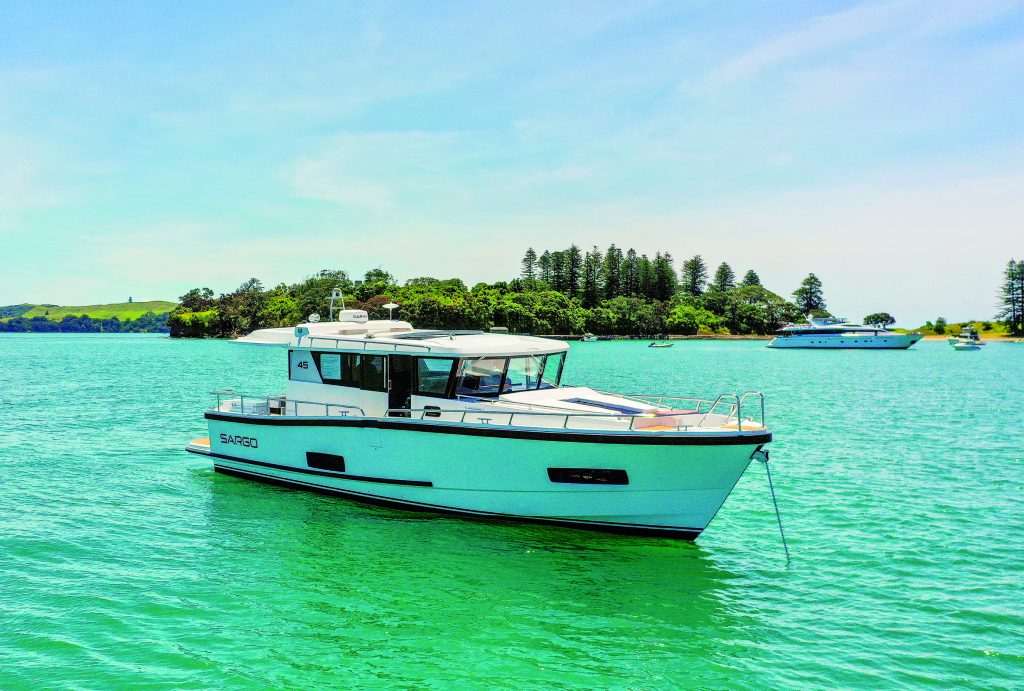
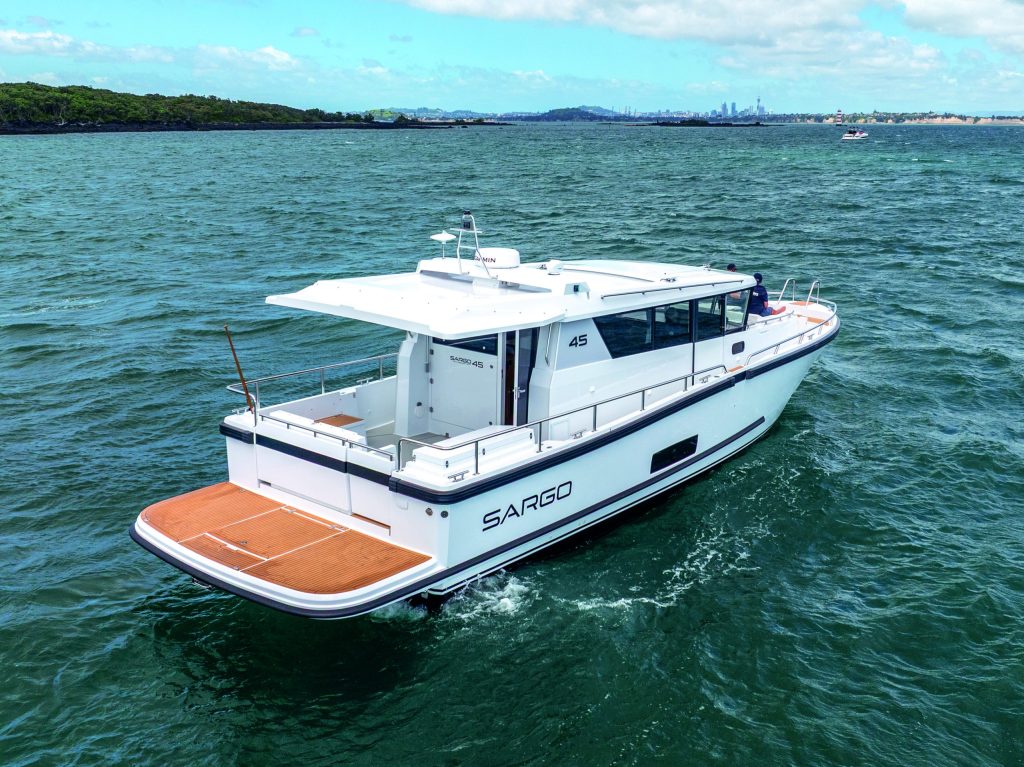
Released in 2023, the Sargo 45 is the largest boat to date in the Finnish manufacturer’s range, available in Standard and Explorer trim, and soon to be complemented by a flybridge version. The boat reviewed here is the standard Sargo 45 in white, a conventional pilothouse style with fully walkaround decks, high bulwarks and railings, a large open foredeck, and sliding doors on both sides of the wheelhouse offering quick access to the side decks.
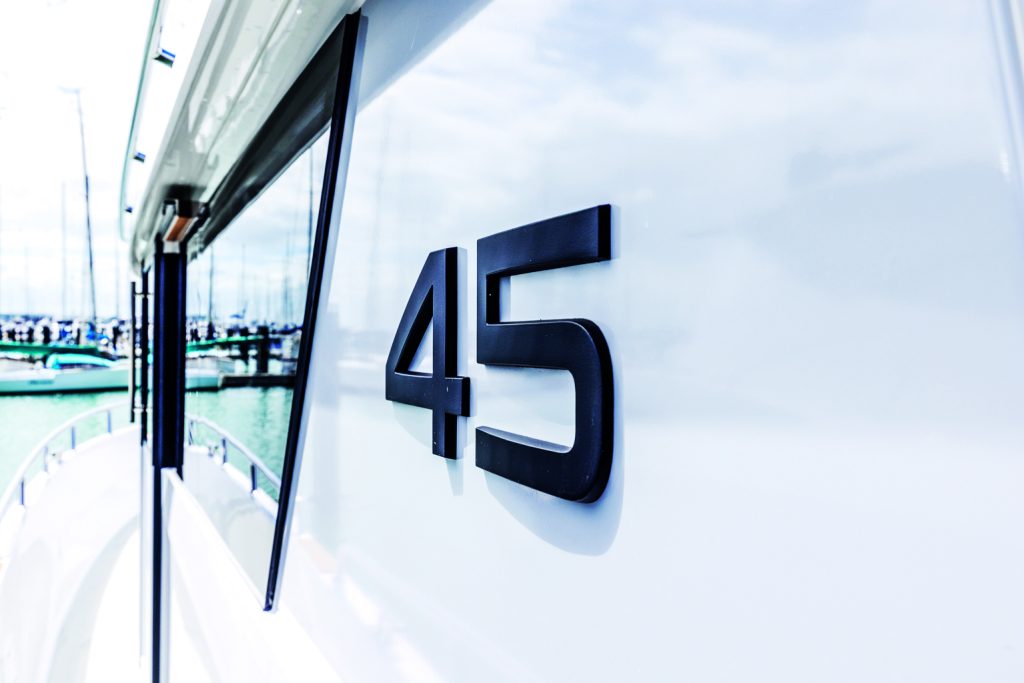
There’s a handy side door on the starboard side for docking and boarding, a massive stern platform sporting a giant wet locker, and substantial wrap-around belting to protect the hull. Flexiteek is used on the platform, cockpit sole and a few other places, but not on the side decks which are non-slip coated.
The foredeck can be configured as a social area with seating around a drop-in table, and a large sunpad option on the cabin roof over the skylight hatches. The anchor is tidily secured under the bow, with a pair of hatches providing access to the fairlead, capstan, and the anchor locker itself. There are additional lockers to either side of the bow for lines or other gear, the cleats are decent size and quality, arranged forward, amidships, and aft.
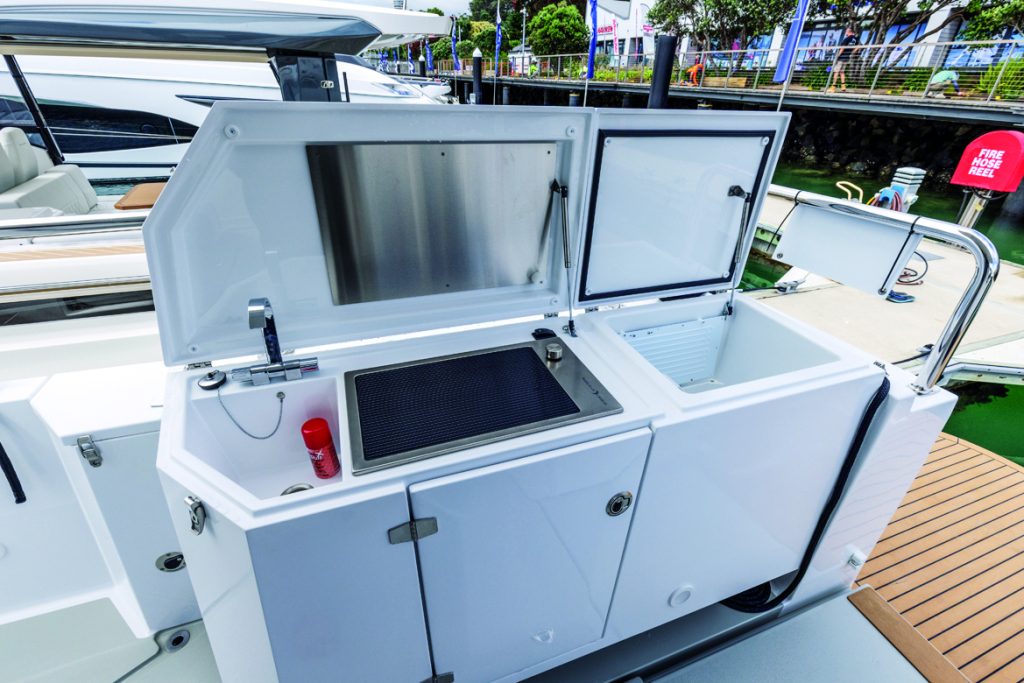
The cockpit is sheltered by the wheelhouse roof overhang (drop covers are an option). Like the rest of the boat, railings wrap right around the cockpit, which features a wide transom door on the starboard side and seating with storage underneath wrapping around the transom and port side. The cushions, secured with domes, can be stowed when not required, as can the drop-in table, which slots into a special cavity behind a panel in the rear bulkhead of the wheelhouse when not needed, along with all the squabs for the cockpit seats. Very tidy.
This locker is just one example of clever design that makes the most of all the available space on board, providing storage solutions that not only work but also don’t look like afterthoughts. Another locker behind the transom seat is for fenders (moulded to shape, with a drain), and there’s a very nice outdoor galley (electric grill) on the starboard side of the cockpit close to the cabin door.
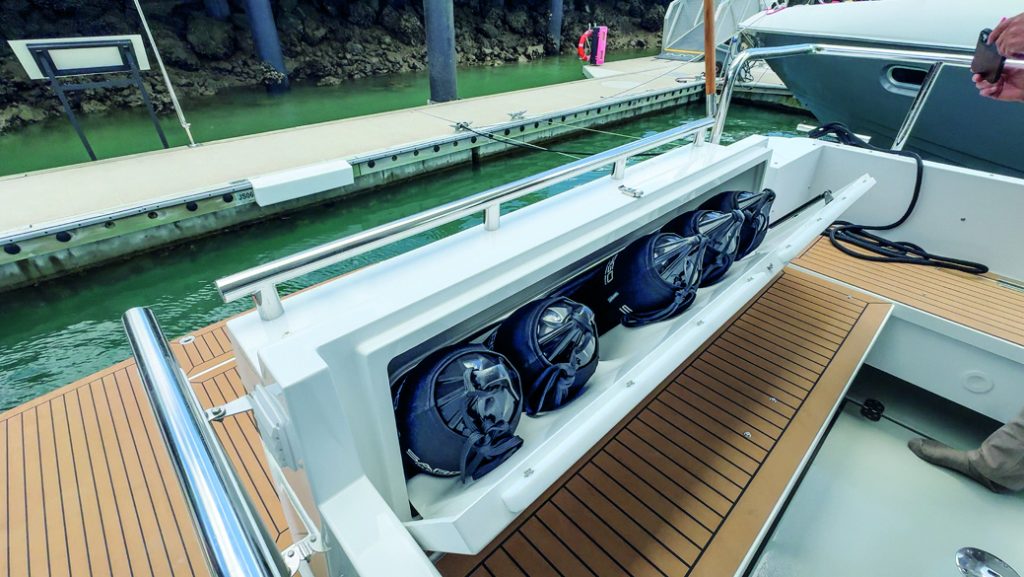
Engine room access is also from the cockpit, via a huge electrically operated hatch in the sole and a smaller hatch for routine inspections and servicing. With the large hatch fully open, there’s good access to the engines, Fischer Panda genset, inverter, fuel valves, and other mechanical systems housed in the machinery space.
Stylistically, the 45 is very much part of the larger Sargo family. It has quite a purposeful but sporty sheer line, a modest amount of forward flare, pronounced spray rails, and quite an angular superstructure. The pilothouse has a reverse-sheer windscreen, something of a signature feature for many boats from the Nordic countries, and a full-length cockpit overhang makes the Sargo 45 suitable for all-season boating, especially with drop covers fitted. Diesel heating keeps the interior cozy and warm and there’s electric heating should you wish to stay aboard in the marina.
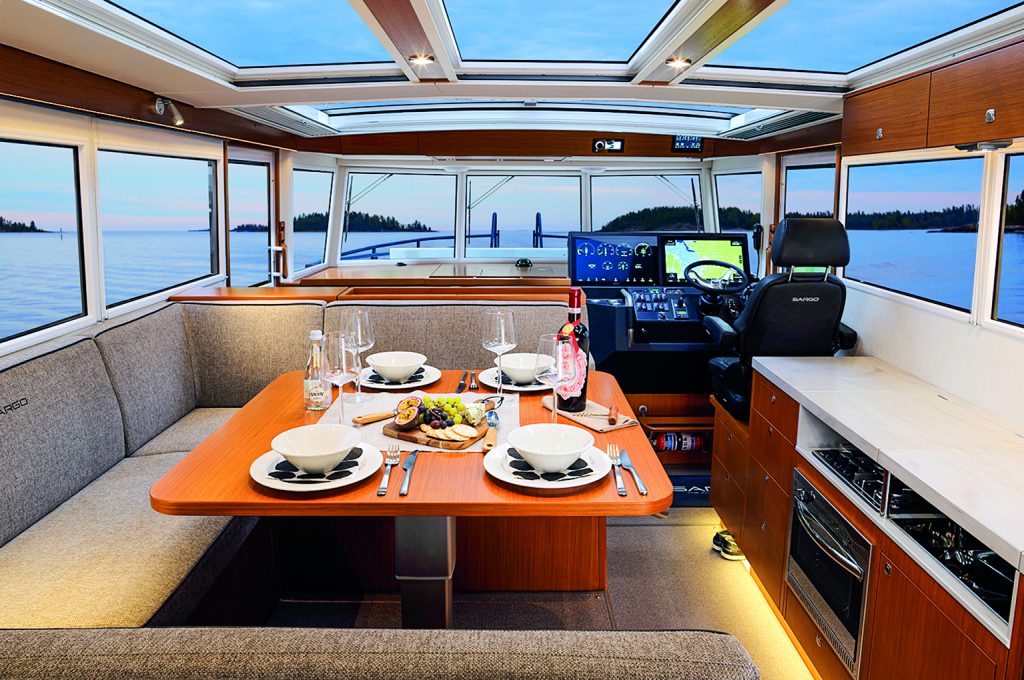
The wheelhouse is where the extra scale is first felt. The layout is quite similar to the smaller models in the range, but with the 45’s extra length and beam, the wheelhouse/saloon has a lot more interior volume to work with. The packaging, especially storage, is still superb, but the interior feels a bit more full-size, especially compared to the 33.
The glass-and-aluminium rear door opens outwards, while the rear window, hinged along the top, opens upwards to provide ventilation and also communication between the dinette and cockpit. For even more air, the side doors can be slid open on both sides and the giant sunroof pushed back to open the wheelhouse to the sky. The wheelhouse roof, including the fibreglass sunroof, can be fitted with solar panels if desired.
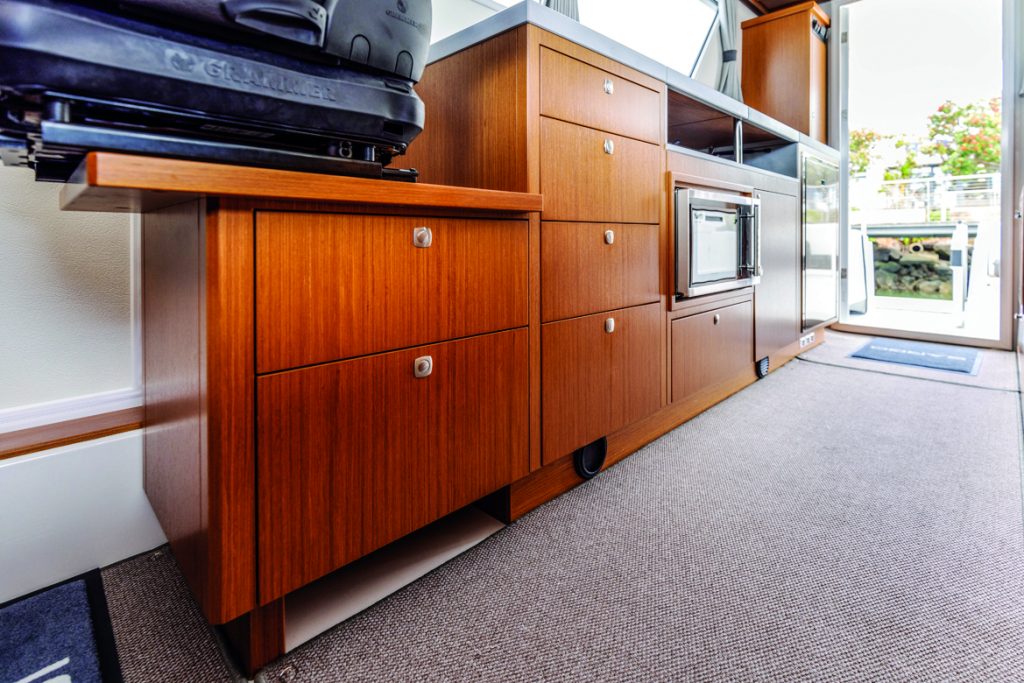
The layout of the saloon is very similar to that of the Sargo 36, with a good-sized raised dinette on the port side aft (freezer drawer under the rear seat), the all-electric galley to starboard just inside the rear door next to the main switch panel (microwave/convection oven under-bench and induction cooktop), the helm station forward on the starboard side, and three comfy seats in a back-to-back configuration with the dinette seats on the port side. The dinette can be converted to another double berth if required and the windows are furnished with blinds all round.
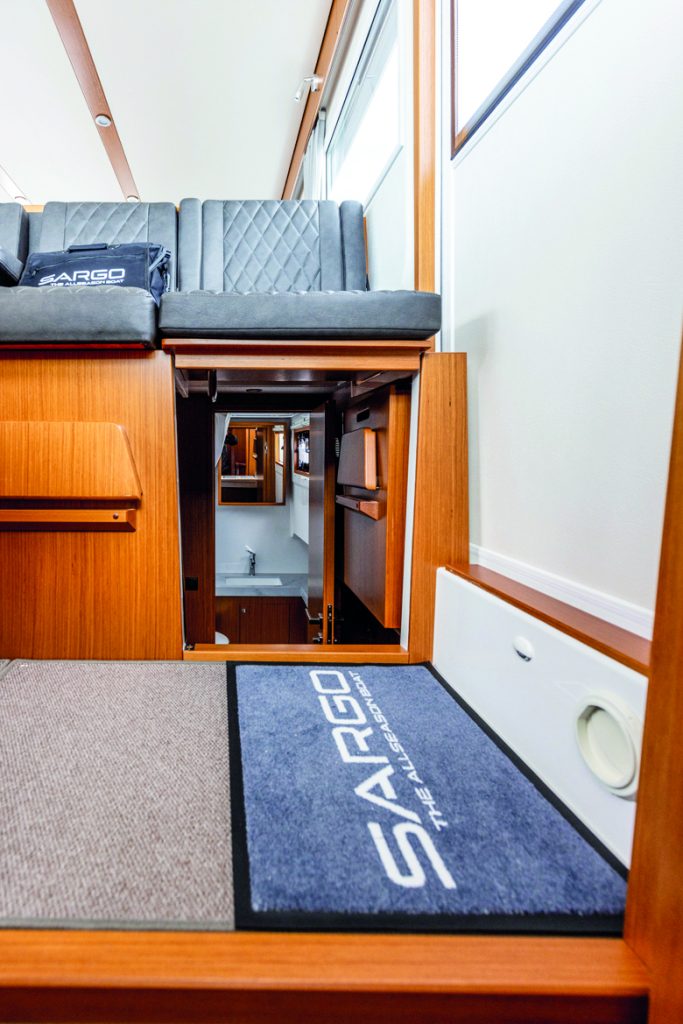
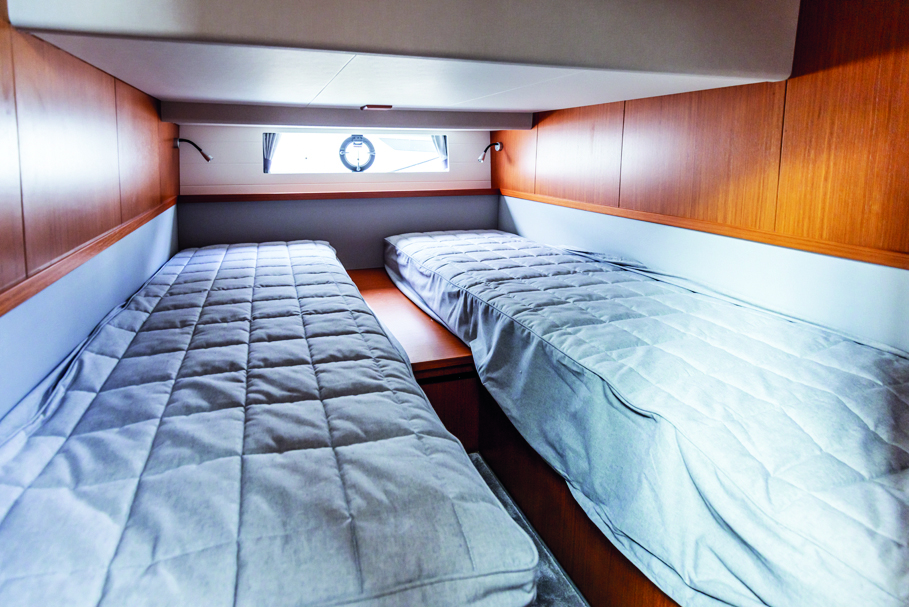
This is the three-cabin version. Access to the twin berth cabin under the dinette and saloon sole is forward on the port side: lift the outermost seat (on gas struts) to reveal steps down into a spacious cabin with a pair of athwartships single berths that slide together if desired. There’s good headroom, a hanging locker near the entrance, and a hull window, but the ceiling is lower over the berths, as is usual in such cabin designs.
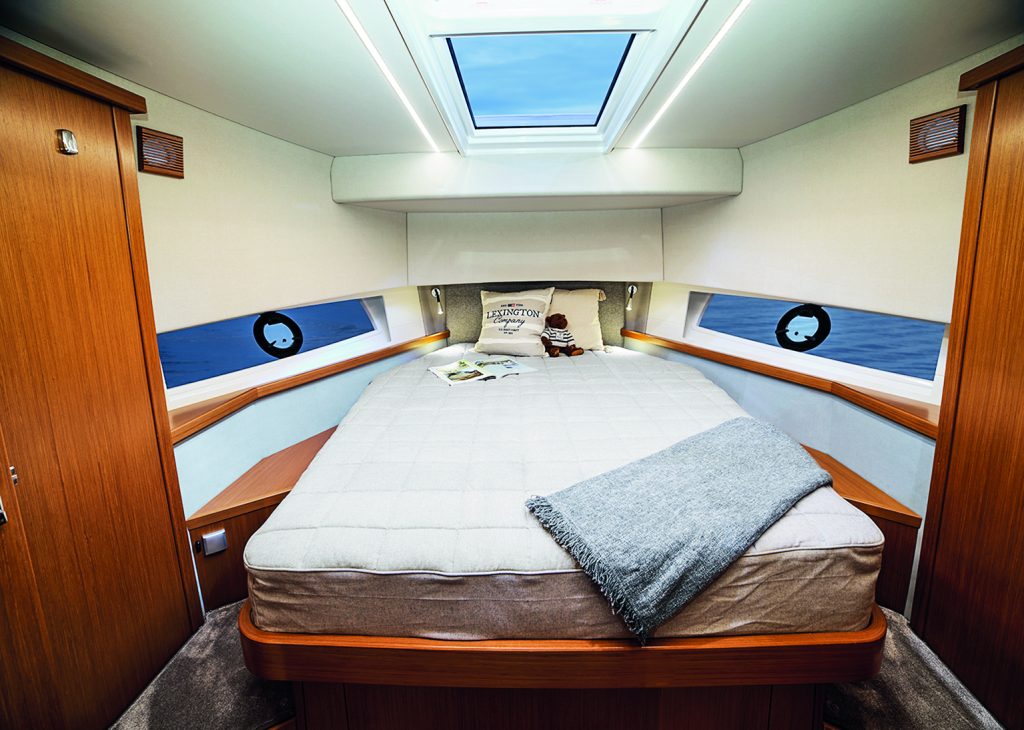
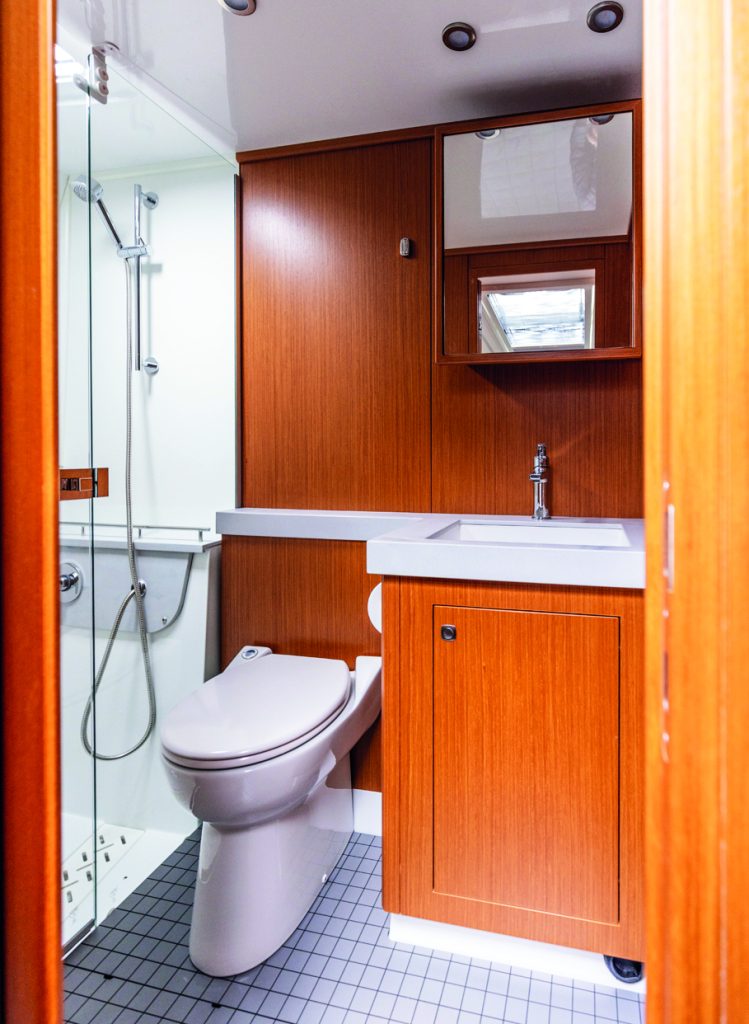
Forward down the yacht-style companionway beside the helm station, there’s a compact guest cabin immediately to starboard with a double berth tucked under the saloon, so standing headroom only near the door. The master cabin with a queen-sized island berth in the bow is bathed in light from the skylights in the ceiling and well served by hanging lockers either side, plus storage in side shelves and under the bed. Both cabins share a semi-ensuite bathroom with a separate shower stall; the aft guest cabin has its own bathroom without a separate shower stall.
The boat’s interior is very nicely finished with lots of traditional dark wood veneer, tasteful fabric and leather upholstery, and solid timber trim here and there. There’s also plenty of exposed white gelcoat, which, along with the large windows and the modern styling and décor, ensures the interior looks fresh and bright.
Sargo boats prioritise functionality, and the Sargo 45 gives the impression it would be a very easy boat to live with, no matter what your boating style. With Volvo Penta power, Volvo Penta’s EVC system with joystick control, a bowthruster and easy deck access, it’s configured for shorthanded operation.
Indeed, Sargo representative Dominic Lowe explained how he recently used the position hold function to nose up against a piling on a very wide temporary berth to place a line over it, all while operating the boat singlehandedly. This system is available on the Sargo 45 whether it is equipped with IPS 600 (960hp) engines like this vessel, or D6-440 DPI engines (sterndrive, 880hp).
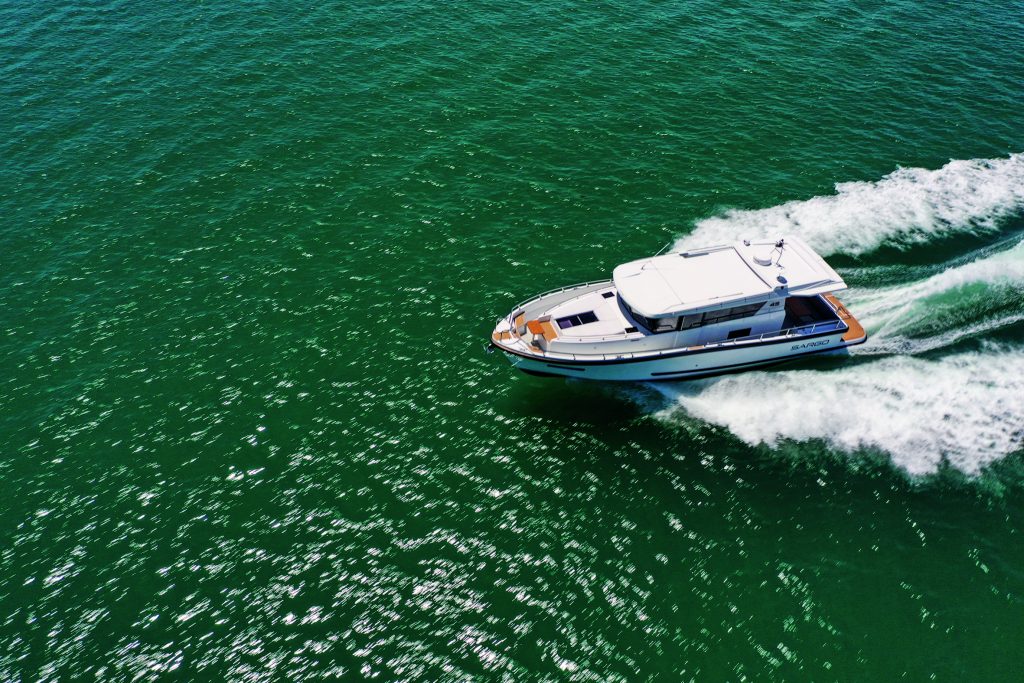
The Sargo 45 also offers plenty of range and delivers fast, comfortable passages in big seas, as befits its Baltic roots. The flagpole that comes with the boat is another nod to its Nordic origins.
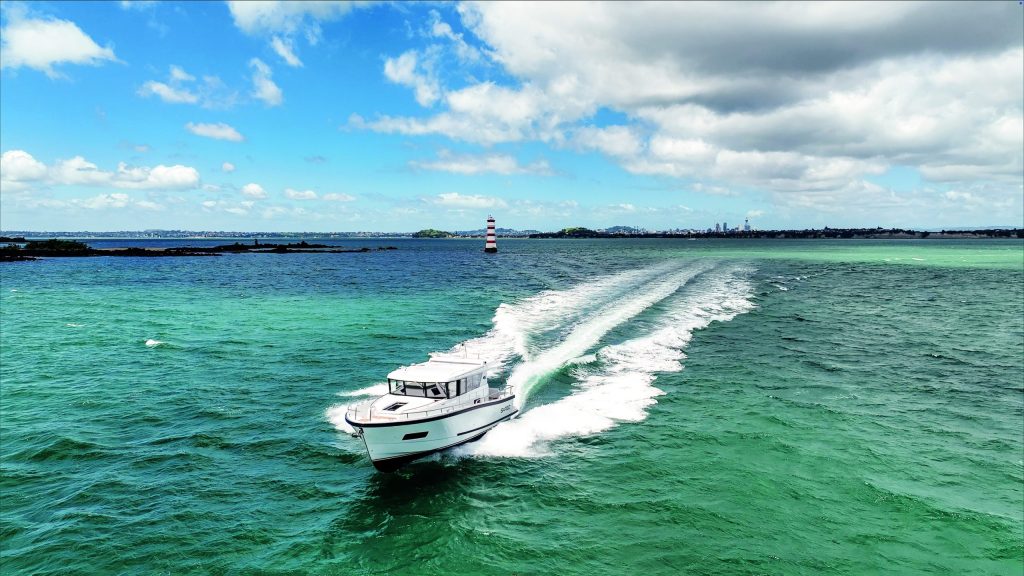
We experienced blustery southwesterly conditions for our review of the Sargo 45, which might have been a little uncomfortable in a lesser vessel, but the Sargo made easy work of the choppy seas.
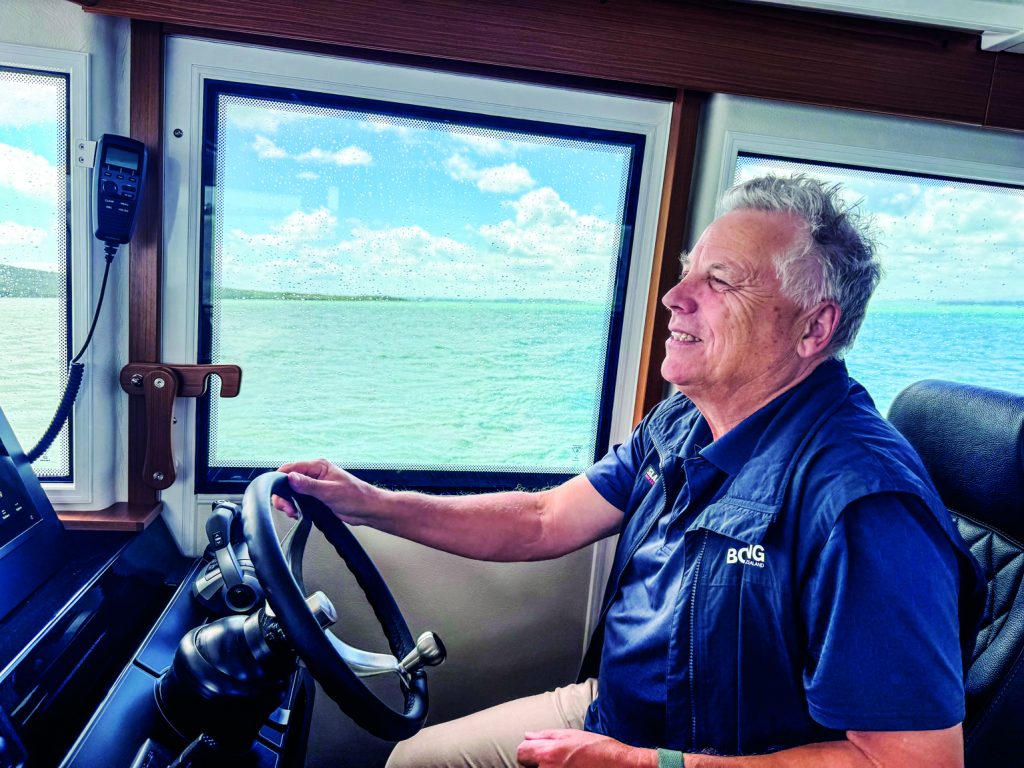
The helm seat is very comfortable. This boat was fitted with quite a few optional extras, including this leather suspension seat, which is adjustable every which way. It also features a drop-down TV, Radar, a spotlight and cockpit floodlights.
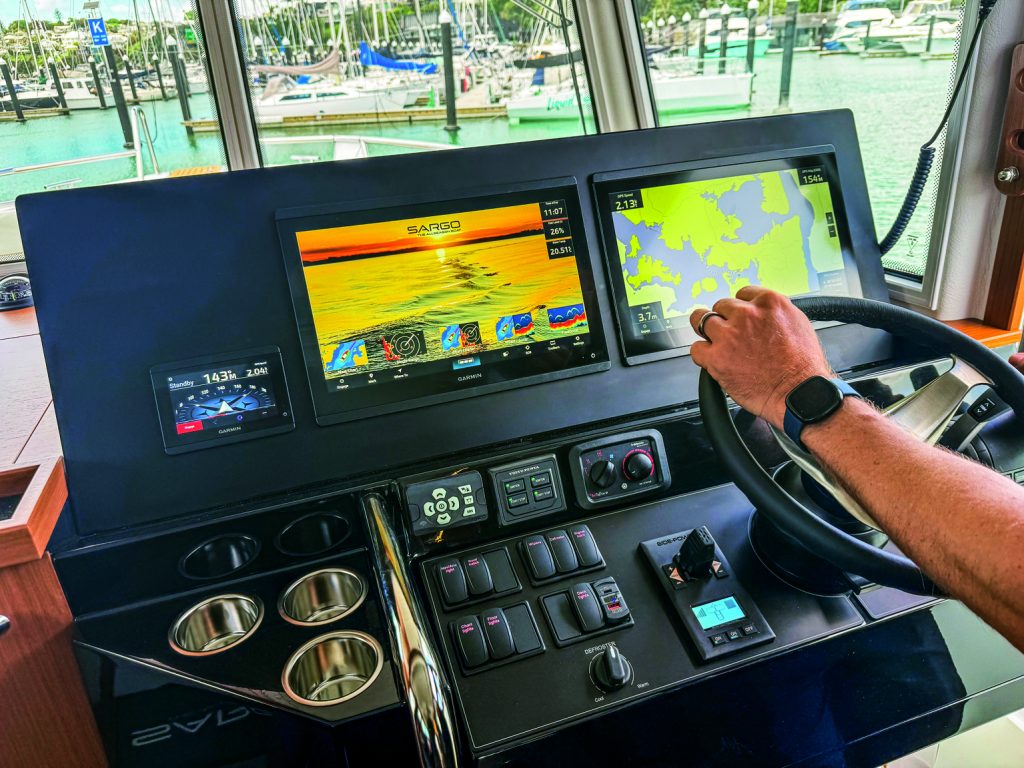
The helm station is nicely laid out. Garmin electronics, which display all of the data needed to monitor the vessel and some peripheral gauges and switches are arrayed under the ceiling above the triple-pane windscreen. Mullions are quite narrow and the boat has three wiper-washers, as well as a powerful windscreen demisting/defrosting system, so visibility was excellent. It’s helped underway by the Sargo 45’s level attitude underway. The transition onto the plane is almost imperceptible, with minimal bow lift and great vision over the bow. Integrated interrupter-style trim tabs work seamlessly with the IPS drives and require no input from the driver.
The boat was nice and quiet at cruising speed once the rear and side doors were closed and we’d shut the sunroof as well. The side doors can be latched fully or partially open, which is handy. A simple wooden latch secures them in place.
At 22 knots and 2600rpm, we were using 4.42 litres of diesel per nautical mile (total); at 25 knots (2750rpm), the fuel burn was identical, so there’s quite a wide sweet spot. Top speed is 30 knots-plus.
The ride was very good – smooth and comfortable, the hull carving its way through the waves. Tracking is good, the steering is light, and the boat’s handling in general inspires confidence. It would take a lot more than a bit of Waitemata short chop to test this boat’s seakeeping credentials, but Sargo boats are known for their comfort in big seas. As the biggest boat in the range, this is probably the most capable of them all.
Finally, the Sargo 45 passed the docking test with flying colours, easing into a very tight berth off a narrow fairway that was suddenly very busy when we approached. Again, Volvo Penta’s EVC proved its worth in the windy conditions, Dominic easily holding us on station until the congestion cleared and backing us into our berth without drama.
The Sargo 45 is the most expensive boat in the company’s range, but it’s also the most spacious and the most capable. Sargo bills this model as a “boat for all seasons,” which describes it very well – versatile and well put together, it’s a little bit different, but should appeal to serious boaters, especially those who enjoy using their vessel year-round.