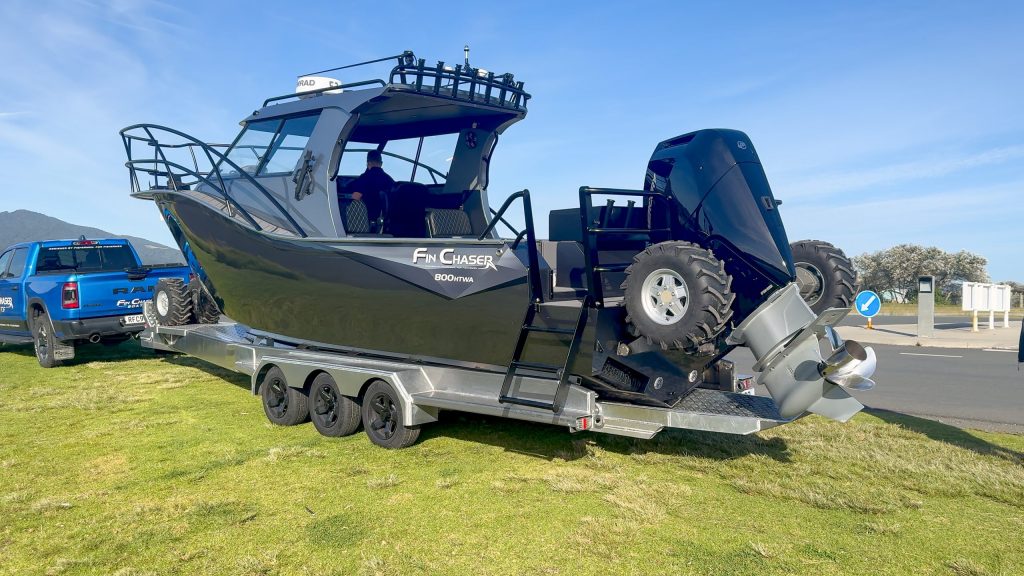
The new Fin Chaser 800HTWA, the company’s flagship amphibious model, is not only Fin Chaser’s largest, but also their most ambitious to date.
In recent years Fin Chaser has leaned increasingly into building amphibious vessels. So much so, that Fin Chaser is now Anura Amphibious Systems’ biggest customer. To date, Fin Chaser has delivered 60 amphibious vessels, with eight more currently in build, and another four boats sold and awaiting build slots. The company is clearly serious about amphibious boats!
As is true across the Fin Chaser range (over 1400 units sold), many have been sold to repeat customers, and the market for amphibious models is growing, including for export. Fin Chaser has sold amphibious models into every state and territory in Australia, with amphibious.au, an amphibious sales and service specialist, recently appointed Australian dealer for the brand.
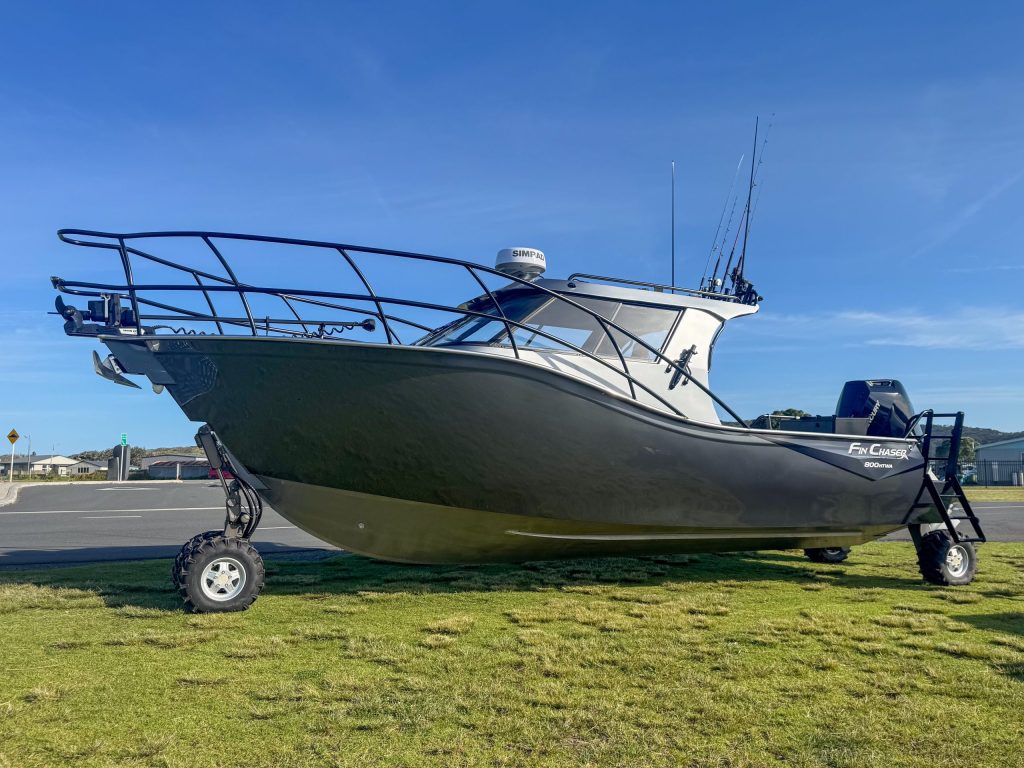
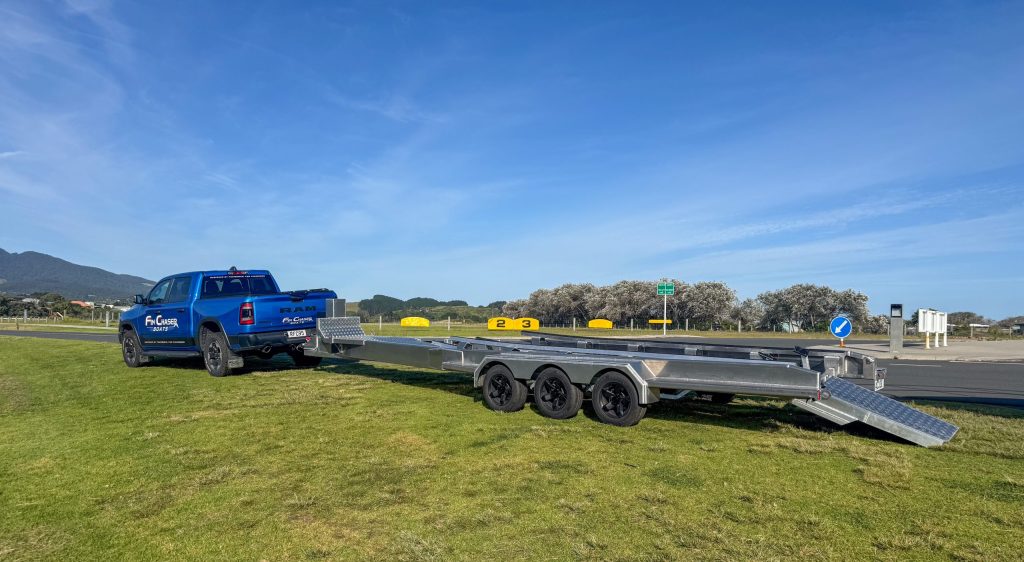
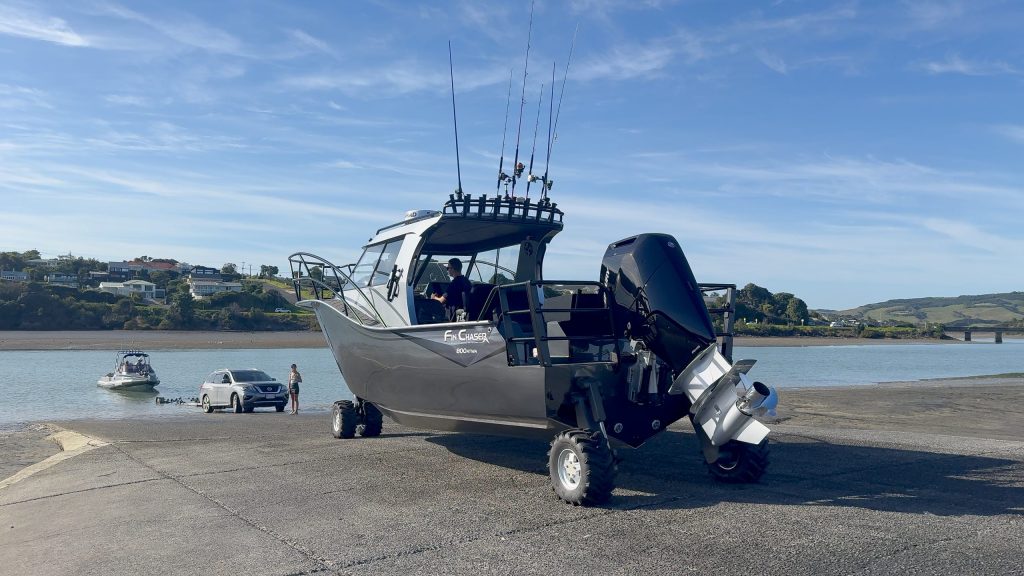
Stylish, imposing, and with a hull that looks flawless and fair from any angle, the Fin Chaser 800HTWA is a striking vessel. With a length overall of 9.7m and a beam of 2.7m, it’s a lot of boat to trailer coming in at around 4400kg on its aluminium road trailer, requiring a heavy-duty tow vehicle and trailer flags/plates. This boat is built with 6mm thick hull plates, but non-amphibious versions can be specified with 8mm bottoms.
This vessel is powered by an electric-over-hydraulic Anura S30 amphibious system on land and an XXL long-shaft Mercury 425hp V10 outboard on the water. The installation of both is very tidy, with the Anura mechanicals hidden away completely under the aft seat on the port side. The big Fin Chaser is near the upper limit of the Anura S30’ss payload, but Fin Chaser reports performance on land is good, including hill climbing. Run time is up to 80 minutes.
The boat’s electrical system is interesting, with a 48-volt lithium-ion battery bank serving the Anura amphibious system (48V), the 36-volt Minn Kota Terrova electric trolling motor
on the bow, and the 12-volt engine and house demands. A DC-DC regulator takes care of the voltage step-ups and step-downs, with the tidy, neatly labelled installation visible inside the transom locker. The Mercury’s high output, 150-amp alternator easily keeps up with charging demands, supplemented by solar panels covering most of the hardtop roof.
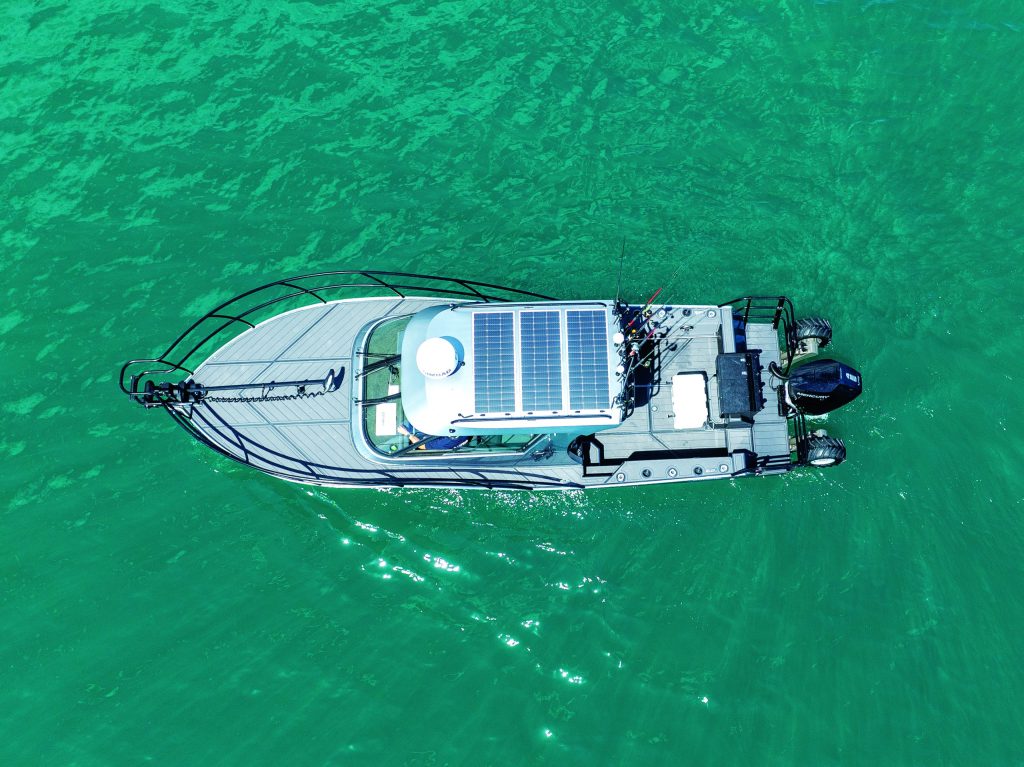
Large the Fin Chaser 800HTWA might be, but its ease of use belies its bulk, one of the biggest attractions of amphibious vessels. This was illustrated by the way Fin Chaser’s Tim Fairhurst (aka ‘Timmo the Fisho’ – check out his YouTube channel) singlehandedly unloaded the boat from its custom road trailer beside Raglan Harbour after towing it from Hamilton. He simply climbed aboard, raised the boat up on its wheels, and near-silently reversed it off the bespoke, triple-axle Credo-braked trailer.
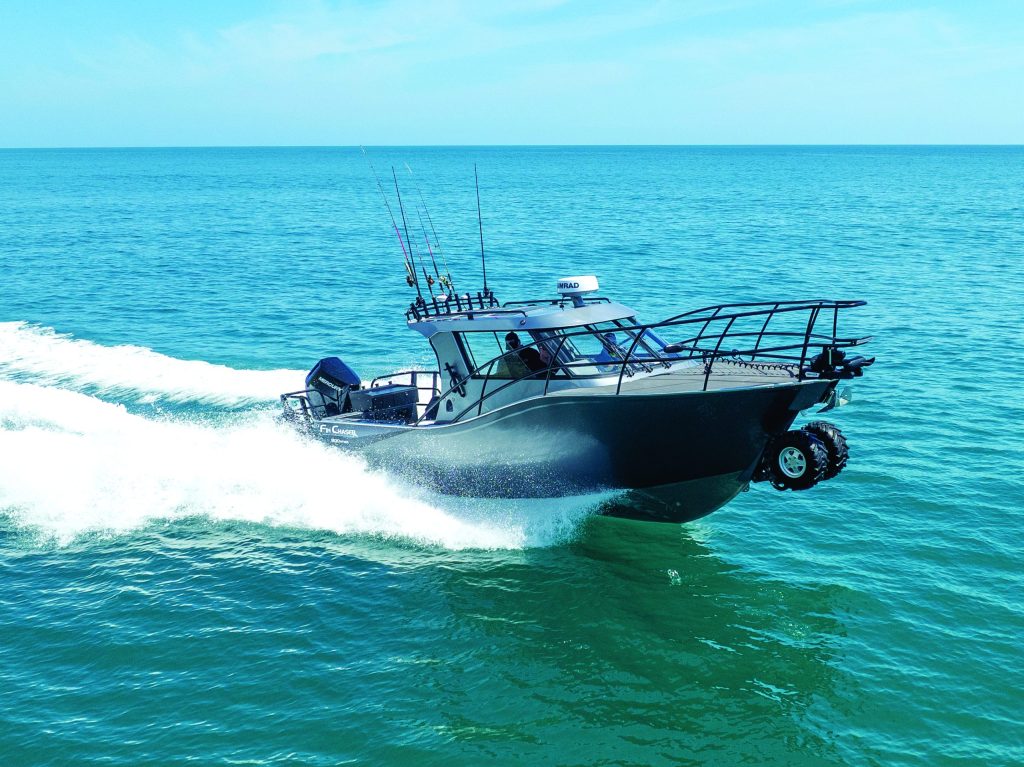
For us, boarding the boat was easy. The sides of the cages enclosing the large swim platforms either side of the outboard drop down as boarding ladders, accessible from the ground or from the water; rear facing boarding ladders are impossible because of the wheels. Of course, the vessel can be made to kneel, which lowers the hull to the ground, allowing you to climb aboard over the rear wheels. The walk-through transom door is on the port side.
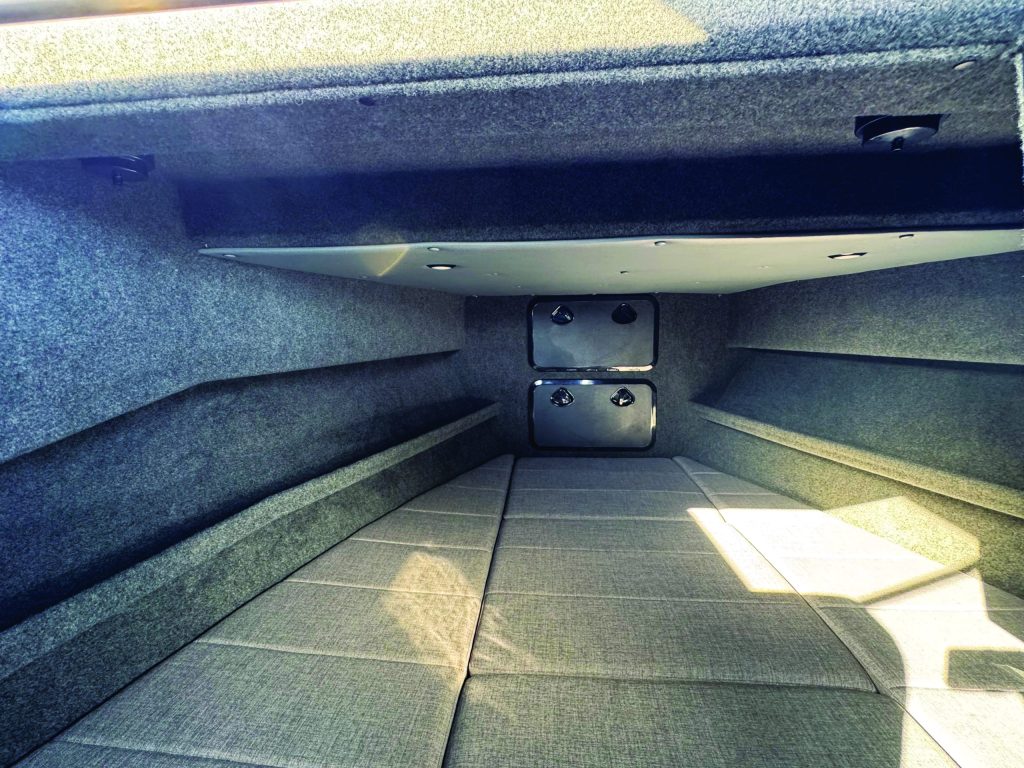
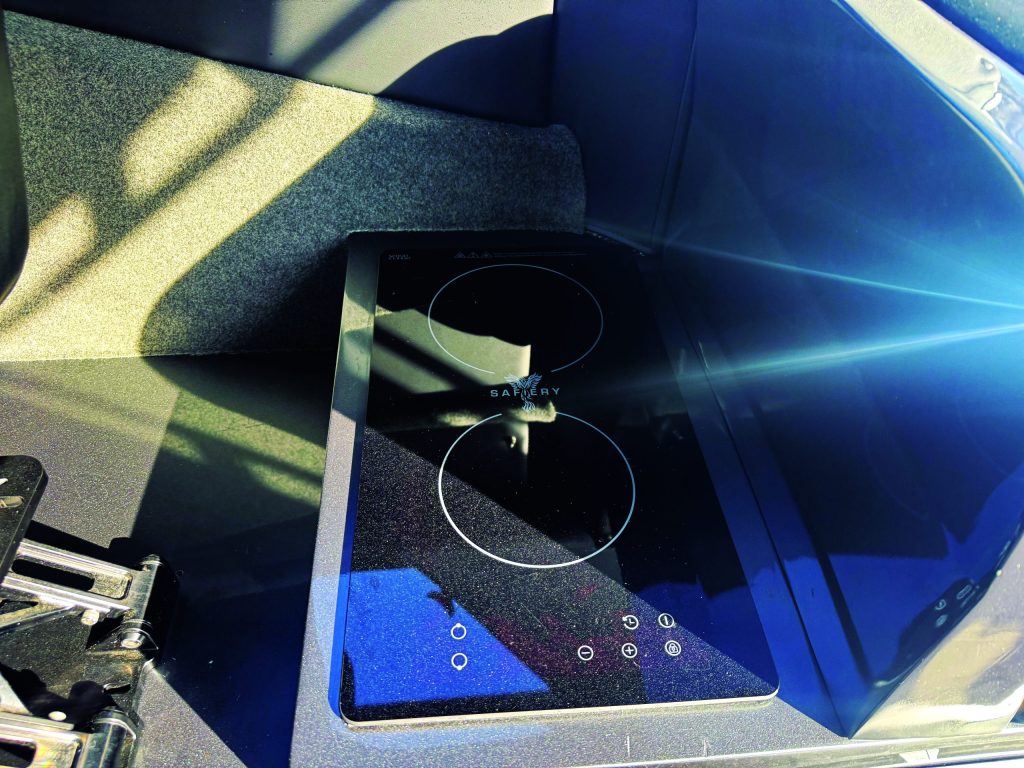
Once aboard, the vessel feels spacious inside, and premium too, with ample cockpit area, two-metre-plus standing headroom under the hardtop, a two-element induction cooktop (no LPG or flames onboard), fridge, dinette, plenty of undercover seating options, and a large forward cabin with a generous berth and a flush toilet. It’s comfortable for long days on the water chasing game fish, family cruising, or for the occasional overnighter.
With its attractive sheerline and ample freeboard, there’s no mistaking the 800HTWA for anything other than ocean ready. And with Fin Chaser’s hands-on sportfishing and scuba diving experience, it has what serious anglers want in a boat. The 800HTWA is well sorted in that respect, including 20-foot Kilwell carbon fibre outriggers for game fishing.
We trundled down the concrete boat ramp at the campground in Raglan and into the waters of the harbour, passing under the bridge (aerials lowered, fishing rods removed from the 16-position rocket launcher) and down the main channel towards the open sea. Conditions on the bar were good, but there is always a lift even in flat conditions, which the big Fin Chaser simply shouldered aside.
The vessel feels premium in operation too, the electric-over-hydraulic Anura system proving very quiet underway, as is the big Mercury – its gruff but rather attractive engine note never becoming intrusive.
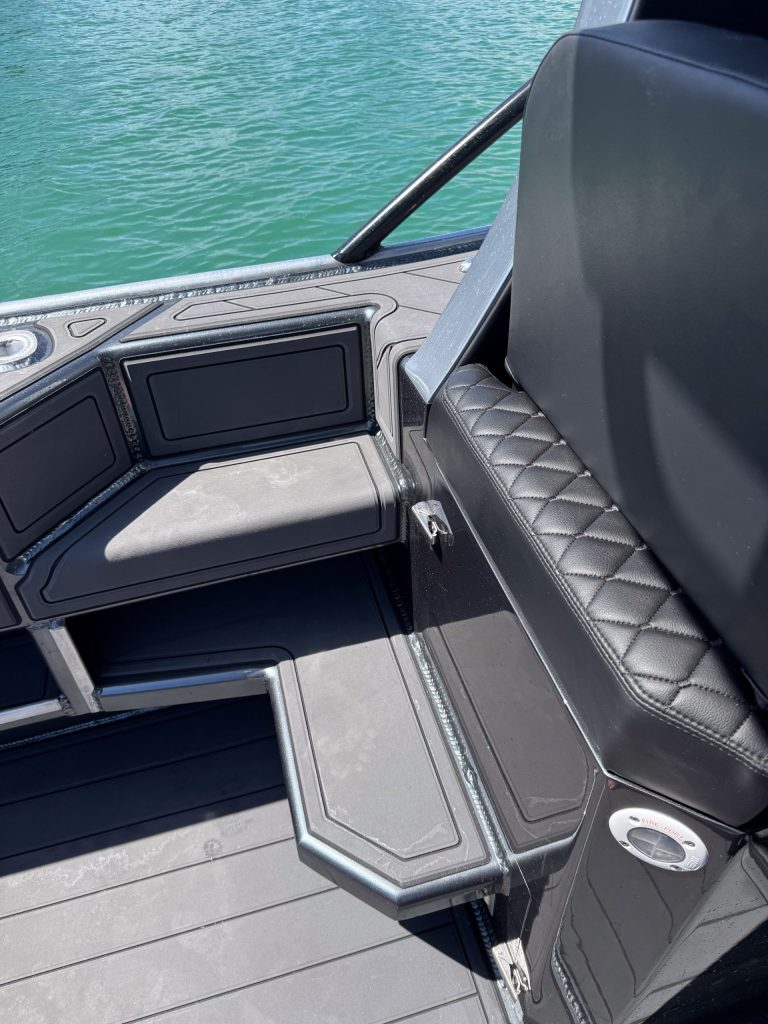
Like every boat in Fin Chaser’s line-up, the 800HTWA’s decks extend out over the gunwales, making the foredeck and side decks wider. As a result, the expansive foredeck is more useable – it’s easily big enough for two anglers casting lures and safe too, with high railings wrapping around the bow – and the side decks are easier to negotiate. To all intents and purposes this is a walkaround vessel, but with a full-size cabin. Those deck overhangs also serve to direct spray downwards and away, resulting in a drier ride. Steps make accessing the side decks easier, and I also like the steps/footrests for the rear seats which help shorties like me reach the rods in the rocket launcher.
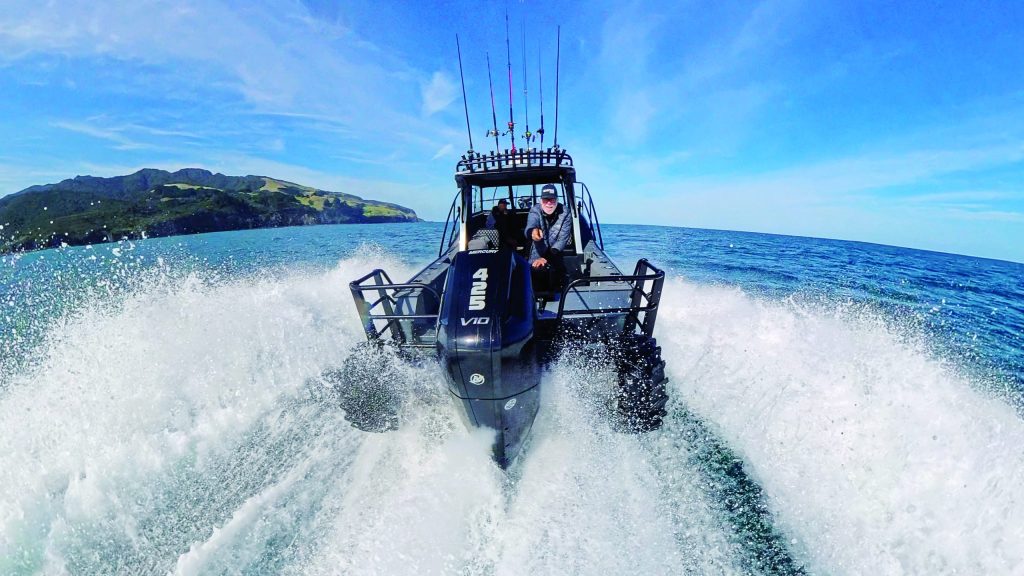
There’s enough volume in this hull to easily carry the 500kg-plus amphibious system. As always with such vessels, that weight, much of it hung off the ends of the vessel, to some extent affects how boats behave, but the 800HTWA’s handling feels lively and performance is brisk.
The Mercury 425hp V10 is a beast, offering impressive hole shots and 40-knots plus top speed, but the boat was rushed out of the factory for this review, so Max Christensen expects further improvements to top speed, fuel economy and handling with a bit of fine tuning. A Seakeeper Ride active trim tab system is integrated into the transom in recessed pockets, an engineering first for an aluminium boat in New Zealand. It seamlessly controls pitch and roll.
Although the initial plan had been to head offshore and troll lures for marlin, the game fishing had gone cold over the last few days, so Tim suggested heading out to Karewa/Gannet Island and trying our luck with the local kingfish.
The passage out was comfortable, the 800HTWA shrugging aside perhaps half a metre of leftover swell and some wind chop from the easterly breeze. The wind was predicted to swing north and drop as the day progressed. At 22-25 knots the ride was smooth and dry, and we reached our destination in less than an hour.
The electronics on this vessel are comprehensive. A 16-inch Simrad NS 4 MFD displays sonar, Radar and GPS, along with Simrad autopilot, a full suite of Mercury engine data and the video feed form the bow camera, necessary to show the way ahead over the high bow when operating on land.
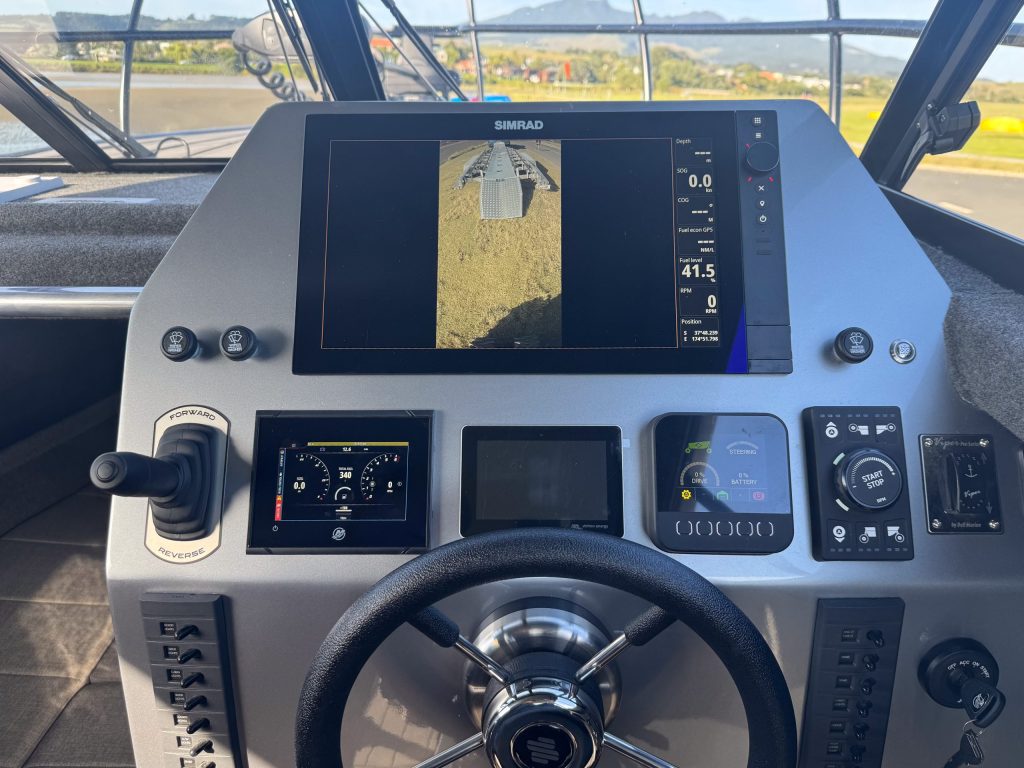
The powerful through-hull transducer gave a good, clean bottom reading at 28 knots and Tim used the sonar to good effect to locate schools of kingfish patrolling the reefs around the island. Jigging produced a succession of small kingfish, which were entertaining to catch and release, though to beat the sharks, you had get them to the boat quickly! Some bronze whalers even shadowed topwater lures cast from the bow platform. Tossing a soft plastic around resulted in a reasonable snapper and a nice trevally, destined for sashimi, along with more small kingfish. The snapper and trevally were consigned to the large livewell low in the hull amidships, a feature found throughout the Fin Chaser range.
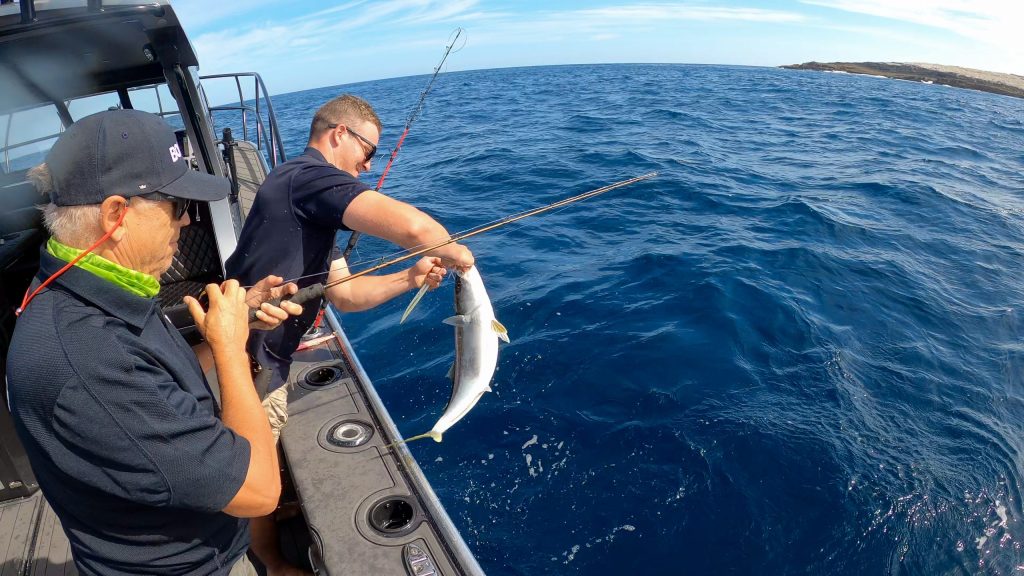
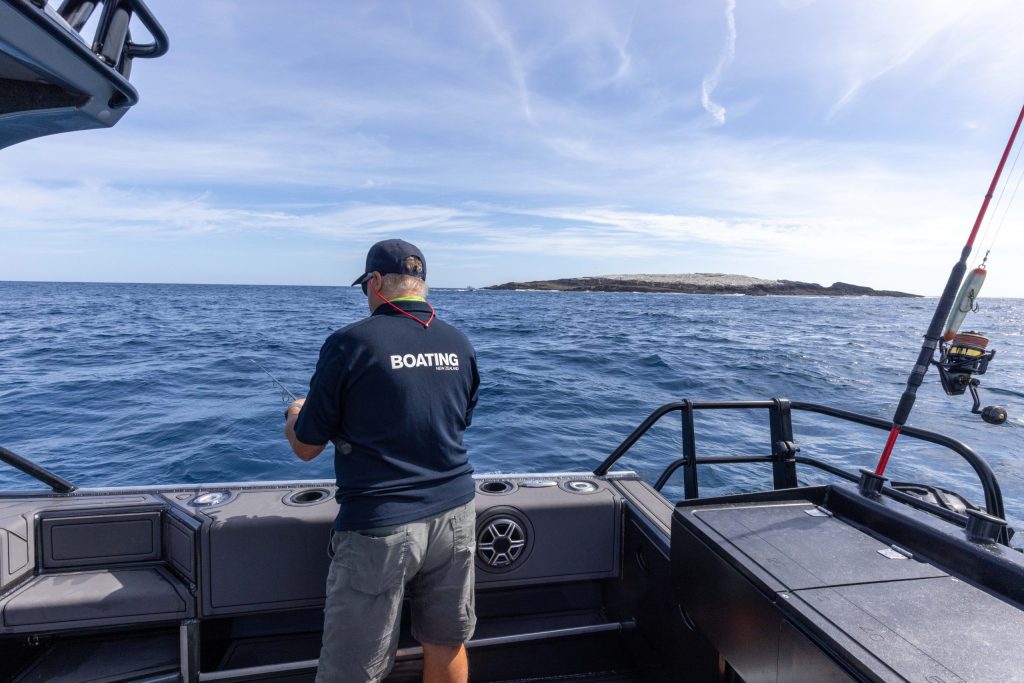
Fishing from this boat was a pleasure. The cockpit is wide and deep, the gunwales providing good support at upper-thigh level. There’s ample freeboard but the coamings are not so high off the water that boating fish becomes difficult. The swim step cages are particularly useful for jig fishing, especially when using the electric bow motor to hold the vessel in position.
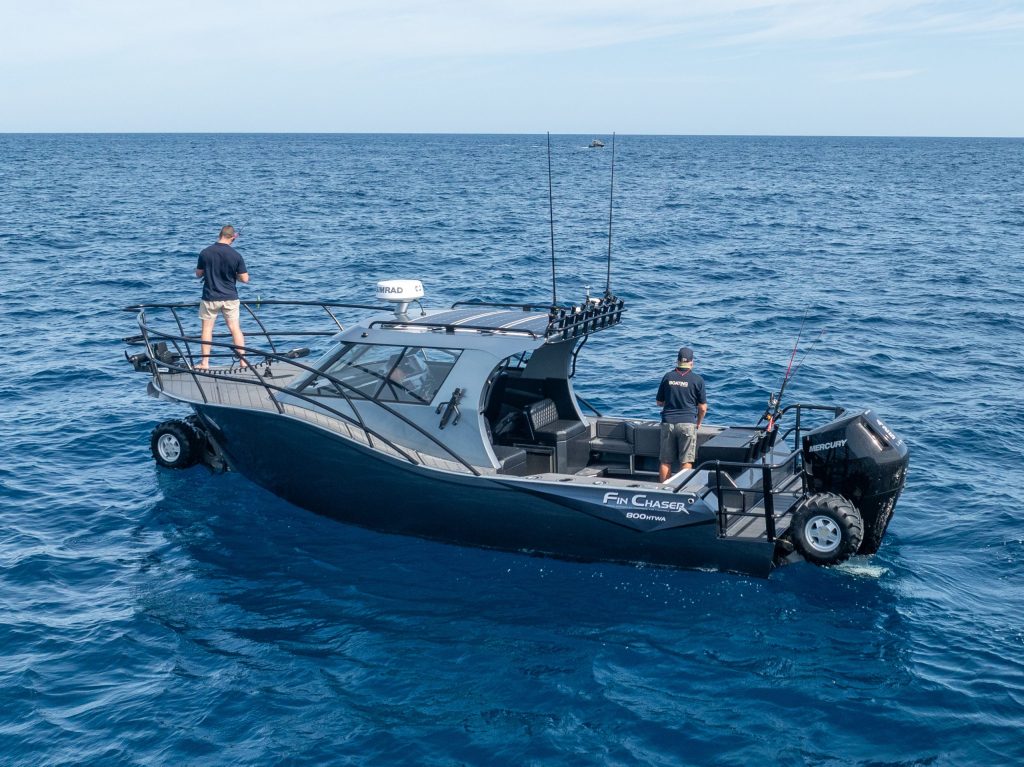
The cockpit sole is lined with U-Dek, also used on the gunwales, side- and foredecks. The hardtop and ceiling are vinyl-lined, which, like the upholstery, is fitted in-house. Fishing features include a large bait station with rod storage and tackle drawer, three angled
rod holders in each coaming, matching sinker/cup holders, a 15-positiion rocket launcher, more rod holders across the back of the bait board, and game poles fixed to the hardtop sides. There’s a washdown on the port side and floodlighting for night use, along with an LED lightbar on the bow to illuminate the way ahead. The cockpit drains into sumps in the corners, pumped out via bilge pumps.
This boat is Fin Chaser’s demonstrator optimised for Max and Ross Christenson, who are both tall men, so for me standing to drive wasn’t ideal, but a raised footwell is an easy option. Vision though the three-pane, three wiper-washer windscreen is good from the comfort of the suspension helm seat, and all the controls fall easily to hand. The front passenger gets a very comfortable, back-to-back seat.
A Viper Pro-Series drum winch takes care of anchor duties. Gas rams extend the fairlead/bowsprit so the anchor clears the wheels; the Viper winch pulls it back inboard when the anchor is all the way up. With this arrangement there’s no need for an extended bowsprit, and the Minn Kota also needn’t stick out so far to clear the anchor. The upshot is a shorter boat that’s easier to garage. Clever.
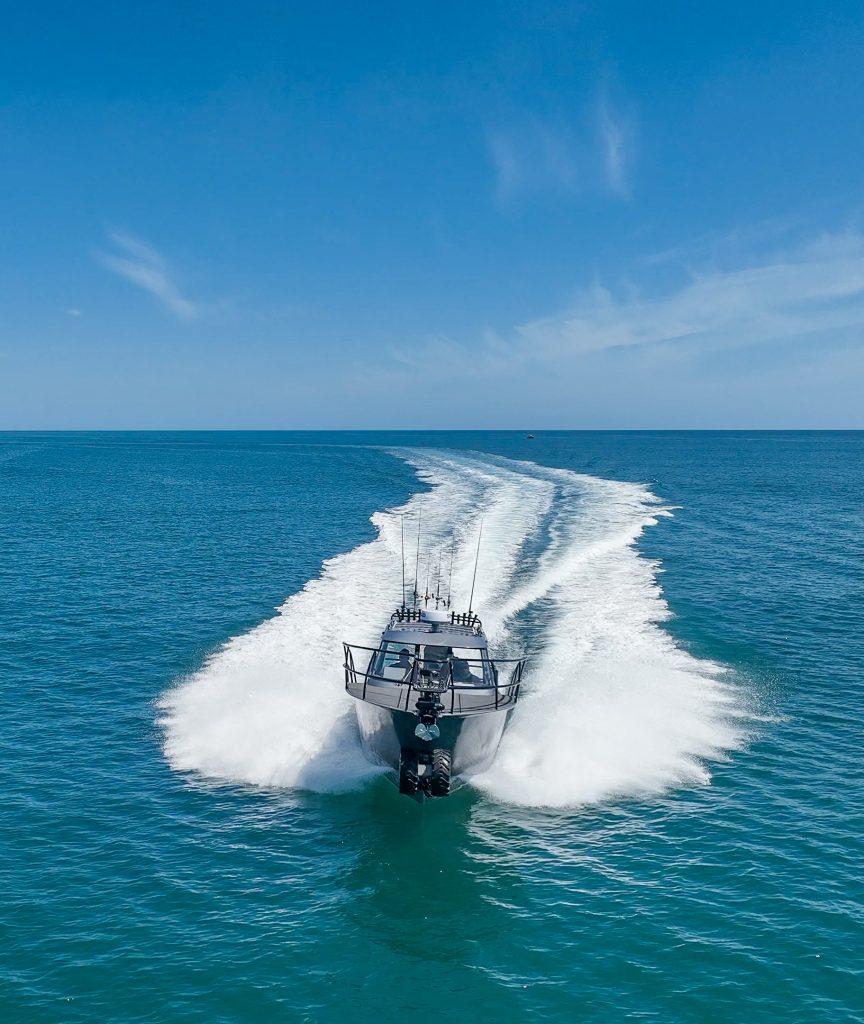
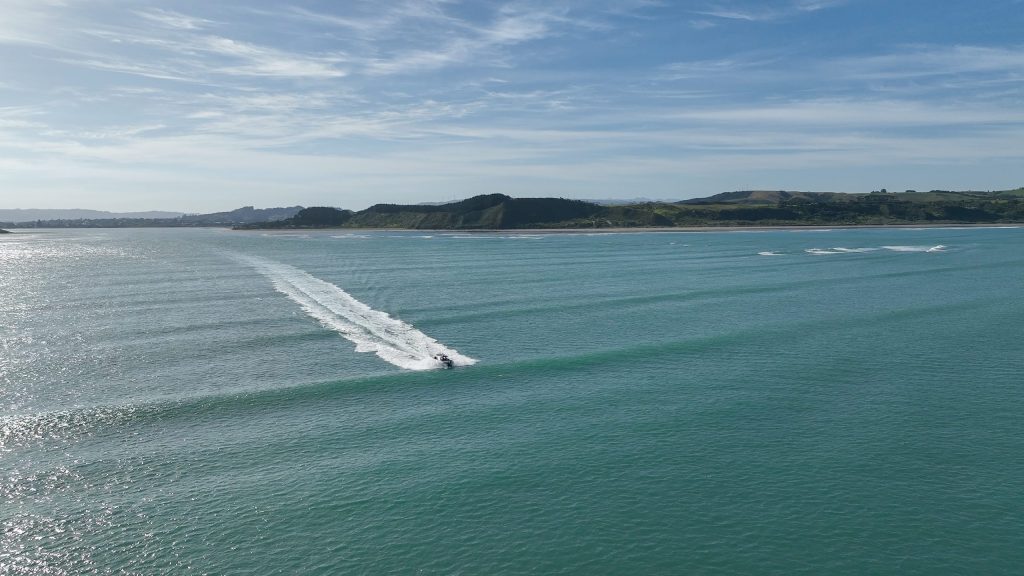
The wind had died away to almost nothing and the seas had flattened off for our journey back to Raglan, which was pleasant in warm, sunny conditions – sliding side windows welcome. The boat cruises comfortably anywhere between 20 and 30 knots and we achieved a top speed of over 40 knots. Closer to the coast, we spent a bit of time performing manoeuvres for the drone camera, before tackling the bar once more and cruising back up the harbour to our launch position.
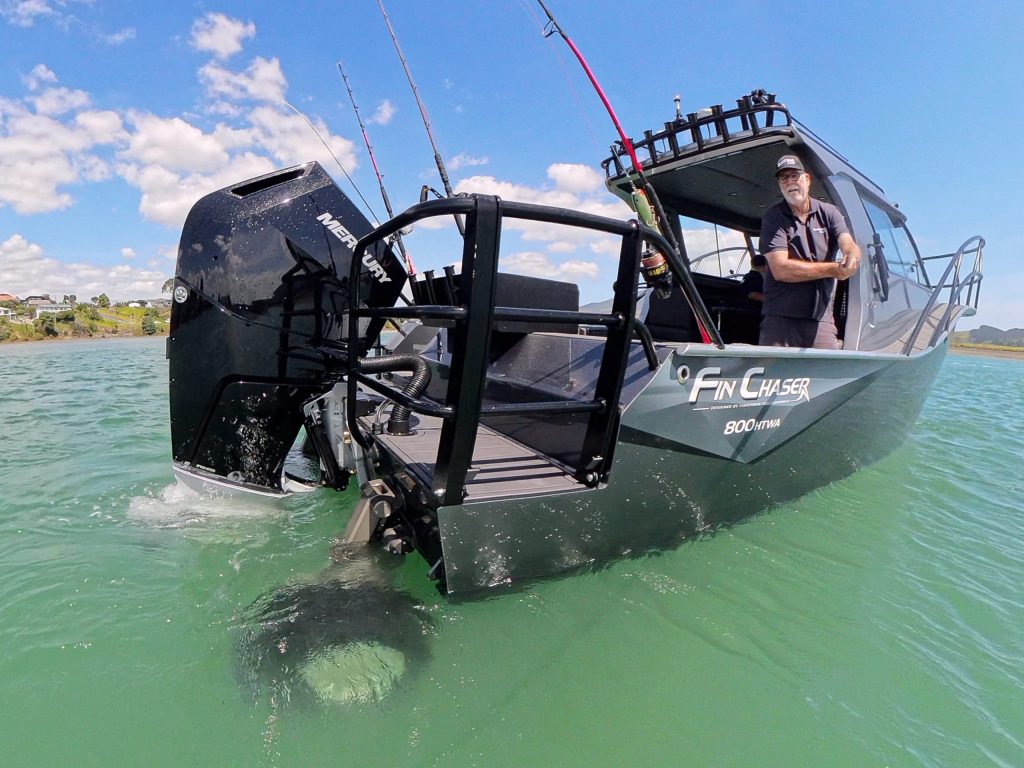
Leaving the water was just as effortless as entering it had been, Tim skilfully piloting the big rig around other boats on the ramp preparing to launch. The sight of a boat exiting the water on its own wheels always draws attention, but the imposing Fin Chaser 800HTWA pulled a bigger crowd than most. By the time Tim drove the boat along the access road and onto its trailer, there was quite an audience, and within minutes of leaving the water, the big Fin Chaser was safe and secure on its road trailer, its systems shut down, ready to head back to Hamilton.
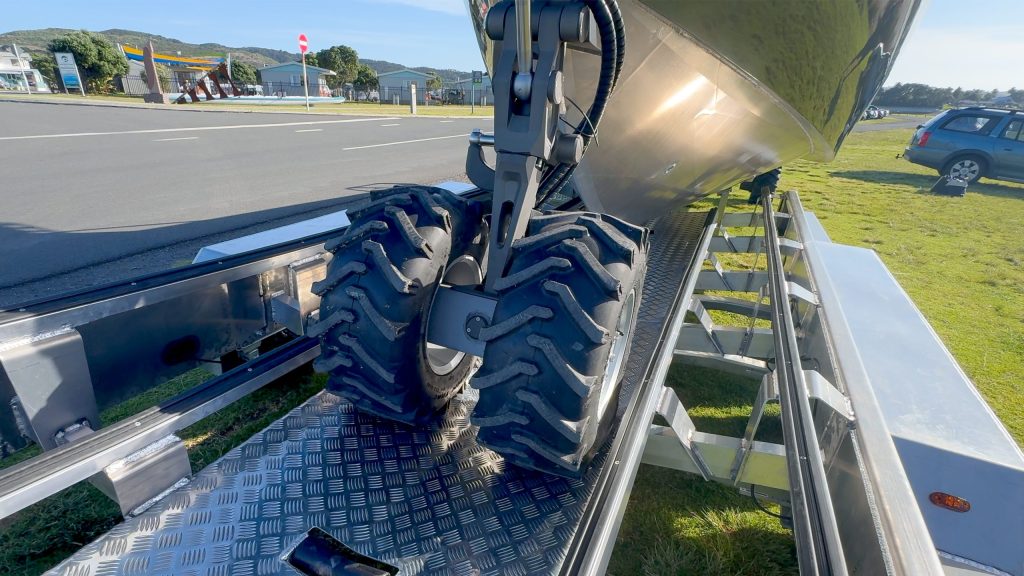
Just like launching had been, retrieving the boat was an easy one-person operation. And that’s what amphibious vessels are all about, after all, even vessels as large as this one.
Fin Chaser’s latest is clearly a big deal, not just for the company, but for amphibious boats in New Zealand, the demand for which only seems to be growing. In terms of size, build quality, engineering and performance, the 800HTWA is a premium product that should be up near the top of the list if you’re in the market for an amphibious vessel. Seventy-plus Fin Chaser amphibious customers are surely onto something!