A Fleet in a Dangerous Balance
In 1940, following France’s armistice with Germany, the French Navy—the Marine Nationale—found itself in a precarious position. While much of France came under German occupation, the fleet remained under Vichy French control in Toulon. The Allies and Axis powers both saw the fleet as a critical asset; its capture could decisively shift naval power in the Mediterranean.

Under the armistice terms, the French pledged not to allow their fleet to fall into German or Italian hands. However, when Germany launched Operation Lila on 27 November 1942 to seize the fleet, French sailors were faced with an impossible decision: to fight or to deny the enemy their ships.
Operation Lila: A High-Stakes Gamble
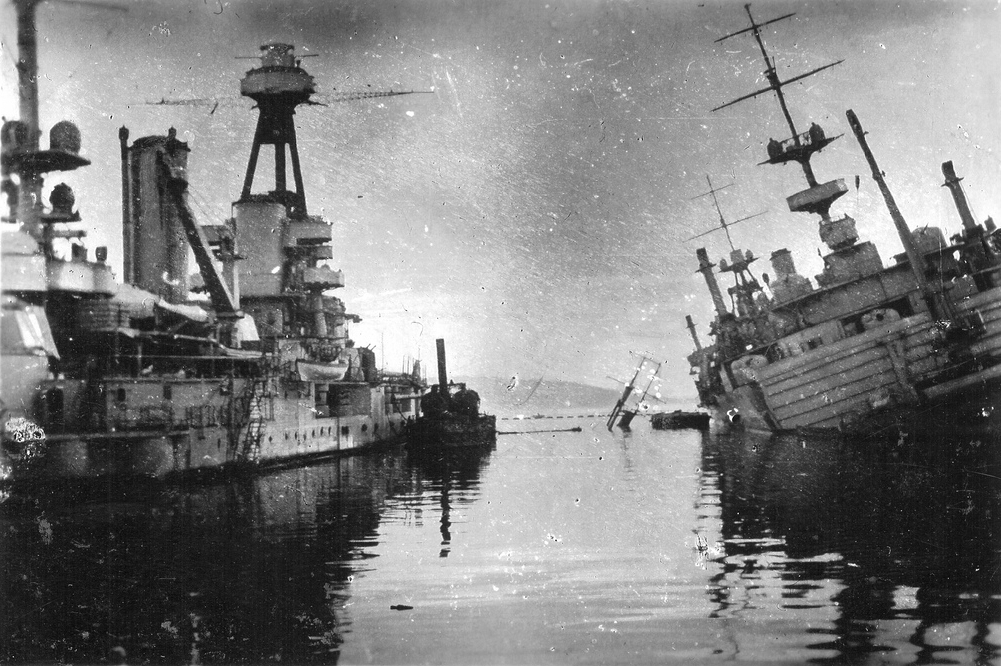
As German troops advanced toward Toulon, French Admiral Jean de Laborde gave the order for scuttling. Over 70 ships were sunk by their crews, including three battleships, seven cruisers, and dozens of destroyers and submarines. Some ships were set ablaze, while others were detonated with explosives. The harbour was soon engulfed in smoke and flames, rendering the vessels useless to the advancing Germans.

Despite meticulous German planning, the operation failed to prevent the destruction of the fleet. French sailors, in a highly coordinated effort, ensured that critical ships and equipment were either submerged or irreparably damaged.
Sacrifice and Strategic Implications
The scuttling of the fleet at Toulon was a devastating blow to French naval power, yet it was a defiant act that denied the Axis a critical advantage. Though the loss of these ships weakened the Free French forces led by Charles de Gaulle, it also reaffirmed the sailors’ commitment to protecting France’s sovereignty in their own way.

The event also demonstrated the limits of German occupation and served as a powerful reminder of French resistance during the war. While the Allied forces mourned the loss of potential reinforcements, they recognised the tactical necessity of the act.
Remembering Toulon
The scuttling of the French fleet is commemorated as a moment of both tragedy and heroism. Toulon’s harbour remains a symbol of resistance, where the silhouettes of warships against the Mediterranean skyline serve as reminders of the sacrifices made.