A tactical trim for the ULTIM giants
In a rare mid-race adjustment, organisers of the Transat Café L’OR Le Havre Normandie have shortened the course for the ULTIM class. To maintain grouped arrivals in Fort-de-France, the leg to Ascension Island has been scrapped. The San Pedro and San Paolo islands, straddling the equator, now mark the fleet’s final waypoint before the run to Martinique.
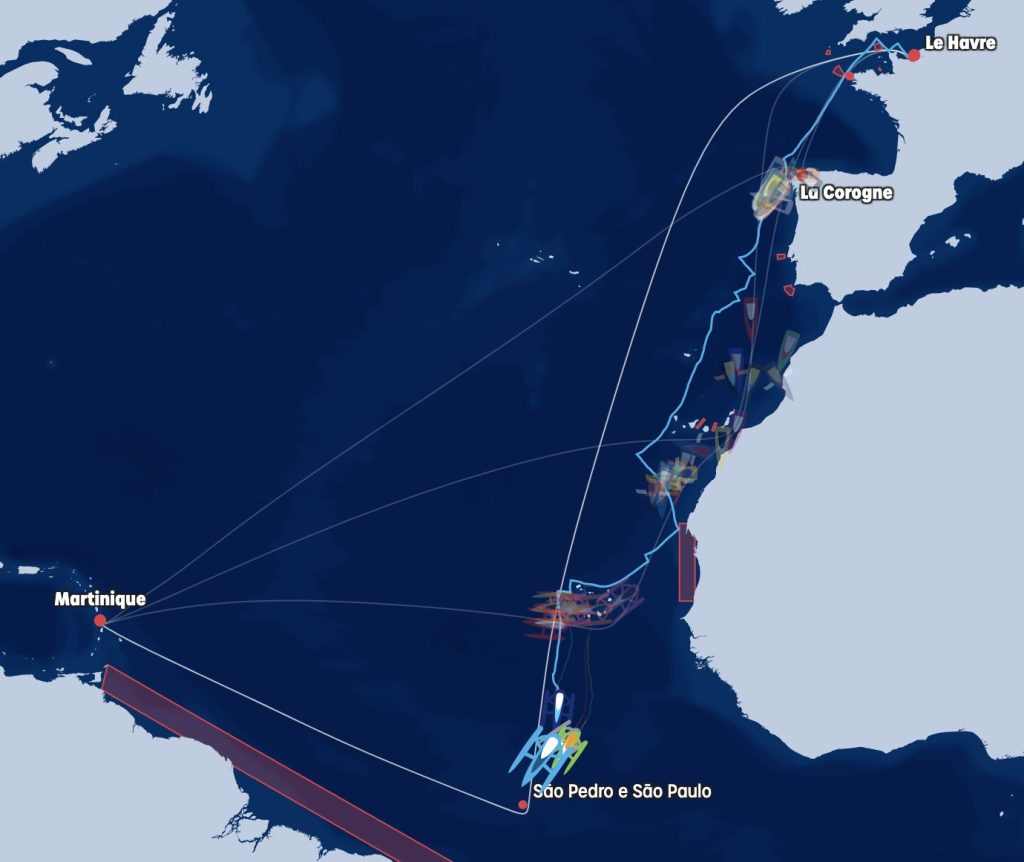
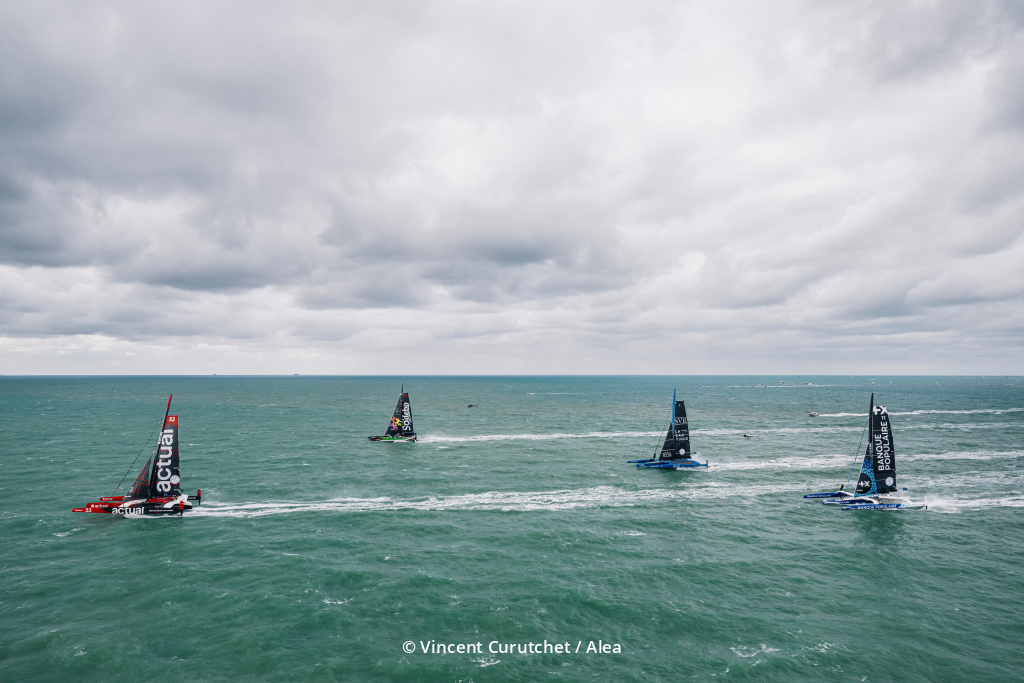
The ruling affects the quartet of oceanic giants — SVR-Lazartigue, Sodebo Ultim 3, Actual Ultim 4, and Maxi Banque Populaire XI — all racing in close contact after a bruising passage through the Intertropical Convergence Zone (Doldrums). Estimated arrival for the leaders is 6 November, but with just 2,500 nautical miles remaining, the field remains wide open.
The Doldrums take their toll
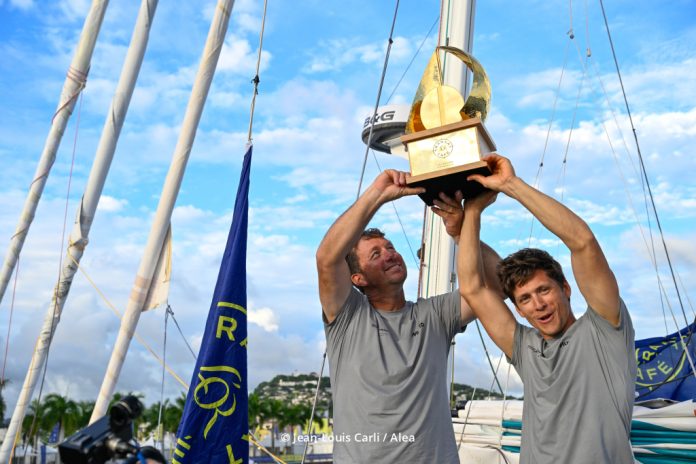
Race leader Tom Laperche and co-skipper Franck Cammas on SVR-Lazartigue reported a 36-hour battle through shifting squalls and light airs. “You always think it’s over, but there’s still a lot of activity,” Laperche said. “It’s better than yesterday, but the whole thing lasted nearly a day and a half — it was a proper Doldrums.”


Behind them, Armel Le Cléac’h and Sébastien Josse on Banque Populaire XI closed the gap by nearly 100 miles overnight, making the most of steadier breeze as SVR struggled to break free. “We stopped for a while and had to manoeuvre a lot,” Laperche added. “The last few hours were easier, and we’ve found our rhythm again.”
All to play for in the second week
As the fleet approaches San Pedro and San Paolo, attention now turns to the 2,200-mile leg across the trade winds to the Caribbean. According to Laperche, “it’s a wide, open section where nothing is guaranteed.” The next phase will be sailed largely downwind, neutralising the upwind advantage SVR-Lazartigue enjoyed earlier.
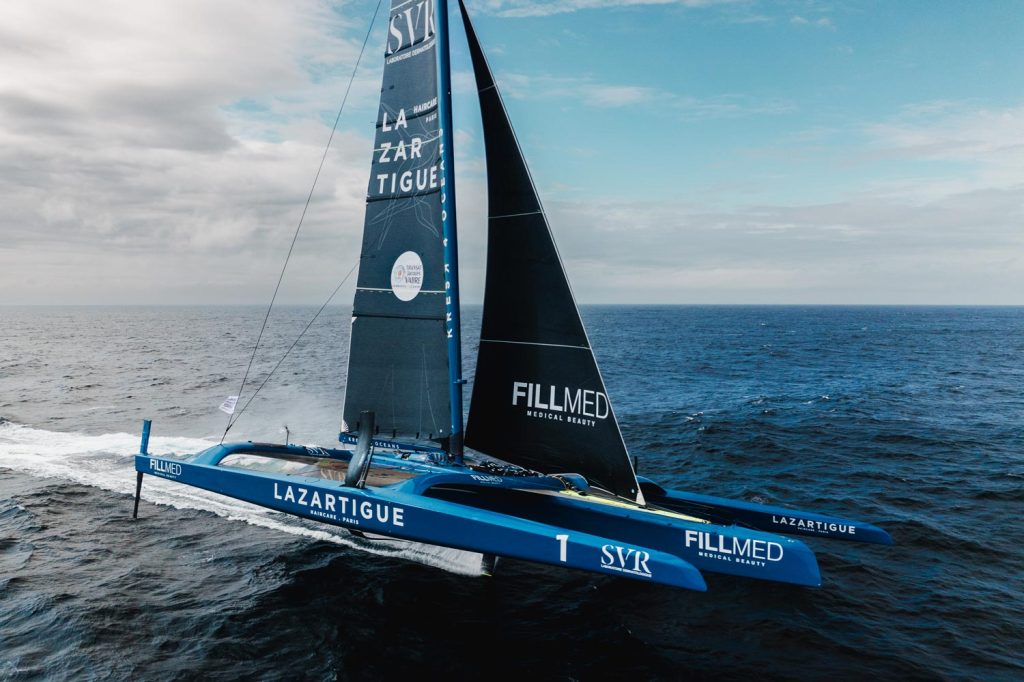
The four boats — all operating near full potential — are expected to deliver a spectacular showdown as they gybe westward toward Martinique. “At this point, any small mistake or shift could decide the race,” notes one race analyst. “These are 32-metre trimarans capable of crossing oceans at aircraft speed — strategy and stamina will be everything.”
Background: the long road from Le Havre
The Transat Café L’OR Le Havre Normandie remains the longest and most demanding double-handed transatlantic race. Founded in 1993, it connects the French port of Le Havre with coffee-producing regions of the world, and this year’s edition sees fleets in four classes — ULTIM, Ocean Fifty, IMOCA, and Class40 — racing to Fort-de-France, Martinique.
Each class reflects a different tier of offshore design and endurance:

- ULTIMs: 32m carbon-fibre foiling trimarans capable of 40 knots
- Ocean Fifty: 15m multihulls built for speed and precision
- IMOCA: 60ft monohulls, including Kiwi sailor Conrad Colman aboard MSIG Europe
- Class40: 12m yachts providing accessible, high-level competition