However, the ability to realise the full potential of these various methods starts with spooling our reels with line of the right type and diameter.
The following are my recommendations:
Snapper
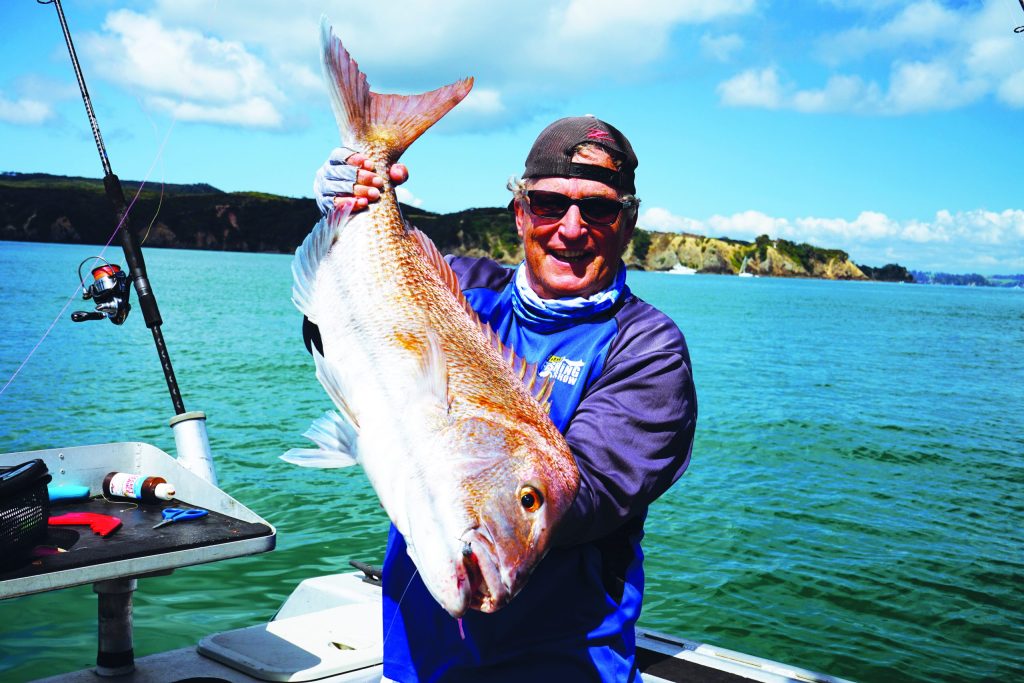
Stray-lining baits in reasonably shallow water (i.e. less than 20m, nothing beats good old nylon of between 6 and 15kg breaking strain (b/s), depending on the situation (i.e. whether it’s sandy or rocky). Yes, nylon is relatively thick and elastic compared with braid, but this elasticity helps to mask our presence from biting fish, making them more likely to follow through on their initial bite(s). Low-stretch braid, on the other hand, is so effective at transmitting pressure that biting fish are often alerted to something not being quite right and are therefore less likely to fully commit to your bait, especially when not particularly hungry.
Anglers who do use nylon may also want to take full advantage of its properties by tying on circle hooks and using long, light-tipped rods; by the time the stretch comes out of the nylon and the rod tip is starting to pull down in earnest, the circle hook has quietly gone about its business, sliding up into a secure position around the fish’s jaw hinge.
Many shore-based fishers also use nylon rather than braid for some of the same reasons. Rock fishers, especially, find that nylon’s thicker diameter provides a little extra protection from jagged rocks, with fewer break-offs as a result. Nylon monofilament’s ‘give’ is attractive to surfcasting exponents fishing in big-swell locations, since it acts like a kind of bungee to absorb the pressure of crashing waves, reducing the chances of the break-out sinker’s wire tines pulling free. To maximise the benefits of stretch, many top surfcasters use just 6kg nylon, or a thin-diameter 8kg line.
In deeper water (i.e. 25-100m or more) with some current and fishing with weighted rigs and baits, nylon, with its relative bulk and stretchy nature, is a poor candidate for the task. Instead, use 10-24kg (PE2 to PE5) braid, with the situation again dictating the best breaking strain. As braid’s diameter is often just a third that of nylon of equivalent breaking strain, it cuts through the water better, resulting in the line bowing less in the current. Minimal stretch means very effective bite detection and hook-setting too. N.B. The 24kg line weight option is often fished as though it were 15kg – the greater diameter provides some insurance against line damage through abrasion.
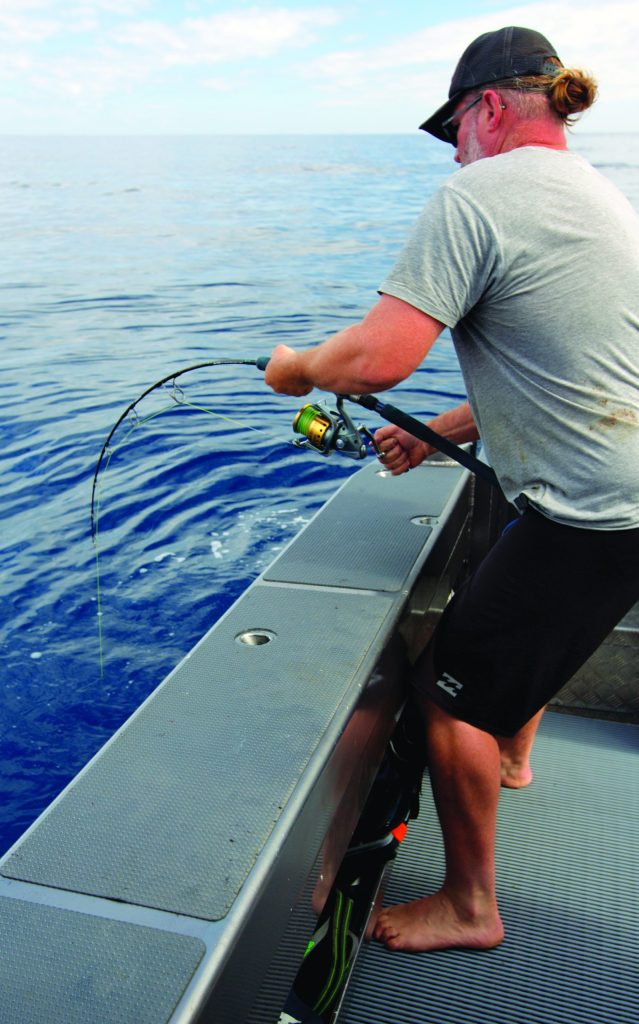
When you are fishing with lures, braid is again the line to use. Braid slices through the current for better contact with the lure, superior bite detection, and an enhanced ability to convert bites into hook-ups. Reasonably small hooks, as used with many popular lures, also make hook-ups somewhat easier (soft-baits are an exception, but my preference is for jig hooks smaller than 3/0 in size).
Soft-baiters tend to use fine-diameter fluorescent-coloured braid in 15-20lb (PE1.5 to PE2) nominal b/s, since the line cuts through the wind and current more effectively and bites are easier to see and feel. The latter qualities are also important for jig fishers, but as kingfish are a common bycatch, especially when targeting work-ups, jig-fishers may opt for heavier 15kg braid. Jiggers are also more likely to choose a braid that changes colour every 10 metres, so they can count down their lures to intercept fish showing on the fish-finder at a specific depth.
Regardless of the lure type, a two- to three-metre fluorocarbon or tough monofilament leader must be tied to the braid – the braid should not be tied directly to the lure.

Kingfish
Choosing line types to fish for kingfish with live bait is a case of personal preference. Monofilament nylon, usually 24-37kg b/s, is actually pretty practical, as mono’s extra diameter can save the day in the event of line damage. However, the reel needs to be physically bigger to accommodate nylon, which is thicker than braid. That’s why I prefer to use braid, with a much smaller, lighter reel, although I always add a fluorocarbon leader around 6-9m long. It’s usually just the last few metres of the leader that get badly punished, and this can be cut away as required, so this works well. If fishing in deeper water, braid coloured in 10m increments can be an advantage. The bait can be accurately set to a specific depth or to intercept fish showing on the fish-finder.
When trolling, the scenario is similar to live-baiting, except a long, thick nylon or fluorocarbon leader doesn’t cut through the water very well, which impacts on how deep lures run and even hampers their actions. So, I suggest risking a shorter leader of 2-3m – just long enough to grab hold of to exert some extra control boatside.
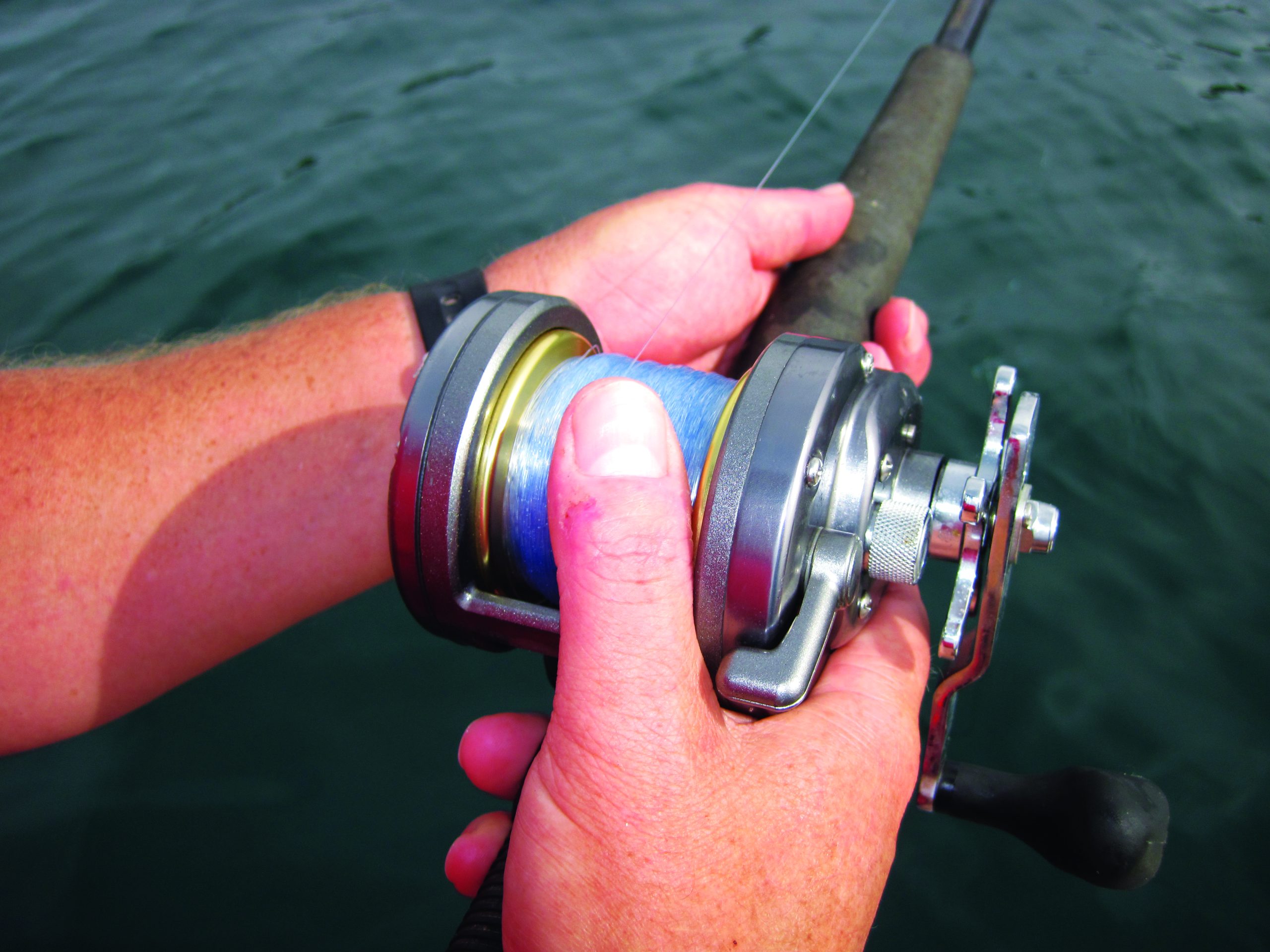

When talking heavy-duty jigging, once again, braid shines. It allows anglers to use relatively small, compact reels holding between 250 and 400m of 24-37kg multi-coloured braid (PE5 to PE8). But, as already mentioned, braid cannot take much abrasion without snapping, so again, I tend to use a very long leader, typically around six metres of 37-130kg fluoro or tough mono. The leader’s exact strength is generally determined by the weight of the jig and where I’m fishing. Around Auckland, it will mostly be 37-45kg, while at the likes of the Three Kings Islands, Ranfurly Bank or White Island, it will likely be 45-60kg.
Casting topwater lures is a similar scenario to jigging, except that suitable reels are nearly all good-quality spinning models capable of holding at least 200-250m of high-vis 24-37kg braid (PE5-8). I add five metres of 37-45kg leader – that’s longer than most topwater fishers use, but it reduces the chances of bust-offs. The leader is still easy to cast since it is connected to the braid using a very streamlined PR or FG knot.
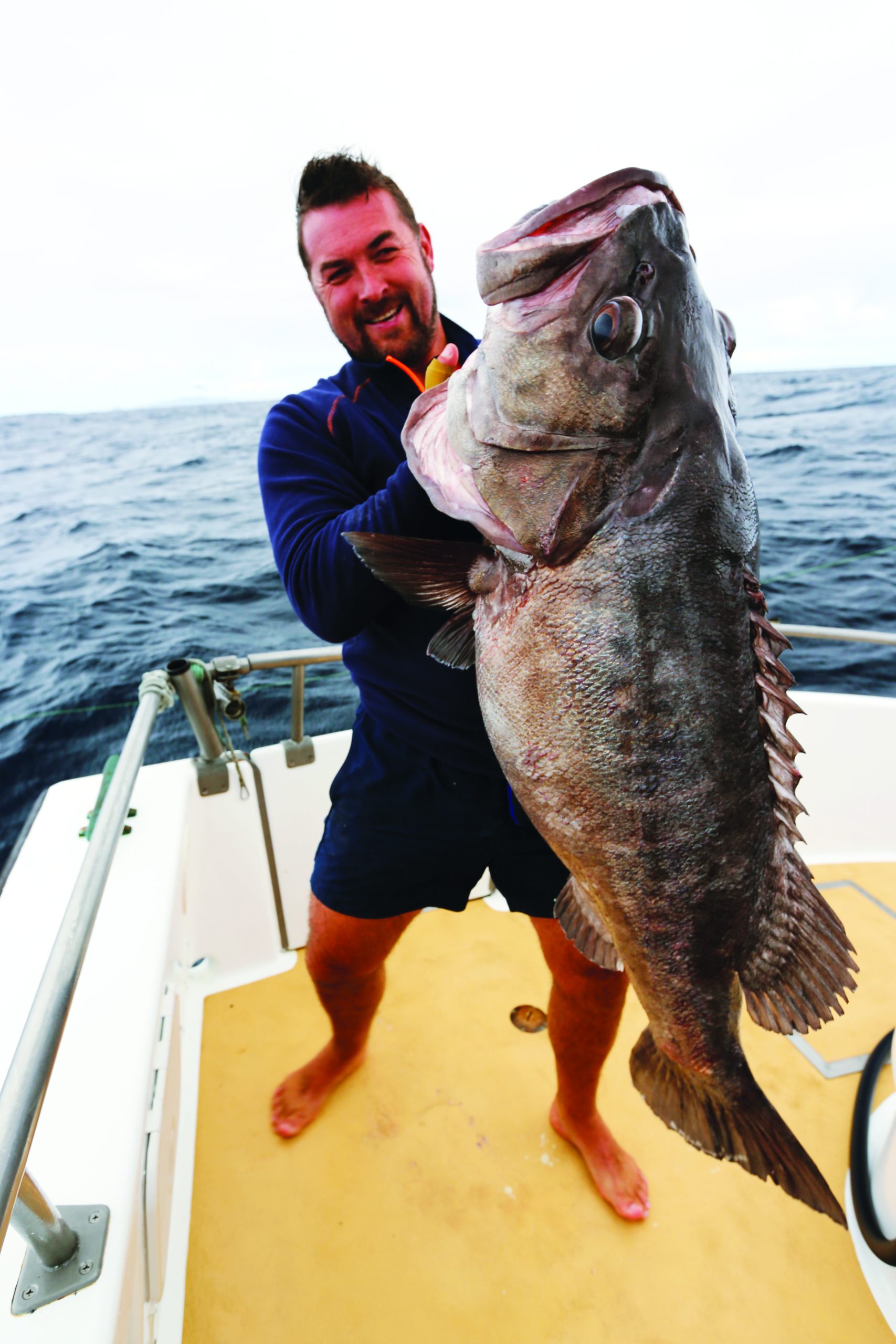
Hapuku, bass and bluenose
Fishing with bait is another big win for braid. You’d better use 37-45kg (PE 8-10) too, because these fish live deep down in rocky, unforgiving territory and can grow very big. Again, I add around five metres of 100lb nylon trace to the end of my braid mainline to protect against the dangers of abrasion.

Game fishing
Whether trolling or live baiting, a slightly different braided line called hollowcore has been a game changer for me. Not only is it very thin, it is – as its name suggests – hollow. So instead of having to use relatively cumbersome and weighty 80W reels, which were traditionally recommended in case a decent blue marlin hopped on, it is now possible to use a 50W or even a straight 50-size reel instead.

Depending on the reel’s size, the brand of line chosen and whether there will be a wind-on leader or not, these models can take around 650-900m of 37-45kg (80-100lb) hollowcore connected to 70-100m 37kg of nylon topshot. The topshot can be connected to the braid almost seamlessly by inserting at least a metre of it inside the hollowcore using a hollow needle and then finishing it off with a PR knot. Look the process up on Google or have your local fishing specialist store do it for you.
And while the initial price of the hollowcore line is relatively steep, it’s nearly always the nylon topshot that gets damaged, not the braid, so when it needs to be replaced, you’re only paying for 100m of 37kg nylon. Cheap!