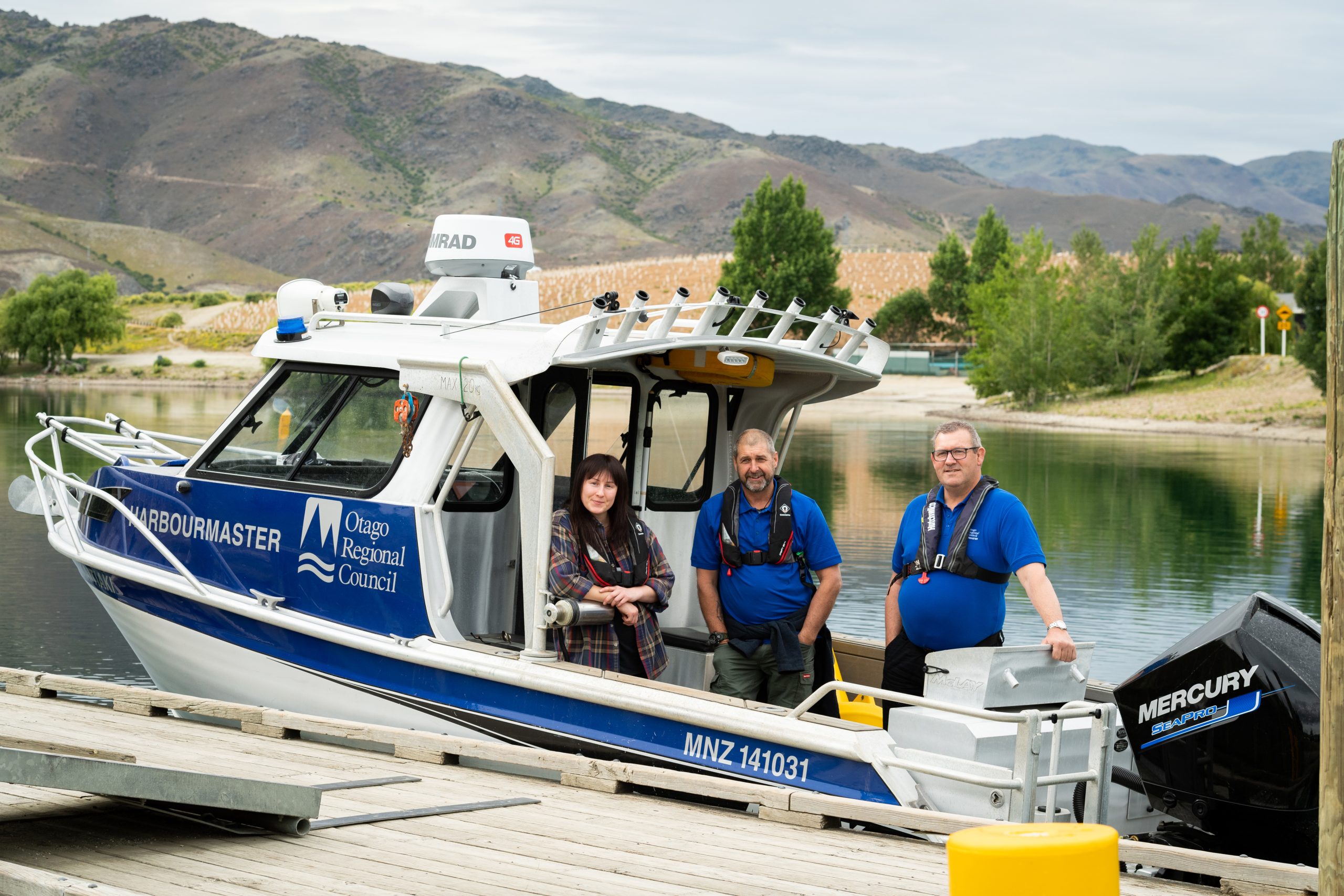
The Otago Regional Council regulates ports, harbours, waters, and maritime-related activities in Otago under the Maritime Transport Act (1994). The council’s Harbourmaster team covers the Otago region, apart from the Queenstown Lakes District, which has its own Harbourmaster under the district council. The Harbourmaster has two boats, the Āwhina, an 8.5-metre RIB, and the Kaitiaki, a 7-metre McLay.
The team’s key functions are to:
- oversee maritime safety
- promote safe boating and maintain safe-boating signage at local boat ramps
- make sure navigation aids, lights and beacons are in place and well-maintained
- remove hazards, such as trees and abandoned vessels
- work with water users and other stakeholders on matters related to the harbour and waterways
- let boaties know about changes to local rules and regulations
- work with Port Otago to keep commercial shipping and related activities in Otago harbour safe
- respond to marine oil spill events
- review applications to hold an event on the water
- issue Harbourmaster instructions from time to time.
The team works with Maritime NZ to carry out regular training exercises to keep everyone’s skills sharp. These include things such as an oil spill exercise, bringing together Port Otago staff and emergency services to use an oil spill kit. Any spill in Otago’s harbour poses a threat to the abundant local wildlife, which includes seals, orca, albatross and many other species unique to Otago.

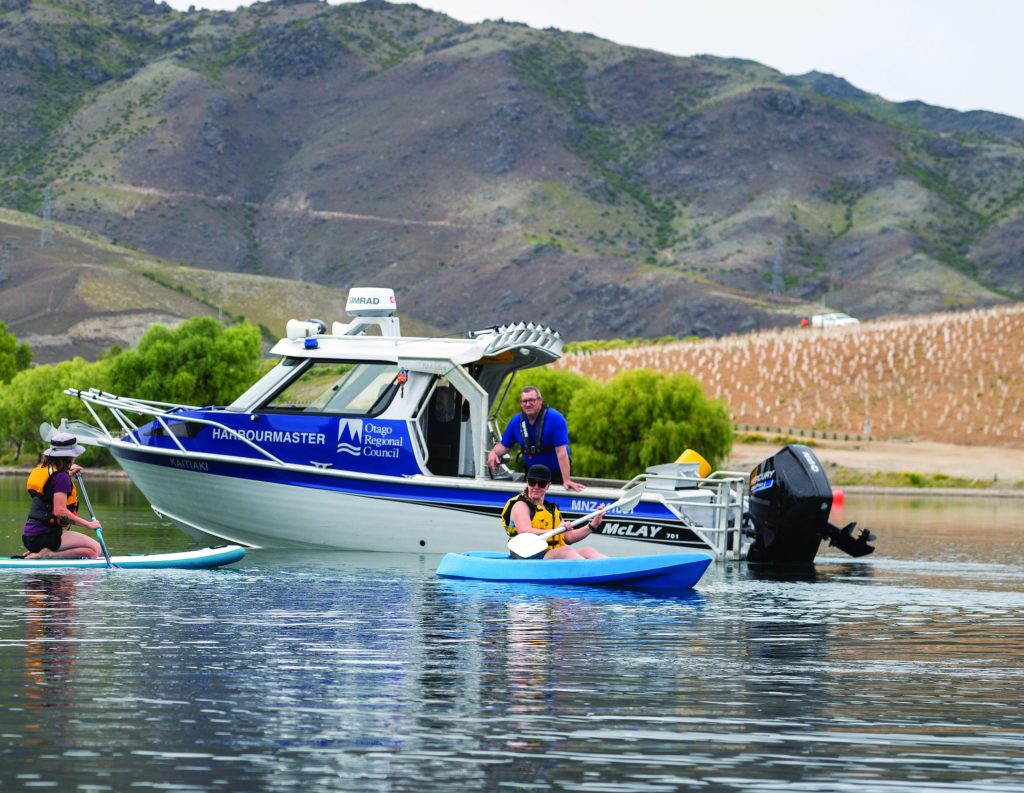
Over the summer period, the team of three splits their time between coastal Otago and Central Otago’s lakes and rivers to make sure everyone gets home safe after a day of fun. Towards this, they have recently designed and installed new signage at the region’s boat ramps to reinforce the boating rules and why it’s important to check, clean, and dry vessels if you are moving them from one waterbody to another to prevent the spread of freshwater pests, such as lagarosiphon and didymo, in Otago’s waterways.
In 2026 we will be carrying out a region-wide consultation on proposed changes to the navigational bylaw, which include carriage of Automatic Identification System (AIS) and amended commercial traffic management in the Victoria Channel of the Otago Harbour. Most of the original bylaw is still fit for purpose with some minor editorial adjustments; however, ORC Harbourmaster Steve Rushbrook says, “We’d appreciate it if Otago boaties kept an eye out for an opportunity to give their feedback in the new year. In the meantime, follow the safer boating code and we’ll see you out on the water this summer.”
Thanks very much to Jasmine Couch from the Otago Regional Council for this article.