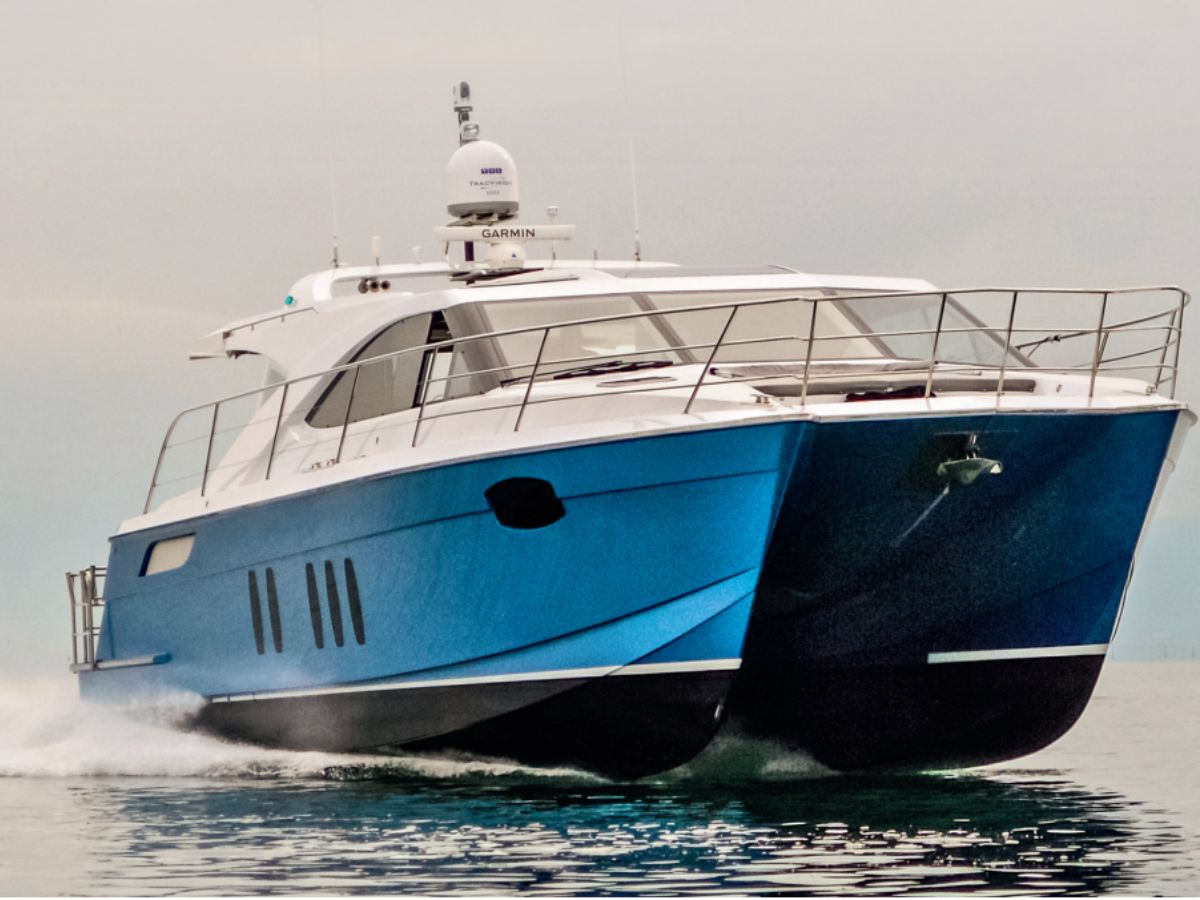
Multihull boating has moved decisively from niche to mainstream, and in early 2026 the shift is no longer theoretical. Across both sailing and power categories, catamarans and trimarans have become one of the fastest growing and most influential segments of the global marine industry, reshaping expectations around space, efficiency, comfort, and use case.
While monohulls still account for the largest share of total production volume, the gap is narrowing rapidly. Industry analysts now suggest that, excluding dinghies (for example, Nacra), production of multihulls for liveaboard and cruising use could reach parity with monohulls within the next year. That milestone would mark a structural change in the market rather than a short-term cycle, reflecting a sustained shift in buyer preference and manufacturer investment.
A market driven by function, not fashion
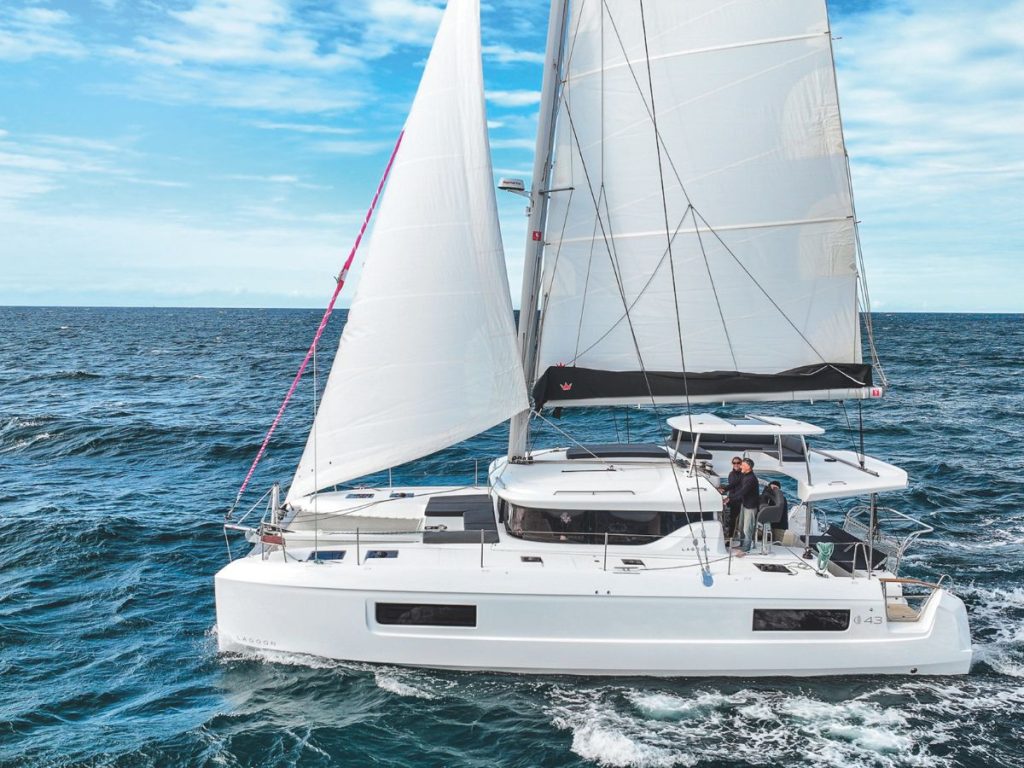
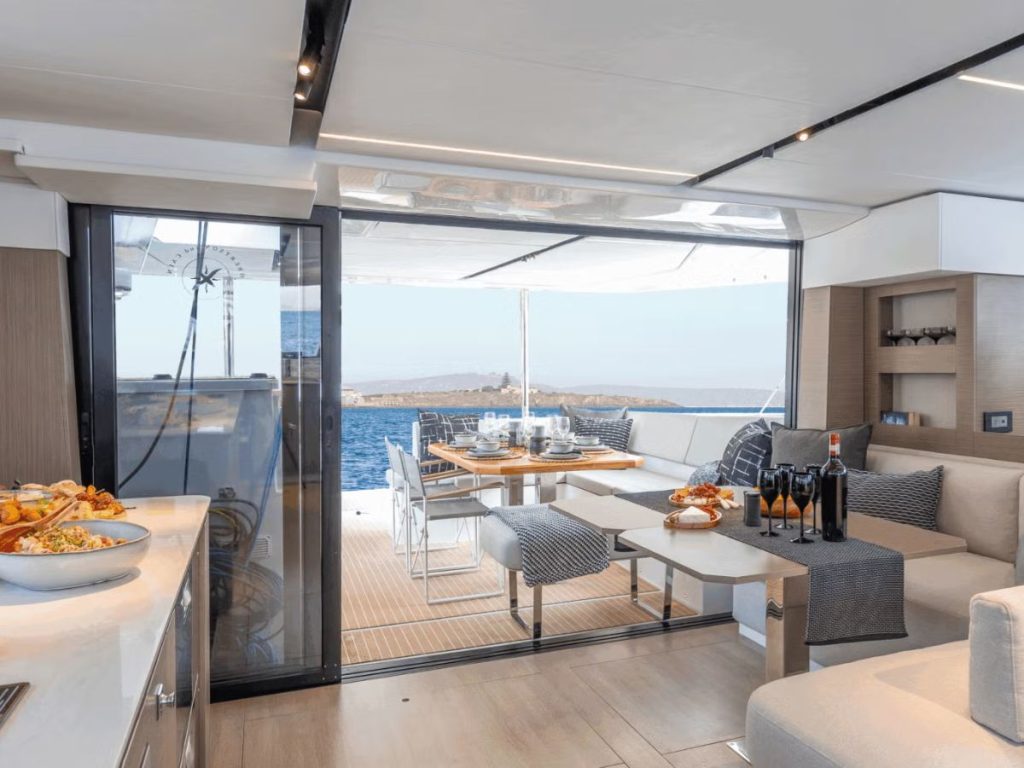
The reasons behind the rise of multihulls are well established. Compared with monohulls of similar length, multihulls offer significantly more usable deck and interior space, minimal heel underway, shallow draft access to anchorages, and excellent manoeuvrability, particularly in marina environments. These characteristics have made them especially attractive to families, charter operators, and long-range cruisers.

At the same time, the sector has embraced technological innovation at pace. Solar electric propulsion, hybrid drivetrains, lightweight composite structures, and performance-focused hull forms are no longer fringe developments. They are now mainstream design tools shaping both new launches and award winners across sail and power categories.
Boat shows and international award programmes increasingly reflect this momentum. Multihull-only events are expanding in scale and influence, most notably the International Multihull Show in La Grande Motte, which has grown steadily in boat numbers, exhibitor diversity, and international participation. Dedicated powercat marinas, innovation zones, and expanded on-water layouts underline how multihulls now justify purpose-built events rather than shared platforms within general boat shows.
The result is a market that has fractured into highly specialised sub-segments. Performance cruisers, eco-focused powercats, charter-optimised platforms, offshore speed machines, and electric day boats now coexist, each optimised for a distinct mission rather than a one-size-fits-all approach.
A long New Zealand lineage in multihull thinking
New Zealand’s relationship with multihulls is not new. In the late 1970s, Auckland designer Malcolm Tennant was already exploring small, high-speed catamarans with the Great Barrier Express, aimed at efficient cruising in the Hauraki Gulf. At the same time, Europe’s Micromultihull class was driving innovation in trailerable multihulls, prompting local interest and experimentation.

Although the Micromultihull rule never formally took hold in New Zealand, decades of design work, construction, and modification followed. That body of knowledge eventually fed into the creation of the 8.5 Class in 2004, based largely on the dimensions and evolution of the Great Barrier Express platform. The class formalised what had already been learned on the water: that compact multihulls could deliver speed, efficiency, and practicality in equal measure.
This pattern of early experimentation followed by long-term refinement continues to define New Zealand’s influence on the multihull sector.
New Zealand’s quiet influence on modern multihull design
New Zealand designers and builders have long played a role in multihull development, often operating ahead of broader market acceptance. Most established Kiwi yards have, at some point, designed or built a catamaran, powercat, or multihull concept, even if the timing was not always right for commercial success.
That timing has now arrived.
New Zealand Yachts has returned to the global stage with a wave-piercing multihull concept that finally aligns with modern superyacht demand. Its narrow demi-hull platform delivers exceptional stability, redundancy, and fuel efficiency, combining multihull hydrodynamics with superyacht scale and presence. What felt radical two decades ago now fits a market seeking long-range capability, charter flexibility, and composed performance in challenging conditions.
The lineage behind the current Voodoo Yachts range can be traced back to earlier New Zealand experimentation. The foil-assisted powercat Souvenir marked a pivotal moment in multihull powerboat design, combining high-speed planing hulls with a fixed foil to reduce drag and fuel burn. Designed by Roger Hill and built by Pachoud Yachts, it demonstrated how foil assistance could deliver both efficiency and sustained performance at 30-knot cruising speeds.
That thinking has since evolved into larger, more ambitious platforms. The evolved Souvenir, Voodoo XF75 signals a step change in large multihull design, pairing hydrofoil-assisted efficiency with sustained 50-knot performance. Developed in New Zealand, it delivers long-range capability, reduced fuel consumption, and the internal volume of a far larger yacht, redefining expectations of what a high-speed multihull can be. With a new model coming to the market soon, the Voodoo space continues to excite.
Like the Voodoo range of power catamarans, the Valder Sprint 20S and the Nic de Mey Yachts Spaceship 60 both carry clear Roger Hill design influence, particularly in hull proportions, internal flow, and the relationship between helm, living spaces, and propulsion geometry. Hill’s long-standing focus on efficiency, balance, and real-world use has created a recognisable design language across multiple yards.
Performance-luxury hybrids such as the Valder Sprint 20S continue to reinforce New Zealand’s reputation for advanced multihull engineering. Designed by Roger Hill and built by Scott Lane Builders, the 26-metre powercat blends offshore racing DNA with bespoke luxury execution, surface-piercing propulsion, and foiling technology to deliver high-speed efficiency and genuine superyacht comfort.
Valder Sprint 20S Launch: Another Knock Out High-Performance Luxury Yacht from New Zealand
New Zealand’s influence also extends into the emerging electric leisure space. Vessev VS–9 Skye represents a shift toward simpler, people-focused day boating. Built on a lightweight catamaran platform with fully retractable foils and battery-electric propulsion, the Skye reframes hydrofoiling as a comfort tool rather than a performance statement, reducing noise, impact, and fatigue while encouraging longer, more relaxed days on the water.
At the custom end of the market, Tauranga-based Nic de Mey Yachts has been translating race-bred carbon expertise into serious long-range multihulls. The Spaceship 60, drawn by Roger Hill, uses semi-displacement hulls and lightweight composite construction to deliver high cruising speeds with exceptional efficiency and range. It exemplifies how New Zealand’s composite craftsmanship is shaping owner-driven, purpose-built catamarans for global passagemaking.
The New Zealand-designed and built Earthling E 40 further highlights this pragmatic approach. Confirmed to appear at the International Multihull Show 2026, the hybrid powercat integrates twin electric motors, solar generation, and low-consumption diesel charging within a lightweight multihull platform. Quiet electric coastal operation, efficient long-range cruising, and system redundancy take priority over outright speed, reflecting a growing segment focused on energy management and operational simplicity.
Awards underline sector maturity
The technical and commercial maturity of the multihull sector is underlined by recent award results. The 2025 International Multihull Show award programmes recognised a diverse spread of vessels across cruising, power, and performance categories.
In Sail Cruising, judges highlighted designs such as the Leopard 46, New 41, and Lagoon 43, citing their balance of liveability, ease of handling, and real-world cruising practicality.
The Multipower category reflected the rapid evolution of powercats, with awards going to platforms including the 60 Sunreef Power Eco, Silent 62, and Aquila 50 Yacht. These vessels demonstrate how silent operation, extended range, and luxury can coexist without sacrificing efficiency or usability.
In Sail Performance, honours were claimed by the Dragonfly 36, HH52, and Cure 55, all of which emphasise lightweight construction, advanced sail handling, and high average passage speeds rather than headline figures alone.
The International Multihull Show 2025 is bigger, bolder, and busier by far
Together, these winners illustrate how broad and sophisticated the multihull market has become, with clear differentiation between design intent, operating profile, and buyer expectation.
No single “best”, only the right tool
In early 2026, the multihull market no longer produces a single benchmark boat. Instead, clear leaders exist within tightly defined missions.
Performance cruisers such as the Outremer 55 prioritise speed-to-comfort ratios and the ability to sail at or near wind speed in moderate conditions. Eco-luxury platforms like the 60 Sunreef Power Eco focus on energy autonomy and low-impact cruising. Performance-oriented sailing cats such as the HH44 offer monohull-like helm feel combined with multihull speed and volume. Historical icons like the Lagoon 380 continue to shape the used market, while extreme offshore platforms such as the MOD 70 represent the outer edge of multihull capability.
This fragmentation reflects a healthy, mature market where buyers are selecting boats based on how they intend to use them rather than aspirational generalisation.
Looking ahead to 2026
Momentum continues into 2026, with the International Multihull Show already confirming multiple world premieres. Among the most anticipated launches are the Whisper 50 electric catamaran, Simbad 55 sailing catamaran, Outremer 48 performance cruiser, and a new generation of powercats including the Aventura 37 Explorer, Aventura 56 MY, and the AY60 from Adventure Yachts.
International Multihull Show 2026 highlights hybrid innovation and global shift in La Grande Motte
Notably, for the first time, more power multihulls than sailing multihulls are expected to debut at the show, reflecting the accelerating shift toward efficient, multi-engine platforms for long-range and coastal use.
A strong second-hand market
The multihull story is equally evident on the New Zealand second-hand market, where demand spans cruising, performance, and power designs. Listings range from expedition-capable powercats such as the Schionning Alaskan, through performance cruisers like the Nautitech Open 40, to mainstream family platforms including the Lagoon 40.
Older designs such as the Kennex 380 and Ekman 40 continue to attract interest, while specialist platforms like the Multiplast 82 and Perry 43 appeal to experienced owners seeking offshore pedigree.
Together, these listings reinforce that multihulls are no longer confined to a single buyer type. From family cruising to high-performance offshore use, the sector now mirrors the diversity and maturity of the wider boating market.
A market that has arrived
What was once seen as alternative has become established. Many modern designs are now easily sailed single-handed, broadening their appeal and making them a genuinely versatile option. They are defined by clarity of purpose, technological confidence, and alignment with how people actually use their boats.
Alone, afloat, and in control: the rise of single-handed multihull sailing