Rolls-Royce Power Systems has made a meaningful shift in how it tests its mtu diesel engines, switching from fossil diesel to hydrogenated vegetable oil (HVO) across its German facilities in Friedrichshafen, Augsburg, and Ruhstorf. The move has already delivered tangible results, with around 3,200 tonnes of CO2 saved by the end of 2025.
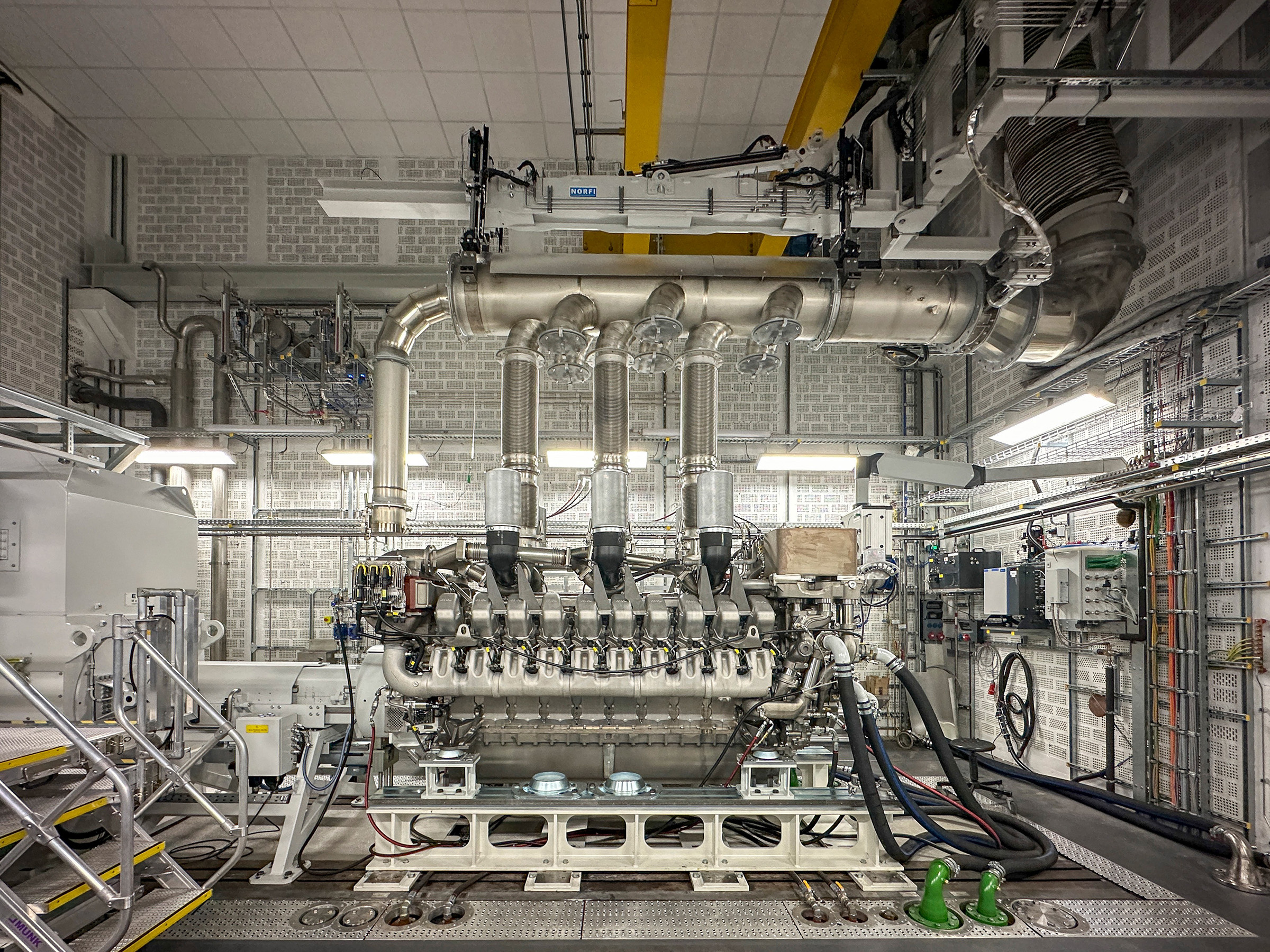
The transition began in September 2024 and progressed steadily until the flagship mtu Series 4000 engines, used in ships, trains, and energy systems, were all being tested on HVO. In Friedrichshafen alone, CO2 emissions from test benches dropped by roughly 25 percent in 2025 compared to fossil diesel operation. With full-year HVO use now in place, even larger reductions are expected in 2026.
Beyond carbon, HVO burns considerably cleaner than conventional diesel, cutting particulate emissions by more than 40 percent and nitrogen oxide emissions by up to eight percent. Across its entire lifecycle, from production to combustion, HVO can reduce CO2 emissions by up to 90 percent compared to fossil diesel, depending on the feedstock and production method used.
Critically, no engine modifications are needed. Rolls-Royce has been approving its mtu engine series for HVO and other fuels meeting the DIN EN 15940 standard since 2021, and the price premium over standard B7 diesel averaged just ten cents per litre in 2025.
The company’s customers are already putting this to practical use. Deutsche Bahn has run its vehicles on sustainable fuel since 2022. Swedish data centre operator Eco Datacenter uses HVO for its emergency generators. Mining giant Rio Tinto now fuels dump trucks at large sites in California and Australia with the same fuel.
“The switch to HVO is an important step towards even more sustainable manufacturing of our products,” said Nicholas Templin, Executive Vice President of Production, Logistics and Quality Management at Rolls-Royce Power Systems. “Our experience has been entirely positive.”

For the full original press release, visit Rolls-Royce’s website: Rolls-Royce Power Systems reduces emissions by switching to sustainable fuel for engine tests.